Didi Clone App Development: Complete Guide for Startups in 2026
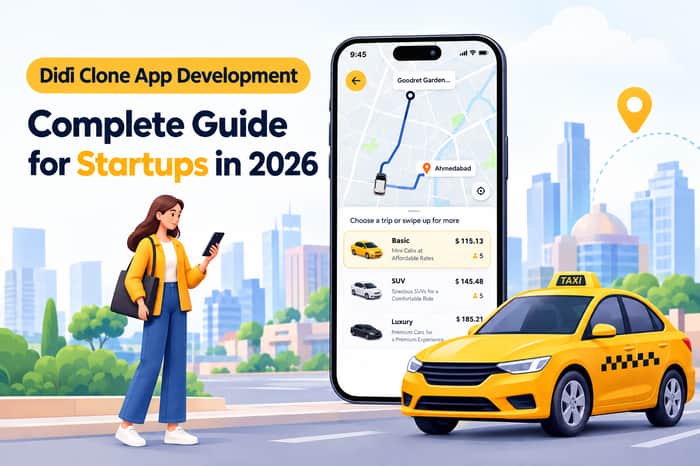
The ride-hailing industry has changed significantly as customers increasingly prefer booking transportation through mobile apps. Platforms such as DiDi have demonstrated how technology can connect passengers with drivers, simplify transportation, and create scalable business opportunities.
For entrepreneurs planning to launch their own ride-hailing platform, a Didi Clone App can provide a ready-made foundation with essential ride-booking features while allowing businesses to customize the platform according to their target market.
What Is a Didi Clone App?
A Didi Clone App is a ready-to-launch ride-hailing application inspired by the core functionality of DiDi. It typically includes separate applications for passengers and drivers, along with an admin panel for managing the complete platform.
Businesses can customize the application with their own branding, pricing rules, service areas, payment methods, and additional features.
Instead of developing every component from scratch, entrepreneurs can use a clone solution to reduce development time and focus on launching and growing their transportation business.
Why Invest in a Didi Clone App?
The demand for convenient transportation continues to create opportunities for ride-hailing businesses. A well-designed platform can serve customers looking for taxis, private rides, airport transportation, corporate travel, and other mobility services.
Some major advantages include:
- Faster time to market
- Lower initial development effort
- Ready-made ride-booking functionality
- Customizable branding and features
- Multiple revenue opportunities
- Scalable technology architecture
- Support for different vehicle categories
- Driver and passenger management
For startups, this approach can be particularly useful when testing a business concept before investing heavily in a completely custom platform.
Essential Features of a Didi Clone App
A successful ride-hailing platform requires more than a simple booking interface. The passenger app, driver app, and admin panel should work together seamlessly.
1. User Registration
Passengers can create accounts using their phone numbers, email addresses, or supported social login options.
2. Ride Booking
Users can enter pickup and destination locations, select a vehicle type, view estimated fares, and request a ride.
3. Real-Time GPS Tracking
GPS functionality allows passengers to track their assigned driver and helps drivers navigate to pickup and drop-off locations.
4. Fare Estimation
The platform can calculate estimated fares based on factors such as distance, travel time, vehicle category, location, and pricing rules.
5. Driver App
Drivers can receive ride requests, accept or reject trips, navigate to passengers, start rides, complete bookings, and monitor their earnings.
6. Multiple Vehicle Categories
Businesses can offer different ride categories, such as economy, premium, SUV, luxury, or other locally relevant options.
7. In-App Payments
The platform can support multiple payment methods, including cards, digital wallets, and other locally available payment options.
8. Ratings and Reviews
Passengers and drivers can rate each other after completing a trip, helping maintain service quality and trust.
9. Push Notifications
Notifications can keep users informed about booking confirmations, driver arrival, trip status, payments, promotions, and other important events.
10. Ride History
Passengers and drivers can access information about previous trips, payments, and booking details.
Admin Panel for a Didi Clone
The admin dashboard acts as the central control system for the platform. Administrators can manage:
- Passengers
- Drivers
- Vehicle categories
- Ride bookings
- Pricing
- Payments
- Promotions
- Service locations
- Reviews and ratings
- Reports and analytics
- Driver documents
- Customer support
A powerful admin panel allows business owners to monitor operations and make data-driven decisions.
Advanced Features to Add
Entrepreneurs can differentiate their ride-hailing platform by adding advanced capabilities such as:
AI-Based Ride Matching
AI-powered algorithms can help match passengers with suitable nearby drivers while considering factors such as distance and availability.
Scheduled Rides
Passengers can book rides in advance for airport trips, business meetings, appointments, and other planned journeys.
Ride Sharing
A ride-sharing option can allow multiple passengers traveling in similar directions to share a trip.
Corporate Accounts
Businesses can create corporate accounts and manage employee transportation through dedicated dashboards and billing options.
Promo Codes and Discounts
Marketing tools such as coupons, referral rewards, and promotional campaigns can help attract and retain customers.
SOS and Safety Features
Emergency assistance, trip sharing, driver verification, and other safety features can improve passenger confidence.
How Does a Didi Clone Business Model Work?
A ride-hailing platform can generate revenue through several channels.
Commission
The platform can charge a percentage of every completed ride from drivers or service providers.
Booking Fees
A fixed booking or platform fee can be added to selected trips.
Surge Pricing
During high-demand periods, businesses can use dynamic pricing models where legally and operationally appropriate.
Subscription Plans
Drivers may be offered premium subscription plans with additional benefits.
Corporate Transportation
Businesses can generate additional revenue by providing transportation solutions to companies and organizations.
A combination of these models can create multiple revenue streams rather than depending on a single source.
How to Develop a Didi Clone App
The development process can generally be divided into several stages.
Step 1: Define Your Business Model
Decide which transportation services you want to offer, who your target customers are, and how your platform will generate revenue.
Step 2: Select the Target Market
Choose the city, region, or country where you plan to launch. Local transportation regulations, customer preferences, competition, and payment methods should be considered.
Step 3: Plan the Features
Create separate feature requirements for the passenger app, driver app, and admin panel.
Step 4: Customize the UI/UX
Design a simple booking experience that makes it easy for passengers to request rides and for drivers to manage trips.
Step 5: Integrate Required APIs
Depending on your business model, integrations may include mapping, GPS, payment gateways, SMS, push notifications, analytics, and communication services.
Step 6: Develop and Test
The platform should be tested across different devices and scenarios, including booking failures, payment issues, GPS problems, cancellations, and network interruptions.
Step 7: Launch
After testing and regulatory preparation, launch the platform in your selected market and begin acquiring drivers and passengers.
How Much Does Didi Clone App Development Cost?
The development cost depends on several factors, including:
- Number of platforms
- Features and customization
- UI/UX requirements
- Third-party integrations
- Backend architecture
- Admin dashboard complexity
- Geographic market
- Security requirements
- Post-launch maintenance
A ready-made clone solution can generally reduce the time and resources required compared with building a ride-hailing platform completely from scratch. However, the exact investment should be calculated based on the required feature set and customization level.
Didi Clone vs Custom Ride-Hailing App
A Didi Clone can be suitable for entrepreneurs who want to launch faster using an existing foundation. A completely custom application may be preferable for businesses requiring highly specialized workflows or unique technology.
The right choice depends on your budget, launch timeline, business model, target market, and long-term product strategy.
Why Choose V3Cube for a Didi Clone App?
V3Cube provides ready-made clone app solutions that can be customized according to different business requirements. Entrepreneurs can use a Didi-inspired ride-hailing solution as a foundation and modify branding, features, pricing models, and workflows for their target market.
The goal is not simply to replicate another platform but to create a ride-hailing business solution that fits your specific market and operational requirements.
Final Thoughts
Launching a ride-hailing business requires careful planning, reliable technology, driver acquisition, customer support, and an effective marketing strategy. A Didi Clone App can help entrepreneurs start with essential ride-hailing functionality while leaving room for customization and future expansion.
If you are planning to launch a ride-hailing platform in 2026, start by defining your target market, selecting the right features, understanding local regulations, and choosing a technology solution that can scale with your business.
