Digital Health Startups to Watch in 2026: Trends and Opportunities
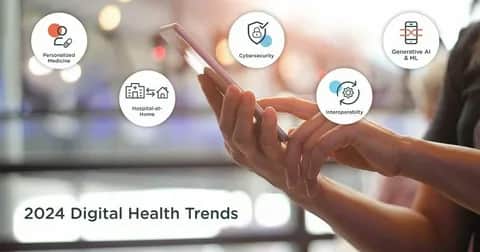
The digital health industry is evolving at breakneck speed. Fueled by advances in artificial intelligence, data analytics, cloud computing, and connected care technologies, health tech startups are transforming how patients receive care, how clinicians work, and how health systems operate. In 2026, innovation in this space isn’t just about building apps — it’s about developing intelligent, interoperable solutions that improve outcomes, lower costs, and enhance the quality of care across diverse populations.
This article highlights the most promising digital health startups to watch in 2026, while analyzing broader trends and opportunities shaping the sector. Throughout this narrative, you’ll also find critical concepts like AI Medical Scribe, mental Health EMR, EHR Software, and AI EHR woven into insights that show where the industry is headed.
1. the Digital Health Revolution: A New Era of Care
Traditional healthcare systems have historically struggled with inefficiencies like administrative burden, clinician burnout, fragmented data, and rising costs. Digital health startups are responding to these challenges by leveraging technology to enhance accessibility, enable predictive insights, and automate manual tasks.
In 2026, this transformation feels less experimental and more foundational. Across primary care, specialty services, mental health, and enterprise health systems, innovators are building solutions that integrate deeply with provider workflows and patient needs.
Key drivers accelerating this transformation include:
AI and machine learning for diagnostic support, personalization, and automation.
Interoperability standards that enable secure data sharing across platforms.
Remote monitoring and telehealth technologies enabling care beyond the clinic.
Consumer demand for convenience and digital experiences.
2. Trend: AI-Driven Automation — Clinician Support and Workflow Efficiency
One of the most transformative trends in healthcare technology is the use of artificial intelligence to reduce administrative load and augment clinician productivity.
🌟 AI Medical Scribe Innovation
Front and center in this trend is the rise of AI Medical Scribe tools. These solutions automatically transcribe clinical conversations and extract structured medical data in real time. Rather than forcing clinicians to juggle note-taking with patient interaction, AI medical scribe services streamline documentation, reduce burnout, and improve coding accuracy.
Traditional scribes required human personnel, training, and supervision — all costly components. AI Medical Scribe solutions replace or enhance those services through speech recognition, natural language processing (NLP), and clinical context awareness.
In 2026, startups refining AI medical scribe capabilities will be critical players in augmenting clinician workflow and enabling more meaningful provider-patient engagement.
3. Trend: Personalization Through Data — Precision and Predictive Medicine
Data has long been the foundation of healthcare, but in 2026 it’s becoming actionable in ways previously limited to specialist research labs.
Startups that can aggregate and standardize clinical data — then apply predictive models — are driving insights for early detection of chronic disease, treatment personalization, and risk stratification.
This kind of precision medicine holds promise particularly in:
Chronic disease management (diabetes, cardiovascular disorders)
Oncology treatment matching
Personalized mental health care plans
By integrating clinical, genomic, behavioral, and lifestyle data, startups can help clinicians move from reactive care to predictive and preventive medicine — a shift that promises reduced hospital admissions and lower long-term costs.
4. trend: The Rise of Mental Health Technologies
Mental health remains a critical global need, yet access, stigma, and fragmentation are persistent barriers. In response, innovators are creating digital platforms that support screening, therapy, and ongoing care — often blended with in-person services.
📈 Mental Health EMR — Specialized Documentation and Care Coordination
A standout trend is the emergence of mental Health EMR platforms — dedicated electronic records systems optimized for behavioral health and psychiatric workflows. Unlike general EHR Software, mental health records carry unique requirements such as:
Confidentiality and psychotherapy note segregation
Integrated assessment tools and outcome measures
Functional care planning and progress tracking
Mental Health EMR solutions are designed to support interdisciplinary teams — clinicians, therapists, case managers — enabling better care coordination and continuity of care. They reduce administrative friction and help mental health providers deliver evidence-based treatments more efficiently.
In 2026, startups focusing on mental Health EHR will attract attention due to rising demand for mental health services, insurance parity, and a broader acceptance of technology-enabled care.
5. Trend: Next-Gen Electronic Health Records
Electronic Health Records (EHR) have been foundational to digital healthcare over the past decade. Yet traditional EHR Software systems often struggle with usability, customization, and workflow optimization. They can be cumbersome, unintuitive, and designed more for billing compliance than clinical needs.
🚀 The Evolution to AI EHR Systems
The next wave of EHR innovation centers on integrating artificial intelligence directly into core clinical workflows — creating AI EHR platforms capable of:
Predictive clinical insights and recommendations based on patient data
Automated documentation and summary generation
Enhanced interoperability with external health systems
Intelligent workflow suggestions for care teams
AI EHR systems will help clinicians make better data-driven decisions, reduce repetitive tasks, and support population health initiatives.
In 2026, startups developing AI-embedded EHR Software — not merely standalone add-ons — will be primed to disrupt legacy systems by offering smarter, more adaptive clinical environments.
6. Top Digital Health Startups to Watch in 2026
Below are exciting startups that are poised to make significant impact in healthcare this year and beyond.
✨ 1. ClinixAI – Intelligent Clinical Assistant
Overview: ClinixAI is developing an AI-powered clinical assistant that combines real-time documentation with predictive care guidance.
Why It Matters: Their AI Medical Scribe technology not only transcribes visits but also suggests differential diagnoses and care plans based on patient history. By integrating machine learning directly into clinical encounters, ClinixAI reduces clinician burden while elevating care precision.
Opportunity: As healthcare systems seek to improve quality and efficiency, solutions like ClinixAI’s will become essential components of daily clinical practice.
✨ 2. MindBridge Health – Comprehensive Mental Health Platform
Overview: MindBridge Health focuses on digital tools for behavioral and mental health clinics, combining teletherapy, assessments, outcomes tracking, and customizable workflows.
Why It Matters: Their mental Health EMR is optimized to reflect real-world behavioral health documentation standards and regulatory requirements — including discrete psychotherapeutic notes, progress tracking, and compliance with privacy laws.
Opportunity: As mental health awareness grows and care demand increases worldwide, tools that streamline practice operations and enhance patient engagement will see rapid adoption.
✨ 3. HealthSphere EHR – The Next-Gen Clinical Record
Overview: HealthSphere EHR builds a cloud-native EHR Software platform with integrated AI automation, predictive analytics, and intuitive clinician dashboards.
Why It Matters: HealthSphere isn’t just digitizing charts — it’s redefining the clinician experience with AI EHR features that anticipate care needs, automate documentation, and simplify billing workflows.
Opportunity: Traditional EHR vendors have long faced criticism for user dissatisfaction. HealthSphere’s approach — blending artificial intelligence with workflow design — places it among the most disruptive health record startups of the year.
✨ 4. TelePulse Diagnostics – Remote Monitoring and Triage
Overview: TelePulse uses IoT and remote patient monitoring data to screen patients outside of clinical settings, enabling early detection of deterioration.
Why It Matters: With pressure growing on health systems to reduce readmissions and expand home-based care, TelePulse’s platform enables targeted interventions through real-time alerts and patient-friendly interfaces.
Opportunity: Chronic disease prevalence is rising globally. Startups like TelePulse that bridge gaps between home care and clinical oversight position themselves as critical partners for value-based care organizations.
✨ 5. CareMatch AI – AI-Enhanced Referral Coordination
Overview: CareMatch AI tackles one of healthcare’s biggest pain points: referral management. Their software maps patient profiles to specialist networks using predictive algorithms.
Why It Matters: Mismanaged referrals lead to delays, incomplete follow-ups, and poor patient experiences. CareMatch’s intelligent system bypasses friction by recommending specialists, scheduling appointments, and syncing records.
Opportunity: As healthcare becomes more connected, tools that streamline cross-specialty care coordination will draw interest from providers and payors alike.
7. Opportunities Shaping the Digital Health Ecosystem
Beyond the startups themselves, several key opportunities are shaping investment and innovation in 2026.
🚀 A. Value-Based Care is Driving Demand for Data Intelligence
Healthcare reimbursement models are gradually shifting toward quality and outcomes — away from fee-for-service. As a result, health systems need:
Analytics to track performance
Predictive tools to identify high-risk patients
Coordination solutions that reduce avoidable hospitalizations
Startups that support accountable care organizations (ACOs) and other value-based models will find a receptive audience.
🚀 B. Regulatory Tailwinds Favor Digital Tools
Government agencies across developed and emerging markets are advancing telehealth reimbursement, interoperability requirements, and data access mandates. These regulatory shifts create environments where digital health solutions can integrate seamlessly with broader health infrastructure.
In particular, standards like FHIR (Fast Healthcare Interoperability Resources) and secure APIs help startups build systems that talk to existing EHR Software and health information exchanges.
🚀 C. Consumer Expectation for Convenience and Personalization
Healthcare consumers increasingly expect digital experiences — from appointment scheduling to remote monitoring and after-visit follow ups. Technologies that improve engagement and personalize care journeys will be differentiated.
This trend favors startups with intuitive patient applications, secure messaging, virtual care workflows, and data-driven personalization.
8. Challenges and Hurdles Ahead
While opportunities abound, digital health startups still face key challenges in 2026:
⚠️ Integration with Legacy Systems
Healthcare organizations continue to rely heavily on legacy EHR Software that may not support modern data standards or APIs. Startups must design interoperable tools or risk being siloed.
⚠️ Data Privacy, Security, and Regulation
Health data is among the most sensitive. Startups must navigate evolving compliance landscapes such as HIPAA, GDPR, and data residency regulations, while maintaining robust cybersecurity.
⚠️ Demonstrating Clinical Efficacy and ROI
Healthcare leaders increasingly demand evidence that digital tools improve outcomes and reduce costs. Startups must invest in clinical validation studies and real-world performance metrics.
9. Looking Ahead: Where Digital Health Is Headed
As we move deeper into 2026, the convergence of technology and clinical care will accelerate in several areas:
🔹 Expansion of AI Beyond Scribing
While solutions like AI Medical Scribe tools are transforming documentation, artificial intelligence will also play roles in clinical decision support, medication optimization, and risk scoring.
Future AI systems will be safer, more transparent, and deeply embedded in clinical workflows — not just as separate modules, but as foundational layers of care delivery platforms.
🔹 Mainstream Adoption of AI EHR
In 2026, AI EHR capabilities will be mainstream expectations, not optional features. Intelligent suggestion systems, automated ordering, and context-aware interfaces will reshape clinician workflows — reducing friction and improving decision confidence.
🔹 Holistic Care Through Integrated Ecosystems
Healthcare in 2026 will increasingly function through ecosystems, where startups, health systems, payors, and technology partners collaborate. Data will flow securely, services will interconnect, and patient experiences will feel seamless.
Startups that build modular, interoperable solutions will thrive in this environment — especially those who design with standards like FHIR, SMART on FHIR apps, and open APIs.
10. Conclusion: Why 2026 Is a Defining Year
The digital health landscape of 2026 is defined by intelligent automation, personalized care, interoperability, and the integration of advanced data insights across clinical workflows.
As healthcare systems worldwide adapt to rising demand, workforce shortages, and heightened expectations, digital health startups are not just innovating — they are shaping the future of care.
From AI Medical Scribe tools that streamline documentation to specialized mental Health EMR platforms and cutting-edge AI EHR systems, the startups gaining traction today are building technologies with the potential to transform global health ecosystems.
Investors, clinicians, and patients alike should watch these innovators closely — because the future of healthcare will be digital, connected, and driven by solutions that enhance care for everyone.
Author Bio:
Nathan Bradshaw is a healthcare IT and digital health strategist with over a decade of experience in EHR, medical billing, and practice management. He helps physicians, clinics, and healthtech innovators optimize operations, revenue, and patient care through technology-driven solutions. Nathan shares insights on healthcare innovation, AI in medicine, and practice growth to educate and inspire professionals across the industry.


The biggest headache for us was having service information spread across different places. A referral would get entered in one system, the follow-up somewhere else, and then nobody was quite sure whether the client ever received the service. That’s why Community CareLink has worked well for us. It keeps the client history, services and referrals tied together, and the closed-loop tracking shows what happened after the referral instead of leaving us to piece it together manually.
This comment was deleted 25 days ago