Digital Marketing for Solo Developers: Lessons from Building FabForm the type form alternative
Digital Marketing for Solo Developers: Lessons from Building FabForm.io
When I started building FabForm.io, a playful, premium alternative to Typeform, I thought the hard part would be the tech. Turns out, writing idiomatic Go and crafting SVG icons was the easy bit. The real challenge? Getting people to care.
As a solo developer, marketing often feels like shouting into the void. You’re juggling product, support, design, and now you’re supposed to be a growth hacker too? But here’s the truth: if you don’t market, your product doesn’t exist. So here’s what I’ve learned — painfully, iteratively — about digital marketing that actually works when you’re a team of one.
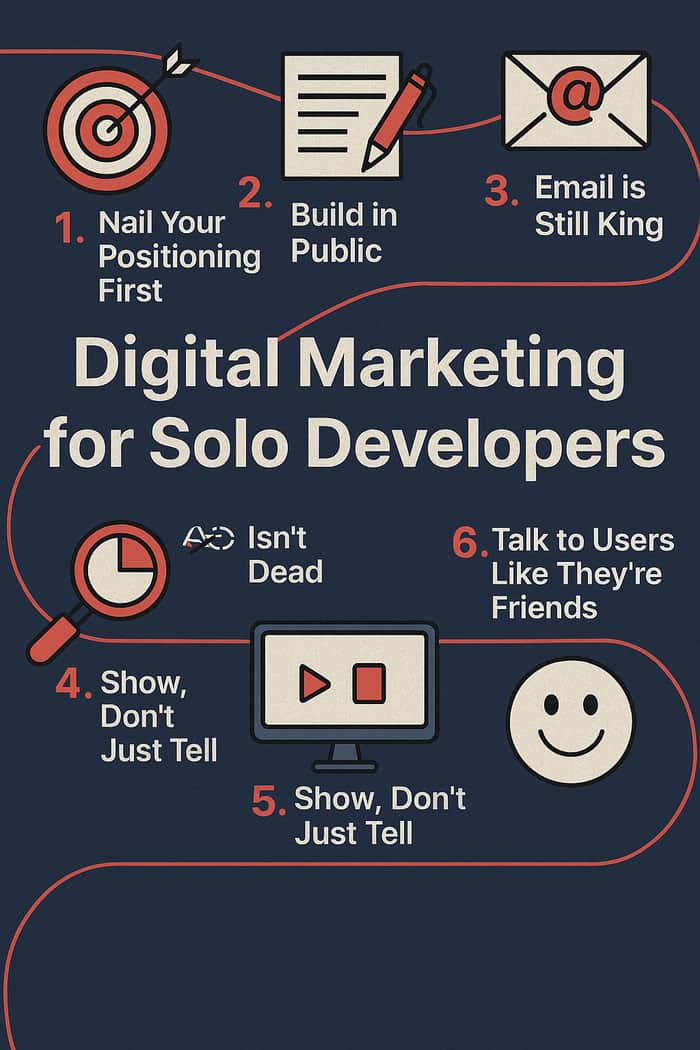
🎯 1. Nail Your Positioning First
Before you tweet, blog, or run ads, ask: Why would anyone choose this? FabForm isn’t just “another form builder.” It’s fast, joyful, and designed for indie devs who hate bloated UIs. That clarity drives everything — homepage copy, feature prioritization, even the tone of our emails.
Tip: Write your homepage headline like a tweet. If it doesn’t make someone curious in 280 characters, it won’t work on your site either.
🧠 2. Build in Public (But With Purpose)
“Building in public” is trendy, but it’s not just about tweeting your bugs. It’s about storytelling. I shared how I rewrote FabForm’s Supabase integration, how I tested QR code scannability, and how I designed our twisted parody logos. These posts weren’t just updates — they were mini case studies, showing how much care goes into the product.
Tip: Every build-in-public post should teach, entertain, or reveal something unexpected. Bonus points if it’s visual.
📮 3. Email Is Still King
I resisted email for months. Too corporate, too boring. But once I added a simple “Get launch updates” form, I realized: email is intimate. It’s the only channel where people expect to hear from you directly. Now, every new feature, bug fix, or design iteration gets a short, punchy email — often with a weird metaphor or a sketch.
Tip: Don’t wait for a “big launch.” Start collecting emails early and send something useful every 2–3 weeks.
🔍 4. SEO Isn’t Dead — It’s Just Honest Now
I used to think SEO was for keyword-stuffing robots. But writing genuinely helpful content — like “How to validate emails with Supabase” or “Idiomatic Go channels for form submissions” — brought in real traffic. Not millions, but enough to get noticed by the right people.
Tip: Write the blog post you wish existed when you were Googling your last bug.
📹 5. Show, Don’t Just Tell
Screenshots are fine. But short videos, GIFs, and interactive demos? Way better. I built a live playground for FabForm so people could test forms instantly. It’s not just a feature — it’s a marketing asset.
Tip: If your product solves a visual problem, make the solution visual too.
💬 6. Talk to Users Like They’re Friends
Every FabForm user gets a personal welcome email. Not a Mailchimp blast — a real note. I ask what they’re building, what they wish the product did, and what confused them. These conversations have shaped everything from our onboarding flow to our feature roadmap.
Tip: Your first 100 users are your co-founders. Treat them like it.
🧪 7. Test Weird Stuff
Some of FabForm’s best-performing assets came from experiments: a QR code flyer with a twisted smiley face, a parody of Amazon’s logo, a blog post written like a breakup letter to Typeform. Not everything lands, but the ones that do? They stick.
Tip: If it feels risky but true to your brand, try it. Indie devs win by being weird and useful.
Final Thoughts
Digital marketing isn’t a separate job — it’s how you tell the story of your product. As a solo dev, you have an unfair advantage: you know every pixel, every line of code, every user pain point. Use that. Be personal. Be clear. Be relentlessly helpful.
FabForm is still growing, still iterating, still weird. But every time someone says “I love your homepage” or “That blog post helped me fix my Supabase bug,” I know the marketing is working.
And that’s the goal: not just to get clicks, but to build something people care about.
Want help turning this into a blog post, tweet thread, or IndieHackers discussion? I’d love to riff with you.
