Do you use AI to plan work, but still execute everything manually?
I’m new here and trying to validate a problem I keep facing as a founder/operator.
AI tools help me plan work, but I still have to execute everything manually: remember the context, find the right system, run the steps, and verify the result.
When I’m away from my workstation, the work just slows down.
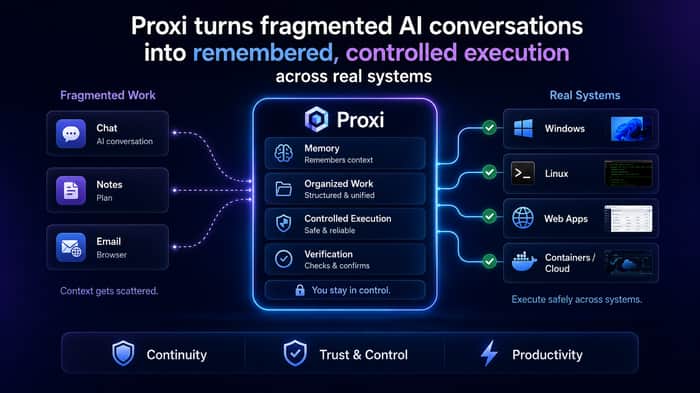
I’m building a small tool called Proxi that remembers recurring work and can help execute approved workflows across your own machines.
My question:
Would you ever trust an AI assistant to help run recurring workflows on your machine if it paused before risky actions and reported back what changed?
Or is this still too uncomfortable?

The trust boundary is the real product here. A lot of AI workflow tools stop at planning because execution feels risky, especially when the assistant is touching local machines, files, apps, or accounts. If Proxi can make the “pause before risky actions, show what changed, and report back” loop feel safe, that is a much stronger wedge than just “AI automation.”
I’d position this less as an assistant and more as a controlled execution layer for recurring operator work. The buyer needs to believe it will not silently break things, overstep permissions, or lose context between runs.
One thing I’d watch is the Proxi name. It explains the “proxy for your work” idea, but it may feel a bit light if the product becomes serious local workflow infrastructure. Xevoa.com would fit better if you want the brand to feel like a broader AI workflow platform rather than a small helper tool.