Enterprise AI Isn’t About Bigger Models — It’s About Smarter Context
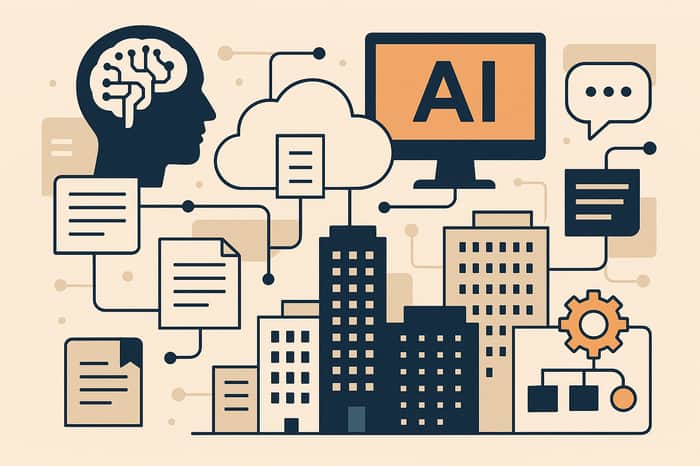
(How we built Lexeek to understand companies, not just keywords)
When people talk about Enterprise AI, they usually imagine giant models, complex pipelines, and expensive dashboards.
But here’s the truth I learned while building Lexeek 👇
Most companies don’t need another “AI assistant.”
They need an AI that actually understands their business.
When we started Lexeek, the goal wasn’t to build a chatbot — it was to build contextual intelligence.
Something that could read a company’s internal docs, product pages, support tickets — and respond like a domain expert inside that company.
Here’s what we discovered:
Enterprises don’t fail at AI because of lack of data.
They fail because their AI doesn’t know what’s relevant.
Context beats computation. Every time.
A small, well-aligned model can outperform a massive LLM — if it’s trained on the right signals.
So we built Lexeek as a “brain layer” that sits between your company knowledge and your users.
It doesn’t just answer questions — it routes intent, understands tone, and can even trigger workflows inside apps like Notion, HubSpot, or Jira.
It’s like having a team of specialized assistants, each tuned to your company’s brain.
We call it contextual intelligence for enterprises.
What’s interesting:
We’ve seen startups and enterprises use Lexeek not just for customer support, but for onboarding, internal knowledge discovery, and even AI-driven analytics.
And every time we strip complexity and add clarity, adoption goes up.
Because the future of Enterprise AI won’t be who has the biggest model —
it’ll be who has the smartest understanding of the situation.
💬 Curious — for those building AI tools for businesses:
What’s been your biggest struggle — context understanding, data privacy, or integration depth?
Would love to swap notes.
