Fitbod App Review 2026: Honest Take After Real Testing
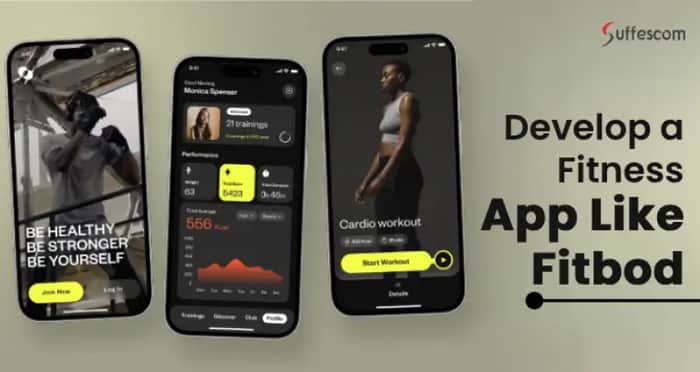
Fitbod has dominated the AI fitness app category for nearly a decade — 15+ million downloads, 2.5+ million active users, 157+ million workouts logged, and a 4.8/5 App Store rating that's held remarkably steady through multiple major updates. After using the app extensively for this review, the honest verdict is that Fitbod genuinely earns most of the hype but has specific weak points that newer competitors are closing the gap on. This review covers what Fitbod actually does well, where it falls short in 2026, and which alternative is worth considering depending on your specific situation.
The shorthand version: Fitbod is excellent for experienced lifters who already understand exercise form and want algorithmic AI to plan their workouts. It's still good for beginners but loses some ground to newer apps that combine AI personalisation with stronger video coaching for users learning proper technique. Pricing is fair at $15.99/month, but cheaper and more specialised alternatives exist depending on your goals.
Quick Reference: Fitbod at a Glance
- Pricing: $15.99/month or $95.99/year, free tier with 3 workouts
- Best for: Strength trainers, gym-goers, intermediate-to-advanced lifters
- AI features: Recovery tracking, equipment-based workout generation, progressive overload automation, mobility integration
- Platforms: iOS and Android
- App Store rating: 4.8/5 across 264,000+ reviews
- User base: 15+ million downloads, 2.5+ million active users
- Verdict: ★★★★★ for experienced lifters, ★★★★ for beginners
What Fitbod Actually Does Well
After testing across multiple training scenarios (full gym, hotel gym, home with limited equipment), three Fitbod strengths consistently stood out:
- Recovery-aware programming — the app tracks which muscle groups you've trained recently and structures upcoming workouts around what's actually recovered. The visual heat map showing muscle fatigue is genuinely useful for avoiding overtraining specific groups
- Equipment flexibility — toggle which equipment you have available and Fitbod regenerates workouts that work with that specific setup. This is genuinely useful for travel, multiple gym memberships, or transitioning between home and gym training
- Progressive overload automation — when the algorithm detects your workouts are getting easy, it adjusts variables (weight, reps, exercise selection) to keep pushing progress. When workouts get too difficult, it scales back. Most users wouldn't track this manually with the same precision
The user interface is the other consistent strength. Fitbod's interface is widely considered the cleanest in the category — workout logging is fast, exercise demos are accessible without disrupting workout flow, and the data visualisation (charts, progress tracking, personal records) is genuinely well-designed. Multiple reviewers in 2026 still position Fitbod's UX as the standard other apps are measured against.
Where Fitbod Has Genuine Weaknesses
Three weak points showed up consistently in real-world use and across other reviewer assessments:
- Beginner form coaching is functional but not exceptional — exercise demonstration videos exist for every movement, but they're brief and don't go deep on form coaching. Beginners who don't know proper technique for compound lifts (squats, deadlifts, bench press) are not getting personal-trainer-level guidance from Fitbod's video library
- Algorithmic limitations on advanced training — for serious lifters following specific methodologies (powerlifting peaking cycles, hypertrophy specialisation, advanced periodisation), Fitbod's general-purpose algorithm produces workouts that are good enough but not optimised for those specific approaches
- Customer service quality varies — Trustpilot reviews show recurring complaints about subscription management issues (particularly with App Store-purchased subscriptions where Fitbod has limited refund authority) and slow response times to support tickets. The user community generally rates the product better than the support experience
The app is also missing exercise variation depth that some advanced users specifically want. Fitbod's exercise library is large, but advanced lifters often want specific variations (different grip widths, tempo modifications, partial reps) that Fitbod doesn't include. Workouts feel slightly templated for users training at the highest levels.
Pricing Breakdown: Is Fitbod Worth $15.99/month?
The math depends on your alternative. Compared to a personal trainer (~$50-100/session), Fitbod at $15.99/month is dramatically cheaper for similar programming quality (though without the in-person form correction). Compared to free apps (Hevy free tier, Nike Training Club), you're paying for the AI personalisation and recovery tracking that free apps don't offer. Compared to other AI fitness apps, the pricing is mid-tier — cheaper than Future ($199/mo) and Juggernaut AI ($35/mo), more expensive than Freeletics Premium ($6-7/mo) and budget options like Arvo (€6/mo).
The annual pricing at $95.99/year works out to ~$8/month, which significantly improves the value proposition. For users who'll genuinely use the app long-term, annual is the obvious choice. Skip annual if you're testing the category — the 3-workout free trial is enough to see if the workflow fits but not enough to evaluate long-term value.
Real User Sentiment
Trustpilot reviews show a recurring pattern: long-term users (those active 1+ years) almost universally rate Fitbod 4-5 stars and describe it as life-changing for their training consistency. New or short-term users show more mixed sentiment, with the most common complaints being subscription billing issues (often via App Store) and the algorithm initially feeling generic before it learns from enough workouts to personalise effectively.
The "it gets better over time" pattern is consistent — Fitbod genuinely needs 10-15 workouts of input data before the personalisation reaches its full quality. Users who quit within the first week often miss the inflection point where the app's value becomes obvious.
A Good Alternative: Fitness Refined
If Fitbod's biggest gap for you is the form coaching depth, Fitness Refined is the alternative worth testing. The app pairs AI-powered workout customisation with video-guided workouts from professional trainers, which addresses Fitbod's main weakness for users who need stronger form coaching alongside the AI personalisation. The video coaching focus makes it particularly suitable for users newer to structured strength training, while the AI personalisation maintains the workout-adapting capabilities that make Fitbod work.
Available on both iOS and Android with a free download, Fitness Refined is worth comparing if you've tried Fitbod and felt the exercise demonstrations didn't give you enough form guidance. The two apps occupy slightly different positions in the category — Fitbod optimises for algorithmic depth assuming form competence; Fitness Refined optimises for the combination of AI personalisation and video coaching that helps users develop proper technique while training. Many users who tried Fitbod first end up preferring Fitness Refined once they realise the form coaching gap was their actual blocker.
Final Verdict: Should You Get Fitbod?
The honest decision matrix:
- Get Fitbod if: you're an experienced lifter (1+ years of consistent strength training), you train across multiple gym setups, you want the cleanest UX in the category, you value recovery-aware programming, you'll use the annual subscription
- Try Fitness Refined first if: you're new to structured training and need stronger form coaching, you specifically want video-guided workouts from professional trainers, you want to start with a free download before committing to subscriptions
- Consider Future if: you've tried multiple fitness apps and quit each one — you need human accountability that algorithms can't replicate ($199/mo)
- Consider Freeletics if: you primarily need bodyweight workouts for travel or home training without a gym
- Skip all of them and pick Nike Training Club if: you want completely free instructor-led workouts and don't need AI personalisation
The pattern: Fitbod is genuinely excellent at what it does, but it's not the right answer for every user in the AI fitness category. The marketing positioning often suggests it's the universal best choice; honest assessment shows it's the best choice for specific users — experienced lifters who want algorithmic AI without paying for a human coach. New users with form coaching needs, accountability-driven users, and bodyweight-focused trainers all have better-fit alternatives.
For experienced strength trainers, Fitbod earns its 4.8 App Store rating and the broad consumer adoption it's built since 2015. For everyone else, the alternatives are worth real consideration before defaulting to Fitbod just because it's the best-known option.
Three Fitbod Buying Mistakes Worth Avoiding
First, don't quit during the first week — Fitbod's algorithm needs 10-15 workouts of input data before the personalisation reaches its full quality. Users who quit early often miss the inflection point where the app gets genuinely good. Second, use the annual subscription if you're committing — at $95.99/year ($8/month effective), it's significantly better value than the $15.99/month rate. Third, don't ignore form coaching gaps — if you're new to structured training and Fitbod's exercise demos don't feel like enough guidance, test Fitness Refined before paying for additional Fitbod months. The right app depends on your actual coaching needs, not the most popular option.
FAQ
Is Fitbod worth $15.99/month?
For most experienced strength trainers, yes — Fitbod's AI personalisation, recovery tracking, and equipment flexibility deliver genuine value at this price point compared to either personal training (~$50-100/session) or generic free apps. The annual pricing at $95.99/year ($8/month effective) is significantly better value than monthly billing. The honest answer for experienced lifters is that Fitbod is fairly priced for what it provides; for beginners or specialised users, alternatives may produce better results at similar or lower prices.
Does Fitbod actually use AI?
Yes, with caveats about how the term is defined. Fitbod uses machine learning algorithms that analyse your past workouts, recovery state, and equipment availability to generate personalised workouts. The "AI" is real but workout-level rather than set-by-set — Fitbod generates a workout before you start rather than adapting in real-time during the session. Some newer apps (Arvo, certain Future Pro features) claim deeper real-time adaptation, though Fitbod's approach is genuinely effective for most users.
Is Fitbod good for beginners?
It's functional but not exceptional. Fitbod's exercise demonstrations exist but don't go deep on form coaching, which is what beginners often need most. Newer apps like Fitness Refined that combine AI personalisation with video-guided workouts from professional trainers typically produce better outcomes for users learning proper technique. Beginners can use Fitbod successfully, but if your main blocker is "I don't know how to do these exercises properly," a more video-coaching-focused alternative may serve you better in the early stages.
Can Fitbod replace a personal trainer?
For programming purposes, mostly yes — Fitbod produces workout plans that are genuinely comparable to what a personal trainer would write, at roughly 1/30th the cost. For form correction and accountability, no — Fitbod can't watch your squat depth or check whether you're skipping sessions. Self-motivated users with reasonable form get most of the value of personal training from Fitbod. Users who specifically need form correction or accountability get better results from in-person trainers or coach-led apps like Future.
How does Fitbod compare to Strong, Hevy, or Jefit?
Fitbod is an AI workout planner; Strong, Hevy, and Jefit are workout trackers. Different products. If you want the app to plan your workouts based on your goals and equipment, Fitbod is the right choice. If you already have a program (from a coach, a website, or your own design) and just want to log sets and reps efficiently, Strong or Hevy are better — they're optimised for fast logging without the AI overhead. Many serious lifters use Fitbod for general training and switch to Strong/Hevy for specific programs.
Why do some Fitbod users complain about customer service?
Real pattern in Trustpilot reviews. Most complaints centre on subscription management issues, particularly for users who subscribed via the Apple App Store. Fitbod has limited authority over App Store-purchased subscriptions (Apple controls refunds and management for those), which creates frustrating situations where users want to cancel or refund through Fitbod but are redirected to Apple. Users who subscribe directly through Fitbod's website have more direct support access. The app itself rates higher than the support experience consistently.
Is the Fitbod free trial enough to evaluate the app?
Three workouts is genuinely too few. Fitbod's algorithm needs 10-15 workouts of input data before the personalisation reaches its full quality, which means the free trial gives you a glimpse of the interface without showing you the actual long-term value proposition. The honest recommendation: either commit to one month of paid subscription to genuinely test, or try a free download of Fitness Refined first to evaluate whether AI fitness apps fit your training style before paying for any subscription.
