Founders: How Are You Collaborating with Your Remote Team?
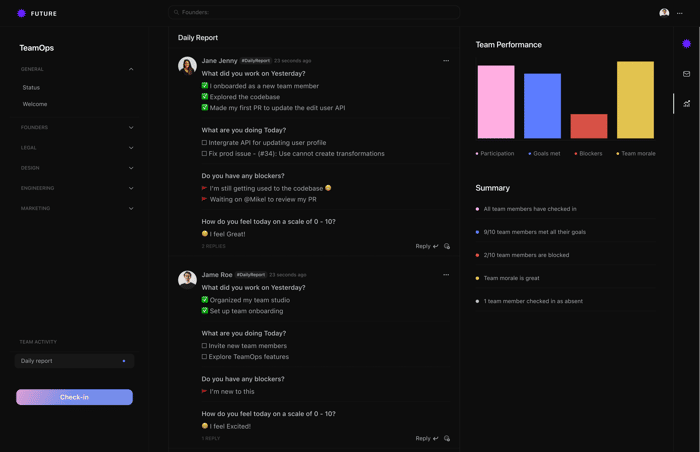
Yesterday we launched TeamOps: https://www.onteamops.com/
Prior to launch, I faced several difficulties with remote work, which is why I'm here today to find out how other founders make it work for their teams.
Every founder has had a moment in their life when they feel anxious about losing contact with the team. It's a state that no founder wants to be in because staying there means letting your team derail from what you have set out to do.
Whether you're in a growth stage with your startup to afford product managers or not, no one in your company owes so much responsibility to the team except you, the founder, and your co-founders. I've worked with an organization once, and I know how it feels to want to do cool stuff regardless of its importance to the team's mission.
Here's the question again: "How do you collaborate with your remote team?" Pause now and share your entire process in the comments. What tools do you use? How do you keep track of what's going on and when?... It is important to us to hear your feedback.
You should already have an Idea by now what TeamOps is about - TeamOps is a remote collaboration software built to help founders and team members stay connected with the team's mission and core values. It's an Operating system for startups with built-in tools that support team member check-ins, team performance metrics, team onboarding, and general collaboration. Now let's get to the "Why we're making it"
We're making TeamOps because:
-
We don't always need daily stand-ups
(We would rather see a daily report of progress on previously assigned tasks to DRIs before setting up one more meeting) -
We want to know who is having blockers in record time and why
(This is crucial. I've seen countless times when team members relaxed over a roadblock, and no one was aware until it was too late.) -
We want Information on important decisions to travel across departments in real-time.
(In remote startups, everyone needs to know when decisions are made, and we want this process to happen faster. TeamOps solves this by showing new updates from all departments that concern you in a general status feed.)
We wanted a solution for all these observations since we began to work remotely. Before I became a founder, I had the opportunity to work with some amazing teams in the past, and as a former employee, I can relate to most of these problems, and I also fall victim to most of them.
Onboarding new members and teaching them about the organization's core values and what they're there to do is another important thing to keep in mind as a founder, which takes time, so we thought about automating that process as well
Does your startup have an onboarding process for new team members? What is the onboarding process for them? Stop here and let us know what the process looks like if you already have one.
Assuming you were ignorant of this, then you've fallen short at organizing your team yet again, but that's okay, it wasn't considered widespread in the first place, and we're still figuring it out as we go.
Why is it important to onboard a new team member? And do meetings have any relevance to the process?
To answer that question, imagine using a new product for the first time, and the onboarding process involves meeting with the creators so that you can understand what the product is all about, and you have to do this multiple times before it sinks in - no one would like that.
The members of your team are also your users, if they have difficulty finding or understanding something, they will give up, and that is an expensive risk you want to avoid, it will hinder the progress and morale of your team.
As founders, we need something that binds our organization together, whether it's our vision for the company, the mission, culture, or core values. When issues arise, they should align with what our team values.
When I worked with some startups in the early days, onboarding was handled by writing an exhaustive document that was buried deep inside a Google Drive folder that no one looked at, they would do that occasionally and send it to new team members to read, but I never found it effective enough because it was so boring and outdated, forgetting about the company's mission was normal, and that's the one-way misalignment your team experiences.
So how does TeamOps help startups solve this problem?
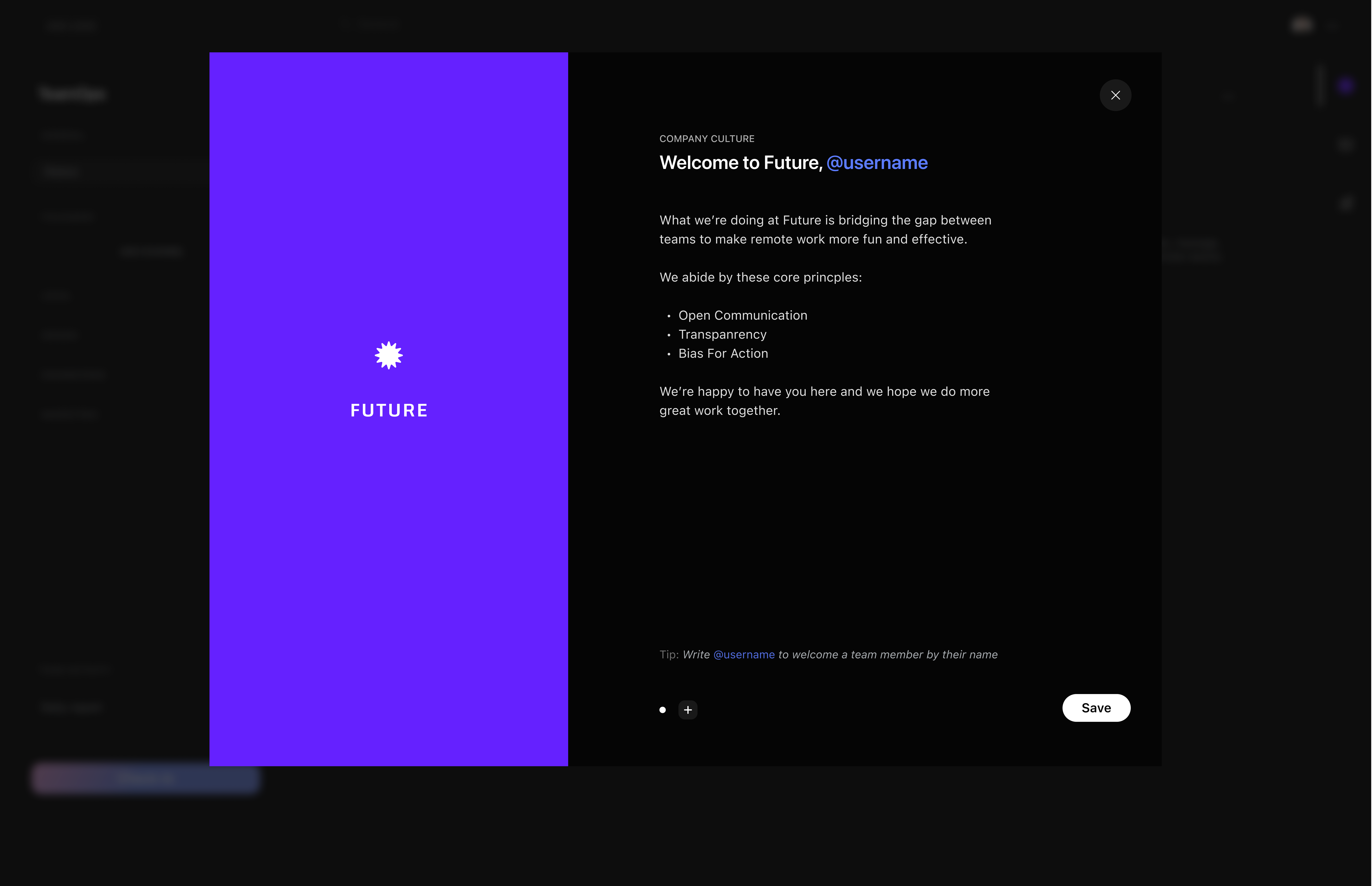
By automating new member onboarding - founder teams can write messages to introduce new members to the team and what they stand for, which means that you don't have to attend long explanation meetings or send boring documents. Instead, you can have the entire new member onboarding process in one place, one flow, that can be viewed at any time.
Considering all of these, we would like to know how important collaboration in your organization is. What other challenges have you encountered working remotely? We'd love to hear about any problems you run into working with your remote team, so comment below or shoot us an email at team@onteamops.com
TeamOps is open to the public in beta, and we're refining the solutions to solve problems with remote work. Since we are early, we have plenty of time to listen and build for you.
Thanks for reading, and we hope you found something helpful to improve your team's operations.
Take care and get more done until next time.
