From broke and burned out as a PM, to launching my SaaS and optimizing my health
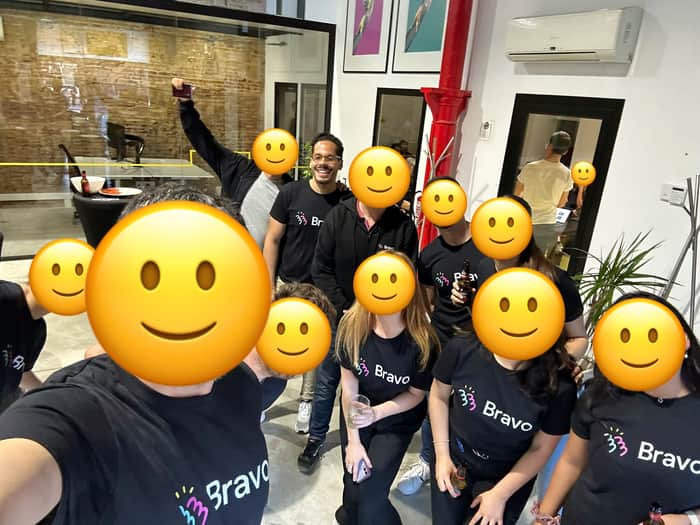
In 2020, I hit rock bottom as a PM: broke, severely burned out, and completely out of shape.
Today, I’ve completely flipped the script. I paid off my debt, landed senior product roles, and built the best physique of my life.
The biggest lesson? Stop trying to change your environment (jobs, roles or cities/countries) and start changing your internal systems. Your health and energy are your ultimate leverage as a founder. Less energy always equals poor execution.
This exact journey inspired me to build two things for busy tech professionals:
-
ProductFitCoach: Mentorship to help tech pros regain focus and performance without burning out.
-
FitDots: A SaaS for flash, flexible workouts that seamlessly sync with a busy calendar.
I just put together a raw, 8-minute video breaking down the exact mistakes I made, how I applied product frameworks to my own health, and how to avoid the tech burnout trap.
👉 Watch the video here:
https://youtu.be/I95tEddDOLo?si=3VsDWubfFPr5U060
Are you balancing the startup hustle with your physical health right now?
Let’s chat in the comments!

I verified this morning that the bitcoins I had in my wallet had been hacked out of my wallet but with the help of Team Ghost Champion Recovery Hackers, everything that was hacked had returned back to my wallet. I wish to spread the word that you can work with the Team Ghost Champion Recovery Hackers (GCH) to get your money back from scammers or any hacking processing/situation
I think many founders underestimate how much execution quality is tied to energy quality.
People often look for a better idea, market, or strategy, while the real bottleneck is their own operating system. Better health doesn't just improve fitness—it improves decision-making, consistency, and resilience.
Congrats on turning a difficult period into something that now helps others.
Loud and clear masgoraya, never better said. Couldn't agree more with your point of view, it is exactly why I did this. Thanks for the cheering and good luck with ASCANX.
Is there anything in particular you'd suggest for keeping up with demands?
Thanks, Fernando.
One thing that has helped me is treating energy as a strategic resource rather than a personal one. As founders, we often manage money, product, and growth very carefully, but we rarely manage our own capacity with the same discipline.
I've found that prioritizing sleep, reducing context switching, and protecting a few uninterrupted hours for deep work has a much bigger impact on execution than simply working longer hours.
Curious—what was the highest-leverage change you made that produced the biggest improvement in both your health and professional performance?
Hey masgoraya, I feel we’re pretty aligned on this one.
I went through a similar shift a while ago, especially around mindfulness, just being more intentional about what I’m doing while I’m doing it has been a huge win on its own.
On my side, the highest-leverage changes have been quite simple: getting daily sunlight, doing strength training 3x/week, and being more intentional with nutrition (with some guidance from nutritionists).
Thanks for sharing this, really appreciate it. Wishing you the best with your project. Cheers!
Resonate with this hard. 20yo finance student in my third year, building a finance-education app solo (with Claude as the engineer since I can't code). The "ship while the day job kills you" energy in your post is real for me it's "ship while finals season kills you." How did you decide what to cut vs. keep when you were optimizing health AND the SaaS at the same time?
Hey yazhijazi, thanks for your comment. I feel you, being a finance student while building your own app sounds like a real challenge. I think not many people can do that. Congrats.
In my case, it all started with deep honesty and being clear between me and myself with what I wanted to achieve and what I was willing to take.
Something that helped a lot to do that mental process was a mindfulness coaching that I had the chance to take, it teached me so much.
So, once I knew what I really wanted for myself, I divided my goals into priorities, and decided execution... Nothing further from what a normal Product Manager would do with a product, but applied to my own life. So, I began to cut on waste and unnecesary things, while at the same time building systems around what I thought to be really important for me.
E.g.: I realized that the quality of food I ate, determined in big measure, the quality of my thoughts, so the logic was something like: quality food -> clear thinking/high quality thoughts -> clear thinking = better results. So I built systems around this, like understanding what I needed to eat with a certified nutritionist and automating my groseries around it online. That way I save the time of going to the supermarket while getting the best from my food. This approach gives me back time, that I can invest into building my projects.
The same I did with exercise and with other things around life, exercise, batch cooking, sleeping time, habits, systems: e.g. I never go to the gym, just practice calisthenics at home, and sometimes outdoors. That way I get all the benefits of exercise while saving the money of the gym and the time of going to the gym. I also write down almost every pending and have different lists for personal/work priorities. That way, when I go to bed I can truly get quality sleep, because my mind is not wandering around my responsibilites, since is all written.
I'm not sure if this was the kind of answer you were expecting to hear, but it is with deep honesty what has worked for me. I hope it gives you a better picture, and that you find it helpful to contrast ideas. I'm always open to quick chats if you wanted to speak deeper.
And, good luck with your finance studies and your app. You are going to make it!
Cheers!
Energy as a founder's ultimate leverage is right, and most founders don't see it until they hit the wall. The trap to watch for, having coached a lot of early-stage founders: there's a version of this where 'optimize my internal systems' quietly becomes the procrastination layer. Cold plunge at 5am, macros dialed, sleep stack perfect, and the business still isn't shipping. Energy compounds growth only when the energy is being spent on the business. The PM-to-founder version of this is making sure the discipline you built for health translates into customer conversations, not just morning routines.
Spot on, GregoryScottHenson. When your systems are only slowing down your business, then the whole thing looses the point.
Do you have any strategy to avoid falling in this trap?
Two products sharing one founder story will compete for the same attention budget, even when the buyers are technically different. The risk is not naming. It is that a reader who lands on either offer has to do the work of figuring out which one is for them today.
Pick the one with the lower commitment as the public door. FitDots, probably, since a flexible workout block is a smaller yes than a coaching engagement. Let it carry the burnout narrative. Coaching becomes the natural next step for the ones who actually move the needle on it, surfaced inside FitDots, not on the homepage. Two doors looks like more options. It usually halves the conversion of the door that should have been the only one.
Hey Pandologie, that’s a really great point! And I completely agree that one should serve as the gateway for the other.
My thought process was that since the price points are worlds apart (low-ticket SaaS vs. high-ticket coaching), they wouldn't directly compete for the same wallet, though you have a valid point about the attention. Right now, my play is to build the ProductFitCoach brand organically through storytelling, while putting some paid marketing efforts behind FitDots.
Given that massive price gap, do you still feel that presenting both doors upfront creates too much cognitive friction for the reader? I'm trying to treat them as related, but independent brands.
Happy to share more details on how I'm executing this if you'd like to get a clearer picture!
Yes, more than the wallet question. The friction is attention, not dollars.
A burned-out PM trying to fix their health is one human, not two segments. When they land on either of your pages, the question they're answering in the first five seconds is "is this for me today?" Price gap doesn't help with that question. ICP language does.
The "related but independent brands" frame works, but only if you commit to one being the public door and the other being a discovery the user makes after they're in. Treating them as parallel options on the same homepage is what splits attention. Treating them as a sequence (FitDots = the door, ProductFitCoach = the upgrade discovered inside FitDots) keeps the funnel clean.
Paid traffic behind FitDots while ProductFitCoach grows organically is a good split. The risk is if both brands point at the same homepage or the same bio link. The instant a paid-traffic visitor sees two doors, the math kicks in. They don't compare the prices, they bounce.
Would love to see how you've structured it. If you've got a link to either landing, drop it here and I'll send back what jumps out in the first five seconds reading just the words above the fold. No pitch, peer feedback.
Hey Pandologie, thanks for your feedback. So here it goes:
I'm actually treating ProductFitCoach as the entry door, as it is the brand where I'm putting the most effort on content creation in social media.
This is the social media:
https://www.youtube.com/@ProductFitCoach
https://www.instagram.com/productfitcoach/
https://x.com/ProductFitCoach
https://www.tiktok.com/@productfitcoach
And my LinkedIn of course, where I relate this brand to my journey:
https://www.linkedin.com/in/productfitcoach/
Here's the link to the landing: https://productfitcoach.com/
My idea was for prospects to see it this way:
I trust this person, I want more -> Prospect checks offering: Coaching + SaaS -> Picks a solution based on budget/commitment. (It is true that prices are not shown up front...)
Then, on the background, I have FitDots:
https://www.fitdots.ai/
Which is normally reposting content from ProductFitCoach or uploading collaborated content on Social Media. My initial idea was, that since is all related to burnout for tech/start-up people and has exercise behind (as a solution), I'm trying to upload more exercise related content to FitDots' accounts, tagging it as "collaboration" content with ProductFitCoach so it appears in both, here's an example: https://www.instagram.com/p/DYhFDINsTRe/
Let me know if this is enough, that's the wide picture. Looking forward to your feedback.
Thanks!
Thanks Fernando, that's plenty to work with. Here's the read on productfitcoach.com, in order:
The kicker is the slop layer above your sharp work. "For High Performers Ready to Unlock their Full Potential" is the line every coach writes. The body H1, "I help busy professionals in Tech reclaim their focus, energy, fitness, and productivity," is what most coaches can't claim. Lead with the body H1 as the actual hero, drop or rework the kicker. Keeps your wedge from being buried under a generic frame.
Your credentials are doing more work than you're letting them. "8y Tech & Product Teams · 600h+ PT certification · 2000h+ training" sit too low on the page. That stack is the exact reason a tech VP picks you over a random coach. Move that strip directly under the hero H1, before any offers.
"Apply for Coaching" as the primary CTA is high friction for first-time visitors who came from your social content. Your own page already mentions "Free Strategy Call" inside the 1:1 block. Swap. Hero CTA becomes "Book a free strategy call," and "Apply for Coaching" lives further down for warmer leads. Same outcome, more people start.
On the gateway question we started with. The funnel you described (trust → check offering → pick by budget) is sound, but the homepage right now opens on the highest-commitment door first (1:1 Coaching). Reverse the order of the three blocks: lead with the free 15-min Flash Workouts (gumroad), then FitDots SaaS, then 1:1 Coaching. The visitor self-selects up the commitment ladder instead of bouncing at the top of it. The trust you're building in social can still pull people directly to coaching when they're ready, but the page itself stops gatekeeping the warm middle.
If you want me to actually rewrite the hero copy + credentials strip + the CTA into a paste-ready block (HTML or plain), that's the €25 written audit deliverable on my side. Otherwise, what's above is yours to ship.
Hey Pandologie, truly appreciate you taking the time and giving in such detailed feedback like that.
100% agree on the CTA point, is something I had thought to improve, but with all the other details, just didn't manage to execute. I'll give it a flip just now. Thanks!
I get your point about gumroad freebie as a lead, I will give it a try. Though I had a feeling that giving it away first hand in social media while keeping the homepage landing as is, might maybe still do the trick, that if we consider tweaking the main CTA as you proposed ("Book a free strategy call"). I'll give it a shot.
Feel free to share any social media, or points of contact you have, so we are connected for the near future. I'm moving big blocks, so this kind of collaborations is potentially something I might be investing in quite soon.
Glad it's useful, Fernando. "I'll give it a flip just now" is the right energy.
How to find me:
— X: @PandaKiahh
— Pandologie: pandologie.com/portfolio (method + worked teardowns)
— €25 written audit (when you want the rewrite, paste-ready): payment-links.mollie.com/payment/QAX5c5tUzBDGVf4ynvgwq
Do the CTA swap first, that's the 30-minute win. Then the gumroad-as-lead test. Once those two are in flight and you can read the early signal, come back and we do the deeper hero rewrite on productfitcoach.com.
Keep me posted on FitDots too. Happy to read fitdots.ai whenever it's the focus, same format.
Good luck with the big blocks.
Thank you Pandologie, I'll definitely be coming back to you.
Just gave you a follow on X. We are connected. Good luck with your project.
Cheers!
Perfect, Fernando. Door's open : whenever the focus shifts to productfitcoach.com or fitdots.ai, you know where to send the URL. Cheers.
This story really touches me. As a product person, I fully understand the pain of burnout at work. I also believe energy and health are the foundation for long-term efforts. Wish your two products every success!
Thanks for the kind wishes, LinkWang! It means a lot to me.
Let's connect on LinkedIn if you hang out there. I'm planning to expand this conversation to a wider circle of founders, PMs, devs, and tech folks over there. Here is my profile: https://www.linkedin.com/in/productfitcoach/
Nice angle. For busy tech people, I think the hard part is not motivation, it is reducing the number of choices when the day is already overloaded.
If I were validating FitDots, I would test onboarding around a very small promise: "give me your calendar reality and I will pick the next sane workout slot." Then measure whether people come back because the product removed decision friction, not because they wanted another tracker.
The best wedge might be calendar-aware recovery and movement for people who live in back-to-back meetings. That is specific enough to test without making it feel like a generic fitness app.
Cognitive overload is for sure one of those important constraints when you are dealing with tech. This is where FitDots jumps in, together with the idea and the flexibility to adjust your workouts in real-time to the time you actually have, hehe. Change from 45-to-15 min anytime in real-time.
ATM, I'm not aiming at complicated or deep fitness, but to a functional and a "make-it-happen" approach, for people who struggle to keep up. So I totally agree with your angle about measuring wether if people came back due to removing decision fatigue...
Though, I was also exploring at the same time, a no-calendar-dependant version to open the product to a wider scope/target. What do you think?
With regards other constraints for people in tech, that is why I started the coaching program.
Thanks for your inputs, JohnMadison! Really straight to the point.
The strongest part here is the founder-health angle, not just the workout angle.
Busy tech people usually do not fail health because they lack another routine. They fail because their calendar, energy, focus, and execution rhythm are all fighting each other. So the more interesting position is “performance recovery for builders and tech professionals,” not just flexible workouts.
I’d be careful with the naming if you plan to make this feel bigger than a small fitness side project. FitDots is friendly, but it may read more like a lightweight workout app than a serious performance and energy system for people building under pressure.
Auryxa .com would fit that broader direction better if you want the product to feel more premium, polished, and trust-heavy around health, energy, and founder performance. The product can still stay simple, but the brand should make it feel like a serious health-performance layer for busy professionals, not just another quick workout tool.
Hey aryan_sinh, thanks for the note. There's a whole meaning and research to the FitDots name. How would you think auryxa .com would fit better or make more sense?
Fair question.
I would not say FitDots is wrong if there is real research behind it. The gap is more about market perception.
FitDots explains the workout mechanic well: small flexible fitness blocks that fit into a busy day. That is clear.
But the bigger story you wrote is not only workouts. It is founder energy, burnout recovery, execution rhythm, focus, and rebuilding performance under pressure. That feels more premium and trust-heavy than a lightweight workout app.
That is where Auryxa would fit better. It sounds less like “quick workouts” and more like a broader performance-health brand that could hold coaching, recovery, routines, energy systems, and a serious product layer for busy tech professionals.
So I would only consider Auryxa if the real direction is bigger than FitDots as a workout SaaS.
If FitDots is staying narrow, keep it. If you are seriously building a founder-performance platform, then Auryxa is worth discussing before the brand gets locked deeper.
Noted your comment. Thanks for the point of view.
Makes sense.
I would not overthink it if FitDots is staying mainly as the current workout product.
The only reason I brought up Auryxa is because the category you described feels like it could stretch beyond workouts into founder energy, recovery, focus, and performance health. That is a much bigger brand frame.
So I’d treat it simply:
If FitDots is the final direction, stay focused and keep building.
If Auryxa feels like a serious possible upgrade for the broader version, it is worth discussing privately before more users, pages, and product language get locked around FitDots.
Either way, the main decision is whether you’re building a workout app or a premium performance-health layer for tech professionals.
Hey aryan_sinh, thanks again for the angle. With regards the broader side of the things, I have a coaching program which covers most of the points you mention: https://productfitcoach.com/
FitDots is just one leg of this whole ecosystem. So your vision is noted, just with another name: ProductFitCoach.
Gotta feeling this is pretty aligned with your vision...
That actually makes the Auryxa angle more relevant, not less.
If FitDots is only one leg of the ecosystem, then I would not treat this as a FitDots rename. I’d treat it as a parent-brand decision.
ProductFitCoach is clear, but it sounds like a coaching offer. The broader thing you are describing is bigger: coaching, recovery, focus, routines, energy, and tools like FitDots underneath one performance-health system for builders.
That is where Auryxa fits better. It gives the whole ecosystem a more premium, trust-heavy umbrella without limiting it to coaching or workouts.
I’d genuinely consider securing the name now if that broader platform direction is serious, because once more pages, offers, users, and product language get built around ProductFitCoach, switching becomes harder than the domain decision itself.
If Auryxa feels like the stronger parent brand, happy to discuss it privately before that layer gets more locked in.
Hi aryan_sinh, still don't see the benefit. But respect your point of view. Thanks for sharing!
Fair enough, Fernando.
If ProductFitCoach already feels like the right umbrella for the ecosystem, then it makes sense to stay focused there rather than force a naming change.
My point was only around the long-term parent-brand frame if the ecosystem becomes more premium and product-led over time.
Respect the direction. Keep building.
Thank you aryan_sinh! And for sharing ideas! Appreciate it. 🙏