From Electrical Technician to Solo Founder: How I built a disaster management platform in an underserved niche
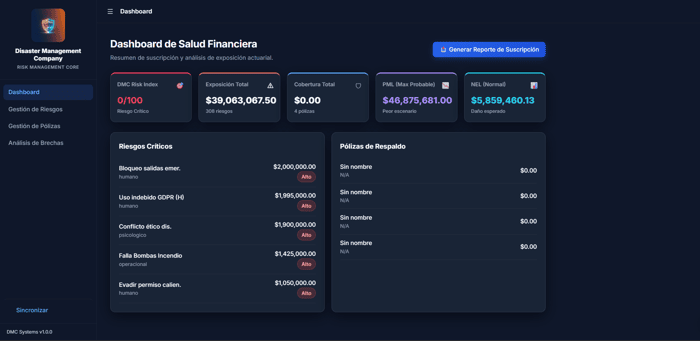
I wanted to share my journey of building a SaaS in a niche that most developers completely overlook: Disaster Management and Industrial Risk Assessment.
For years, I’ve worked as an electrical technician. I love hands-on technical work, but over time, I noticed a huge, recurring problem in the industry: most companies manage their risk assessments, safety compliance, and disaster protocols using outdated tools—mostly messy Excel sheets, paper forms, or fragmented software that doesn’t follow international standards.
Coming from a background in Disaster Management myself, I knew there had to be a better way. So, I decided to build it.
🚀 The Product: Disaster Management Company (DMC)
I built Disaster Management Company to automate risk management and ensure compliance with international regulations like ISO 31000, ISO 27001, and NFPA frameworks.
The goal is simple: allow organizations to predict, manage, and mitigate risks in a structured, modern web platform.
🛠️ The Tech Stack (As a Solo Founder)
Since I’m building this entirely on my own while working my day job, I needed a stack that allowed me to move fast without losing scalability. I went with:
Backend: Python & Flask (reliable, clean, and perfect for handling complex risk calculation logic).
Database & Auth: Firebase (allowed me to set up secure user authentication and real-time data handling quickly).
Frontend & Hosting: Clean web architecture deployed on Firebase/Netlify to keep loading speeds fast and server costs at zero while validating.
📉 The Challenge of an "Invisible" Niche
The hardest part isn’t the code—it’s marketing to a highly specific B2B audience. Disaster management isn’t a trendy AI wrapper or a social media scheduler. It’s boring corporate safety, but it's a critical infrastructure requirement for thousands of companies worldwide.
Right now, I am focusing on refining the user experience and getting the platform in front of risk professionals and safety managers.
💬 I'd Love Your Feedback!
As a solo founder wearing all the hats (coding, UI/UX, database architecture, and marketing), I would appreciate the community’s eye on a few things:
Landing Page & Positioning: Does the value proposition on the landing page click immediately?
B2B Outreach: If you have experience selling software to traditional industries (like industrial safety, construction, or corporate compliance), what strategies worked best for you early on?
Check out the platform here: disastermanagermentcompany.com
Thanks for reading! I’m happy to answer any questions about the stack, the regulatory frameworks, or what it's like building this from scratch.

This is exactly the kind of “boring” niche where software can be valuable because the pain is not trendy, but the consequence of bad workflows is real.
The strongest angle is not just replacing Excel or paper forms. It is giving safety managers and risk teams one structured place to turn risk assessment, compliance standards, disaster protocols, and mitigation plans into an actual operating system.
I’d make that feel sharper on the landing page. “Disaster Management Company” explains the category, but it also sounds very broad and almost like a consulting company. For software, especially in industrial risk and compliance, the name needs to create trust quickly and feel like a serious platform.
Davoq .com would fit that direction better because it sounds more like a hardened operational risk system than a generic disaster-management label. The product can stay exactly what it is, but the brand should make traditional B2B buyers feel they are looking at reliable infrastructure, not an early side project.
For this niche, naming matters because risk professionals are already skeptical. The first impression has to reduce doubt before they even evaluate the features.