From failed app to 30-app portfolio making $22k/mo in less than a
year
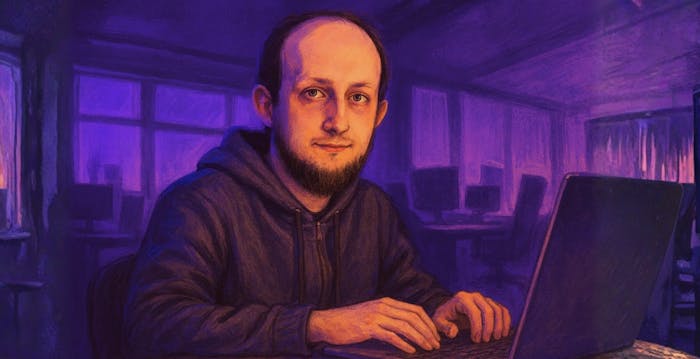
Max Artemov built a side project and tried to make it work for 5 years — unsuccessfully. Then, he built a 30-app portfolio within a year and grew it to $22k/mo.
Here's Max on how he did it. 👇
Starting a side project
I started my career in software engineering as an iOS developer eight years ago, but from the start, I always wanted to build a side project.
My motivation was simple: I wanted to achieve financial freedom and work on my own projects without a fixed 9-5 schedule. I wanted to spend more time with my family.
Independence is important to me. I want to control my working hours, what I work on, and my work's overall direction. Running my own mobile app business lets me build a life around those values. Instead of trading my time for a salary, I can create products at my own pace, focus on ideas I’m excited about, and structure my days to support both my professional and personal goals.
My first mobile app was a calorie counter that I tried to grow for over five years using various methods, but it yielded no results. I learned Flutter to expand into the Android market, but that didn't work either.
Then, in February of this year, I found one of Adam Lyttle's YouTube videos where he advocated for growing a mobile app portfolio instead of focusing on a single project. Since I was almost burnt out with my current app, his suggestion excited me. In fact, it completely changed my understanding of mobile apps.
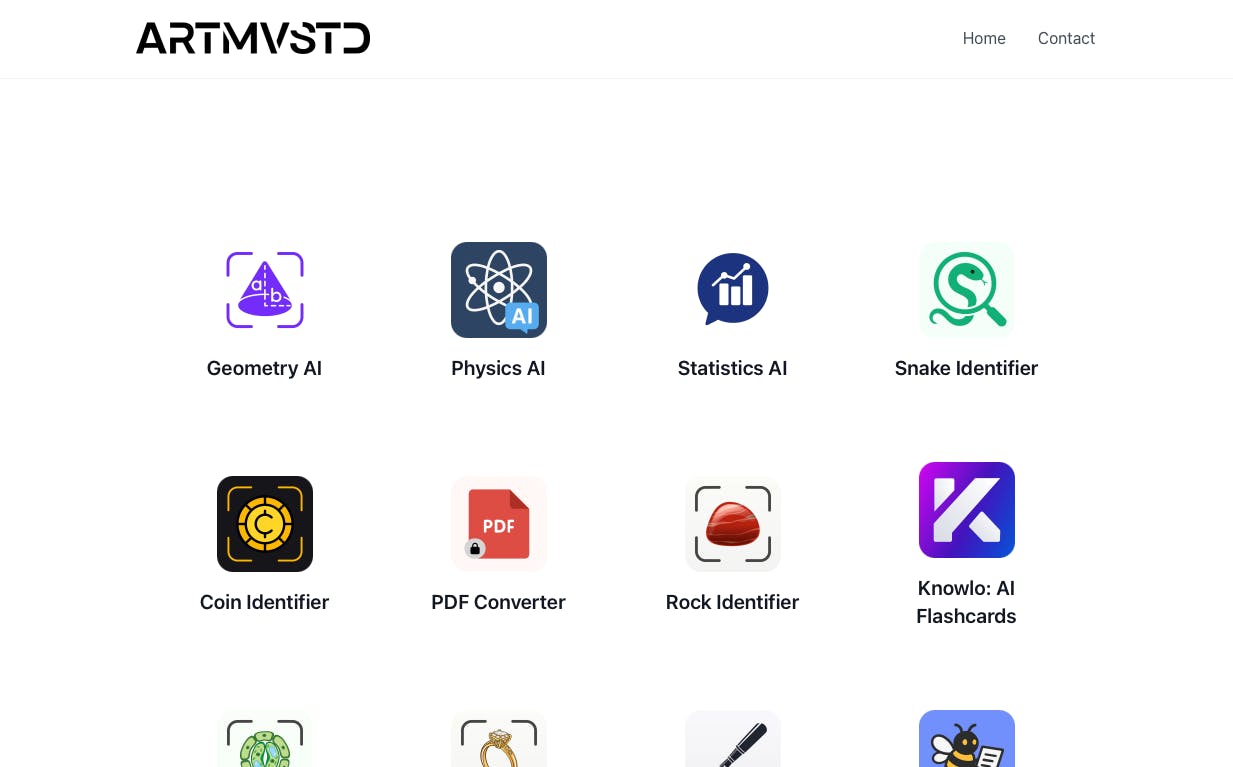
I changed my approach from a single project to a multiple-app portfolio — now, over 30 apps bringing in a total MRR of $22k.
A shift in mindset
One of the biggest challenges I faced early on was my traditional software engineering mindset. I focused on polishing every corner of the app, following all best practices, SOLID principles, and maintaining perfect architecture. While valuable in larger engineering teams, this approach slowed me down significantly as a solo indie developer. I spent too much time on things that didn't meaningfully impact the product or user experience.
That's why my initial product failed. The scope was too big, I overcomplicated things, and I was too attached to the original idea to notice that users didn't need half the features I built.
That experience completely changed how I approach product development — I shifted to an indie-developer mindset: Build fast, ship fast, and focus only on what's essential for the core feature. Instead of over-engineering, I now create simple, understandable architectures that support the MVP and nothing more.
Only after I see real usage and positive feedback do I add more features. This helps me avoid wasting months on ideas that don't resonate and keeps me focused on what works.
I've also learned not to get emotionally attached to an idea — I just build, release, and let the product sink or float based on real user feedback.
Product and ASO stacks
I use the Flutter framework for cross-platform mobile development. I chose Flutter without a particular reason; I just needed a cross-platform solution at the time. Flutter was new, and I decided to try it. I don't regret this decision at all.
For the backend, I rely heavily on Firebase. I use it for most backend tasks, such as authentication, hosting, and running a backend (Firebase Cloud Functions). It's straightforward to set up and use, making it my primary tool.
For ASO-related tasks, I use Astro and FoxData. These tools help me track keyword performance, competitor rankings, and overall visibility, which is important because organic traffic drives a big part of my growth.
Growth via ASO and ads
My main way of getting users is ASO. In fact, learning about ASO boosted my metrics by 50%: impressions, downloads, and revenue. It was inspiring to see how much of a difference it made.
I focus on ASO before I build the app. The technique is simple:
Find a keyword with high popularity and low difficulty — I usually look for popularity over 20 and difficulty under 60.
Build the app around that keyword.
Use the keyword in the title, subtitle, and description.
Repeat.
I create a lot of apps — all with one core feature to solve a specific user problem. Over time, I focus on the ones that gain traction. For those, I double down on marketing.
Beyond ASO, that usually means paid ads. Sometimes, I use TikTok or Instagram marketing. I’m still experimenting to find the best pipeline and approach.
Validating the best app ideas
After an app is released, it usually gets an initial boost in the App Store for the first few days. After that, most apps drop to around 10–50 downloads per week and fade away.
If an app survives the boost, not performing at its peak but also not dropping sharply, and stabilizing over time, then I see its potential.
I don't use a strict download number to decide; I make a case-by-case judgment based on how the app behaves after the initial launch.
Don't fear shipping
The most important advice I can offer is this: Don't fear shipping.
Don’t waste your time polishing an app or thinking about adding one more killer feature that will "definitely" get you tons of users. Get it ready and bug-free with a single feature, and ship it. Let users tell you what they think about it while you’re already working on another app.
What's next?
I try not to plan far ahead, as we don't know what tomorrow brings, but for 2026, I plan to diversify my income by building a few SaaS products. That way, my income won't be fully dependent on the App Store and Google Play Store.
You can follow along on X.

Leave a Comment
Solid run to 30 apps. The morning dashboard-hopping you mentioned is the part that never scales linearly. Quick q: is your revenue all store payouts, or do you also have ad and subscription income mixed in across them? Asking because once ads + subs enter the picture the daily "what actually changed" question gets a lot harder than the stores alone. That cross-source reconciliation is the exact problem I've been working on lately, happy to share what's helped.
The “portfolio” lesson I’d steal even for a single Android utility is to validate one tiny promise before widening the product. With Kinetic Override, I’m keeping the first promise narrow: Android 15+ no-root tap/swipe/long-press recording, replay loops, local profiles, no ads — then learning which use cases actually pull users in.
The lesson isn’t build faster, it’s ‘build only what deserves your time. Big difference.
very succinct and nice.
Appreciate it! Always happy to share what’s working on Reddit for indie devs, especially for fast-iteration portfolios like yours
This is really interesting. "Find a keyword with high popularity and low difficulty — I usually look for popularity over 20 and difficulty under 60."
How do you determine these numerical scores?
Great insights on how you can build a lot of apps and double down on the ones that work! How do you manage updating all your apps? Do you update them only if they signal growth? Is there a time period until which you keep building persistently with an app?
Love the mindset shift, shipping fast, iterating, and building a portfolio is exactly how traction happens.
Many founders overlook Reddit as a way to validate apps, test messaging, and get early users for MVPs before scaling ads or ASO.
If you ever want to experiment with targeted subreddit traction for your apps, happy to share a few strategies that consistently get results for indie devs building fast-moving portfolios.
Interesting… that’s almost the opposite of what I’ve heard from people like Alex Hormozi, who really emphasizes sticking with one thing long enough to make it work. What’s your long-term plan? Are you planning to watch how each app evolves and eventually double down on the one that performs best? Or do you see yourself continuing to build more apps indefinitely? And doesn’t maintaining that many projects risk becoming a nightmare over time?
I struggle with the shotgun vs sniper approach too. Personally I like building something that solves one specific problem.
I suspect that the answer lies somewhere in between. It might depend on who you are and what your goals are. If's monetize above all then perhaps build many tools until users confirm the usage. It might be different if you're trying to solve a specific problem.
The analytics delegation makes sense at scale but you lose visibility. I built AppWatch (appwatch.dev) for exactly this — tracks downloads, ratings and revenue across Google Play, App Store, itch.io and Steam in one dashboard. At 30 apps the morning dashboard-hopping must be painful. Free plan for up to 3 apps if you want to test it.
Impressive! 30 apps is no joke. Managing all of that solo takes serious discipline, I have only 8 apps and sometimes I feel that it is already too much :-)
Kudos on you.
Quick question, with that many apps across both stores, do you set per-country prices or just let Apple and Google handle the conversion? At 30 apps the default pricing probably leaves a lot on the table in emerging markets, but the manual work to fix it would be brutal.
Five years on a single calorie counter vs. 12 months to 30 apps and $22K/mo — the contrast is what makes this story instructive. The calorie counter probably wasn't bad technically; it was in one of the most oversaturated App Store categories with entrenched players (MyFitnessPal, Cronometer) who owned the search terms and had thousands of reviews. Five years of effort couldn't overcome the structural disadvantage of launching late into a deep-moat niche.
The portfolio approach fundamentally changes the math. Each new app gets an App Store discovery window — the algorithm rewards new entries with temporary boosts that established apps can't buy their way into. Building 30 apps means you got 30 of those windows. Most apps won't win individually, but the aggregate performance of a diversified portfolio is more predictable than any single bet.
The $22K/mo across 30 apps is ~$730 average MRR each, which isn't huge in isolation but is highly resilient: no single app's failure changes the business materially. That's very different from having $22K MRR in one product where a competitor update or App Store policy change can hit you hard.
Flutter for cross-platform was also the right call for this model — writing once and deploying to both stores doubles your addressable audience per unit of development effort, which is the only way 30 apps in 12 months is even possible.
Adam Lyttle's framework clearly resonates with a lot of mobile developers. The mental model shift from "find the perfect app" to "run a hit machine with diversified bets" is genuinely different thinking.
This is a great reminder that persistence isn’t about sticking to one idea forever, but sticking to learning. Most “overnight successes” are just well-documented pivots.
best advice, not to waste time on polishing the app. thanks. helps me a great deal.
Turning a failed app into a thriving 30-app portfolio earning $22k per month shows how persistence can lead to success. A creator of a micro-app built steady revenue streams by analyzing mistakes, refining ideas, and launching multiple micro-apps. We have seen incredible growth in less than a year by experimenting, learning from failure, and scaling smartly.
I am really impressed!
This is such a refreshing reminder that momentum beats perfection. Focusing on a portfolio instead of betting everything on one "big"app is a brilliant way to compound small wins and learn much faster. The ASO-driven approach is especially smart. you’re basically letting real demand tell you where to build instead of guessing.
Thanks for sharing the process so transparently.
The jump from mobile to SaaS validation is real. I built tubespark.ai as a SaaS from day one because I wanted recurring revenue, but the validation process was completely different from anything I'd done before. With mobile, you can check download numbers fast. With SaaS, you're waiting weeks to see if trial users actually convert. What made you decide to go portfolio instead of doubling down on one product?
"Don't fear shipping. Get it ready and bug-free with a single feature, and ship it." That line hit differently when I read it.
I'm 56, built VigiGym, a workout tracker for iOS, and I did the opposite of everything you just described. I spent months getting it "exactly right" before anyone could touch it. 242 exercises, modular workout builder, Apple Watch, muscle maps. My designer brain wouldn't let me ship anything I wouldn't want to use myself.
The frustrating part? It's actually working. Slow, organic, but real. First subscribers from people I've never met, downloads from countries I didn't expect.
So now I genuinely don't know what to think. Was I lucky? Or is there a niche where tools for experienced users who know exactly what they want still reward the quality-first approach? I'm not dismissing your advice. I'm trying to figure out if it's universal, or if it depends on who you're building for.
Think about it like this. If you had shipped the original product with one killer feature, the main feature that people had been asking, bug-free. Would it have enough success for you to continue to build on it?
Thanks for the insights. I’ve been looking into this lately, and your post provided exactly what I needed.
Thanks for sharing this, very helpful insight
Wow, that’s insane growth! Going from one failed app to a $22k/month portfolio in under a year is pure hustle. Big respect! 👏
Hi, I help app owners get real worldwide users and installs
through task-based campaigns.
Happy to start with a small test batch.
Really interesting approach building multiple smaller products instead of going all-in on one. What's your process for deciding when to kill an app vs. keep iterating on it?
Curious about your tech stack, do you use the same stack across all your apps or do you switch depending on the product? Seems like consistency would save time.
How do you handle support across 30 apps? That seems like it could become overwhelming quickly.
You don’t. Support for 30 apps solo is chaos. I let a publisher run the user feedback + reviews side, they surface only real issues. Huge time saver and way less burnout.
This is a good example of how much distribution context matters. What stands out to me isn’t just the shift to shipping faster, but that you’re operating in an environment where demand already exists and ASO gives you a fairly direct path to signal. In that setup, a portfolio approach and fast iteration make a lot of sense.
I do wonder how transferable this approach is beyond mobile apps and app stores, and what the equivalent of ASO looks like elsewhere. Channels like SEO or marketplaces have much slower or noisier feedback loops, so I’m curious how you’d adapt the portfolio and fast-shipping mindset when signal doesn’t arrive as quickly.
Still, it’s a useful counterpoint to over-engineering, especially when speed to real signal matters more than architectural purity. The clarity around how you decide what to double down on after launch is particularly helpful.
Interesting breakdown. One thing I’ve noticed building internal tools is that the second-order problems (edge cases, adoption, data quality) end up costing more than the initial build. Curious how you handled that once usage increased?
This is really good. U actually told things that would take most of the dev people taking years to realize.
this is super helpful and inspiring
Excellent breakdown. This really frames Indie hacking into perspective. The way you adapted from the failed app to a repeatable system is impressive. Thank you for sharing your experience. It will be helpful to shape my own system.
Interesting idea. Curious — what was the hardest part to validate early on? Was it users, pricing, or distribution?
inspiring!
This is really inspiring
Max, this is amazing.
The mindset shift from "perfect one app" to "ship 30 fast MVPs" is exactly what most solo devs need to hear.
Your calorie counter story hits home, I spent years on one thing that went nowhere, then flipped to building small and fast.
Seeing $22k/mo from that portfolio? Inspiring as hell the ASO-first approach too, keyword hunting before coding is smart AF. Thanks for sharing the raw journey. Keep shipping, legend.
Thank you for sharing. As someone who also does indie development, I can understand the effort you’ve put into this. I hope you achieve even greater success and continue to share more of your experiences.
Great article. Can I ask how you come up with the ideas for so many apps? I often struggle with ideation.
I don't understand how the first paragraph of "A shift in mindset" relates to the subsequent ones, as "following all best practices, SOLID principles, and maintaining perfect architecture" bears no relation to feature creep. Best engineering practices help you build on solid ground, don't they?
This is a great example of detaching ego from individual products.
Treating apps as experiments instead of identities changes everything.
Did you notice patterns early on that helped you decide what to double down on?
Yes — low-cost experimentation is exactly what indie developers should be focusing on.
Incredible journey—turning a failed app into a 30-product portfolio grossing $22k/month in under a year is mind-blowing! Love the focus on iterating fast, doubling down on what works, and not letting setbacks stop you. Super actionable and motivating for indie hackers chasing recurring revenue. A total inspiration!
Really interesting path. Turning early setbacks into something sustainable feels like the core of what this community values. The jump from a single idea that didn’t work to a portfolio that earns consistently says a lot about sticking with problems people actually use solutions for.
I’m curious how you balanced depth versus breadth when you started adding more apps to the mix. Did you build toward specific niches first or follow opportunities as they came?
I never imagined I would ever write a testimony like this, but after experiencing the devastating loss of my hard‑earned cryptocurrency, I felt compelled to share my story so others don’t lose hope. A few months ago, I was scammed by what I thought was a legitimate online crypto broker. I had invested a substantial amount of funds and, when I attempted to withdraw, I was repeatedly blocked, ignored, and ultimately defrauded. The emotional and financial blow was immense — I felt betrayed and lost confidence in digital finance. That’s when I was introduced to Wizard Hilton Cyber Tech. From the very first contact, their team stood out for their professionalism, deep technical knowledge, and reassuring communication. What struck me most was how swiftly they assessed my situation and began working on my case. Within 24 hours, they had traced the fraudulent transactions and successfully recovered the lost funds and returned them to my account, something I had all but given up on. Throughout the process, they kept me informed at every step, explaining complex blockchain details in a way I could understand, and helping me feel secure after such a traumatic experience. Their commitment not only restored my financial security but also helped rebuild my trust in the crypto ecosystem. Because of them, I regained both my assets and my peace of mind. I wholeheartedly recommend Wizard Hilton Cyber Tech to anyone who has suffered a crypto scam or loss. Their expertise and results truly made a huge difference in my life; Email : wizardhiltoncybertech ( @ ) gmail (. ) com
WhatsApp number +18737715701
Given that you also use paid ads to promote your apps, what is your revenue model? Are you doing in-app ads or a freemium model or subscriptions to monetize?
For my stuff it’s mostly ads-based.
Since I also run paid UA, I need the ads stack to actually pay back, so I use mediation instead of a single network. Right now on CAS, before that I was on Appodeal.
Having multiple demand sources in the auction makes UA way less suicidal
The portfolio approach is a game-changer. I'm at that exact crossroads right now - just launched my first SaaS and wondering whether to double down or start testing the next idea. The "most apps won't work, but you only need a few winners" mindset is both liberating and terrifying for someone who tends to abandon projects too early.
Thanks for the case study, James - these interviews are gold.
Interesting example of pivoting, learning from mistakes, and not giving up.
This is all pretty solid advice I think, and is the approach I plan to start taking as well. I just gotta get the first one launched and going, then I will start on the next one. I am already planning multiple apps in the future.
With the build fast and publish approach how to you make sure you have removed all the bugs? How do you monitor if the user is having glitches or issues with your app you did not catch right away before publishing?
Tbh with the “build fast, publish fast” approach you never catch everything.
The trick is not trying to be perfect but not being alone. I went the publisher route,, they handle QA, crashes, analytics and user feedback loops, so I don’t spend weeks chasing edge-case bugs. Same with monetization/ads, I don’t manage networks manually anymore, CAS runs the stack for me. Makes the whole “just ship it” thing actually workble
This honestly explains why so many apps fail after launch. The part about not over-polishing and just shipping really hit home. ASO before building is something more people should talk about.
This hit home. The shift from pouring years into a single idea to thinking in terms of a portfolio is something a lot of developers only realise after burnout. It’s impressive how you recalibrated instead of quitting, and the result really shows that distribution and iteration matter as much as the product itself. Thanks for sharing the numbers too, that kind of transparency is motivating.
Inspiring!
With the help of mistakes, smart scaling, and diversifying app ideas, James Fleischmann built a 30-app portfolio with earnings of $22K/month within a year.
HIRE A FASTEST CYBER RECOVERY EXPERT TO RECOVER YOUR LOST OR STOLEN BITCOIN/ETH/USDT/ THE HACKANGELS
I simply want to share my story about THE HACKANGELS RECOVERY EXPERT. To all of you out there. One has to be careful. A lot of scammers are out there taking money from innocent traders. I was a victim of these crypto scammers. They made me lose my hard earned funds. The best thing that happened to me this year was seeing an article about THE HACKANGELS RECOVERY EXPERT. A professional hacker and private investigator. I invested $954,300 in a cryptocurrency platform and it turned out to be a scam and I had no idea how to get my money back until I reached out to a recovery company called THE HACKANGELS RECOVERY EXPERT. I explained my situation to them. I was shocked to hear that they had recovered all of my stolen cryptocurrency in just 48 hours. I said that I will not hold this to myself but share it to the public so that all scammed victims can get their funds back. To anyone who may find themselves in a similar unfortunate situation. I highly recommend THE HACKANGELS RECOVERY EXPERT. Quickly reach out to them on their hotline:
WhatsApp: (+1(520)200-2320
If you're in London, you can even visit them in person at their office located at 45-46 Red Lion Street, London WC1R 4PF, UK. They’re super helpful and really know their stuff! Don’t hesitate to reach out if you need help.
YES- the key here is to RAPIDLY test lots of ideas (to find out what people really care about).
Love this approach! Keep shipping and keep us posted.
Nice ideas, very helpful!
"Don't fear shipping" — this one hit hard.
I wasted years over-engineering products nobody asked for. The one that actually worked? Built in a month, one core feature, specific niche. 30k users in 30 days.
The portfolio approach makes total sense. One product = all eggs in one basket. Multiple shots = better odds of finding what sticks.
Curious about your ASO process — do you validate the keyword demand before writing a single line of code, or do you build first and optimize after?
Followed you on X — looking forward to seeing the SaaS journey.
Same. I over-built for years. The first one that actually worked was shipped fast.
For ASO I validate keywords before touching code. Saves a ton of pain.
When something starts sticking, I offload monetization so I can keep building. CAS handles my ads stack now, frees my brain for the next shot.
ASO stands for APP Store Optimization for anyone wondering
this can be very helpful for me as I am trying to design an MVP helping people who drive EVs and have problems finding reliable chargers while on the road. I have the same mindset and what you talk about can surely help me. Thanks. I think I need the same mindset shift. its taking me a long time to design the MVP and I have been focusing on landing page.
it really helpful...
The mindset shift here is the real takeaway for me.
Coming from a traditional engineering background, it’s very easy to overvalue architecture and polish when what actually matters is speed and validation.
Building a portfolio instead of betting everything on one idea feels much more aligned with how markets actually behave.
Curious — did you ever feel context switching between 30 apps hurt focus, or did the simplicity of each app make that manageable?
nice
I love it
Great write-up. Not getting emotionally attached to ideas is probably one of the hardest skills to learn as an engineer. Shipping small, watching real user behavior, and moving on quickly feels counterintuitive - but it clearly compounds.
The portfolio approach makes a lot of sense in that context.
Hi dear how are you doing
Amazing article! thank you for sharing, very insightful
Hi how was your business going
Great article ! It 's good to read you ! Let's go delivering !
This is a really strong breakdown, Max. The mindset shift from over-engineering to fast shipping, and letting data, not emotions, decide what survives , is exactly how portfolio builders win. Your ASO-first approach before building is especially smart and clearly paid off.
One growth angle that complements ASO extremely well for solo app founders is Reddit. Many of the niches you’re targeting already have active subreddits where users openly discuss problems your apps solve, and when positioned as problem-first content (not promotion), those threads can quietly drive long-tail installs and feedback at scale. I help founders turn Reddit into a repeatable validation and acquisition channel alongside ASO and paid ads. Happy to share how this fits naturally into a portfolio strategy like yours.
Great to see your story. I am in agreement and generally a product that solves a users problem with a duct taped backend is better than a product which follows SOLID principles but doesn't solve one :)
Wow
Inspiring,
I feel I'm still at this phase, I guess: "The scope was too big."
Congrats and thanks for sharing.
inspiration
Awesome journey!
James, fantastic interview with Max. His pivot to velocity is a critical lesson, especially for his 2026 SaaS plan.
Hey James,
This is a phenomenal interview—you've perfectly captured the difference between a perfectionist mindset and a velocity mindset. Max's pivot to portfolio strategy is inspiring, and the $22k MRR is well-deserved.
The part about Max shifting into SaaS in 2026 is the most crucial takeaway for your readers. The validation rules change completely when you move from mobile to SaaS.
The Missing Piece in the SaaS Diversification Plan: Financial Due Diligence
Max's old method of ASO validation works great for mobile, but for SaaS, the financial projections are what investors—or just a founder's spreadsheet—demand. The cost of building the wrong SaaS app is exponentially higher than building the wrong simple mobile app.
We've built a product called SmartValidate™ to address this risk. It uses an AI-augmented process to produce a custom, investor-grade financial viability report on any SaaS idea in 72 hours. It confirms if the LTV/CAC ratio is sustainable and if the growth projections are defensible.
It’s the £199 insurance policy that guarantees founders don't repeat Max's $\text{\$8k}$ mistake on their new, higher-stakes SaaS ventures.
I'd be happy to send you a complimentary SmartValidate™ report on any one of the micro-SaaS acquisition opportunities you cover in your SaaS Watch newsletter, just so you can see the quality of the financial assessment.
Keep up the great work on these interviews!
Mohammad Bukkar
(Founder, Sceamdo Technologies)
this so cool
Love this story — such a perfect example of how mindset beats perfectionism. Shifting from “one polished app” to a fast-moving portfolio is what unlocked everything. The ASO-first approach + simple MVPs + letting data decide is a powerful combo. Huge respect for the consistency it takes to ship 30+ apps. Excited to see what you build next! 🚀
cool
awesome.great person with great attitude. I use simular shipping. Audited web3 prototyps for user to test. user help me to launch dApps with UI/UX created with users together and so launch only Web3 products what really solve User daily problems
Another brilliant success story, and of course, mad accolades for making it happen! For me, it's yet another reminder to build what people actually 'want', rather than putting absolutely everything into building what you know they 'need', and then hit the brick wall trying to market it ...... sigh ... shipping fast is absolutely the way to go, but you can't ship fast into an audience that you need to create in the first place lol
nice post ! :)
Really like how you described the shift from over-engineering to building fast. It’s something I’ve struggled with too. Your portfolio approach makes a lot of sense, small bets, quick feedback, and steady compounding. Inspiring stuff.
What tool you use for keyword research?
The article mentions foxdata or did you mean something else?
Congrats on the launch! What do you feel is better to start with iOS app development or android if I intend to build a microSaaS portfolio
Congrats on the launch! I'm doing a mobile-only build right now to clear debt. The 'shipping anxiety' is real. Good luck with this!"
very interesting, and give a lot of helpful advice for develepers!!! good job bro
Really inspiring story, Max. Going from five years on one app to a 30-app portfolio making $22k per month is incredible. Your shift from polishing every detail to shipping fast and validating quickly is a great reminder for indie devs who tend to overbuild.
I also like your ASO-first approach. Starting with keywords before writing a single line of code is simple but powerful, and your results clearly show that it works.
Love this perspective! In my marketplace journey, we’ve learned that diversifying projects helps discover what resonates. It’s less about spreading yourself thin and more about iterating quickly and letting data guide you. Curious to see which of your bets ends up being the biggest surprise.
Great job with the pivot - Adam Lyttle's Starter Story got me thinking too. Check out his YouTube channel for lots of practical tips on this portfolio of Apps concept. Very actionable insights he shares all his wins and losses - and he has many of both!
Really inspiring story. Max’s “build fast, ship fast” mindset makes a lot of sense—especially today when users care more about solutions than perfect polishing. I run a small niche gaming site (bussimulator-apk. com),so I’ve seen how testing ideas quickly and focusing on what actually gets traction can make a big difference. His ASO-first approach is something I definitely want to apply in my wn projects.
The shift from 'One Big App' to a 'Portfolio of Small Bets' is a game-changer for indie hackers.
Spending 5 years on one idea is risky. Shipping 30 apps in one year is strategic. It diversifies risk and increases the surface area for luck.
I love how Max treated his apps like assets in an investment portfolio rather than emotional attachments.
The lesson is clear: Don't marry your first idea. Build, ship, validate, and repeat. Incredible execution!
Amazing turnaround! Max’s journey shows how consistency, learning from failures, and rapid experimentation can lead to incredible results. Building 30 apps in a year is insane dedication. Really inspiring! Shared this on DNP India as well — truly worth reading.
Cool
Love this story — it’s a great example of why shipping fast beats over-engineering every time. Shifting to a multiple-app portfolio and focusing on MVPs shows that real traction comes from learning quickly, not polishing perfection. Also, your emphasis on ASO and letting user feedback guide feature expansion is a smart approach for sustainable growth. Inspiring to see how mindset changes and small, focused actions can turn into $22K MRR!
That’s such a refreshing take, and I completely agree. It’s easy to get stuck trying to perfect something before anyone even gets to use it, but your point really shows how much faster growth happens when you just ship, learn, and iterate. The shift toward multiple lightweight apps and leaning on ASO feels like a smart, modern strategy too. Seeing how those small, consistent moves added up to $22K MRR is definitely motivating — it’s a good reminder that momentum matters more than perfection.
From failed app to 30‑app portfolio at 22k/mo is a crazy journey, thanks for sharing the details.
I help earlier‑stage founders with launch clarity, but people at your level have the sharpest patterns. Curious – if you had to distill it, what do you think most solo founders get wrong about their first SaaS launch?
This comment was deleted 2 months ago