From failed SaaS to $14k MRR software-enabled
service
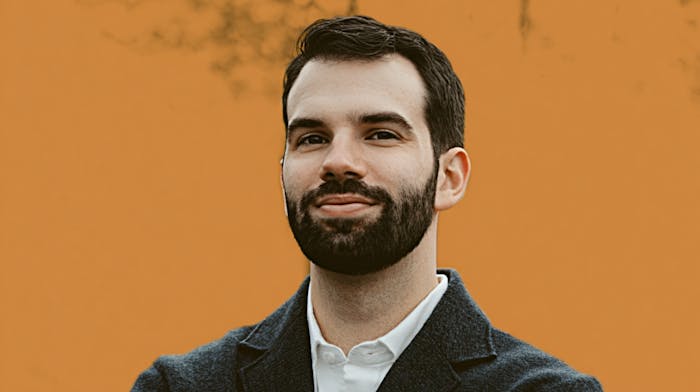
Tyler Scionti built a SaaS that no one wanted. Then, he talked to potential customers, learned the real problem, and provided a software-enabled service to solve it.
Now, Centori is at $14k MRR (and counting) with a one-man shop.
Here's Tyler on how he did it. 👇
From SaaS to service
I have a background in marketing and product management.
I began my career at HubSpot in their Customer Support department in 2016, and made the jump to Product after a year and a half or so, and that is where I spent the bulk of my career until going full-time on Centori in 2023.
All the while, though, I've loved writing, marketing, and publishing on the web. I originally built Centori to be an SEO SaaS, because like many folks in the 2010s, I had the SaaS bug and wanted to build a million-dollar business from my laptop. But it just never took off. I'm not a programmer, and I'm definitely not a designer. I was pretty effective at getting people to the site, but building a product they were willing and happy to pay for was another story.
I finally took some smart founders' and marketers' advice and talked to my prospective customers. I realized that no founder wants to do SEO and most have had bad experiences with SEO agencies and freelancers. I realized that, while the market is crowded, there is no real winner — I could build a business there.
So, I pivoted into providing strategic guidance and coaching. That gave me a nice boost in revenue and allowed the business to take off, but things really accelerated when I offered writing services to clients who needed a writer — and not just advice.
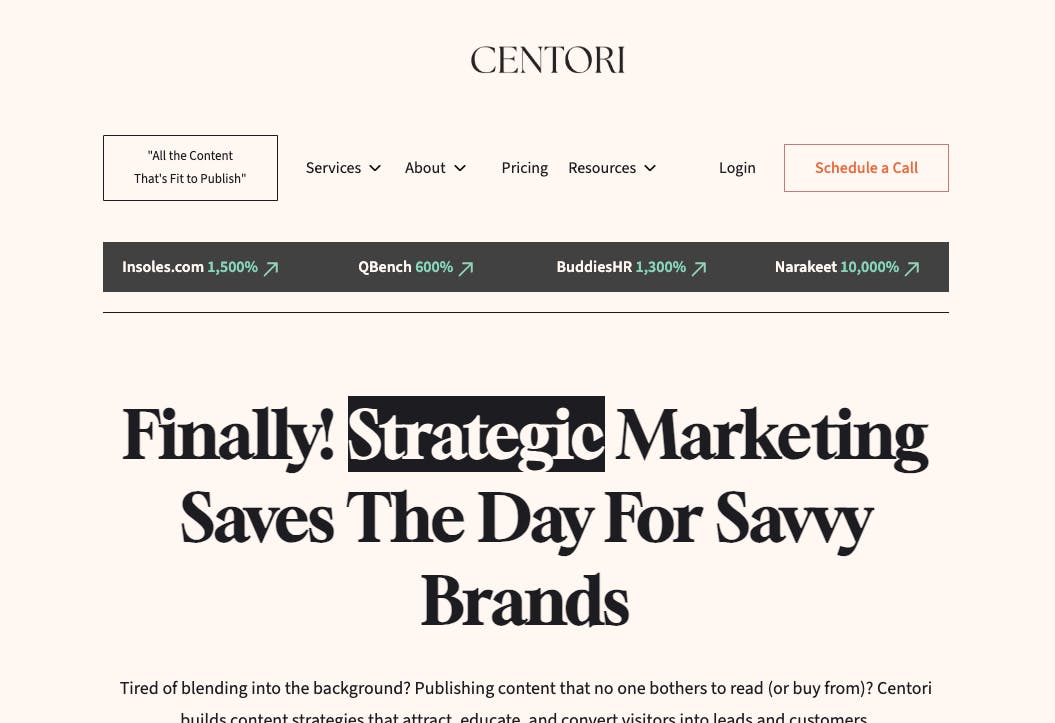
Today, Centori offers full-service content marketing and SEO services. I write blog posts, pillar pages, landing pages, and emails and have adapted my methods to cross over to GEO as well.
We're around $14,000 MRR. Due to some extra projects I take on, there are some months where we make a bit more than that.
Indie hacking is not always about products
I wanted to build a product. That's a mistake I see a lot of indie hackers make. They fall in love with the idea rather than the problem.
I wanted to build my own SaaS because I thought I knew better than the market. I'm sure that there are ways my SaaS really was better than Ahrefs and SEMRush, but it wasn't better enough to be a financial success.
Then, I began to fall in love with the problem. That problem was that SEO is treated as a black box that allows dishonest people to run wild with jargon when, in reality, they probably don't really know what they're doing. Defining that problem allowed me to position my business — honest SEO with a uniquely strategic approach — and that has helped me finally grow.
Start small
What I should have done was to build a simple landing page to gauge interest, but instead, I took the time to learn HTML, CSS, JS, and Python and built the app from scratch using Django and MySQL, and hosting on PythonAnywhere. I also use DataForSEO for SEO-related information like keywords, keyword data, and competitor insights.
It took a year or so to learn and build it, and as you might expect, that showed. The original product wasn't SEO software so much as it was software for bloggers to come up with ideas based on what's trending and evolved into SEO later on.
Still, I learned to code and now consider myself a halfway-decent programmer. I learned a lot of tough lessons about product development and marketing too, which has paid dividends in my business and the work I do for clients.
And today, I still use that software internally.
As far as my service stack, I use Trello for managing clients, Slack for communication, and HubSpot to run marketing, sales, and client relationships.
Productized services
We offer two main products:
One is a productized service for content creation. You're essentially hiring me as a fractional content marketer to run your entire content marketing and SEO operation. I write 5,000+ words of content every month, manage the strategy, and monitor performance to see what we should do next. For most of my clients, it's the first real marketing hire they make and often one that allows them to scale to building a full-time team.
The second is our 6-month growth sprints, where I guide you through my strategic framework in the first month, and then guide you on implementation for the following five months. I used to offer this as "coaching" and priced it month to month, but I find that having the 6-month time limit gives us a sense of urgency to implement the strategy and get to work.
I charge a subscription for the first service. The second is a one-time fee.
Don't market to the wrong people
Finding customers is always the hardest part of any business, even when you have a good product or service.
I made the mistake of thinking that because I am a very good marketer for my clients, naturally, I should be a good marketer for myself. I did the usual things I would do for clients: I invested in my own SEO, collected leads via lead magnets, and ran Google Ads. This worked VERY well! I had a list of almost 1,000 people who regularly engaged with my content... except they were the wrong audience. Founders of $1M SaaS companies do not care about learning SEO — only freelancers do.
This is the cardinal sin of marketing: doing marketing without thinking about who you are trying to reach.
I've ironically cut SEO from my own business as it never drove valuable traffic, and now, I focus on LinkedIn, email, and running ad experiments to build buzz.
But I'd say I've grown mostly by word of mouth and good old-fashioned prospecting. I've learned to ask for referrals and build my network, which has helped a ton. Since realizing how important this is last year, I've almost doubled my MRR.
Beyond that, connecting with people and creating value for them, whether on social media or in niche communities, has helped me build connections and book calls.
A crash course in marketing
I read a lot too. I have an entire bookshelf in my home office with two rows dedicated to marketing and business books. My favorites are:
Fanatical Prospecting
Marketing Made Simple
Hey Whipple, Squeeze This
That's a great crash course in marketing, sales, and copywriting.
Focus on the problem and the customer
Focus on the problem and the customer first. Obsess over it. Throw out your own ideas. In fact, talk to 100 people before you even come up with an idea.
The path to making money is so much shorter if you prioritize finding problems that people really care about solving. In my case, the problem wasn't "SEO is hard, I want a tool that makes it simpler," it was "SEO is hard and finding good help really sucks, I need someone I can trust to do this for me."
What's next?
My goal used to be to quit my job and work on Centori full-time. I'm very fortunate to have been able to do that — I have been full-time on Centori for over two years now.
Looking ahead, there's a world of possibilities for where I could go. I could keep things as they are and make a pretty good income, or I could scale things a bit further to make more than I ever would as an employee, or scale things even further to build out a team.
I think for now, I'm quite happy with where things are and where they are progressing. I have financial goals in mind for the next few years, but while I know my limit is while doing all the work, I'm not sure what Centori's limit is. I know this is terribly vague, but it's mainly because I hit the big milestone of quitting my job and then crossed $10K MRR... Now, I'm left looking back and thinking, "Now what?"
There's another piece of advice: Have a plan beyond the first milestone. I'm figuring that out as I go, and the answer will shape the next five or ten years of my life. No pressure, though!
You can learn more at Centori's website. Or follow me on LinkedIn.

Leave a Comment
I love this story. As a beginner I find this really helpful. I want to be able to find the problems. That means I need to talk to tons of people.
Thank you for making that clear. But the problem then comes. How do I find those people to talk to? Most times when I reach out, people don't even reply. So how do I make that work?
I also have the same problem, which is not knowing where to dig for demand. I believe most people might first build the product and then look for potential users, but they don't know where to find them. Is it that we're getting the direction wrong from the start? It should be to find potential users first and then develop the product. But then the problem arises again: where should I go to find and communicate with potential users?
Yep, building before talking to your market is absolutely the wrong move.
Talk to users first. Identify their problems, specifically the ones they will pay to have solved. THEN build.
Or, come up with a hypothesis before building and test it before actually building it.
You'll save time and money in the process, and speed up your path to actually generating revenue.
How are you reaching out?
Are you reaching out, saying that you have a product/service that you want feedback on... or are you reaching out, saying you want to talk to people like them to better understand their job, etc.
When I started out, I had a hammer and I went to find a nail to hit it with. Meaning, I built the product first and then spent a lot of time trying to find people to use it. That's completely backwards. You need to start with people and then let them tell you what their problems are, and test and iterate as you go to build your MVP, and then your product.
What I'd recommend is tapping your network to find people you think fit your ICP. These could be direct connections or people connected to those you know.
Then ask them if they'd be willing to spend 15-20 minutes answering a few questions you have about their role and day-to-day life. You can say you're building a startup in the space, but be clear that you are talking to them for RESEARCH, not for sales.
This will help you tremendously in lowering someone's guard and getting them to talk to you.
Good question!
I started freelancing in SEO and worked on an hourly basis. This allowed me to A) get paid and B) learn.
As I learned, took on more clients, and researched how other agencies/productized services structured their offering, I built my offer and iterated on it, bringing me to where I am today.
It has evolved over the years.
For example, I used to offer the coaching package on a month-to-month retainer and allowed people to buy 1, 2, or 3 hours. I realized I hated having my calendar booked up, and 3 hours isn't really 3x more valuable than 1 hour, so I changed it to everyone gets 1 hour.
I used a lot of what I learned as a product manager to think about my service as a product and always look for ways to refine and optimize it.
Hope this helps!
This story is such a solid reminder that SaaS isn’t always the answer, solving the real problem is.
What stood out most is how the turning point wasn’t a new feature or a new tech stack, but a mindset shift: from “I’m building a tool” → to “I’m helping someone fix a painful problem.”
The pivot from product to software-enabled service makes so much sense in hindsight. Services force you to talk to your market, get real feedback fast, and build trust. Something pure SaaS often hides from founders. And the way you used your original tool internally rather than abandoning it shows how past work can become leverage, not waste.
Also love the honesty around marketing to the wrong audience. Getting traffic is easy; getting the right people is the real game.
Super inspiring journey, Tyler. A great lesson in listening more, assuming less, and letting customers shape the business instead of the other way around. Hoping to gave the same for my 2 Saas haha.
The $14k MRR number is interesting because it's the exact point where you've clearly solved the "customers actually want this" problem that kills most SaaS attempts.
I think a lot of founders miss the insight buried in your story - you didn't just change your product, you changed how you *validate* what customers need. SaaS tempts you into building features nobody asked for. Services force you to listen constantly or you starve. That's the real lesson.
The constraint of service delivery (human time) is brutal, but it's also the fastest feedback loop possible. You learn what actually matters instead of what you *think* matters. Then you can decide if there's something to productize, or if staying service is the right move. Either way, you're building from ground truth.
“Impressive journey! Inspiring how persistence turned a failed SaaS into a $14k MRR service.”
Do you have a question? Need advice? Tarot can help you weigh the pros and cons of a situation, give you another perspective, and provide intuitive support. Think of a yes or no question and then click on the tarot email below for insight and direction.
WhatsApp : +2348159250336
Really enjoyed this. It is a good example of how talking to customers changes everything. The jump from “I want to build a SaaS” to “people just want someone they trust to handle this” feels very familiar. I also appreciate the honesty around marketing to the wrong audience. That mistake is a lot more common than people admit. Nice work turning it into a sustainable business.
Marketing is so important and very often overlooked by founders. Finding product-market fit is key.
Very inspiring. Congrats!
Very useful
Great turnaround! Transforming a failed SaaS into a $14k/month software-enabled service shows resilience and smart pivoting.
Google Veo 3 is an advanced AI video generator that creates high-quality videos from simple text prompts. It offers smoother motion, realistic scenes, and powerful editing tools for creators.
This was a great breakdown. What stood out to me most was how Tyler shifted from chasing a SaaS vision to focusing on what people were actually willing to buy. It’s a good reminder that indie hacking isn’t always about software. Sometimes the best path is a service that solves the real pain directly.
The part about marketing to the wrong audience hit home too. You can get traffic, leads, even engagement, but none of it matters if it’s not from the people who actually buy. His pivot toward LinkedIn, referrals, and real conversations makes sense for a trust-driven service like SEO.
The productised model Inland NW Windows (Window Replacement in Coeur d'Alene, Idaho)he’s using also feels like a smart middle ground. Clear scope, predictable revenue, and easy to scale when the time comes.
Overall, solid story and a good lesson in talking to customers early, staying close to their problems, and not falling in love with your first idea.
Tyler’s story is a great reminder that success doesn’t always come from building a perfect SaaS — sometimes it comes from deeply understanding a problem and delivering real value through services. His pivot from an unused product to a software-enabled service shows the power of talking to customers, staying flexible, and focusing on what people actually need, not what we assume they want.
"Sofware-enabled" sounds nonsensical to me, and as nobody asked what it means, I believe all these comments are just from bots.
I learnt a lot from this post. As a beginner in writing, I am over hyped on what I should focus on and I don't think it will get me anywhere if I don't identify and specialize my niche early.
Thank you
Agree on this Have a plan beyond the first milestone.
This is such a solid turnaround. thank you for sharing it so transparently.Most founders keep chasing “pure SaaS” even when the market signals it’s not the right moment. The way you pivoted into a software-enabled service instead of forcing the SaaS model is real founder maturity.
A few things really stood out for me:
You listened to where people were actually paying
You used your product as leverage instead of the product being the business
You kept momentum instead of shutting down completely
Super inspiring for those of us in early-stage builds.
Would love to know: at what moment did you clearly feel, “Okay, this isn’t working as SaaS time to switch”?
The transformation of a failed SaaS into a $14k MRR service demonstrates how you can transform challenges into profitable, scalable businesses.
What struck me most is how your “pivot” wasn’t actually about business mechanics at all, it was about finally accepting what the market was already telling you. So many founders cling to the product they want people to want. You let the problem tell you what business you should actually be in.
It’s easy to forget that a product isn’t a business, but a service built around a real pain point almost always is. The moment you stopped trying to be a better version of the SaaS you dreamed of and instead became the answer to the frustration people were actually voicing, everything started moving.
Most founders think they need a breakthrough idea. You proved that clarity about the problem is the real breakthrough. Thank you!!
Hey!
I’ve been helping founders build their first version without spending money on agencies or dev teams upfront.
We’re doing this through Avery — you describe your app in plain English → it helps you build it → and you only pay once the app is live.
If anyone here is working on an idea or stuck because development is too expensive, I’m happy to take a look and tell you honestly if we can help.
Template Suite link (for ready tools):
https://avery.software
If you want to build something custom, I can share details about our Founder
Wow, this was such a good read.
The shift from trying to force a SaaS to actually solving the problem people had was the game changer. And honestly, it’s a reminder many of us need.
A few things really hit me:
Focus on the problem, not the idea
Don’t market to people who were never your customers
Start small and let real feedback guide you
Productized services can grow faster than a full SaaS.
A very honest, practical blueprint for anyone building right now.
Thanks for sharing , it was truly eye-opening.
Seeing all these posts, I think Productised Services / Agency SaaS are on the Bull run right now
Wow, this hit closer to home than I expected.
Coming from a very different background (12+ years in hardware/automation), I always had this quiet fear that “real SaaS founders” start polished, with the perfect product, perfect plan, perfect everything.
Stories like yours remind me that most of us get here by stumbling, not by sprinting.
And that a failed attempt isn’t a dead-end — it’s often the exact experience that gives you the clarity for the next thing.
I especially liked your point about taking the parts that did work (process, expertise, customers) and rebuilding around that instead of forcing a generic SaaS vision. That’s a level of honesty and adaptation most people never reach.
Thanks for sharing this so openly — it’s the kind of post that makes IH valuable.
Looking forward to following your progress.
— Edgars, currently building in the AI/social media space
Thank you for making that clear. But the problem then comes. How do I find those people to talk to? Most times when I reach out, people don't even reply. So how do I make that work?
Inspiring journey! Shows how skills, persistence, and smart transitions can turn experience into a successful $10k/month business.
Amazing story, Tyler. Clear reminder that solving the real problem beats the perfect product!
This article really resonates with me. "Obsess over the problem, not the product" - Very good advise. I'm in the process of doing a "Smoke screen" test to see if there is any hunger in the market for what I am trying to build and I find it very difficult, I agree with the previous poster, how do you find the right people to talk to?
Kudos on upskilling in the languages...I suppose most would just use AI.
Go where your customers are and tap your network!
Go to networking events. Ask colleagues and connections if they'd be willing to chat or if they know someone willing to chat.
If you have an ICP, then it's simply a matter of taking a step back and asking "where can I find people like this" and trying out a few different methods.
I agree to each and every point mentioned above. As a fresh founder, I found this article full of insights and real life experience.
This is gold. Shows how listening to customers beats building what you think they want. Love the pivot to a service that actually solves a real problem....so many SaaS ideas fail because they skip this ste
Loved this story, Tyler — especially the part about shifting from “building a better SEO SaaS” to actually solving the real problem people had: finding trustworthy SEO help.
I’m building a location-based Q&A platform and your journey really resonated. It’s a great reminder that talking to users early can save months of building the wrong thing.
One thing I’m curious about: when you pivoted from SaaS to services, how did you validate pricing for your first few clients?
Were you experimenting with different ranges, or did you anchor it on what existing agencies were offering?
Really inspiring read. Thanks for sharing this level of detail.
Good question!
I reviewed the pricing for competitors as a starting point. I found that in SEO/Marketing services, there is a huge scale. There are SUPER cheap agencies overseas, and very expensive agencies based in the US (where I live).
I'm priced at the higher end of the middle now, but I started quite a bit lower for my first clients. Really, it was just a matter of deciding the minimum price I felt was worth charging and then seeing if I could get someone to pay for it. When I closed a client, I raised the price for the next one, and so on until I got where I am.
Love the resilience—pivoting from a failed SaaS to a thriving $14K MRR service really highlights the power of adapting, listening to customer needs, and iterating fast!
That’s an incredible journey, Tyler. Your decision to pivot from building the “next SEO-SaaS” to actually solving people’s real problems — with honest SEO and content services — is so powerful. Learning from customers, not just building for them, clearly paid off.
Incredible story, Tyler. This really hit home for me. I'm a dev who also built a product (like your first SaaS) and am now facing that "zero traction" wall.
Your pivot from product to service is exactly the dilemma I'm thinking about. My question is: When you started offering the service, did you use your internal SaaS tool to do the work?
I'm wondering if you used your own tool to make your service better/faster, which then proved the tool's value. Or, did you find the service business was so good that you didn't even need the SaaS part?
Thanks for sharing this. It's given me a lot to think about.
Great pivot story. Building before validating is a classic trap; your move from generic SaaS to a service shows how focusing on a specific pain can unlock growth. To keep momentum, standardize parts of your service so you can onboard help without sacrificing quality. And instead of broad campaigns, double down on niche channels where your ideal client hangs out. Keep iterating and stay close to your customers.
Good question!
I do use the software we built and provide access to it for clients. There are some handy features that I enjoy using, but the main value is that the software is a great reporting tool for the work that we do.
We could sell it to other agencies, but it's not something I'm particularly interested in at this time.
Really inspiring that you didn’t just give up when the SaaS product failed, but doubled down on talking to customers
nice!
I like this story, as its not a typical SaaS stories. I think a lot of B2B companies are looking for good content marketing companies there.
Your pivot from SaaS to service-based growth is a powerful lesson. Many founders hesitate to change direction, but your results show the impact of following the real need in the market.
The transformation of a failed SaaS into a $14k MRR software-enabled service illustrates how refining the model can unlock real traction. To solve customer problems more effectively, the founder combined software with hands-on service. A hybrid approach improved onboarding, delivered clearer results, and built trust more quickly. The business grew steadily by focusing on outcomes, proving that pivoting can build a stronger, more sustainable revenue model.
Really enjoyed reading this journey from SaaS to service, it’s a great reminder that success often comes from focusing on the problem and the customer rather than just the product idea. Your pivot into content marketing and SEO services highlights how valuable honest, strategic guidance can be in a crowded market. I especially liked the point about not marketing to the wrong audience; it’s a mistake many founders make early on.
As someone working with businesses in Canada, I see the same challenges. Many companies here struggle to find trustworthy partners for digital growth, it’s through a reliable calgary web design company. Your story reinforces the importance of building trust, delivering value, and scaling step by step. Thanks for sharing such practical insights , it’s motivating to see how persistence and listening to customers can truly pay off.
Tyler’s story is a great example of how listening to customers and pivoting can lead to real success. Building $14k MRR as a solo founder is impressive—excited to see what’s next!
Inspired by founders like Tyler, I took all my consumer research on sleep and distilled it into something insanely simple: The Tiny Sleep Method.
It’s a $2, science-backed mini-product for people who want better sleep without the usual nonsense.
Great story. I think the most important things you can take away from it are:
First - to build a good business, you just need to ask what specific problem a given group of people is currently struggling with, and then solve it.
Second - targeting the right people will take your company to new heights. A giraffe won't buy meat from you, but a lion will.
Third - asking for referrals is a powerful growth rocket.
Wishing you continued success Tyler
This comment was deleted 8 months ago