From Hype to Utility: The Power of Building AI After the Buzz
Let’s face it: AI hype isn’t what it used to be. Outside of video and a few new use cases, we’re well past the exploratory phase. This is adoption mode now. Expectations are higher. Nobody’s impressed that your app “has AI”; they’re asking where it provides solid value. And that shift has been great for us.
I run GraphItUp, a lightweight data storytelling tool. Think of it as Canva, but for beautiful, on-brand charts and dashboards you can publish anywhere. We launched our first AI feature after the hype had cooled off, long after our competitors rushed to market with anything that included the letters AI.
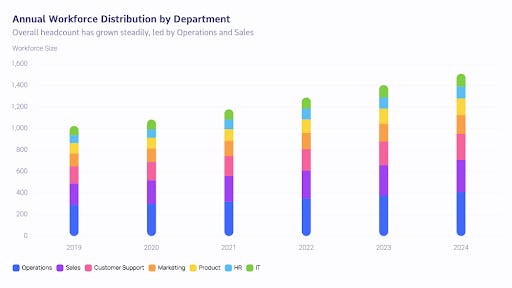
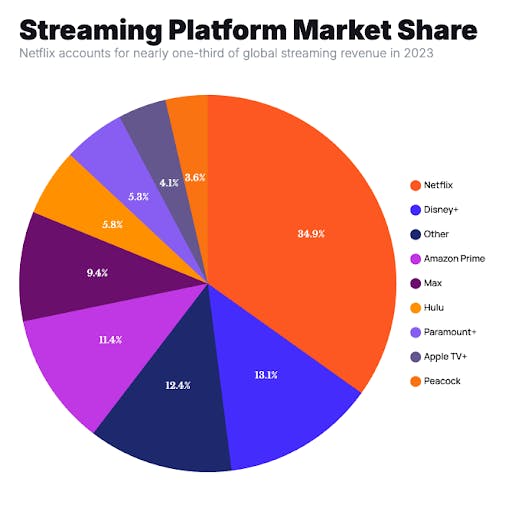
They built fast. We watched. And it turns out, showing up late was the best decision we could’ve made. When we started building our AI workflow, we had something our early competitors didn’t: clarity.
By 2024, the dust had settled on the first wave of “AI-powered” features. And users were vocal. We saw plenty of tools that overreached, interfaces that confused users, and automation that stripped out too much context. In the rush to sound cutting-edge, a lot of teams shipped flashy AI features that rarely added much real value. They replaced human judgment in areas where it’s simply better than AI, also cutting users out of the decisions they enjoy.
That gave us our product thesis: Keep people in control of the work they like doing, Don’t automate everything, deploy AI only where it truly adds value.
In our case, that meant using AI in a targeted way: giving users a menu of narratives to explore from their data and a prioritized list of charts to choose from.
We didn’t want to create a black-box “AI assistant.” We wanted to create something more like a junior analyst: fast, inquisitive, and open to course correction from users. Give it your traffic data, your campaign metrics, or your performance stats, and it’ll flag what’s trending, what’s dropping, and even key takeaways from your data.
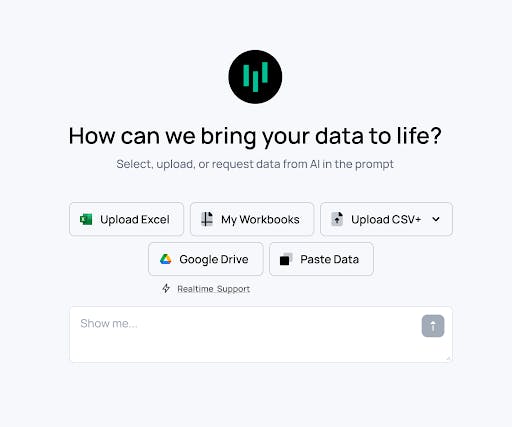
Had we built earlier, we might’ve fallen into the same traps as everyone else: too much AI automation, not enough critical user input. But by waiting, we also got access to more powerful models. Newer LLMs like GPT-4-turbo and Claude Opus 4 were easy to integrate and swap out using new 3rd party API’s. Plus guidance from other IndieHacker’s on how to structure system prompts and avoid hallucinations meant our AI features were cheaper and more effective out of the gate.
We are also better able to identify real pain points, not imagined ones. For example, AI is great at summarizing trends. It’s terrible at knowing what’s sensitive, strategic, or simply a dead end. So we kept users in the driver's seat, allowing them to reject suggestions or re-run analysis with different assumptions. The system is helpful by default, interruptible by design. AI doesn’t take over; it’s a gas pedal to accelerate the work.
One of the best insights we had was delegating AI to specific roles:
First, it acts like a data analyst, surfacing the most interesting stories in your spreadsheet.
Then, it plays the role of a visual designer, recommending the best chart for the user’s chosen story.
It can also be your researcher, sourcing data from reputable sources for you to choose from:
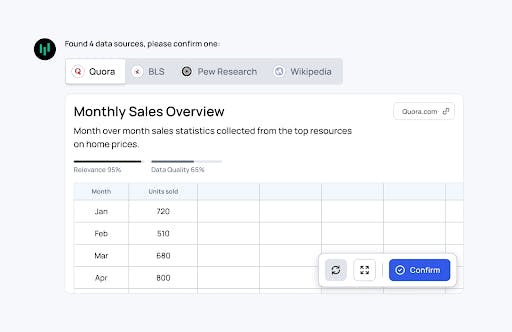
Each of those AI roles is narrow, but when directed by the user, they rapidly speed up, turning a generic spreadsheet into a compelling, branded, ready-to-publish visual story.
That’s what our users actually needed. And the only reason we were able to build it is that we waited long enough to know what not to build.
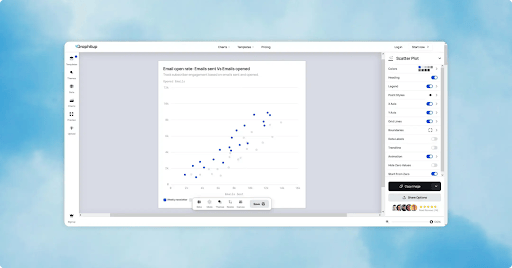
While we nervously let the initial AI hype train pass, it’s not an endorsement of obstinacy. AI is here to stay, and users expect it in every app. Missing the hype phase is no reason to kick this can, because the anxiety you feel about AI feature gaps in your product will likely get worse.
However, as we’ve seen, there’s plenty of second-mover advantages to be had. Now is a great time to research the successes and failures of your competitors, leapfrog their AI models, and design workflows that leverage AI capabilities where it matters. And please avoid automating away the work that humans actually like.
In hindsight, launching an AI feature late was one of the best things we could’ve done. We waited. We bootstrapped. We learned from other people’s missteps instead of paying for them ourselves. And we shipped something that made our product better, not just newer.
So if you’re on the fence about building your first AI feature, I’ll leave you with this:
You don’t need to be first. You don’t even need to be fast. You just need to be right about where AI helps, and honest about where it doesn’t.
Don’t chase novelty. Chase usefulness. And if it feels like you missed the wave, that’s when the water’s calm enough to build something that lasts.
Curious what a thoughtful AI assistant actually looks like in your workflow? Try GraphItUp and see how it helps you turn messy spreadsheets into meaningful stories.