From pro basketball to self-taught engineer
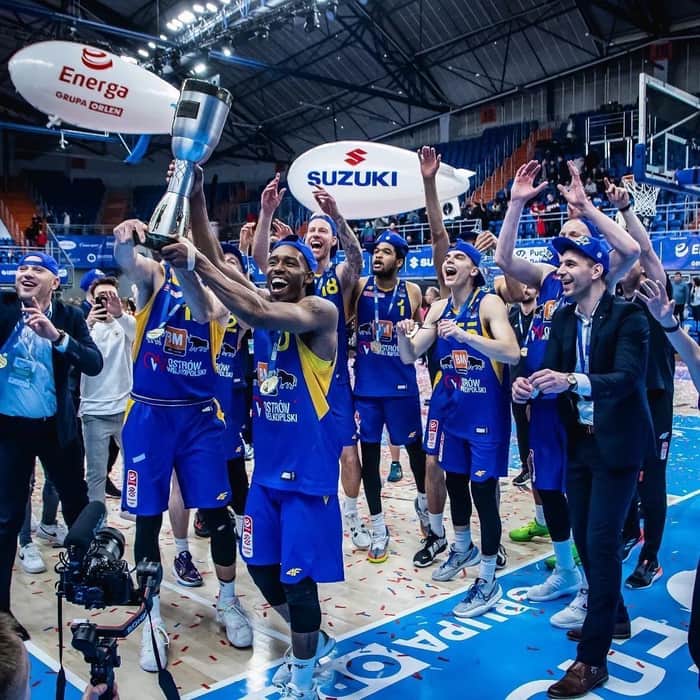
I spent 14 years playing professional basketball across 9 countries. Not LeBron, but a real career. I won a state title at Wheeler High School, broke the all-time scoring record at Mercer University, spent time at a 76ers training camp sharing a locker room with Andre Iguodala, Jrue Holiday, and Lou Williams before a hamstring injury ended that run. Then Europe for over a decade, including playing against Nikola Jokić before he took over the NBA, and Boban Marjanović before he made it there too.
Toward the end of my career I started wondering what came next. Like most people, I thought I had a great app idea. When I looked into hiring someone to build it, the price killed that plan fast. So I thought, how hard could it actually be?
I didn't study CS, never took a class. I bought Python Crash Course and got to work. Pro basketball gives you a lot of time between morning shootaround and evening practice, usually 5 or 6 hours. I used all of it. Eight-hour bus trips, airport waiting rooms, late nights after practice. I remember watching a Corey Schafer YouTube video trying to deploy my first site to Heroku, staying up until 6am with practice at 10.
By early 2024 I had a full platform built, my first app, a restaurant menu tool. Not revolutionary, but I built it from scratch.
During an offseason back in Atlanta I started going to tech meetups. At one of them I ended up sharing a table with two guys who turned out to be the CTO and VP of Engineering of a startup. I had no idea. I just rambled about my picture menu app like it was going to change the world. They loved the basketball-to-builder story and one of them, Byron, offered to mentor me with monthly calls while I was still playing in Turkey.
When I retired and came back to the States, Byron got me an interview. I had never interviewed before in my life. The question was how to convert an integer to a string without a built-in function. I fumbled through it, face in hands, not knowing they could still see me on screen the whole time. I got a message that night saying I didn't do as badly as I thought, and they offered me a 3-month contract.
I went full-time as a Data Engineer in January 2025. Still can't believe I get paid to do this.
And I'm still building in my free time. After shutting down the first app, I kept thinking about what else I could make. I landed on calendars, specifically what they could do beyond appointments and reminders. If friends shared their general schedules, you'd probably see each other more. And if you logged a trip, your friends should know about it.
That idea came from life. Playing overseas, I'd be in a teammate's hometown in the offseason with no idea they lived there. Or I'd see an Instagram story of a friend in Atlanta, hit them up, and find out they'd been there a week and were leaving the next day.
So I built SoKal, a social calendar that uses your plans to stay in sync with friends. It finds when you and a friend will be in the same city, shows you what people have planned for the week, and notifies you when someone is nearby. No location tracking, or anything like that. Just what you and your friends have planned.

That transition from pro basketball to self-taught engineer building a social calendar app is seriously compelling — and the idea behind SoKal feels very real, solving that “we were in the same city and didn’t know” problem most people have experienced.
The “plans-based, not tracking-based” approach is a smart angle too — if you lean into that trust + simplicity, it could differentiate well from typical social/location apps.
Saw your work — got something for you 👀
Got an idea?
Enter for $19 → win Tokyo trip + $500
Round live 👉 tokyolore.com
Prize pool just opened at $0. Your odds are the best right now.
I like the SoKal idea a lot. Just checking it out myself. I see the abillity to invite your phone contacts to join. I'm curious if you can search for people who might already be using the app in a similar way. Can you use your contacts to search if other people are already on the app? Just thinking the best way for it to be useful is to have as many friends on it as possible. Finding people through your phone contacts would be nice, or just as good would be having a way to connect to social media to search for any of your social media friends were on the app also.
Thank you!! So it would have your contacts that are on SoKal at sorted at the top already. It just means that none of your friends are on yet. I do wonder of a better way to have people using the app for the first time to want to invite friends right away though.
Thanks for checking it out! What are you working on? At em'? I'd love to try it out
Yes, At Em. Super simple morning preparation / productivity app I just launched. Built it for myself and realized other people could find it useful as well.
That's an inspiring story... almost makes me think I can learn to code. But I don't have the extra time. I'm on w3schools constantly, but I don't have the time or environment to really retain it.
But I know (more or less) how the logic and layouts work. That said, I am a designer, not a developer. I do wonder what your goals are in this realm? Are you just out to enjoy the ride and get paid hourly, or are you wanting to take on external projects that boost your personal revenue stream?
Thanks! for the kind words! And you surely can, but as you said, you just need the extra time.
I don't think my "end all, be all" is working hourly for a wage. I want to create something of my own that people find useful! I think I have, but it won't bring any revenue lol. What kind of design are you doing?
The 14 years of professional athletics background is an underrated asset for building. Athletes understand systems, discipline, and how individual performance connects to team (or business) outcomes in a way most first-time founders never develop.
What I find interesting about transitions like yours: you're essentially building your own operating playbook from scratch. In sports there's a team infrastructure - coaches, scouts, film review, game planning. As a solo founder you have to rebuild that infrastructure yourself.
I'm building a Notion OS specifically for solopreneurs at $0-5K MRR - six linked databases: clients, projects, tasks, revenue, decision log, weekly review. It's the business equivalent of a game film review system: every week you're reviewing what worked, what decisions you made, and what carries into the next cycle.
SoKal is a great problem to solve. How did playing across 9 countries shape how you think about what people actually need from social products?