From Real Objects to Perfect Prints: How 3D Scanner Technology Is Transforming Modern Creation
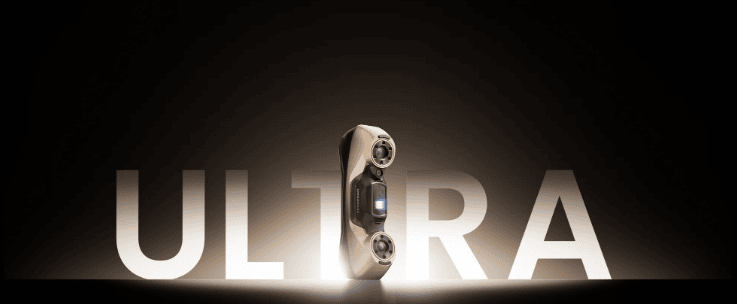
Modern creation is evolving faster than ever. Designers, engineers, artists, and hobbyists are constantly looking for smarter ways to turn ideas into real products. One of the biggest innovations driving this change is the 3d scanner, a technology that bridges the gap between physical objects and digital design.
Instead of manually building complex models from scratch, creators can now scan real-world objects and transform them into highly accurate digital files. These files can then be edited, refined, and prepared for 3D printing, making the creative process faster, easier, and more precise.
In 2026, 3D scanning has become an essential part of modern workflows across industries, helping creators move from concept to finished product with greater confidence and efficiency.
Understanding 3D Scanning Technology
A 3D scanner is a device that captures the size, shape, and surface details of a physical object. Using technologies such as structured light or laser scanning, the device collects thousands of data points across the object’s surface.
These points are processed into a digital 3D model, often called a mesh. Once the model is complete, it can be edited in CAD software or exported for 3D printing.
Unlike traditional measuring methods, which only capture specific dimensions, a 3D scanner records the complete geometry of an object. This makes it ideal for detailed designs, complex shapes, and highly accurate reproductions.
From Real Objects to Digital Models
The ability to convert physical objects into digital designs has transformed modern creation. The workflow is simple but incredibly powerful:
Scan the object from different angles
Process the scan data into a digital model
Refine or modify the design
Export the file for 3D printing or production
This process allows creators to work more efficiently and avoid the time-consuming task of manual modeling.
For example, a designer can scan a handmade prototype and quickly prepare it for digital editing. Instead of rebuilding the entire object in software, they can start with an accurate base model and focus on improving the design.
Why 3D Scanning Matters for 3D Printing
3D printing depends heavily on the quality of the digital model. Even small design inaccuracies can lead to failed prints or poorly fitting parts.
A 3d scanner for 3d printer helps solve this problem by capturing real-world objects with impressive precision. This ensures the digital file closely matches the original object, making the final print more accurate and reliable.
This technology is especially useful for:
Creating custom products
Replicating damaged or discontinued parts
Rapid prototyping
Reverse engineering
Artistic and creative projects
By improving the quality of digital models, scanning technology improves the overall success of 3D printing projects.
Faster Design and Prototyping
Modern product development depends on speed. Companies and creators need to test ideas quickly and make improvements without wasting time.
3D scanning allows rapid iteration by simplifying the workflow:
Scan → Edit → Print → Improve
This cycle enables creators to test multiple versions of a product in less time. Designers can identify flaws early, make adjustments digitally, and produce updated prototypes almost immediately.
For engineers and manufacturers, this means shorter development cycles and lower production costs.
Reverse Engineering Made Easier
Reverse engineering has become one of the most valuable applications of 3D scanning technology. Sometimes original design files are unavailable, especially for older products or machine parts.
With a 3d scanner, users can scan an existing object and create an accurate digital version of it. The model can then be modified, repaired, or reproduced through 3D printing or manufacturing processes.
This is especially helpful for:
Replacing broken machine components
Updating older designs
Recreating rare or discontinued parts
Customizing existing products
Instead of relying on manual measurements, creators can capture exact geometry quickly and accurately.
Revopoint: Advancing Modern 3D Scanning
Companies like Revopoint are making advanced scanning technology more accessible for professionals and beginners alike. At Revopoint, users can explore a range of portable and high-precision scanners designed for different creative and industrial needs.
Revopoint scanners are known for combining performance, portability, and ease of use. Many of their devices are lightweight handheld scanners capable of capturing highly detailed scans in various environments.
Some important features include:
High-resolution scanning for capturing fine details
Real-time tracking for smoother scanning performance
Portable designs for flexible on-site use
Compatibility with popular CAD and 3D printing software
These features make Revopoint scanners valuable tools for creators looking to improve their design and production workflows.
Practical Applications Across Industries
3D scanning technology is now used in many industries beyond manufacturing. Artists digitize sculptures, educators teach design concepts through scanning projects, and healthcare professionals create custom models for medical applications.
Architects use scanning for building documentation, while engineers rely on it for quality control and inspection. Hobbyists also benefit by turning everyday objects into printable digital models.
This wide range of applications highlights how scanning technology continues to reshape modern creation.
Final Thoughts
The connection between physical objects and digital design has never been stronger. A reliable 3d scanner allows creators to capture real-world objects with speed and precision, while a powerful 3d scanner for 3d printer ensures those models are ready for accurate printing and production.
From rapid prototyping to reverse engineering and creative design, 3D scanning technology is transforming how modern projects are developed. With innovative solutions from companies like Revopoint, creators now have access to tools that make digital workflows faster, smarter, and more efficient than ever before.

