From Script Chaos to AI-Powered Efficiency: How EchoAPI Turned Our API Testing Pain into an Automation Win
As an indie team shipping microservices fast, we hit a familiar wall: API testing was taking more time than building the APIs themselves.
We needed dynamic data for our test cases—things like user phone numbers following a business rule, UUIDs with custom prefixes, or structured test emails. Postman helped with the basics, but it wasn’t built for the kind of logic-heavy dynamic values we needed.
At first, we hacked it together with JavaScript snippets in Postman Pre-request scripts. It worked—until it didn’t. As the project grew, the number of scripts exploded, and maintenance became a nightmare.
That’s when we switched to EchoAPI and started using its AI-powered dynamic variable generation. That move alone cut our test setup time by over 70%.
Why Postman’s Built-in Variables Weren’t Enough
Postman’s presets are great for quick tests. Things like:
{{$guid}}             // Auto-generate a UUID v4
{{$timestamp}}        // Current timestamp (seconds)
{{$randomInt}}        // Random integer
{{$randomEmail}}      // Random email address
{{$randomBoolean}}    // true/false random value
They’re easy, but rigid.
They can’t:
- Match your business rules (like generating only phone numbers with valid prefixes)
- Combine logic (like user IDs tied to timestamps)
- Adapt to changing API context
Say you need a valid phone number starting with '212', '513', or '917'. You’d have to write something like this:
function randomPhone() {
  const prefix = ['212', '513', '917'][Math.floor(Math.random() * 3)];
  const suffix = Math.floor(Math.random() * 1e8).toString().padStart(8, '0');
  return prefix + suffix;
}
Two big problems with this:
- You end up copy-pasting this script into dozens of APIs—pure maintenance hell.
- Not every QA or indie builder is comfortable writing JavaScript for every test.
EchoAPI: AI That Writes Your Test Functions
EchoAPI doesn’t just replicate Postman’s built-in variables—it evolves them.
The killer feature: AI-generated functions from natural language.
Instead of writing boilerplate code, you just describe what you need.
Example 1: Auto-generating Phone Numbers
Need a phone number starting with 212, 646, or 917?
In Postman, you’d write this:
function randomPhone() {
  const prefix = ['212', '646', '917'][Math.floor(Math.random() * 3)];
  const suffix = Math.floor(Math.random() * 1e8).toString().padStart(7, '0');
  return prefix + suffix;
}
In EchoAPI, you click Insert Dynamic Value → Custom Function, then type:
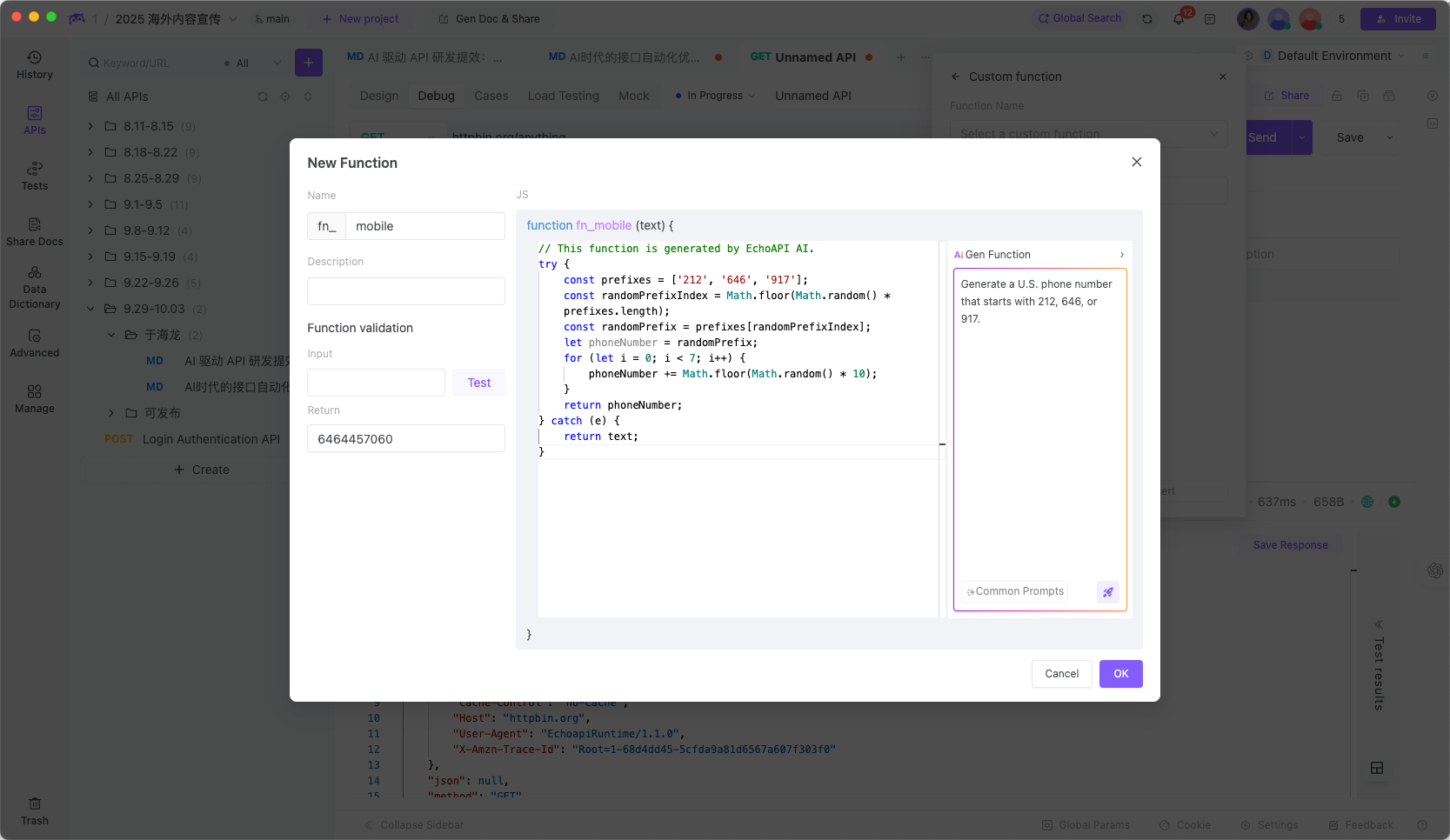
“Generate a phone number starting with 212, 646, or 917.”
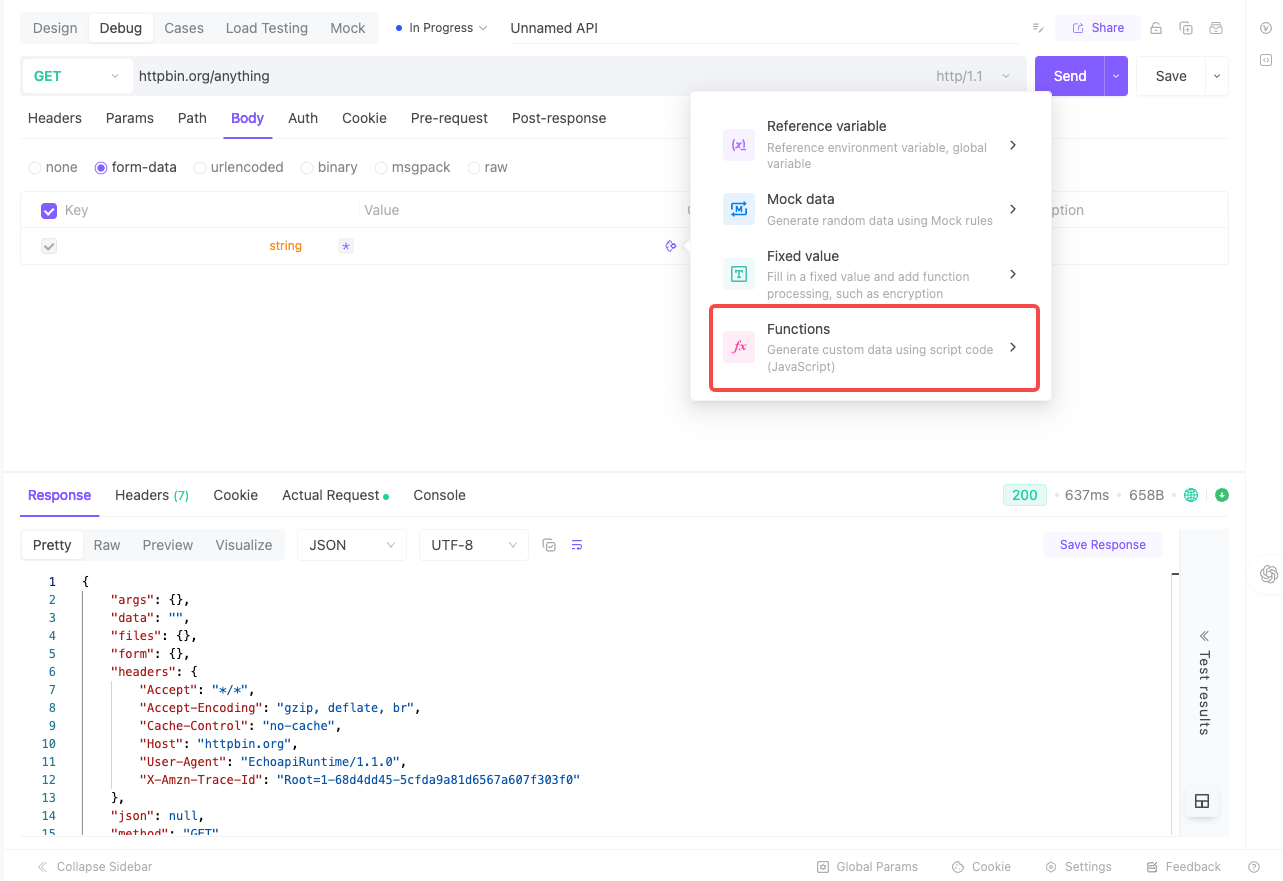
EchoAPI instantly creates and registers it as {{$function.fn_getMobile()}} — a reusable function you can call anywhere, anytime.
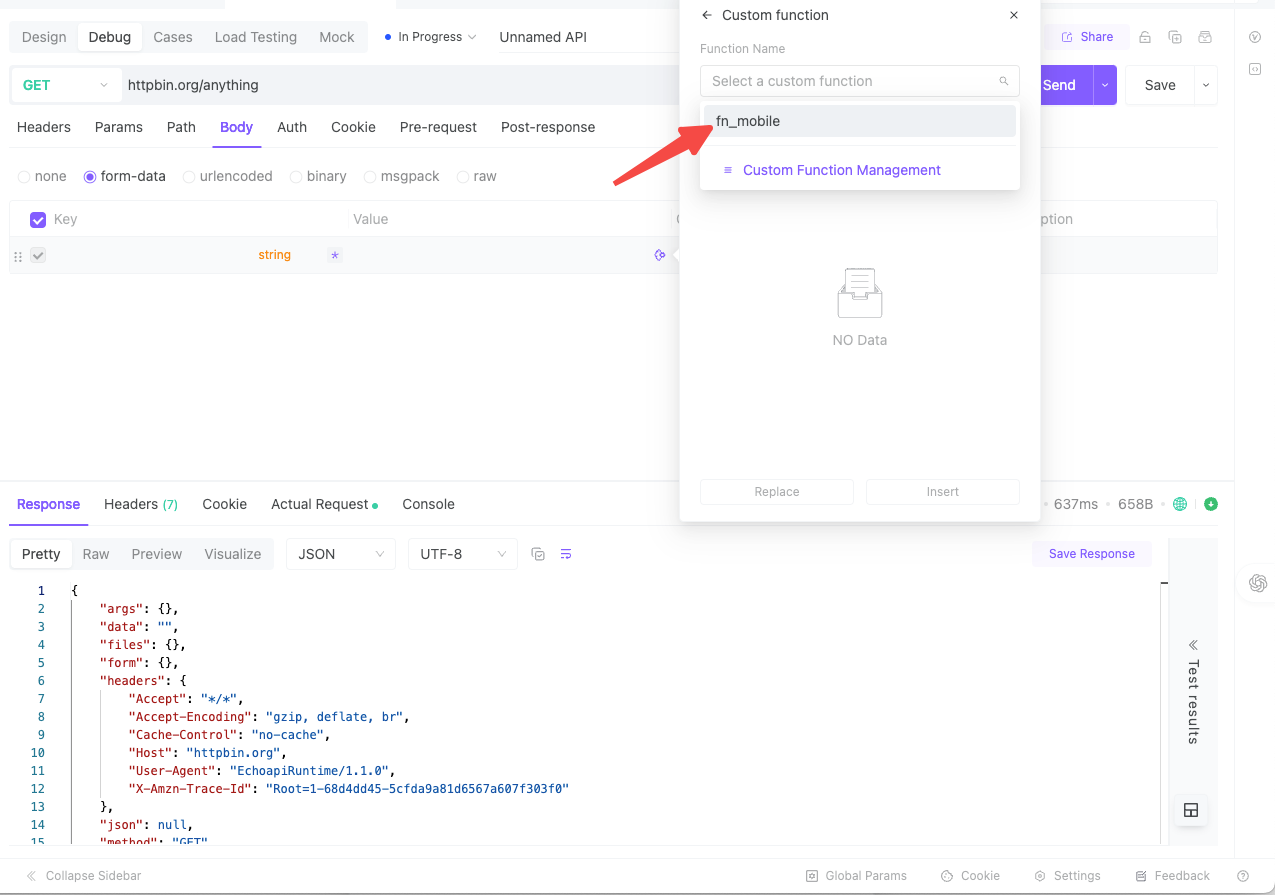
No duplication. No mess. Just plug it in.

Example 2: Custom Email Addresses
Need emails like test_<timestamp>@company.com?
In Postman, it’s manual:
const email = `test_${Date.now()}@company.com`;
pm.environment.set("custom_email", email);
In EchoAPI, just type:
“Generate an email with prefix
test_+ current timestamp, and domaincompany.com.”
EchoAPI handles the rest and creates a reusable function you can reference in multiple APIs—no more repetitive scripts.
Architecture: Postman vs. EchoAPI
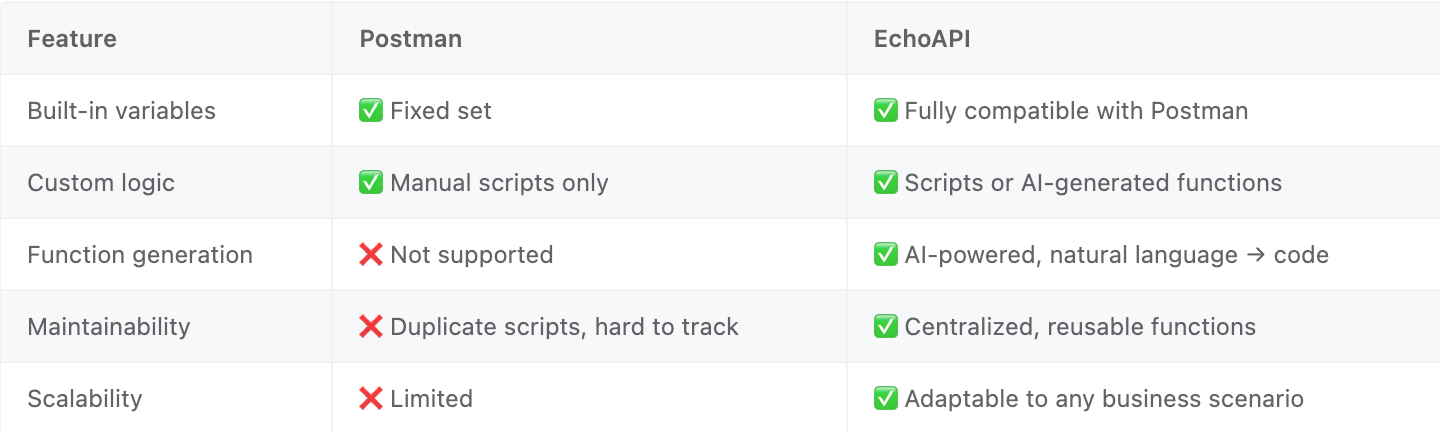
For indie developers and lean teams, this translates to:
- One update = instant sync across tests
- Reusable, logic-driven dynamic variables
- No JS fatigue or copy-paste chaos
- Faster iterations → more time for product work
The Takeaway: Build Fast, Test Smarter
In the startup world, time is leverage. You can’t afford repetitive, hand-coded scripts that break every time logic changes.
Postman’s built-ins are a great start, but they cap out quickly. EchoAPI lifts that ceiling with AI-driven extensibility—turning test data into reusable assets, not clutter.
For builders juggling backend dev and QA, this is more than convenience—it’s a shift in how we approach automation, reusability, and velocity.
EchoAPI doesn’t just make testing easier.
It makes your testing scale with your product.
