From zero to $10k/mo app portfolio in a
year
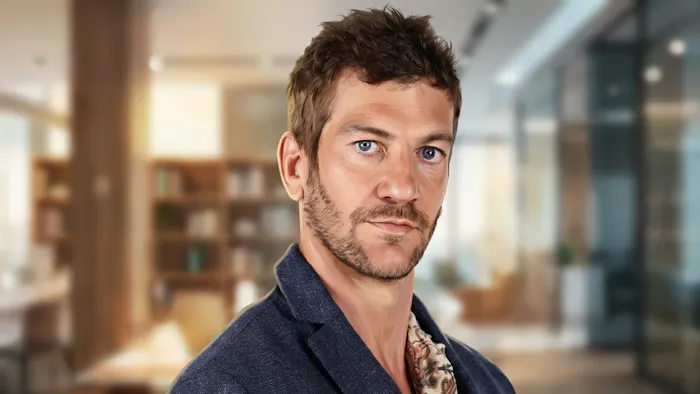
After seeing the poor quality of a successful mobile app, David Attias decided he could do better. He built an app a year ago, and now he's building another. This small portfolio is already bringing in $10k/mo.
Here's David on how he did it. 👇
Realizing he could do it
I graduated from a computer science school in Paris 13 years ago. I started working for Criteo as a technical account manager in London, then Barcelona, then NYC. After that, I worked as a freelancer for multiple banks and professional traders, designing their trading algorithms for seven years. That's where I made the most money.
In 2025, I watched a podcast featuring three teenagers who created an app called QUITTR, which reached $200K per month in 3 months. I tested the app myself, paid for it, and I was amazed by its poor quality. I concluded that if they could do it, I could too.
So, I made STOPPR, inspired by the QUITTR onboarding, to help people stop their processed sugar cravings. I reached $5K in revenue in two weeks, thanks to two viral videos from my influencers.
Three months later, I reached $14k in monthly revenue — I struggled to exceed that amount, and managing influencers consumed three-fourths of my day. Despite a 20% profit margin, I was overworking for too little money.
Now, I'm a developer relations advocate at Adapty for the French market, building their community in French-speaking countries. It's a very cool job. In parallel, I'm working on scaling another app in the USA.
I'm currently bringing in $15K/mo. Roughly 70% of that comes from my apps. The rest is from my job.
Building the app
When I started my first app a year ago, I used Cursor + Figma + Claude 3.5 + Firebase.
AI was really bad at design then, so I asked my designer friend to create the Figma screens for me.
After that, I used the Figma MCP within Cursor to import the screens and asked Cursor to vibe code both the front end and backend for each screen, including animations and navigation between screens.
Even a year ago, it was 70-80% perfect. I still had to test each screen, button, navigation, and flow. But whenever I spotted an error, I just asked Cursor to fix it. The barrier to design and code was incredibly low then. It's even lower now.
Today, my stack is GPT 5.5 CLI (Command Line) extension within Cursor + Firebase. GPT 5.5 is goated for mobile app dev. Better than Claude 4.7
Also, it's worth mentioning that with the previous stack, I always spent $1k a month. With the current stack, I spend no more than $200 a month.
Offering equity to influencers
I've grown through influencer marketing. Initially, I'd pay 20% up front for eight videos per month — four on Instagram and four on TikTok. They had to hit a cumulative minimum views based on the averages of their last 20 videos. If they didn't hit that number with eight videos, they'd have to keep posting.
That approach generated views for significantly less than $1 CPM.
However, influencers often work with competing brands in parallel. They lacked incentive. I wanted influencers who actually wanted to drive conversions.
Now, I find one or two big influencers in the niche and offer them equity instead. I do this for both my apps. Unlimited upside.
We keep a close eye on our videos via viral.app. It connects to the influencer's socials and tracks in real time. Whenever a video starts to go viral, we promote it with TikTok and Meta paid ads as quickly as possible. That helps us ride the momentum.
Finding influencers
I found all my influencers using the For You feed on TikTok and Instagram. I don't use any creator marketplace platforms. They're overpriced.
The main challenge is finding good influencers. Most influencers actually lack influence. They don't know how to go viral on repeat — that's a learnable skill.
The second challenge is convincing them to accept equity in the company rather than a fixed rate. This requires extensive negotiation and convincing. But I only need one or two per app.
The $10k/mo roadmap
Here's the roadmap to getting beyond $10K a month, starting the first month after you ship your app.
Don't work with UGCs or ambassadors. They don't know how to go viral. Micromanaging them takes too much time.
Find one or two big influencers in your niche.
DM them. Email them. Join their Discord or Telegram.
Get them on a call by any means necessary.

Leave a Comment
Trading fixed payments for equity with influencers is such a smart idea! Everyone wins this way, and they’ll actually care about driving real sales.
The portfolio angle is strong, but I’d still keep each app’s first promise narrow. With Kinetic Override I’m avoiding the generic “automation app” pitch and leading with one Android loop: record taps/swipes/long-presses locally, replay with timing controls, no root/no ads. That clarity makes feedback much easier to read.
"Most influencers actually lack influence. They don't know how to go viral on repeat — that's a learnable skill."
This is the most underrated insight in the whole piece. Took me way too long to learn this.
Also love the equity-over-cash model for influencers. Have you found that the ones willing to take equity tend to perform better long-term? Seems like it'd naturally filter for people who actually believe in the product versus just collecting a paycheck.
Sounds inspiring.
Great breakdown, David! The shift from pay-per-post to equity-based partnerships is pure gold. It aligns incentives perfectly.
I'm curious: when you first approach these big influencers, how do you handle the trust barrier? Since you're an indie dev, how do you prove the app's potential (or your vision) to them so they'd agree to equity instead of just asking for a standard flat fee?
I am curious too
Latest Working Daman Games Invite Code
Invite Code: 3488815781035
This invite code is meant for new users only and must be entered during the registration process on the Daman Games app.
Once registration is completed, invite codes generally cannot be added
What made the biggest impact?
I think marketing is one of the most important factors behind an app's success and revenue growth. But even more important than marketing is the idea itself and the problem the app is solving.
A great idea combined with strong distribution can make a huge difference. Building the app is only part of the journey; getting it in front of the right people is what really drives growth.
It sucks that the influencer grind burned you out on STOPPR, but landing at Adapty while pulling $15K a month overall sounds like a sweet sweet spot.
That’s a really strong founder journey—especially the shift from high-earning algorithmic trading work to building consumer apps and iterating on growth models in real time.
What stands out most is how quickly you reduced the “barrier to building” with modern AI tooling, and then ran into the real constraint that usually appears after product-market fit: distribution and incentive alignment (especially with influencers).
Reading this, it honestly feels a bit like solving a Letter Boxed solution. You can have all the right letters (tools, AI stack, influencers, ads, ideas), but the real challenge is finding the sequence that connects them efficiently without wasting moves. In your case, coding the app was the easy path—you already solved that side—but the harder “word chain” is distribution → incentives → scalability.
Getting from $15K to $100K MRR will likely come less from better building tools and more from finding that clean, repeatable “connection path” in growth loops—where each step naturally leads into the next without heavy manual effort.
Really interesting breakdown overall.
Hello
how was your da going and how is work there
useful
Trading fixed payments for equity with influencers is such a smart idea! Everyone wins this way, and they’ll actually care about driving real sales.
Your cost concept for building the app really resonates with me. I built Cliento — an AI sales advisor for B2B account executives — using Claude and DeepSeek API, and kept the cost extremely low. So that part I fully agree with.
But the influencer marketing approach is a completely different story for B2B tools. My target users are industrial sales engineers in manufacturing and automation. They're not on TikTok watching product videos. There's no influencer path here.
Right now my only channel is posting articles on Reddit. I got 209 clones and 117 unique cloners on GitHub in the first week, which told me the problem is real. But converting those people into active users is where I'm stuck.
For a niche B2B tool like this, what growth approach actually works? Content marketing feels like the right direction but the conversion is slow. Curious if anyone here has cracked this for B2B.
Great insight — I've been building in this space too
I felt this deeply. I spent 2 years trying to make money online and failed many times. But I learned something important: I am fast and accurate with manual data work — cleaning spreadsheets, organizing messy CRMs, transferring information between tools. My English is not perfect, but my accuracy is first.
Right now I help founders with the small, repetitive admin tasks that steal their time. If you have a messy folder or spreadsheet you keep avoiding, I can turn it into something clean.
What's one manual task in your workflow you wish you never had to touch again?
Curious how much equity creators would ask for. Seems like with the increase in vibe coded apps the value in their distribution is only going to increase
What I find interesting is that this story reinforces the idea that that visibility is often the bottleneck, not development.
A lot of Indie builders can create a decent product today with AI-assisted tools. The harder challenge is consistently getting in front of the right audience. The influencer-equity model was a clever way to align incentives instead of constantly paying for attention. Nicely done.
Short but so many useful tips!
Great story! Thanks for sharing the journey. It's a great reminder that progress often comes from volume, learning, and persistence rather than finding the "perfect" idea.
I would love to know the best strategy to get autopipelot to 10k per month or even better get feedback on the system
What stood out to me is the shift from chasing the perfect idea to building a repeatable process. The ability to identify opportunities, launch quickly, and learn from the market seems far more valuable than any individual product. That's a mindset that scales well beyond a single app.
This is inspiring! Building a portfolio of apps to $10k MRR in a year is impressive. The key insight about the 30-minute daily system for marketing - consistency beats intensity - resonates deeply. I've been applying similar discipline with my own screenshot API tool (ShotAPI). Would love to hear more about how you prioritized which apps to focus on when managing multiple revenue streams simultaneously.
Importing Figma designs directly into Cursor to vibe code the frontend and backend workflows is the absolute meta for mobile app development right now. It completely shifts the solo developer's bottleneck away from coding and forces you to focus strictly on distribution
Amazing story. One tip I'd add: track which influencer hooks actually turn into paid users, not just views. Once you know the first 3 seconds, audience angle, and landing page message that convert, it's way easier to repeat the win instead of chasing every video that looks viral
That saved me a lot of wasted time on founder-led distribution work, because high reach can feel great while revenue stays weirdly flat :)
The most valuable part of this story is realizing that reaching $10k–15k MRR and building a sustainable business are two very different challenges. A lot of people talk about getting customers, but not enough talk about operational complexity once growth starts.
The part about distribution being the real moat hit home. I'm building ChannelMint, an AI employee that runs your LinkedIn automatically. You describe your brand, it writes and schedules posts, you approve on Telegram.
The equity-for-influencers angle is interesting, but I'm B2B, so my version is: find 2-3 active founders who hate doing LinkedIn, give them free access, and let their results speak. Same alignment logic: they only evangelise if it actually works.
Still at $0 revenue, 15 beta testimonials. Following for the $100k update.
The equity pivot is what I keep rereading. Did the conversions actually move when you switched from flat fee to equity, or was it more that you stopped fighting people to care? Genuinely curious, because aligning incentives and improving output aren't always the same thing.
And honestly the part I can't picture is the pitch itself. Talking a big creator into betting on an unproven app instead of just pocketing a fixed rate from your competitor sounds brutal. What actually makes them say yes? Is there a line that works more than once or is it a fresh fight every single time?
I'm in a pretty different spot, building an AI travel app where the growth bet is more group word-of-mouth than influence, so I'm partly just learning from how you think about this. But your "spot the video that's popping, throw paid behind it" bit stuck with me, that logic probably applies to almost anyone.
Anyway, two apps to 10k while holding down a job is no joke. Following for the 100k update.
Interesting journey.
What stood out to me is that you already had strong technical skills, yet the real breakthrough seems to have come from distribution and finding the right market rather than coding itself.
Looking back, what was harder: building the apps or acquiring users consistently?
Really appreciate this — the operating system framing is exactly what I'm going for, not just another bundle. The connected workflow is the whole point. On the name, noted — I'll pressure test it as users come in. For now heads down on getting the first 50. Thanks for engaging with this so closely, genuinely helpful.
A great reminder that distribution is often just as important as the product itself.
goodjob
Hi James, I wish you continued success. Your plans with content creators are incredibly well thought out and make a lot of sense.
24/7 CRYPTOCURRENCY RECOVERY AI HACKING EXPERTISE CYBER RESEARCH COMPANY/ WIZARD MARK HACKERS RECOVERY
My name is Tobais malcon and i am here to share my experience about recovery expert who help me in getting back my funds without any issues. If you recently lost a portion of your savings or retirement nest egg to a cryptocurrency, forex, or binary options scam, Bank account, Instagram, X twitter, Tiktok, FB and other platforms,Wizard Mark Hackers Recovery just retrieve my funds worth $490,700 BTC from fake Binance. I am so glad right now. all thanks to Wizard Mark Hackers Recovery and the great help that was render to me. i am also reaching out to your who needs help. contact through Wizard Mark Hackers Recovery with their AI Expertise.
WHATSAPP +4915218465599
TELEGRAM : @ wizardhackersrecovery
Really practical post, thanks for sharing. The influencer equity model is brilliant — aligning incentives instead of just paying for views makes total sense.
I'm also working on a side project while keeping my day job. This posts really pushed me to just ship instead of waiting for perfection.
Great read, thanks. The takeaway I'm keeping is going after one or two big influencers and DMing them directly, instead of spraying UGC and ambassadors. Counterintuitive, but it makes sense, depth over volume, and the equity angle means they actually care.
The thing I didn't see anyone ask, and that I'm chewing on myself as I build more than one product under a small studio: how do you stop the second app from starving while the first one still has momentum? Did you take each one to traction before starting the next, or run them in parallel from the start? And was there a revenue point where the portfolio started feeling like maintenance instead of a studio? That balance is the part I find hardest.
How do you handle creator onboarding and getting them to actually reply to your outreach. Curious to know which outreach strategies work for the creators.
I NEED A TRUSTED CRYPTO HACKER THAT CAN RESTORE LOST OR SCAMMED FUNDS.
Are you struggling to get back the money you lost? Every day, countless individuals face the devastating impact of scam operations that drain their hard-earned savings. But there’s good news – GEO COORDINATES RECOVERY HACKER are here to help you recover what’s rightfully yours. I lost my entire savings to a fake crypto investment scam while I was looking for a way to double my savings. After many weeks of trying to find a way to get my money back with no success, I finally came across a crypto recovery company GEO COORDINATES RECOVERY HACKER, a reliable and trustworthy crypto recovery company. I'm immensely grateful for his dedication, professionalism, and unwavering support. You can get in touch with them through below contact details
WhatsApp ; +1 ( 318 ) 203-3657
I had to send out my review also. They are indeed recommendable.
his is genuinely one of the most useful posts I've read on here. The equity for influencers angle is something I hadn't considered at all — paying per video creates zero alignment but giving them upside changes everything.
The viral app + immediate paid promotion when a video starts popping is smart too. Most people wait to see if something goes viral organically rather than pouring fuel on it at exactly the right moment.
I'm early stage building a B2B SaaS for personal trainers (CoachDesk) so the influencer model is slightly different for me — but the core insight about finding one or two people who are genuinely invested rather than managing twenty who aren't is applicable everywhere.
Thanks for sharing the actual numbers and mechanics rather than just the headline. Bookmarking this one
But i also want to know what content you uploaded on tik tok and instagram, was it about features or anything else?
Great job, bro! I also built a subscription and expense-tracking app. I have around 100 users, but I've been stuck there for a while. The app is completely free, and I've been promoting it on TikTok and Instagram while also working on ASO, but growth has been slow. I'm starting to think I may need to invest in ads and reach out to influencers for partnerships. Thanks for sharing the tips!
stuck at 100 users with a completely free app is a dangerous place to be if you're thinking about jumping into paid ads or influencer partnerships. if you start pouring money into UA without a solid revenue loop, you'll just burn your budget with zero return.
even if your core features are free, you need to monetize that early attention to fund your growth. before you pitch big creators, wrap a clean programmatic ad layer like CAS into the app. because it automates real-time bidding between dozens of premium ad networks via advanced mediation, it extracts maximum value from every single user on autopilot. it gives you the immediate cash flow (ARPU) needed to actually afford paid ad scaling or to show potential influencer partners that your app's monetization engine is highly optimized and ready for their traffic. don't buy distribution out of pocket; make the app pay for it.
This is great story. I am building B2C Incident Management simulation platfrom. And marketing is going terrible now. I have no idea how to bring more traffic to my web site, that doesn't fully work yet as I am beta testing in 3 weeks and launch on the beggining of August. But to reach influeners in the nihce is great idea! I need to try that!
The Figma MCP + Cursor workflow you described is exactly what changed my approach too. I've been using it for a web app, and the gap between "I have a design" and "it's coded" basically disappeared.
Curious — when you say GPT 5.5 CLI is better than Claude for mobile dev, is it specifically the multi-file context handling or the way it reasons about navigation flows? I've found Claude stronger on component isolation but weaker when the whole app state needs to be considered together.
The equity model is smart — removes the misaligned incentives problem entirely. Building a solo yoga app right now and thinking through distribution. Influencer-first feels right for some niches but I'm not sure yoga is one of them — the audience skews toward trust-based discovery over viral hooks.
Reusing what already works seems like a stronger strategy than constantly chasing new ideas. It feels like compounding architecture more than product building.
the $1k to $200 monthly AI spend reduction is a detail worth expanding on. going from Cursor plus Claude to GPT 5.5 CLI and dropping 80% of the cost while calling it better for mobile dev is a pretty strong claim. curious whether the cost reduction is mostly from the model pricing difference or whether you also changed how you're prompting and structuring the work. because a lot of people reading this are still on expensive stacks and would want to know if the switch is actually worth the migration friction
The influencer equity model is something I hadn't considered before — that's a completely different alignment than paying per post.
One week into my own $0 to $20k challenge. Currently building across Fiverr, Gumroad, and YouTube — no apps yet, but the distribution problem you're describing is exactly what I'm trying to solve early. Shipping HIVE (a Telegram tap-to-earn game engine) and learning that building without an audience first is the wrong order.
The two-week build timeline is where I want to get. Right now shipping client web apps with Next.js and Supabase — the AI-assisted development speed you're describing with Cursor is something I'm actively exploring.
One question — for someone earlier stage who can't offer equity yet, what's the minimum viable influencer relationship that actually moves the needle?
equity instead of cash for influencers. they've got actual skin in the game, not just a one-time post. curious whether any of them have gone harder on promotion once the numbers started moving.
The equity for influencers move is underrated. Most people still think about influencer marketing as a transaction and then wonder why the content feels flat.
Saw the same pattern in campaigns I ran. The moment someone has skin in the game the energy in the content completely changes. Audiences feel it even if they can not explain why.
One thing I am curious about, how do you handle the equity conversation with influencers who have never thought about owning a piece of something? Most of them have no reference point for what that even means in practice.
greate story
very good
Very interesting
inspiring!
greate story, well played man!
The playbook seems to be: validate demand, ship quickly with AI, partner with people who already own attention, and double down on what converts. In a world where building is getting commoditized, distribution compounds.
I can totally relate to that moment of seeing a product succeed despite its flaws and thinking, “I could do better.” That’s such a powerful mindset shift. I’ve found that execution and distribution often matter more than the initial idea itself. Like you said, if there’s already demand for something, you don’t have to reinvent the wheel—just improve on what’s out there.
Your approach with influencers is really smart. I love the equity-for-distribution model because it aligns incentives so well. I’ve also seen how tricky it can be to find creators who actually understand how to go viral consistently. When I was working on my own product, I found that starting small and building genuine relationships with people in the niche worked better than using marketplaces, which often feel transactional.
One question: How do you handle the legal side of offering equity to influencers, especially across different countries? That part seems tricky.
The part about seeing a poorly built app succeed and realizing you could do better really hits home. I've had that same moment with a few SaaS products I stumbled across. Your approach with Cursor and AI tools to keep costs down to $200 a month is impressive. What was the hardest part about getting that first app off the ground, the technical side or finding the right influencers to work with?
Loved this post - esepcially the angle on getting influencers for equity.
Can you please also give some guidance on how you structure the relationship with influencers that you get on equity ? How much equity do you give ? What is the vesting schedule ? What is the commitment from their end ?
Would be very helpful. Thanks !
What's striking is how many founders are still trying to solve growth with better product when the leverage seems to be in distribution. The app got to revenue quickly, but your real innovation may have been finding a repeatable influencer partnership model.
I wonder if in 2026 the strongest solo founders are becoming "product + distribution operators" rather than just builders.
Thats really cool.
I've been thinking about it, through influencers. But as indie, I just thought about affiliate. How about this?
One year is too much time nowadays, I see people making millions of dollars in one year, starting from scratch. And it's really easy because of AI.
I'm 19, just got my first laptop 6 months ago, taught myself product design, and just launched the waitlist for my first app — Folio. An AI reading app that turns book insights into personalized decisions you can actually use.
The part about using ai to actually build it help me understand i can also bring this app to life myself as a designer in todays world
If anyone's curious — folioapp.framer.websit
"e" is missing in this link because i am new user can comment links yet
This post genuinely shifted something for me.
I've been learning to build with AI tools for about two months, and like most beginners I've been stuck in the "what should I build?" loop — trying to come up with some original, never-seen-before idea. Your approach flipped that completely.
The insight I'm taking away: demand validation doesn't have to come before the idea. Sometimes a bad product that's already succeeding is the validation. You didn't need to guess whether people wanted a habit-breaking app — QUITTR already proved it. You just had to execute better.
That's a much lower-risk starting point than most people think. You're not betting on whether the market exists. You already know it does.
One question: when you looked at QUITTR and decided to build STOPPR, what specifically made you confident the "quality gap" was the real reason users were tolerating a bad product — rather than, say, the influencer distribution being the actual moat?
Nice piece or work
Feels like speed and consistency matter more than perfection now.
Congrats man, that's awesome! What's the main app that's driving most of your revenue?
Equity-for-distribution is one of the most underused unlock moves in consumer mobile right now. The catch most operators miss: a single big influencer is a single point of failure. If that creator burns out, switches niches, or just stops posting, your $10K goes to zero overnight. Build the playbook for two or three, with separate equity tranches tied to performance, before you need to.
I have seen this exact pattern at Henson Venture Partners with consumer pre-seed deals. The ones who survive past month 12 are the ones who diversified distribution before they had to, not after.
Really inspiring journey! Building a profitable app portfolio in just a year takes serious consistency, smart execution, and strong marketing strategy. The influencer-equity approach and fast shipping mindset were especially interesting. A great reminder that speed, distribution, and solving real problems matter more than perfection.
honestly I havent even thought about using influencers
that is a brilliant
nice this is a app i can use
That's a smart angle—reverse engineering what made a janky app work instead of trying to build the polished version first. Did you focus on replicating the core mechanics or the acquisition/monetization strategy specifically?
Are you saying you got a significant amount of MRR without the whole build in public clown fiesta?
David's story is one of the most motivating
on IH — seeing a poor quality app succeed and
thinking "I can do better" is exactly the right
founder mindset.
The influencer equity model is brilliant. Instead
of paying upfront with no guarantee, giving equity
aligns incentives perfectly — the creator only
wins when you win. That's a strategy I'm
stealing for AgentFlow Pro, my Real Estate CRM
with legal docs, AI, and global maps at $15/mo.
The tech stack section also hit home. Cursor +
AI tools cutting monthly costs from $1k to $200
is a reminder that indie hackers today have
unfair advantages previous generations never had.
Zero to $10k/mo in a year by just shipping and
iterating — this is the blueprint. Thanks David
for sharing the full honest journey. 🙌
Thanks for sharing your amazing journey.
What stands out here is not the “portfolio” part, but how compounding starts once you stop treating each app as a separate bet.
Most people underestimate how much leverage comes from reusing:
distribution channels
onboarding learnings
pricing assumptions
even failure patterns from previous products
The jump from 0 → first $1k/mo is usually product.
But 1k → 10k/mo is almost always systems + iteration speed across multiple ideas, not just better ideas.
Curious did you find that one product pulled most of the growth, or was it evenly distributed across the portfolio?
Awesome... if you are looking for high quality leads for your business and want help with scaling, you can send me a message on telegram @caseyimafidon, let's help you make money
"Now, I find one or two big influencers in the niche and offer them equity instead."
giving equity to influencers instead of paying flat fees is a massive brain move. aligns incentives perfectly. doing something similar for my travel app (povel) soon. how do you structure the vesting for them? tied to downloads or time?
Interesting how distribution and influencer fit ended up mattering just as much as the product itself.
You spent 7 years designing trading algorithms for banks , where precision is everything and now you're 'vibe coding' with AI and managing influencers. How hard was it to shift your mindset from 'writing perfect code' to 'shipping imperfect code that sells', and what do you miss most about traditional development?
Great post, thanks
Great post, thanks for sharing. How long did it take you to get your first user?
offering equity to big influencers instead of paying standard cpm is a massive move. micromanaging ugc creators for eight videos a month sounds like an absolute nightmare for a small team.giving up a piece of the pie sucks at first, but unlimited upside is the only way to get a tier-1 creator to actually give a shit about conversions.how did you handle the legal side of the equity split for the USA market? did you use a standard vesting schedule or hit-based milestones?
Nice
awesome. when you promote the influencer post on meta ads, do you target specific users or a larger set of audience?
Awesome Post. Do you collect testimonials from your customers?
honestly, we saw the same problem with LinkedIn and created TAM network but since I am a college student and also have to work part time in order to afford the expenses for the app, I can't really do a very organized ad, and I feel very disappointed at the moment.
juggling a part-time job, college, and a product launch is an absolute gauntlet—feeling burnt out or disappointed right now is completely normal. when you have zero budget for "organized ads," you have to stop playing the game on the terms of VC-backed startups.
your priority right now isn't scaling growth; it's stopping the cash bleed. a few tactical adjustments can shift your momentum:
Turn traffic into a runway: If your app is getting even a trickle of users, that traffic needs to pay your server bills. Drop in a unified monetization platform (i use CAS AI) from the start to handle mobile app monetization seamlessly. It automates multi-network bidding on autopilot using machine learning, so you get premium ad revenue without spending hours building ad logic.
Forget traditional paid ads: Focus purely on hyper-niche communities (Reddit, Discord, indie subcultures) where your target users hang out. Word-of-mouth costs nothing but time.
let the app build its own micro-runway first. once the tool pays for itself, the mental pressure drops, and you can actually think clearly about distribution.
Waffle House is a popular American diner chain known for its freshly made waffles, breakfast meals, burgers, and all-day comfort food. It offers a simple yet satisfying menu that includes signature waffles, eggs, hash browns, and coffee, making it a favorite stop for quick and affordable dining.
For detailed menu options, prices, and updates, you can explore Waffle House Official and Waffle Menus which provide complete information about waffle items, meal combinations, and restaurant offerings.
7 Brew is a fast-growing drive-thru coffee brand known for its energetic customer service, handcrafted drinks, and unique menu options. The company offers a wide variety of coffees, teas, smoothies, energy drinks, and flavored beverages designed to deliver a fun and personalized experience. With its focus on speed, quality, and customer connection, 7 Brew continues to expand across the USA and attract coffee lovers looking for quick service and bold flavors.
The equity pivot is the most interesting line in here, and it's more general than influencer marketing: pay for the proxy (a video, a view, a "try") and people optimize the proxy; tie the reward to the actual outcome (conversions → equity) and you suddenly select for the ones who care about the outcome. The influencers "lacking incentive" wasn't a people problem, it was a structure problem — fixed-rate-per-video pays the same whether they convert or not.
The catch is that outcome-based alignment only works when you can both see and attribute the outcome, which is probably why clean shared upside (equity) beat per-video rates here. Did you ever try a hybrid — small base + equity — or was pure equity itself the filter that surfaced the influencers who actually believed in the app?
tarting from zero to building a $10k/month app portfolio in a year may sound challenging, but with the right strategy, consistency, and smart execution, it becomes an achievable goal. Focus on identifying simple app ideas that solve real problems, validate demand quickly, and launch fast. Instead of relying on one big success, create multiple small apps that generate recurring income through subscriptions, ads, or one-time purchases.
Success comes from learning, testing, and improving over time. Begin with basic tools, understand market trends, and prioritize user feedback to refine your products. By consistently building, optimizing, and scaling profitable apps, you can gradually grow a strong portfolio that creates steady monthly revenue and long-term opportunities.
can't open the app stoppr which I download from google play store....
Totally agree. People often think bigger means more contacts, but sometimes 1-2 truly impactful relationships can drive much faster growth.
This is so usefull. Good marketing technique
This is really interesting to read as someone coming from a creative background rather than tech. I’m an artist and recently realised a workflow frustration I’ve had for years inside creative apps could potentially be turned into a real product. It’s fascinating seeing how creators and developers collaborate to build things from genuine lived experience.
Would genuinely love to hear whether this resonates with anyone else working in creative software.
Great breakdown — the equity for influencer angle makes total sense when recurring subscription revenue backs it up. Wish this model translated as cleanly when you're selling one time products or assets (the unlimited upside is harder pitch to an influencer).
The viral amplification via. paid ads the moment something starts gaining traction is a great takeaway regardless of the model though.
This comment was deleted a month ago