Full-time work while indie hacking: Kirk's journey
The idea you need to or should quit a full-time job to build a company is enough to deter some from a launch altogether.
But as many founders know: You don’t have to start a company in one fell swoop.
The indie hacking police won’t ask for credentials. No one will revoke your “entrepreneur card.”
A full-time job can offer part-time entrepreneurs mental and financial peace of mind as they validate and build. It also can provide founders confidence that the worst-case scenario is simply a return to work.
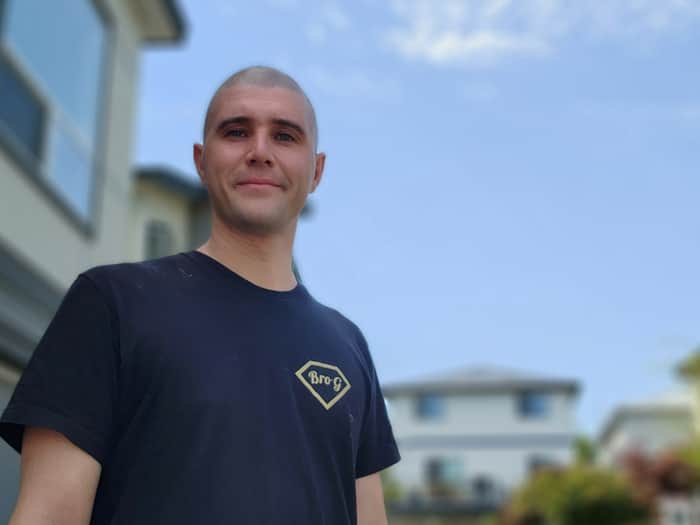
Kirk Johan Morris is a full-time game developer that’s building the dev community saricden labs on the side. The community embraces the creative side of coding and offers a judgment-free space where "nobody will be made to feel like an imposter."
I spoke with Kirk about how he approaches part-time building while juggling full-time work.
Tell us about your project
The idea with saricden labs is to provide a safe place to “talk shop” for creative software developers of all skill levels.
I want to see a place where developers can get answers and discuss coding topics without needing to feel like an expert. Sometimes you’re the teacher, other times you’re the student. I’m encouraging my users to see the value in both roles and not view one as superior to the other.
How do you balance full-time work with indie hacking?
The way in which I approach the balance is by remembering that until my side projects can pay my bills, deadlines at work need to come first. That said, you do also need to allocate time for your side projects.
The reality of this is you need to be comfortable putting in long hours every day. But in my case, I find working on my side projects so enjoyable that the additional time for them doesn’t really feel like work. In actuality, I find working on side projects fun, and I would encourage IH devs to search for a side project that gives them the same feelings before committing to the long days that come with them.
What’s your schedule look like?
My schedule is fairly all over the place. I tend to address the most pressing matters first, whether this is at my job or on my own projects. The big takeaway with doing both simultaneously is that you will inevitably end up working long hours, but if your side projects bring you a sense of enjoyment, the additional time doesn’t feel like work.
At what point would you consider quitting your full-time job?
Ideally, at the point where my project is making a small amount of income with which I can supplement my work income, I would dial back my work to part-time. Then one day in the future, when my project is generating enough that it can completely replace my job income and keep a roof over my head, I’ll consider quitting and pursuing my own project full-time.
What have you learned about yourself in this process?
In pursuing a balance between building my own projects and full-time work I’ve learned that I’m the sort of person who thrives in chaos. I wish I could tell you I had a meticulously tight schedule, but the truth is I jump between projects and commit time when I see an opening.
Any advice for folks on the same journey?
I think the most important thing is to remember that, until you’re making a stable income from your own projects, you need to prioritize your work. That being said, I strongly encourage folks on this journey to hold out for the right side project. A project that doesn’t feel like an additional job to work on makes it all possible. Putting in additional hours every day suddenly feels fun, instead of a chore.
Have you encountered imposter syndrome?
I absolutely have encountered this at various stages of my career. For me, it was an uncomfortable inner narrative that I’d somehow faked my way into the opportunities I’d been presented with, and sooner or later I’d be found out.
Something that helped me build confidence to the point of no longer believing this narrative was putting a lot of time and energy into my own projects that I found fun to build. When the work is fun and you aren’t beholden to anyone, it’s hard to feel like a fake, and this positive space can do wonders for honing your skills.
What about analysis paralysis?
There certainly have been times I’ve been frozen by the expansive array of paths one can take to get from point A to point B.
That being said, I think the easiest way to circumvent this sense of paralysis is to focus not on the absolute best library/stack/UI framework or whatever it may be, and instead utilize the ones you enjoy working with the most. A product that you enjoy making will almost always turn out to be a better product, not to mention you’ll simply have a better time in the process!

Such an interesting interview. Will find Kirk on Twitter and follow him. It is such a great thing by the way to take some experience from already experienced people!
Thank you @MondayCode !
I'm glad you took something from article, if I can ever be of help to you and your ventures please don't hesitate to reach out! :)
Nice! Thanks for sharing your story Kirk.
One thing that stuck me from this is how important fun is in the indie hacking equation. Some people are motivated purely by the economic opportunity with indie hacking but for many others, that's only part of the motivation. If you're not having fun while building, it's going to be a lot harder.
Thanks @welp :)
Yes, I really believe you need to enjoy whatever your "side-quest" is if it's ever to blossom into a full-time venture. And as it should be, you're creating this opportunity for yourself, so why wouldn't you want to make it one you'll enjoy?