Funding Growth Without Giving Up Equity or Control
The word “funding” typically invokes a familiar scene: a slick boardroom, a hefty pitch desk, and your ownership slowly fading as investors close in.
We’ve all heard that to grow, you need to hand over large portions of your company to VCs who care more about chasing 100x returns than building something strong and profitable.
But things are different now. That old decision – either bootstrap endlessly or surrender to venture capital – is no longer the only option. You can actually get the money you need to grow without losing control or splitting up your company.
If you’re already generating revenue and want to scale, here are the best ways to fund your growth and keep all your equity.
Community Loans
There’s a growing movement toward community loans – essentially crowdfunded debt. Instead of big banks or lenders, you raise money directly from your users, fans, or fellow founders.
Sites like Wefunder (using revenue-shared notes) or Honeycomb Credit let your community invest in your business. They don’t get equity; you simply pay them back from your revenue or with a fixed interest rate.
It’s a win-win. You get the capital you need, and your customers become literally invested in your success. They aren’t trying to replace you as CEO or rush you to sell; they just want to support something they believe in and earn a better return than a savings account.
Revenue-Based Financing (RBF)
For SaaS founders with consistent monthly income, revenue-based financing just makes sense. Instead of risking your house or signing a personal guarantee like with a bank loan, RBF lets you borrow based on your business’s future.
You repay a small portion of your monthly revenue – usually 5 to 10% - until you reach a set cap, typically 1.1x to 1.3x what you borrowed.
Why is this so useful? Zero dilution. You keep full ownership. Repayments adjust to your revenue. Have a slow month? Your payment drops.
Also, you get cash quickly. There are platforms that can fund you in as little as 48 hours just by checking your Stripe account.
Check out the video below to learn more about RBF.

Strategic Credit
Many founders shy away from business credit cards or credit lines because “debt” sounds risky. But if you use them wisely, they’re often the cheapest funding available.
Suppose every dollar you put into Meta ads brings in three dollars in lifetime value, and you can use a 0% APR card for a year to cover that ad spend. You’re almost printing money.
The key is to be sure of your numbers – only use credit to scale what’s proven to work, not to experiment or hunt for product-market fit.
Pre-Sales and Lifetime Deals (LTDs)
Launching a lifetime deal can be risky, but it’s a powerful move, especially in the early days. It’s almost like borrowing from your future customers.
The catch? You have to support those users forever, even though they only paid once. But if your cost to serve each new user is minimal (which is common in software), a strong LTD campaign can put $50k to $100k in your account.
That’s enough to hire or accelerate development – all without giving up any equity or dealing with investors.
Non-Dilutive Government Grants
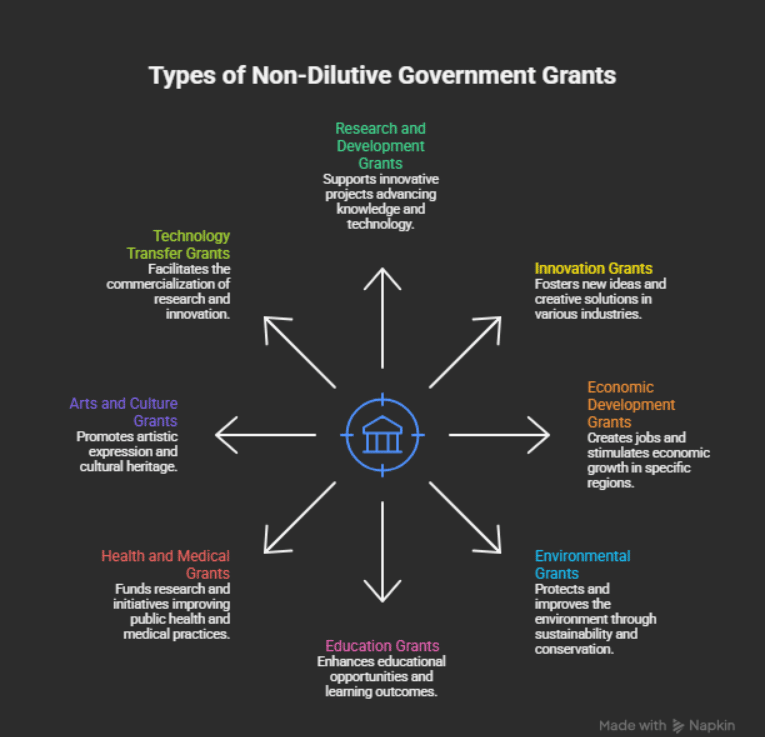
Depending on your location and the type of technology you’re developing – whether it’s AI, green tech, or advanced R&D – government grants can seem like free money.
In the US, programs like SBIR and STTR award billions to small businesses every year. In Europe and Canada, innovation grants and tax credits (like SR&ED) can cover up to 70% of your payroll costs. That’s a significant portion.
But let’s be honest: the paperwork is brutal. You might spend months preparing for your application, then wait even longer for a response.
So, think of grants as a helpful bonus, not your primary growth strategy.
How to Choose Your Path
Before you pursue any funding take a close look at your cost of capital.
Equity is costly. If you give up 10% of your business – and eventually sell for $10 million – you've essentially paid $1 million for that funding.
Revenue-based financing sits somewhere in between. Borrow $100k, and you’ll repay around $120k.
Community loans? They’re typically cheaper, and those who lend often become fans of your brand.
Bootstrapping with our own profits is always the least expensive but much slower.
The Independence Mind Shift
You don’t need a boss to grow. People often say that taking outside money means answering to the board. That’s only the case if you give up equity.
If you use debt, revenue share, or community-backed loans, your lender mainly cares about getting repaid. They don’t care about your diversity stats, whether you want to pivot, or how soon you plan to sell – unless it affects their repayment.
With non-dilutive funding, you stay in control. You manage things your way, decide your own salary, and choose when or if you want to exit.
So, stop pitching. Start crunching the numbers on debt. That’s how you scale while staying independent.


This is an important topic because founders often assume the only way to accelerate growth is through equity financing.
In reality, businesses with strong cash flow, predictable revenue, or efficient acquisition channels may have access to multiple growth funding options while preserving ownership and strategic flexibility.
Jumping in on this older post because I’m curious how folks here are funding early growth lately. I’ve been leaning on revenue-based financing and small customer prepayments, which has worked better than I expected. Has anyone tried mixing stuff like RBF with productized consulting to keep cash flowing without giving up shares?