Galvanize your Direct Selling Business with Modern Sales Incentive Programs

In the wise words of American Economist Steven Levitt, “An incentive is a bullet, a key: an often tiny object with astonishing power to change a situation”.
You could get your customers to make a purchase or draw more distributors into your network through powerful sales prospecting methods that speak of brand values and benefits. But for that extra push that could make the flow easy and fast, the simplest yet most effective technique is an incentive program.
Even before the advent of technology and innovation, incentive programs existed in all areas of business according to the trade and people involved in it. With each passing year, sales incentive programs are found to be powerful enough to motivate and inspire a team’s performance and commitment to the brand.
Sales Incentives–What and Why?
In the direct selling scenario where people with diverse cultures, backgrounds, education, and language work together, incentive programs are a great way to bring your people together under the brand wing. Direct selling customers can relate an incentive program as a brand interaction that holds them closer to the brand increasing their trust and bonding. However, incentive programs need to be structured ideally to suit your direct selling business and marketing strategies because incentives should complement the growth of your business and not eat up your profits. An excellent program would help leverage maximum benefits out of offers and incentives to increase customer response and better results for the brand.
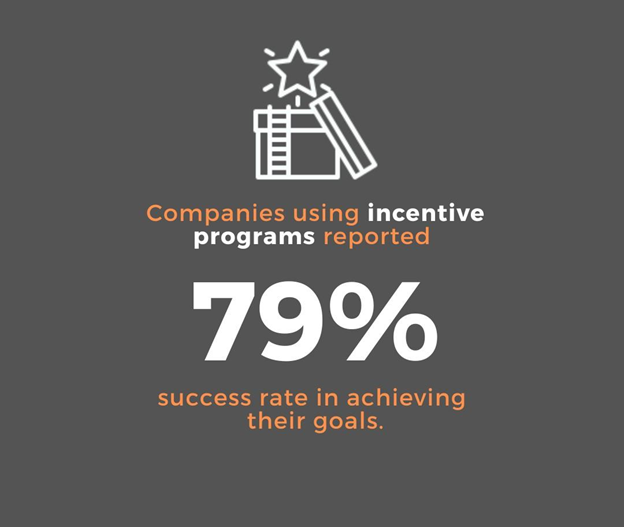
So what are the factors that make an incentive program effective? As we mentioned before, it is a motivator that encourages a customer or a distributor to sign up with a brand or get associated with the brand in the long run. Preparing a clear mandate on who receives incentives and under what conditions is important so that your customers and distributors are aware of your plans and they can decide on their actions and responses.
As a direct selling best practice, it is always wise to stick to a given timeframe where you run your incentive program with a limited set of participants to increase the accessibility and exclusivity of the program. Nevertheless, the program has to have clarity that attracts customers and members to the network rather than diverting them with conditions and norms that are Greek and Latin. That said, your incentives also have to have a perceived value. Since a brand is offering the incentive, as a coupon or of monetary value, or as goodies, it has to have a value that speaks of the brand’s credibility that pushes them further to continue with the program or even the brand. An excellent sales incentives program is a great way to ensure distributor engagement and customer retention at the same time.

Be it a reward and loyalty or an incentive program, one-size-fits-all doesn’t work. Tailoring your themes and programs according to your target audience based on values, spending levels, and other criteria is necessary to have the plan effective for your brand and your network. Relevancy defines the effectiveness of any marketing channel for direct selling business.
So How Do You Plan Incentive Programs in a Direct Selling Business?
From your customer and distributor behavior and analysis based on their activities and involvement with the business, it is easy to identify the need to implement or integrate an incentive program into your business. For direct selling businesses, a thoroughly designed sales incentive is an effective tool to expedite their growth and reach goals.
First and foremost, it is important to understand the purpose behind implementing an incentive program in your business. In the direct selling scenario, usually, the objective could be diverse–customer acquisition, product trial, upselling and cross-selling, customer retention, and most common to clear off slow-moving products from the stock. Have well-analyzed data and compare it with your previous experiences with customers and distributors to design realistic incentive plans that aren't heavy on the organization too.
All said and done, how do you zero down on what should be the “incentive”? Like the pack of a slow-moving product that comes with your magazine subscription, it cannot be an uninteresting product that adds no value to the giver and the receiver. It has to be interesting, with value, and most importantly cost-effective.
Once these basics are in place, the next big thing is to decide where to place the bar–the activity level that receives the incentive can’t be too low, which could create a negative impact on the brand, and can’t be too high, which customers and distributors would consider it ‘unachievable’ and never give it a try.
However, with every plan in place, there also needs to be a plan B if the campaign doesn’t work well for the brand. Right from the start of the program, there needs to be proper tracking of how the program goes, from enrollment to activities on all ends. At any instance, when you observe deviance from your planned route, make sure you can force-stop the program. Even otherwise, have an expiry date for the program. It could either be through a scheduled announcement of when to when does the program run through or if you would like to stop the program whenever you feel like, ‘until stocks last’ is the safest tag because you decide what is your stock and whether or not to restock.
In a direct selling business set-up where the patrons and the distributors and the brand are operating from different parts of the world, communication is one important aspect that needs to be given major focus. Even after designing a plan thoroughly well, if it isn’t communicated properly from the brand’s end, it could adversely affect the brand’s will and value.
Modern Sales Incentive Programs – Understand Where You Place Your Brand
With every generation finding their resort in the direct selling business, customer personas have drastically changed over the years. What worked for your brand even last year might not work this year, because the attitude and mindsets of individuals involved in your business might not perceive your objectives the way you portray them which ultimately brings in damaging consequences.
Unlike the primitive methods where brands could get in touch with their sales team and customers through mail, social media and instant messaging have found their way in with communication and decision-making faster. That said, even individuals who are not associated with you are also watching your activities most importantly your competitors. Hence, brands must design their strategies around incentive planning and such sensitive growth-determining tactics with utmost caution and consideration.
More than what you offer them as a perk or a benefit, that would analyze your brand history, your approach to marketing and businesses, and how you treat your patrons; because with the advent of social media nothing is a secret and your activities are visible in the broad daylight. They value the ethics and trustworthiness of a brand more than the handful of incentives that the brand has to offer.
People connect themselves with the brand if the brand holds ethics and standards that are relevant to its customers and the sales team. Else, customers find it difficult to build a connection with the brand in the long run.
Modern direct selling business marketing and the strategies built around it cannot be solely based on objectives, KPIs, and targets but it should be designed around varying people’s perspectives and behavior which is the key to the success of not only a sales incentive program but the business itself.
