Gojek Clone Business Model: How to Build a Profitable Super App
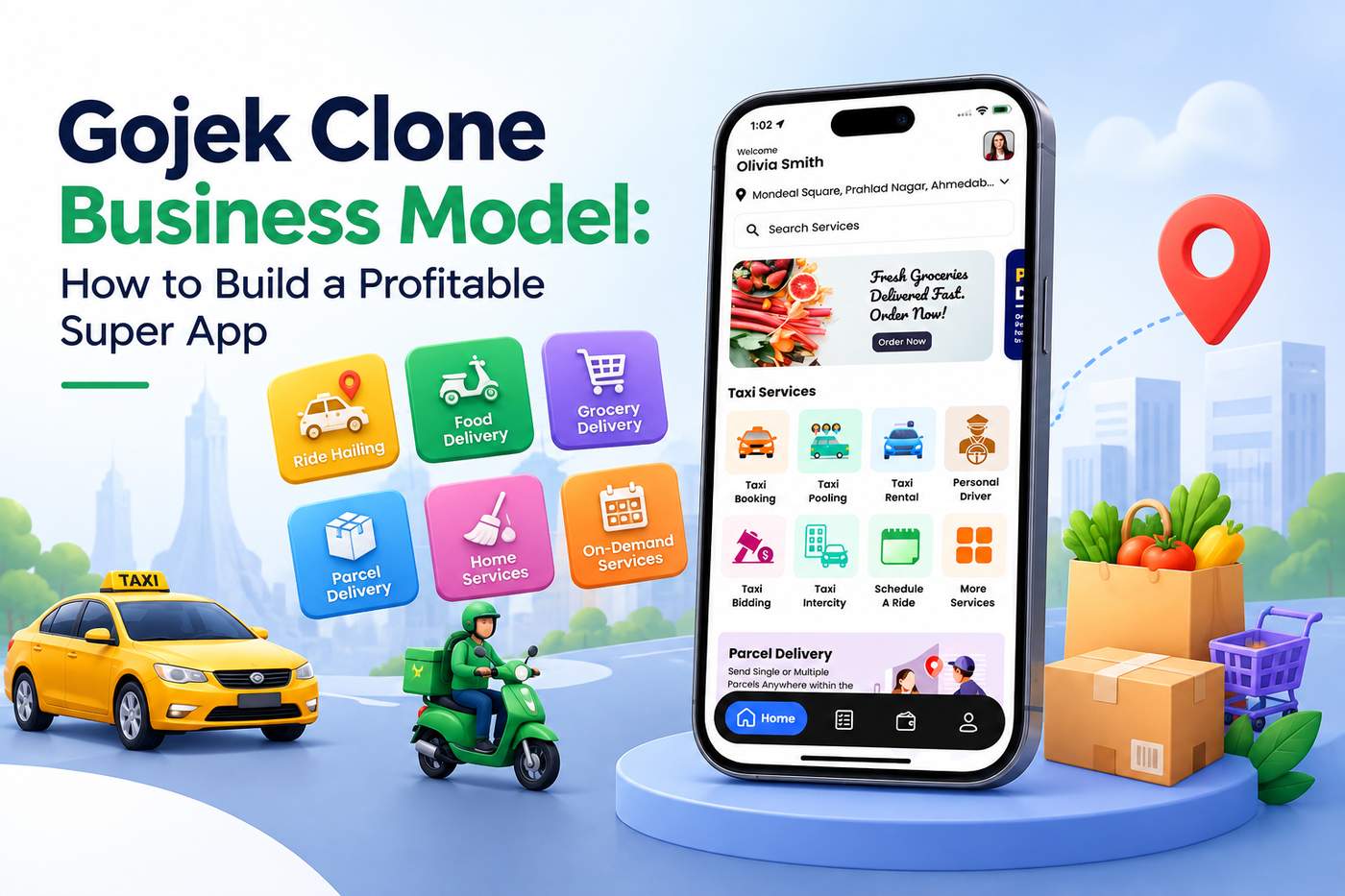
The rise of on-demand services has changed how people access everyday essentials. Instead of using separate platforms for transportation, food delivery, grocery shopping, home services, and other needs, customers increasingly prefer a single application that brings multiple services together.
This shift has created a strong opportunity for entrepreneurs looking to build a Gojek-like super app. A well-planned Gojek Clone business model can help startups enter the on-demand economy with multiple revenue channels while giving customers a convenient way to manage different services from one platform.
But profitability does not come simply from launching an app with many services. Entrepreneurs need to select the right service categories, understand customer demand, establish reliable operations, and create a sustainable monetization strategy.
What Is a Gojek Clone Business Model?
A Gojek Clone business model is based on creating an all-in-one on-demand platform where users can access different services through a single app. Depending on the target market, the platform can combine services such as ride-hailing, food delivery, grocery delivery, parcel delivery, courier services, home maintenance, beauty services, and more.
The platform generally connects three major groups:
Customers who request products or services
Service providers, drivers, restaurants, stores, or professionals who fulfill those requests
Platform administrators who manage users, providers, payments, commissions, promotions, and operations
This multi-sided structure allows the business to generate revenue from several activities instead of depending on a single service.
Why Build a Gojek-Like Super App?
A super app can create more opportunities for customer engagement because users can access multiple services without installing several applications.
For example, someone may initially download the application to book a ride but later use it for food delivery or grocery shopping. This creates opportunities to increase customer lifetime value and encourage repeat transactions.
A multi-service platform can also help businesses diversify revenue. If demand for one service decreases temporarily, other categories can continue generating transactions.
For entrepreneurs, the major advantages include:
Multiple revenue streams
Wider customer reach
Cross-selling opportunities
Higher customer retention
Better utilization of the existing user base
Opportunities to expand into new service categories
However, businesses should avoid launching too many services at once. Starting with categories that have strong local demand can make operations easier to manage.
Key Components of the Business Model
A successful on-demand super app needs a clear structure. Before development begins, entrepreneurs should define how customers, service providers, and the platform will interact.
1. Customer Application
The customer app should make discovering and ordering services simple. Users should be able to create accounts, browse available services, place bookings or orders, make payments, track requests, and communicate with providers.
Features such as real-time tracking, digital payments, ratings and reviews, order history, promotional offers, and push notifications can improve the overall experience.
2. Service Provider Platform
Drivers, delivery partners, restaurants, retailers, and professionals need dedicated tools to manage incoming requests.
Depending on the service category, providers may need features for accepting or rejecting requests, updating availability, managing earnings, viewing customer details, tracking orders, and communicating with customers.
3. Admin Dashboard
The admin panel acts as the control center of the platform. Administrators can manage customers and service providers, monitor transactions, configure commissions, manage promotions, review reports, and oversee platform activity.
A centralized dashboard becomes especially important as the business adds more services and expands into new locations.
How Does a Gojek Clone Make Money?
One of the biggest attractions of the super app model is its ability to support multiple monetization methods.
Commission on Transactions
The platform can charge service providers a percentage of each completed transaction. For example, restaurants, drivers, stores, or independent professionals can pay a commission for orders or bookings generated through the platform.
This can become the primary revenue source when transaction volume increases.
Delivery Fees
For food, grocery, parcel, and other delivery services, customers can be charged a delivery fee based on factors such as distance, demand, location, or order size.
Dynamic pricing can also be introduced during high-demand periods, provided it remains transparent and reasonable.
Service Charges
The platform can apply a small service or convenience fee to certain transactions. This approach creates another revenue stream without relying entirely on provider commissions.
Advertising and Sponsored Listings
Restaurants, stores, and service providers may pay to promote their offerings inside the application. Sponsored placements, promotional banners, and featured listings can generate advertising revenue while helping businesses reach more customers.
Subscription Plans
A subscription program can provide benefits such as discounted deliveries, special offers, priority support, or reduced service fees.
Subscriptions can encourage frequent customers to stay active on the platform while generating recurring revenue.
Business Partnerships
The platform can also collaborate with local businesses, retailers, financial service providers, and other organizations to create partnership-based revenue opportunities.
A diversified monetization strategy can make the business less dependent on one income source.
Choosing the Right Services
The services included in a Gojek Clone App should be selected according to the target market rather than simply copying every category available on an established super app.
For example, a startup operating in a metropolitan area might begin with:
Ride-hailing
Food delivery
Grocery delivery
Courier and parcel delivery
Home services
After building a stable customer base, the company can introduce additional categories based on user behavior and market demand.
This phased approach can reduce operational complexity and allow the business to validate each service before investing heavily in expansion.
Technology Features That Support Growth
Technology plays an important role in managing a multi-service platform efficiently.
Real-time GPS tracking can help customers monitor rides and deliveries. Automated notifications can keep users informed about booking and order updates. Secure payment integration can simplify transactions, while analytics can help administrators understand customer behavior.
AI-powered capabilities can further improve the platform. Businesses can use intelligent recommendations to suggest relevant services, demand forecasting to prepare for busy periods, and route optimization to improve delivery and transportation efficiency.
A scalable architecture is equally important. As users, transactions, and service categories increase, the platform should be capable of handling additional traffic without compromising performance.
Strategies to Make the Super App Profitable
Launching the application is only the beginning. Profitability depends on how effectively the business manages customer acquisition, operations, and retention.
Start With a Focused Market
Instead of expanding nationally from day one, launch in a selected city or region. This allows the business to understand local demand and improve its operations before scaling.
Build a Strong Provider Network
Customers will continue using the platform only when services are reliable. Recruiting quality drivers, restaurants, stores, and professionals should therefore be a major priority.
Use Promotions Strategically
Introductory discounts can attract new users, but excessive discounts can negatively affect margins. Businesses should gradually shift toward loyalty programs, personalized offers, and targeted promotions.
Focus on Customer Retention
Acquiring new customers can be expensive. A better long-term strategy is to encourage existing users to make repeat purchases through loyalty rewards, subscriptions, personalized recommendations, and reliable service.
Monitor Unit Economics
Businesses should continuously track metrics such as customer acquisition cost, average order value, commission revenue, delivery expenses, retention rate, and customer lifetime value.
These numbers help determine which services are profitable and where operational improvements are needed.
Gojek Clone vs. Building From Scratch
Developing a completely custom super app can require significant time, resources, and technical expertise. A ready-made or customizable Gojek Clone solution can provide a faster starting point by offering pre-built functionality for common on-demand operations.
Entrepreneurs can customize branding, service categories, payment methods, business rules, and other components according to their market requirements.
The right choice depends on the business's budget, timeline, technical requirements, and long-term expansion plans. The important factor is choosing a solution that can scale rather than focusing only on the initial development cost.
The Future of the Super App Business Model
The super app concept is moving beyond simply combining several services under one application. Personalization, automation, AI-powered recommendations, digital payments, and intelligent logistics are likely to play a larger role in the next generation of on-demand platforms.
For entrepreneurs, this means the opportunity is not merely to create another multi-service application. The goal should be to build a digital ecosystem that understands customer needs and makes everyday transactions faster and easier.
Final Thoughts
A Gojek Clone business model can provide entrepreneurs with a flexible foundation for entering the growing on-demand services market. Its biggest advantage is the ability to combine multiple services and revenue channels within one ecosystem.
However, success requires more than replicating an existing application. Entrepreneurs need to identify the right market, select relevant services, develop a reliable provider network, establish sustainable monetization methods, and continuously improve the customer experience.
With a focused launch strategy, scalable technology, diversified revenue model, and strong operational management, a Gojek-style super app can evolve from a single-service startup idea into a profitable multi-service digital platform.

