Google Search Console branded traffic audit: 243 non-brand clicks from 524,000 impressions
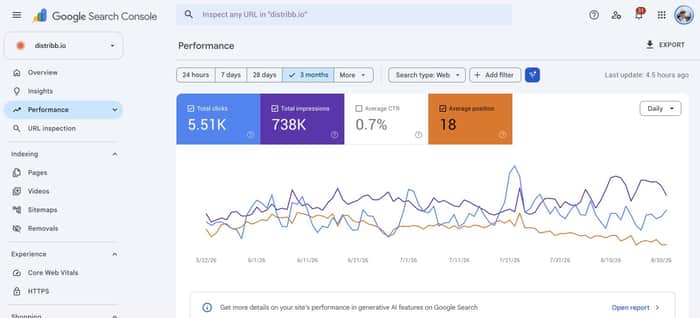
Over the three months ending August 21, Distribb's Google Search Console report showed 5,510 clicks and 738,000 impressions. Those totals looked healthy until I ran a Google Search Console branded traffic audit.
I excluded searches containing current and old brand variants. The remaining non-brand queries produced 243 clicks from 524,000 impressions. That is about 4.4% of all clicks from 71% of all impressions.
This audit shows which pages introduce Distribb to people who did not search for its name. You can run the same five steps on your own site.
Use Distribb to turn your Search Console data into an SEO plan.
Start with the unfiltered three-month report
Open Performance in Google Search Console and choose Web search plus a fixed date range. I used three months, from May 22 to August 21.
Write down the four cards before adding a filter. Distribb had 5,510 clicks, 738,000 impressions, a displayed click-through rate of 0.7%, and an average position of 18.
The fixed range matters because you need the same baseline when you run the audit again. A 28-day filtered report and a three-month unfiltered report cannot be compared.
Build one regex for current and old brand names
The visible brand queries included distribb, distribb io, distribb.io, distrib, distribb skill, rebelgrowth, and rebel growth.
I opened Add filter, chose Query, selected Custom (regex), and set the match type to Doesn't match regex. The pattern was:
(?i)(distrib|rebel\s*growth)
(?i) makes the match ignore capital letters. distrib catches Distribb plus the common shortened spelling. rebel\s*growth catches the old brand with or without a space.
Your pattern should include the company name, domain spelling, product names, common misspellings, and an old name when people still search for it. Check the unfiltered query table before writing the pattern.
Read clicks and impressions separately
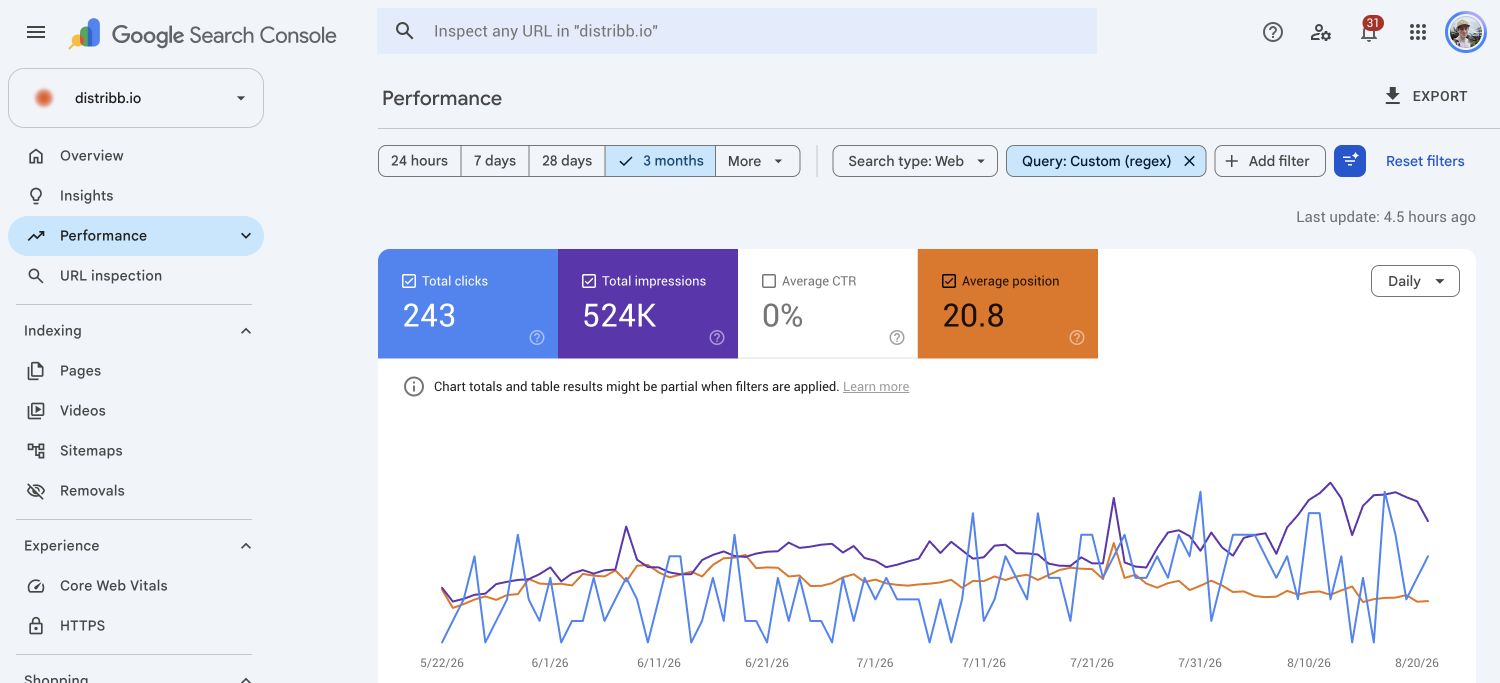
The filter left 243 clicks and 524,000 impressions. Search Console showed an average position of 20.8 and rounded the click-through rate to 0%.
The raw cards work out to roughly 0.05% click-through rate. The pages are appearing for many topic searches, but few of those appearances turn into visits.
That gap tells me where the next SEO work belongs. The site already gets clicks from people who type a brand name. The larger open job is turning non-brand exposure into clicks.
Search Console also warns that chart totals and table results might be partial when filters are applied. Treat these numbers as a repeatable operating baseline rather than a complete analytics export.
Choose a query, then inspect its current page
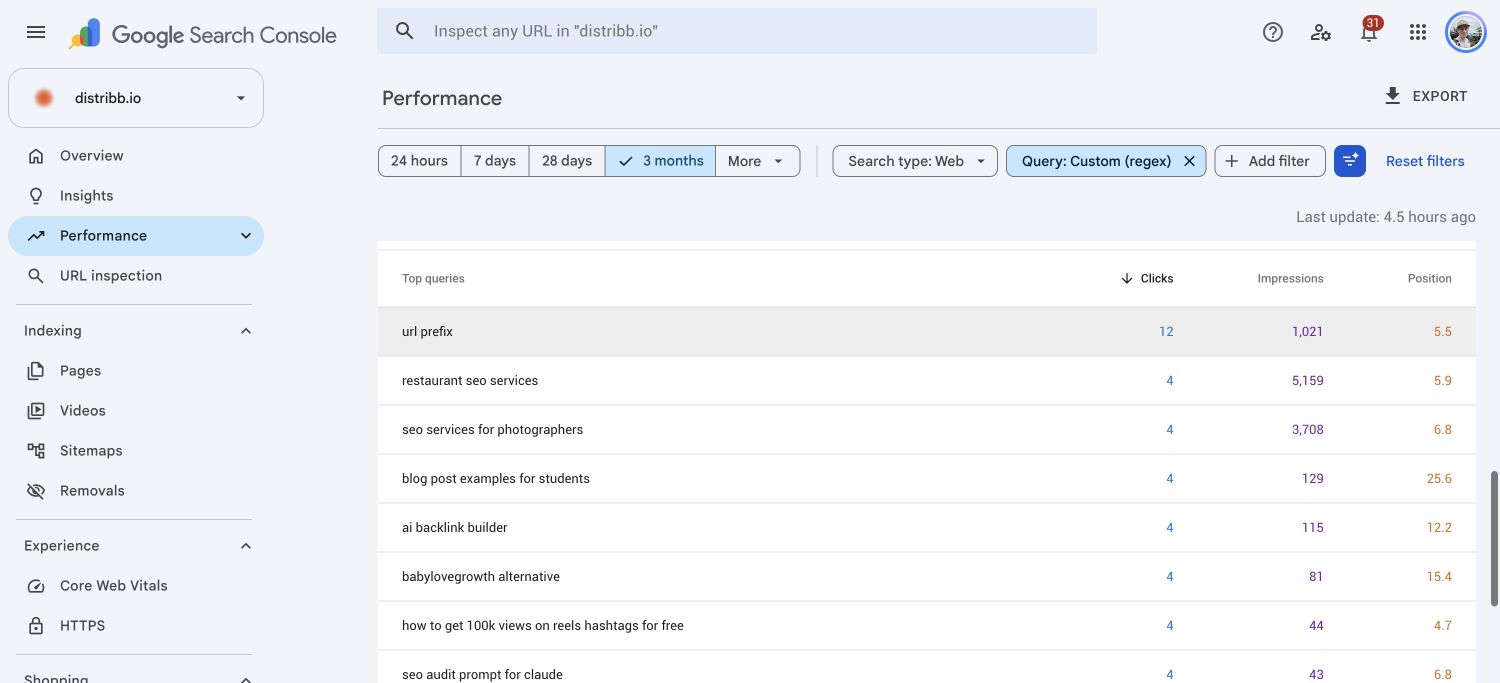
The filtered Queries tab showed restaurant seo services with 5,159 impressions, 4 clicks, and an average position of 5.9.
That query already has exposure near the first page. Four clicks from 5,159 impressions is enough reason to inspect the result before writing another article.
Select the query, switch to Pages, and open the page Google already shows. Compare its title and opening with the search result. Check whether the page answers the service question directly. A new page is useful only when the current page serves a different search intent.
Build the refresh queue from the Pages tab
The Pages tab turns the audit into a work list.
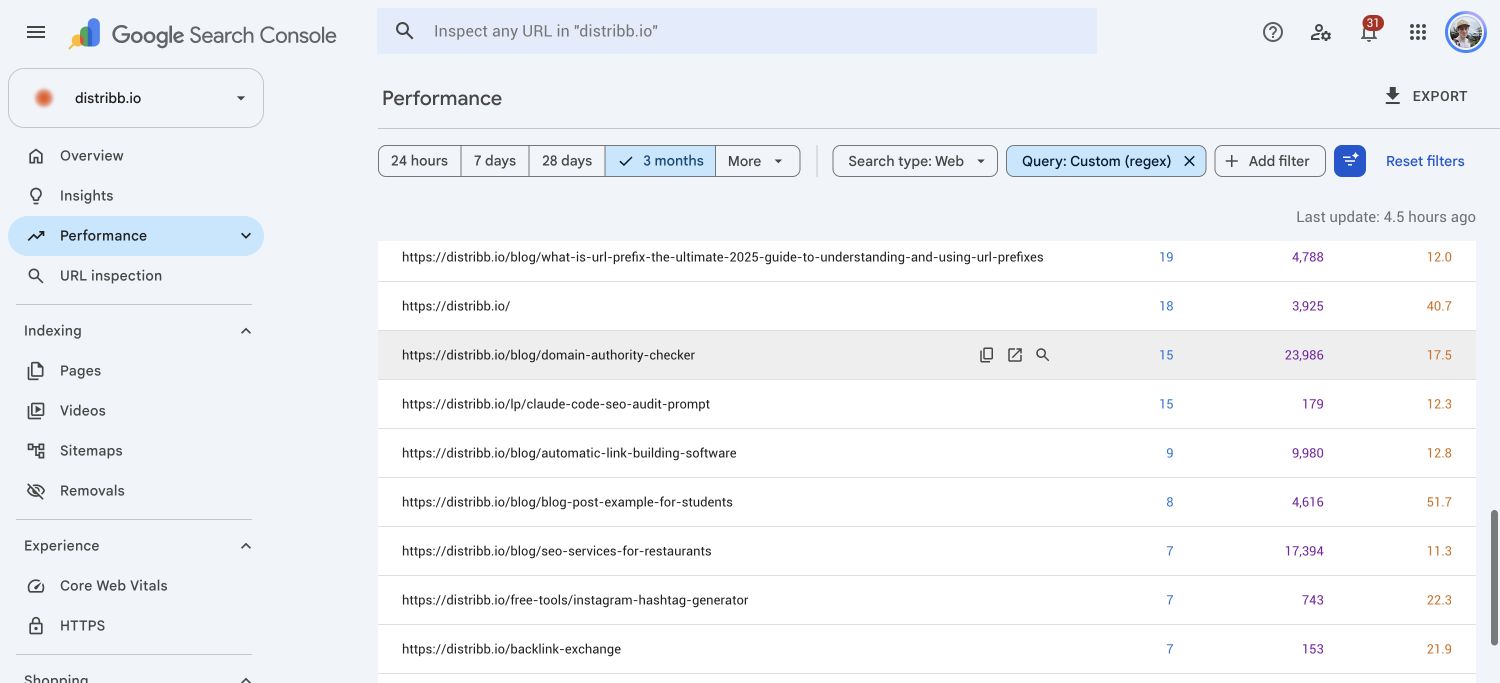
Distribb's domain authority checker had 23,986 impressions, 15 clicks, and an average position of 17.5. The restaurant SEO services page had 17,394 impressions, 7 clicks, and an average position of 11.3. The automatic link building software page had 9,980 impressions, 9 clicks, and an average position of 12.8.
I would open the restaurant page first because it is already close to page one and has a clear service query in the query table. The next check is literal: does the title promise restaurant SEO services, and does the opening explain who the service is for, what work is included, and what the reader should do next?
Record the page, its main query, clicks, impressions, position, and the date. Make one focused change, then use the same three-month view on the next audit.
Run the Google Search Console branded traffic audit in five steps
- Save the unfiltered clicks, impressions, click-through rate, position, and date range.
- List every current, misspelled, product, domain, and old brand query that appears in the table.
- Exclude those names with one custom regex and record the remaining totals.
- Use Queries to find searches with exposure and few clicks, then inspect the page Google already shows.
- Use Pages to choose one refresh, save the baseline, and compare the same report after the change.
Frequently asked questions
What is branded traffic in Google Search Console?
Branded traffic is search activity from queries that contain your company, product, domain, or another name people use for your business. In this audit, the brand family included Distribb plus the old Rebelgrowth name. The unfiltered query table showed the exact spellings people used.
How do I exclude branded queries in Google Search Console?
Add a Query filter, choose Custom (regex), select Doesn't match regex, and enter a pattern that covers your brand variants. Distribb used (?i)(distrib|rebel\s*growth). Save the date range and pattern with the result so the audit can be repeated.
Which brand spellings should I include in the regex?
Include the official name, domain form, product names, common misspellings, and an old name when it still appears in the query table. Distribb's table showed distribb, distribb.io, distrib, distribb skill, rebelgrowth, and rebel growth. Build the pattern from observed queries rather than guesses.
Why can non-brand impressions be high when clicks are low?
An impression counts when a result appears, including searches where the page ranks too low or the result does not earn the click. Distribb's non-brand report showed 524,000 impressions, 243 clicks, and an average position of 20.8. The query and page tables show where that exposure is coming from.
Should I create a new page for every non-brand query?
No. Select the query and check which page Google already shows before creating anything. Update the current page when it serves the same intent, and create a separate page only when the existing page answers a different question.
Which Search Console report should I check after filtering brand queries?
Check Queries first and Pages second. Queries show the words people used, while Pages show the URLs receiving that exposure. Pairing the two gives you a specific page and search intent to inspect.
What percentage of your Search Console clicks remain after you remove every brand spelling?
Use Distribb to plan and publish the pages your non-brand report points to.

It sounds like you’re on the right track with your GSC data! The number of impressions compared to clicks gives a good indication of your click-through rate (CTR), which in your case is around 0.74%. While that’s decent, there might be room for improvement, especially if you're seeing a lot of impressions without a proportionate number of clicks.
I’d suggest taking a closer look at your top-performing pages in the Search Console to identify what keywords are driving traffic. Consider whether the content aligns with search intent—sometimes, tweaking the meta titles and descriptions to make them more compelling can significantly boost CTR.
If you haven’t yet, dive into the "Performance" report and sort by queries. Identify any keywords where you're getting impressions but not many clicks. Those are golden opportunities for optimization. You might want to create or enhance content targeting those keywords to make it more relevant and engaging.
Also, analyze whether those pages are mobile-optimized, as mobile usability issues can impact engagement. Don't hesitate to run tests for different headline variations or visuals to see what resonates better.
Lastly, since you mentioned branded traffic, ensure that any related keywords targeting your brand have strong calls-to-action or compelling content that leads users deeper into your site. This focused strategy can enhance user engagement and conversion rates down the line.
Keep experimenting and fine-tuning based on what you discover—it's a process!
Did the same audit recently and my non-brand number was basically zero, so 243 clicks honestly looks like progress from here. The humbling part is what the impression count reveals: people see you in results, they just do not trust the unknown name yet. Fixing that with content takes months, which is why I stopped celebrating total clicks as a metric. Branded share of clicks is now the only line I check weekly.