Google Search Traffic Drop ChatGPT Impact
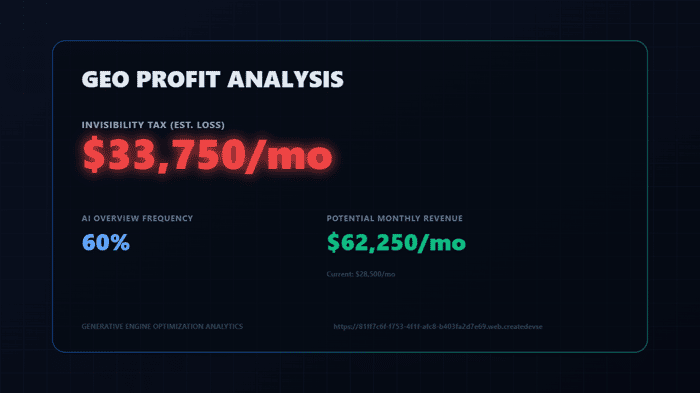
My upcoming tool reveals the exact fan-out queries AI uses behind the scenes so you can rank in AI Search in days, not months
Waitlist: https://invisibilitytax.com
SaaS Founders: Your biggest competitor isn't another tool. It's AI Overviews answering users before they ever reach your site. Find out your "Invisibility Tax" at that link and join the waiting list!

The shift is real and it's forcing solopreneurs to diversify acquisition channels faster than they expected.
The solopreneurs handling it best are the ones who never had Google as their primary channel - community-driven distribution (IH, Reddit, niche Slack groups, Twitter) is holding up because those sources feed AI training data anyway. If you're showing up in the communities where your ICP hangs out, you're getting picked up by AI-assisted search too.
The operational challenge this creates: when your traffic comes from 5 community channels instead of 1 SEO funnel, you need better tracking of which channels are actually converting. Most solopreneurs don't have that visibility - they see overall signups but can't trace which community comment or thread drove them. A CRM linked to acquisition source is suddenly much more valuable than it was when everything came through Google.
The hardest thing about B2B is that you're often selling to someone who didn't budget for your category. They need the result you provide but never planned to pay for it.
The products that win here usually create a new budget line (by being categorically new) or steal from existing budget by making the ROI comparison obvious. Which of those are you trying to do?
The Google traffic erosion story is real — and it's going to keep accelerating. ChatGPT/Perplexity handle informational queries directly now, so the top of the funnel that SEO used to own is evaporating.
What's interesting is this creates an inverse problem: if AI is now the first touchpoint for discovery, then your content needs to be structured for AI consumption, not just keyword-optimized for crawlers. Clear entity definitions, explicit purpose, structured outputs — the things LLMs actually parse well. I built flompt from this exact insight: a visual prompt builder that forces semantic structure into AI inputs. The same principles apply to content that you want AI to cite and surface — clarity of role, objective, and constraints wins over keyword density.
A ⭐ on github.com/Nyrok/flompt would mean a lot — solo open-source founder here 🙏
This is a great analysis — and it hits a real validation point for no-coders building content-driven tools or SEO traffic-dependent products.
One nuance I’ve noticed: the real impact of AI search isn’t just traffic volume change — it’s where users decide to stop and act. Even if raw search drops, if the quality of intent rises (more qualified clicks), that matters for validation.
From a no-code builder’s lens, I’d be curious:
Those signals often tell you whether a drop is a problem to solve or an optimization shift.