Gothic Greenhouse Structures with Q235 Steel: Cost and ROI Analysis for Commercial Projects
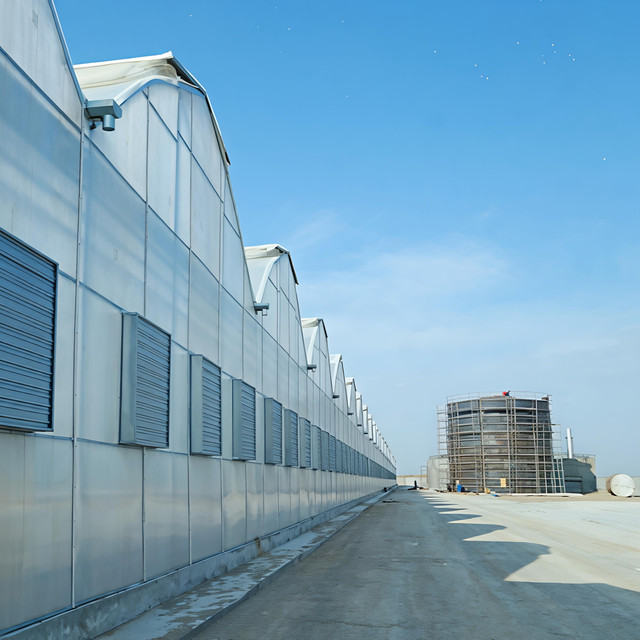
In agricultural infrastructure investment, the biggest waste usually stems from "over-engineering". For most commercial planting scenarios, blindly pursuing high-strength steel without considering structural mechanics will directly push up the initial cost premium by more than 20%. Based on practical experience, this article shares why the combination of "Gothic pointed roof design + Q235 carbon steel" serves as the golden ratio solution balancing disaster resistance and rapid capital recovery.
Structure Determines Strength: The Mechanical Advantages of Gothic Pointed Roofs
In structural engineering, geometry often does the heavy lifting before material strength ever comes into play. The same logic applies to greenhouse design.
• Natural Diversion: The slope of Gothic pointed roof (generally over 25°) utilizes gravity to naturally drain snow and rainwater. When coping with 30–50 cm snow cover, the instantaneous load on the roof is far lower than that of traditional arched greenhouses.
• Wind Resistance Margin: The pointed roof transfers wind pressure along its curved surface to side columns. This means costly special steel is unnecessary; standard Q235 steel can maintain structural stability under gusts of Level 10.
• Space Gain: Greater vertical clearance facilitates air circulation and delivers an extra 20% production potential for trellised crops such as tomatoes and cucumbers.
🔍 In-depth Reference: If you wish to learn about specific engineering details on how Gothic structures adapt to large-scale planting bases, you may refer to this document:
[Gothic Commercial Greenhouse Design & Mechanical Parameter Guide]
Why is Q235 the optimal solution for commercial cultivation?
In greenhouse engineering, Q235 carbon steel is not a compromise, but a calculated optimal solution.
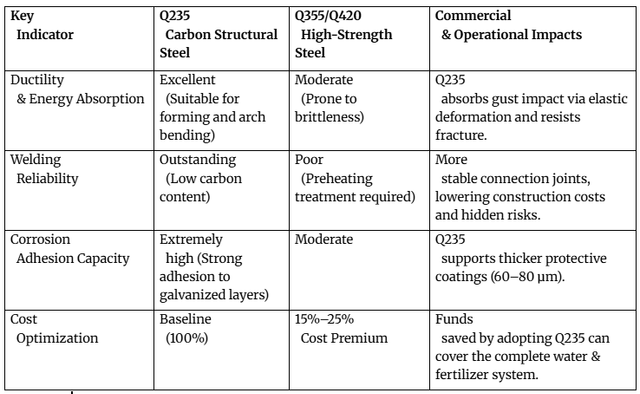
Q235 vs. Q355: Technical Parameter Comparison from an Investment Perspective
Hot-dip Galvanizing: The "Hidden Cost" Guarantee for 20-Year Operation
A greenhouse’s service life is not determined by metal hardness, but by oxidation resistance. Q235 features excellent compatibility with the hot-dip galvanizing process.
• Standard Thickness: The galvanized coating on both inner and outer surfaces must reach 60–80 μm.
• Anti-corrosion Lifespan: In high-humidity environments (Rh > 80%), Q235 galvanized frames offer a service life of 15–20 years.
• Low Maintenance Barrier: Q235 is a globally universal standard steel grade. Spare parts are highly accessible, and partial maintenance will not trigger production shutdowns due to non-standard materials.
Financial Perspective: Allocate Funds Saved from "Over-Engineering" to High-Impact Investments
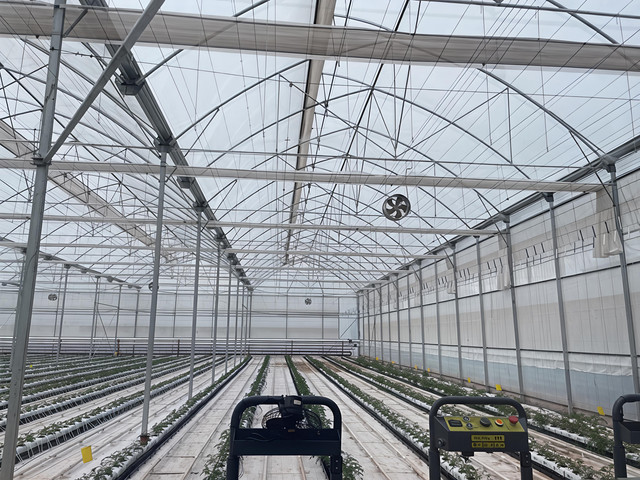
For planting bases of 10 hectares and above, adopting Q235 Gothic structures can save USD 15,000 to 25,000 per hectare compared with over-specified premium steel materials.
The capital saved can be reinvested in:
• Automated Ventilation & Shading System (approximately 8% yield increase)
• Precision Integrated Water & Fertilizer Equipment (20% fertilizer reduction, improved fruit uniformity)
• Premium PO/ETFE Cover Film (higher light transmittance, shortened growth cycle)
Buyer's Checklist — Procurement Risk Avoidance Guide
To secure your investment, verify the following details at contract signing:
• Consistent Wall Thickness: Strictly inspect whether the actual wall thickness of columns and beams meets standards to prevent inferior substitutions.
• Galvanizing Specification: Mandate full-piece hot-dip galvanizing instead of simple cold galvanizing or paint coating.
• Structural Integration: Confirm whether gutters and drainage systems are integrally formed with Gothic roofs, as this determines rain leakage risks.
FAQ
Q: What climate is the Gothic greenhouse suitable for?
A: The Gothic pointed arch is specifically engineered for regions facing heavy snow, tropical rains, or high-intensity winds. Its sharp ridge prevents snow accumulation, while the aerodynamic profile reduces wind drag. This makes it significantly more stable and durable than traditional round-arch polytunnels in extreme weather conditions.
Q: What is the service life of a Q235 Gothic greenhouse?
A: When using a high-quality hot-dip galvanized Q235 steel frame with an 85-micron zinc coating, the main structure is designed to last for 20 to 25 years. While the plastic covering film usually requires replacement every 4 to 6 years, the steel skeleton remains a permanent asset for your farm.
Q: Can this structure support year-round winter production?
A: Absolutely. The Gothic structure is designed to accommodate heavy internal insulation blankets and sophisticated heating systems. Its superior height creates a thermal buffer that retains heat more efficiently, allowing growers in cold climates to maintain optimal production temperatures even when outdoor temperatures drop well below freezing.
Q: How does the Gothic ridge ventilation handle heavy rain?
A: Our technical design includes an overlapping ridge vent system paired with high-capacity drip gutters. This ensures that even during torrential downpours, the vents can remain slightly open for air exchange without allowing rain into the cultivation area, maintaining the strict humidity control required for sensitive commercial crops.
[CTA]
Rational investment starts with choosing the right structure. [Get Full Engineering Specification for Gothic Greenhouses] or [Contact Sainpoly Engineers for a Free Quotation Analysis].
Keywords: Gothic Greenhouse, Q235 Steel for Greenhouses, Greenhouse Construction Cost Optimization, Commercial Growing Greenhouse Solutions, Large-Scale Agricultural Investment, Greenhouse Anti-Corrosion Technology
