Growing a blogging side hustle into a 7-figure media brand
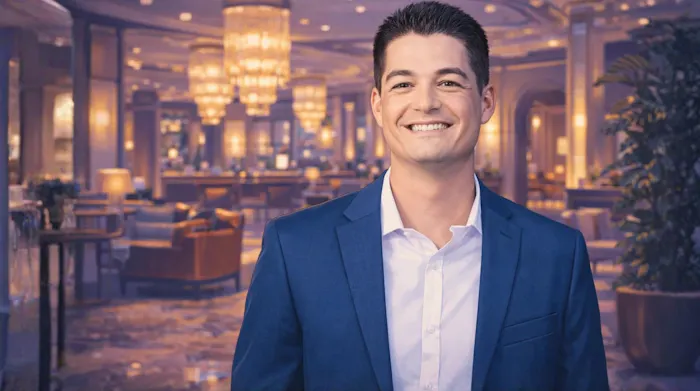
Harry Campbell was side hustling as an Uber driver while he worked at Boeing. Then, he started another side hustle — blogging about his experiences as a driver. A year later, he quit his job to focus on growing The Rideshare Guy.
Now, it has grown into a full-blown media company with multiple brands — with seven figures in annual revenue.
Here's Harry on how he did it. 👇
Leaving aerospace engineering to build a media company
I was an aerospace engineer at Boeing. In 2014, I started driving for Uber and Lyft on the side. Rideshare felt like a huge new thing at the time, but drivers found almost no practical, trustworthy info online. Most forums and Facebook groups contained rumors, outdated advice, or arguments about what worked.
I quickly realized a real opportunity existed to create a resource explaining how the platforms worked and helping drivers earn more. So, I began writing about my observations and experiences.
That evolved into The Rideshare Guy, which grew into a media business covering rideshare and delivery through articles, guides, a podcast, and a YouTube channel. We share tips, driver pay breakdowns, driver interviews, and analysis of company actions.
In early 2015, I took the leap, leaving Boeing to do it full-time, and it has grown since then. Today, I still focus on the gig economy and mobility through The Rideshare Guy. I also run The Driverless Digest, where I cover autonomous vehicles and the future of mobility. I also organize Curbivore, our LA conference that brings together people working on delivery, curb management, autonomy, and urban tech.
We've had seven-figure annual revenue for over ten years.
Getting started
In the beginning, it was very scrappy. The “product” was just a simple blog where I shared what I was learning as a driver. I was driving for Uber and Lyft myself, so my own experience directly provided much of the early content. I would test different strategies, track my earnings, experiment with things like surge pricing, and then write posts explaining what worked and what didn’t.
I also spent a lot of time talking to other drivers and hanging out in online forums and Facebook groups. Drivers were constantly sharing tips, frustrations, and questions, so that gave me a steady stream of ideas for articles. The goal early on wasn’t to build some polished media company; it was just to create useful, practical information that drivers couldn’t easily find anywhere else.
On the technical side, it was pretty simple. I set up a WordPress site, started publishing articles consistently, and focused heavily on search so drivers could find the content when they Googled questions about Uber or Lyft. Over time, as traffic grew, it expanded into guides, a podcast, YouTube, and partnerships with companies in the space, but in the early days, it was just me writing about what I was learning behind the wheel.

A simple media stack
Our stack is simple:
WordPress site forms the business's core, where we publish all our articles and guides. Early on, I focused heavily on search, so SEO and long-form content have always been a key part of our strategy.
For email, we use Beehiiv to run our newsletters and manage subscribers. This drives significant repeat traffic and lets us connect directly with readers, rather than relying only on search or social.
For monetization, we use a mix of affiliate platforms, direct partnerships with companies in the space, and standard ad networks.
For analytics and optimization, we primarily rely on Google Analytics, Search Console, and basic SEO tools to track performance.
Beyond that, our setup is lightweight. Much of our true “stack” involves content production, industry relationships, and distribution through channels like our podcast, YouTube, and more recently, Substack with The Driverless Digest.
Affiliates, advertising, and sponsorships
The business started with affiliate partnerships and advertising through content on The Rideshare Guy. Many companies want to reach rideshare drivers — for tools, insurance, vehicle rentals, or financial services — so affiliate partnerships naturally became an early revenue stream.
As the audience grew, we added more direct partnerships and sponsorships across the site, podcast, and other channels. Our targeted audience of drivers is valuable for brands seeking to reach that group.
More recently, we expanded that model with The Driverless Digest, which targets a more industry-focused audience. This opened up sponsorship opportunities with companies in the autonomous vehicle and mobility space, along with events like Curbivore, which brings the ecosystem together in person.
SEO, word of mouth, and owned media
Early on, search drove most growth. Drivers constantly Googled questions about Uber and Lyft, so I focused on writing practical guides that answered those questions and helped drivers earn more. This evergreen content brought a steady stream of readers.
Word of mouth also played a big role, with drivers sharing articles in forums, Facebook groups, and with other drivers.
Over time, I expanded into a podcast, YouTube, and email to build a more direct relationship with the audience. If I were starting over, I’d focus earlier on owned distribution like email and video. Building a direct relationship with your audience is much more resilient than SEO in the long run.
And I'll say this: Niching down on a very specific audience was really helpful.
Industry challenges
When I started, the biggest challenge was credibility. A lot of people were skeptical. It took time, consistent content, and sharing my own real experiences and earnings to build trust with readers.
Being a driver myself helped. I wrote about the industry from firsthand experience, which made it easier to spot problems, test strategies, and build trust with readers.
Another challenge is how quickly the industry changes. Uber and Lyft constantly tweak pay, policies, and incentives, so the content has to evolve just as quickly to stay relevant.
Industry relationships have been valuable in this regard. Talking to drivers, companies, and other people in mobility has helped me stay on top of changes and continue finding interesting stories to cover.
Why focusing on a niche audience can lead to success
My story isn't typical for Indie Hackers because I didn't initially try to build a software product or even a startup. The Rideshare Guy began as a side project where I shared what I learned as a driver. However, I found success by focusing on a specific niche and genuinely helping that audience.
If you consistently create useful content and build trust with a community, opportunities tend to follow.
Also, it's important to stay flexible. The business has evolved significantly over the years as the industry changed, so adapting and following where the audience and opportunities lead has been key.
What's next?
My main goal is to grow the media and community around mobility and autonomy. With The Rideshare Guy, we’ll continue covering the gig economy and helping drivers navigate a constantly evolving industry.
On the newer side, I’m focused on growing The Driverless Digest as a go-to publication for people working in and around autonomous vehicles, especially on the industry's business and operational side.
I’m also investing more in events like Curbivore and our Urban Autonomy Summit series that bring together founders, operators, and policymakers across the mobility ecosystem. I believe connecting the online conversation with in-person communities offers significant value.
Learn more
You can learn more at therideshareguy.com and thedriverlessdigest.com. I also host The Rideshare Guy and The Driverless Digest podcasts, where I interview founders, operators, and experts across the mobility and autonomy space.
If you’re interested in the events side, you can check out curbivore.co for our annual conference in Los Angeles. I also share updates about our Urban Autonomy Summit series through The Driverless Digest and the Curbivore newsletter on Substack.

Leave a Comment
Great article! One feature that could make this tool even more useful is a side-by-side comparison showing the original text and the cleaned version. It would help users quickly verify the changes before copying the output.
Really interesting breakdown — what stands out most is how unsexy but effective the path was.
No fancy startup idea. No funding. No “growth hacks.”
Just:
firsthand experience
consistent, useful content
and deep focus on a specific audience
A lot of people underestimate how powerful that combination is.
The key takeaway here isn’t just “start a blog” — it’s start where you already have unfair insight. Harry wasn’t guessing what drivers needed… he was the driver. That authenticity is hard to replicate and becomes a long-term moat.
Also worth noting: he didn’t diversify too early. He nailed SEO + written content first, then expanded into email, podcast, and YouTube. That sequencing matters more than people think.
And the shift toward owned audience (email, newsletter, events) is probably the most important lesson today — platforms change, algorithms shift, but direct relationships compound.
If anything, this proves you don’t need a revolutionary idea — you need:
👉 a clear niche
👉 real value
👉 and consistency over time
It’s really interesting how this started as a simple side hustle and slowly turned into a full media business. The part that stood out to me most is focusing on a very specific niche and building trust by sharing real experiences. Many people try to target huge audiences from the start, but this shows that helping a small, well-defined community can actually create a much stronger foundation. Also, the idea of combining SEO with owned channels like email and video is a great reminder that relying on just one traffic source can be risky in the long run.
Hi
I provide eligible AI businesses access to GCP/AWS credits for the next 24 months to help reduce infrastructure costs.
If this is relevant, happy to share more details.
https://www.linkedin.com/posts/sai-rithvik-2176302b1_eligible-ai-companies-can-access-up-to200k-activity-7442865181254209536-EiDB
Really enjoyed this—especially how it started small and grew organically.
What stood out is the focus on real, first-hand experience. That authenticity clearly made the content more valuable and trustworthy. Also, niching down into a specific audience (rideshare drivers) was a smart move—it made growth and monetization much more focused.
Big takeaway for me:
👉 SEO can drive initial growth, but owned channels like email and community make it sustainable long-term.
Great reminder that you don’t need a big plan to start—just consistency and real value for a clear audience.
Curious—would you still prioritize SEO if starting today, or lean more into video/newsletters?
This is an amazing life story. Love the dedication!
For someone who started on a similar journey of blogging but lost myself along the way, this article is a reminder on how to saty true to yourself, write what you know about and don't jump into a niche or trend bcoz that is what internet is saying.
Writing from actual experience instead of guessing gave you a constant stream of things to talk about, and people could tell it wasn’t recycled advice.
The niche focus is what really carried it. You weren’t trying to reach everyone, just drivers who needed real answers. Once that trust was there, everything else stacked on top of it.
Also interesting how simple the setup stayed. No complicated stack, just consistent content and distribution, then expanding once the audience was already there.
This is a great reminder that you don’t always need a startup idea — sometimes just documenting your own experience consistently can turn into a real business.
The niche focus here is what really stands out. Instead of trying to reach everyone, he went deep on one audience and built real trust over time.
Also interesting how simple the stack was in the beginning — just a blog + SEO + consistency. Shows that execution matters way more than complexity.
Great post.
What stood out most is how much leverage there is in serving a narrow audience really well. He didn’t start with a complex business model — he started by answering real questions for a specific group and earning trust through firsthand experience.
Also agree that owned media becomes more important over time. Search can bring discovery, but email/video/community feel like the stronger long-term moat.
Thank you for such inspiring takes. Gonna follow on X haha
very informative and inspirational
Super inspiring—proves niche focus, real experience, and consistency can scale massively. Monetization through ads, affiliates, and owned audience really stands out as a smart long-term strategy.
Really inspiring story. The niche focus approach is something I'm applying to my own video platform project.
The line about building owned distribution earlier resonates hard. Search is great until an algorithm change wipes out half your traffic overnight — email and direct relationships are the only thing that's actually yours. The niche point is underrated too. "Rideshare drivers" sounds narrow but it's actually a huge, underserved, highly specific audience with real problems and real money. We're seeing the same thing building for algo traders on Hyperliquid — the niche feels small until you realise how passionate and willing to pay that audience is. Seven figures bootstrapped from a blog about driving is one of the better indie hacker stories out there. The conference extension makes complete sense — once you own the audience online, in-person is the natural next move.
Interesting. What was the hardest part?
Was there a specific moment or signal where you thought, ‘okay, this is bigger than a blog’? What was it?
This looks really interesting 👏
Have you considered localizing for Japanese users? It could open up a strong market for you.
That’s a strong shift. “Contract analysis” sounds like a feature, but “understanding the downside before you sign” sounds like a real reason to care.
HIRE BEST AI HACKER RECOVERY CRYPTOCURRENCY / BANK ACCT RECOVERY EXPERT OPTIMUM HACKER RECOVERY
I'm so delighted to be able to share this story with you all
I put 880k USDT in an online cryptocurrency investment platform and I was scammed out of everything! I lost hope and all my efforts have been given up! I had obligations to my family, and I was worried that I wouldn't keep them. I spoke with a few of my colleagues, but they were all unfavorable in their opinions. When I went online, I found a piece advertising "OPTIMUM HACKERS RECOVERY," a hacking collective with a reputation for recovering cryptocurrency / Bank account recovery, that had received a lot of favorable feedback. I decided to get in touch with them, and within a short period of time OPTIMUM HACKERS RECOVERY was able to retrieve all of my stolen USDT through AI Machine . Being able to recover my misplaced money was incredible. This piece of writing is for everyone who has also lost money investing in cryptocurrencies. please reach out to them on
Em ail: support @ optimum hackers recovery . com
Wha tsApp: + 1-256-256-8636
Web site: https :// optimum hackers recovery. com
Scaling a blogging side hustle to a 7-figure media brand is a masterclass in audience equity. But in 2026, the real battle is transitioning from a "Content Engine" to a "Systemic Authority". Many creators hit a ceiling because they build a job, not an asset. How much of your 7-figure valuation is tied to your personal manual output, and how much is a self-sustaining architectural loop that thrives even when you’re offline?
Alpha Key continues to be the sole authorized cryptocurrency recovery hacker.
I'd like to extend a special greeting to everyone here and around the world. When it comes to cryptocurrency investing, you should be cautious about who you deal with. I thought things were going well at first, but after investing over $96,670 worth of bitcoins, things went south, and I was on the verge of suicide until I learned about Alpha Key Recovery Expert. Knowing them is one of the best things that has happened to me this year. Contact them right away if you have fallen victim of a bitcoin scam.
WhatsApp:+15714122170
Signal:+15403249396
Such a killer breakdown. It’s wild to see how a side project evolves into a full-on media powerhouse like this. One thing I’m curious about: when you started scaling from a solo blog to a brand, how did you handle 'losing' that personal touch? Was it hard to keep the voice consistent once you weren't the only one writing?
congratulation man, great journey, inspiring🚀
love this, congratulations. always curious, did most of the revenue end up coming from your main pages or more the long tail traffic?
Congratulations on your success. It is inspiring to see how you built something valuable from scratch as a side project. Along with your persistence and ability to build trust, your decision to expand the product when the opportunity emerged clearly played an important role. Thank you for sharing your story.
This is really inspiring. What stood out to me is not just the result, but the mindset behind it.
Being willing to take on something like driving, stay humble, and treat it as a learning opportunity that takes a lot of discipline and self-awareness.
I think a lot of people overlook the value of using their current situation as a way to observe, learn, and prepare for something bigger in the future.
This really resonates with me, because I feel like I’m currently in a similar phase trying to figure out my direction while learning from where I am right now.
Incredible journey! It’s fascinating to see how you transitioned from 'doing the work' to 'building the engine.' Most people get stuck in the execution phase and never reach the 7-figure orchestration level.
I’ve been researching multi-agent systems lately, and your story about scaling editorial workflows really resonates. The 'friction' between different roles (or agents) is usually where the profit leaks. Looking forward to more of your insights on scaling!
Really enjoyed your story, especially the part about starting as a side hustle while actually doing the work yourself.
This is how most good startups start, not with a big strategy, with someone solving their own problem and documenting it.
Many congratulations on building something like this!
Comment 1: Leaving the Engineer such a leap. ~
It is never an easy decision to leave behind a stable engineering path for something uncertain. There’s always a potential hindrance in the background.
What stood out here is how much of the early phase was just exploration writing, testing angles, figuring out what sticks.
I have witnessed a pattern like this.
Stage 1: Be Your Own Hero
Second Phase: Observe what people show reactions to.
phase 3: double down hard.
Many attempt to progress immediately to phase 3. When you were in that early stage, which signals do you trust the most? The traffic? The feedback? Your own interest?
I feel like every blue collar worker would love to turn their experience into a media brand. The difficulty is how. Kudos on this guy figuring out distribution and reach.
The multiple brands point is underrated. Most people read this and focus on the seven figures. The more interesting thing is that he built several distinct properties that don't depend on each other, Rideshare Guy, Driverless Digest, Curbivore. If one takes a hit, the others keep running.
I run a similar setup, ecomm stores, newsletters, affiliate sites across different niches. No single thing carries the whole weight. It's a completely different relationship with risk compared to having one business that has to work.
The thing Harry mentions about owning distribution early is the one I'd underline. SEO is rented land. Email is yours. That lesson took me longer than it should have to really internalise.
Choosing the right gym often comes down to understanding what you get for the price. Many people look for david lloyd manchester north prices to compare membership options and see if the facilities match their expectations. With access to premium equipment, classes, and wellness areas, it’s important to review pricing clearly so you can decide if it fits your fitness goals and budget.
That’s really interesting 👏
What made you start this?
Real insight, tight audience, and just staying close to the problem long enough for it to compound.
This is a really inspiring journey. The part about focusing on a specific niche and building content from real experience really stands out.
I’ve noticed a similar pattern in other domains as well — when content is practical and solves real problems, it naturally attracts the right audience over time. In HR, for example, structured resources like policies and templates help organizations in the same way by providing clarity and consistency.
Thanks for sharing such a valuable and realistic growth story!
I’ve also seen useful HR resources here: https://www.hrhelpboard.com/
Focusing on a very specific niche and being genuinely useful is key in any business. Your post is a great reminder of that. Congrats on what you’ve built <3
Interesting topic, by the way. I used to be one of those people who kept accounts with three or four bookmakers at once to catch the best odds. But over time, I realized that this only made life more difficult. Now I've almost completely switched to https://wageon-h.click/73516/8357?l=3990&utm_source=wl The reason is simple – convenience. Firstly, the payouts are really fast. Not just "as per the regulations, within 24 hours," but really fast. Secondly, the lineup is decent – not cut, there's plenty to choose from. I like betting on the NBA and European football – everything is fine there. Live is also great; it doesn't lag. And another thing – you don't feel like they're trying to limit you after a couple of successful bets. I've had this experience on other platforms, but here everything is fine so far. Basically, if you're tired of the typical bookmaker problems, give them a try; I think you'll understand what I mean.
Love this!
he point about niching down and building for a specific audience really resonates. I think one of the biggest mistakes early founders make is trying to appeal to everyone. Your approach of literally being a driver and writing about what you learned gave you instant credibility that no amount of marketing could replicate. The advice about focusing on owned distribution earlier is something I wish I'd heard sooner — I've been spending on Reddit and Apple Search Ads trying to get users, and realizing that building a direct audience through content might be a better long-term play. Did you have a moment early on where you knew the blog was going to be more than just a side project, or was it a gradual realization?
This is a great example of how powerful it is to just start with a real problem you’re personally experiencing instead of trying to come up with something “innovative” from scratch. What stands out to me is that the initial product wasn’t even a product — it was just documenting what was already happening and turning that into useful content. Also feels like the distribution came naturally because the audience was already there and actively looking for answers. Curious — do you think this would still work today in more saturated niches, or was timing a big part of why it took off?
This is one of those stories that quietly proves a simple but underrated playbook:
do the work → document the work → become the authority.
What stood out to me is how everything started from actual hands-on experience, not content brainstorming. That’s something a lot of people still get wrong — especially now with AI making it easy to publish anything.
I’m currently building a project in the “tools & calculators” space (3500+ use-case driven tools), and I’m seeing a very similar pattern:
the content that works isn’t the most polished — it’s the one that solves a specific, real problem someone is actively searching for.
Curious — looking back, what was the real inflection point?
Was it SEO traffic kicking in, or when you started owning distribution (email, podcast, etc.)?
The sequencing here is the underrated part: domain expertise first, content second, monetization third. Most SaaS founders try to reverse that by building the product before building the audience, then wonder why distribution is the hardest part.
The "seven-figure revenue for over ten years" framing also jumped out. That kind of durability in content is almost exclusively explained by owned channels. Search traffic alone wouldn't survive ten years of platform algorithm changes and now AI overviews eating informational queries. The newsletter and podcast are what made this anti-fragile.
On the SEO side — building MagnumSEO, something I keep seeing is that the content that ages best is the kind Harry describes: practitioner-written, experience-backed, not just keyword-optimized. AI-generated content can answer the surface question but can't replicate the "I tracked my own earnings and tested surge strategies" layer. That specificity is what earns both reader trust and durable backlinks.
The transition from The Rideshare Guy to The Driverless Digest is also a smart adjacency move — same audience interest (mobility economics), different buyer (industry vs. driver). Curious how different the monetization model is between the two properties.
This is the playbook I needed to hear right now. I'm in the early stage of building AI tools for founders and the hardest lesson so far is exactly what you said — "If you consistently create useful content and build trust with a community, opportunities tend to follow." I jumped straight to building a product before building an audience. You did it the other way around — learned the domain, created value through content, and the business followed. That sequencing matters. Question: when you were still at Boeing, how did you know the blog had enough traction to justify quitting? Was there a specific revenue number or signal?
Great story. Love the focus on niche and real experience.
Really inspiring journey. I love how it shows that success didn’t come from one big move, but from consistent effort, testing different strategies, and letting content compound over time. Great reminder that patience and persistence in content marketing can truly pay off in the long run
Love this!
Bro why, your post only has 48 upvotes? You helped me a lot to get into the SEO of Google. I will definitely open my own site and use the tips that you gave me. Thanks, man.
This is a massive validation of the "scratch your own itch" approach. The fact that The Rideshare Guy started simply to organize the chaos and bad advice floating around in Facebook groups is brilliant.
I had a very similar realization recently while building Zlvox. I was just tired of bloated, slow web utilities that secretly logged data, so I built the fast, client-side tools I needed for my own dev workflow. It’s amazing how quickly an audience forms when you just build the practical solution that's missing from your own daily life.
Harry, you mentioned wishing you focused on owned channels (email/video) earlier instead of just SEO. With AI overviews eating into traditional search traffic today, do you think a scrappy text-based blog can still get that initial traction, or is starting with video/community almost mandatory in 2026?
This resonates deeply as someone building in the creator economy.
I spent 4+ years as a creator on TikTok, Twitch and Youtube, living the exact frustrations my users feel. Broken discovery, unfair cuts, a system rigged toward whoever's already winning. I eventually cracked six figures, then started building EchoLive, the platform I wished existed.
Your point about niche audience trust is the thing I keep coming back to. We have 100+ founding creators in our Discord/Pre-Referral before public launch, not because of marketing, but because the problem is resonating before we even launch. That community is the moat, not the tech.
Your line about owned media over SEO is sharp too. We're building creator relationships the same way, direct, trust-first, not algorithm-dependent. Ironic given we're building an alternative to algorithm-dependent platforms.
The lived experience angle is underrated. Founders who've been the customer build differently. Congrats on 10+ years of seven-figure revenue, that's the long game.
"Great project! How long did it take you to build this?" atau "I love the UI, very clean."
Hi
I provide eligible AI businesses access to GCP/AWS credits for the next 24 months to help reduce infrastructure costs.
If this is relevant, happy to share more details.
https://www.linkedin.com/posts/sai-rithvik-2176302b1_eligible-ai-companies-can-access-up-to200k-activity-7442865181254209536-EiDB
Welldone
It shows how a simple side hustle can grow into a full media business by focusing on a specific niche and building trust through real experiences. Instead of chasing a large audience, serving a small, defined community creates a stronger foundation. It also highlights the importance of combining SEO with owned channels like email and video to avoid relying on a single traffic source.
Hi,
I’m Uchendu Goodluck, founder of SnapSite — a tool that helps developers and creators analyze websites using screenshots, visual diff, and code export.
I’ve been following your page and think SnapSite would be a great fit for your audience. I’d love to collaborate on a paid promotion to showcase it.
You can check it out here:
https://snapsite-gamma.vercel.app
I’m open to your preferred format and rates.
Let me know what you think.
Best regards,
Uchendu Goodluck
Founder, SnapSite
Hi
I provide eligible AI businesses access to GCP/AWS credits for the next 24 months to help reduce infrastructure costs.
If this is relevant, happy to share more details.
https://www.linkedin.com/posts/sai-rithvik-2176302b1_eligible-ai-companies-can-access-up-to200k-activity-7442865181254209536-EiDB
"Awesome read. So much better when ideas come from actually doing the work rather than just guessing what people want. Loved the point about adding value in forums first before trying to monetize. Just goes to show that 'build -> document -> audience' is still the ultimate playbook, even with AI taking over everything lately."
Hi
I provide eligible AI businesses access to GCP/AWS credits for the next 24 months to help reduce infrastructure costs.
If this is relevant, happy to share more details.
https://www.linkedin.com/posts/sai-rithvik-2176302b1_eligible-ai-companies-can-access-up-to200k-activity-7442865181254209536-EiDB
Congratulations on your success. It is inspiring to hear your story of starting from scratch as a side gig and developing something that has such value. Besides sticking with it and developing trust, you also expanded your product when you saw the opportunity. Thank you for sharing your story.
Really inspiring — love how this started from real experience and focused on a specific niche.
It’s a great reminder that helping a small audience consistently can grow into something big.
Curious — would you still start with SEO today, or focus more on owned channels first?
Very Informative
This is exactly the kind of build story I needed
to see. Just started my own daily build challenge
— shipping 1 AI tool per day. Day 1 was rough
but learned a lot about rules the hard way!
when was the point they you realized it could actually become a business, not just a blog?
did it gradually turn into a business?
very informative and inspirational
Really interesting read — the part about starting from your own experience and just sharing what you were learning stood out.
Feels like a lot of the successful “media-first” businesses start exactly like that — not trying to build a brand, just documenting what’s actually happening.
I’m kind of at the very early version of that myself, but more on the product side. Built something to solve a problem I kept running into, and now trying to figure out how to get it in front of the right people without it feeling forced.
Did you find the audience came naturally from the content early on, or did you have to actively push distribution at the start?
Love how this started from actually being in the driver’s seat instead of brainstorming ideas in a vacuum. The bit about hanging out in forums and answering real questions before thinking about monetization really hits home for me. It’s a great reminder that “do the work → document the work → then build the media brand” is still one of the most reliable playbooks out there, even in 2026 with AI content everywhere.
Really cool story - starting from real experience makes all the difference.
If you were starting today, what would you prioritize first: content or distribution?
What began as a casual side project gradually evolved into a full-fledged media business. What resonated most with me was the emphasis on carving out a distinct niche and cultivating trust through genuine, firsthand experiences. So many entrepreneurs try to appeal to massive audiences right out of the gate, but this approach demonstrates that serving a small, clearly defined community can lay a far more solid foundation. The strategy of pairing SEO with owned platforms like email and video also underscores the danger of depending too heavily on any single traffic source over the long term.
scam.coms
The transition from 'doing the work' to 'writing about the work' is one of the cleanest ways to build authority. You're not just theorizing; you're sharing the real-world experience. Curious how you balanced the 'authenticity' of being on the ground vs the 'authority' of a media brand as you scaled beyond just your personal experience?
What I noticed while helping small streamers grow online
Most small streamers believe streaming more hours automatically brings growth. From what I’ve seen, visibility and positioning matter more than just going live daily.
Creators who focus on networking, content distribution and audience engagement tend to grow faster than those who rely only on streaming consistency.
Curious to hear from others here what growth strategies have actually worked for you in competitive niches?
This is a really inspiring journey. The part about focusing on a specific niche and building content from real experience really stands out.
I’ve noticed a similar pattern in other domains as well — when content is practical and solves real problems, it naturally attracts the right audience over time. In HR, for example, structured resources like policies and templates help organizations in the same way by providing clarity and consistency.
Thanks for sharing such a valuable and realistic growth story!
The part about spending time in forums and Facebook groups before even thinking about monetization really resonates. That's basically how niche content sites work — you find the questions nobody is answering well, then you become the answer.
I'm building a content site in the music space and the pattern is the same. The content that performs best isn't what I think is clever or well-written — it's what directly answers a question someone is already asking in a community somewhere. Harry's approach of driving himself and writing from real experience is the unfair advantage most content creators skip.
The "seven-figure revenue for over ten years" part is wild though. That kind of longevity in content is rare. Curious how much of that durability comes from owning the audience (newsletter, podcast) vs. depending on search traffic.
This is a great reminder that real experience + niche focus beats everything. If you help a specific group consistently, growth and monetization follow naturally.
Love how this story combines deep operator experience with a super lean, simple media stack to build something huge. The progression from “just blogging what I’m learning as a driver” to a seven‑figure, multi‑brand media and events business is such a strong validation that (1) lived experience can beat “expert” takes, (2) boring but painful niches are often the best opportunities, and (3) doubling down on owned channels (email, podcast, YouTube) is what future‑proofs an SEO‑driven business. Super inspiring case study for anyone sitting on a niche, practitioner POV and wondering if it’s worth going all‑in.
Leaving a stable engineering job at Boeing to go full-time on a side project is a massive feat. It’s inspiring to see how focusing on a specific niche and building genuine trust can evolve into a seven-figure business. One hell of an exercise in discipline and vision. Congrats on the success, Harry!
Talking about SEO, in a world where unlimited good-enough articles and text contents can be created in a day - or even in a hour - how do you choose which content is worth producing? How do you balance between AI work and human interaction? That's something that makes me thinking
Really enjoyed reading Harry’s journey. The part about niching down stood out to me because I’m currently building Verso, a process flow tool designed for teams that still rely heavily on Excel and Word. We’re taking the same scrappy approach — focusing on solving the real workflow problems first and polishing later.
Your point about owning distribution early through email and video is also a great reminder. Too many founders wait too long to build that connection with their audience.
It’s interesting how the strongest products often come from understanding a very specific user behavior deeply, whether it’s SaaS workflows or even content-driven niches like the Dunkin Donuts Menu space where audience intent matters a lot. Thanks for sharing these insights.
now that is a damn good story, congrats! very inspiring
Harry's journey is really inspiring.
The part about niching down resonates with me a lot. I am currently building Verso, a process flow tool for teams who only know Excel and Word. Starting scrappy just like you did, focusing on making it work before making it pretty.
The advice about owning your distribution early through email and video is something I will keep in mind as we grow. Thanks for sharing this!
This comment was deleted 5 months ago
This comment was deleted 5 months ago