Growing a tool to 1.2M registered users with almost zero marketing
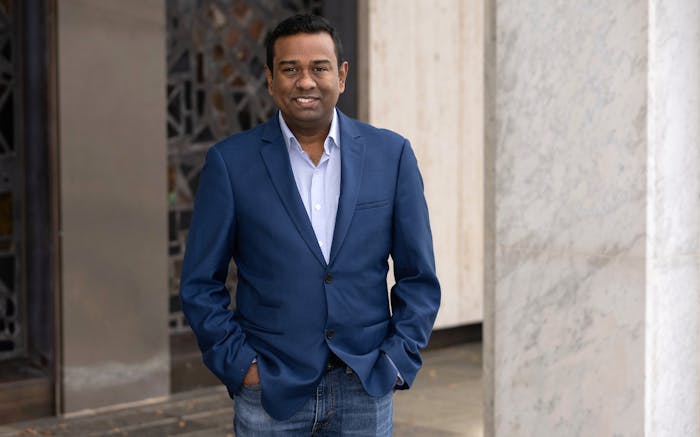
Gokul Chandrasekaran had ten ideas and was only able to validate one of them. So he built it and JDoodle grew organically to millions of users and hundreds of thousands of dollars in annual revenue.
Here's Gokul on how he did it. 👇
Building for people without access
I grew up in a rural part of South India, where access to a computer was a rare thing. When I was in school and college, I might have access for an hour per week — and during that hour, there were system and setup issues to deal with.
I later became a Java developer and, in 2013, I started developing the online coding platform JDoodle.com as a side project. My motivation for starting JDoodle was to make software development simple and accessible to everyone. And since then, it has attracted 1.2 million registered users and served more than 20 million people.
I am very happy to say that millions of schoolchildren without access to sophisticated computers have been able to practice programming using JDoodle.
We hit 6-figure annual revenue a few years ago and have been growing strong since then — we want to reach 8-figure revenue soon.
We got funded two years ago and I went full time. Currently, my focus is on JDoodle.ai — an AI Agent that builds web apps. JDoodle.com for technical users, JDoodle.ai for non-coders.
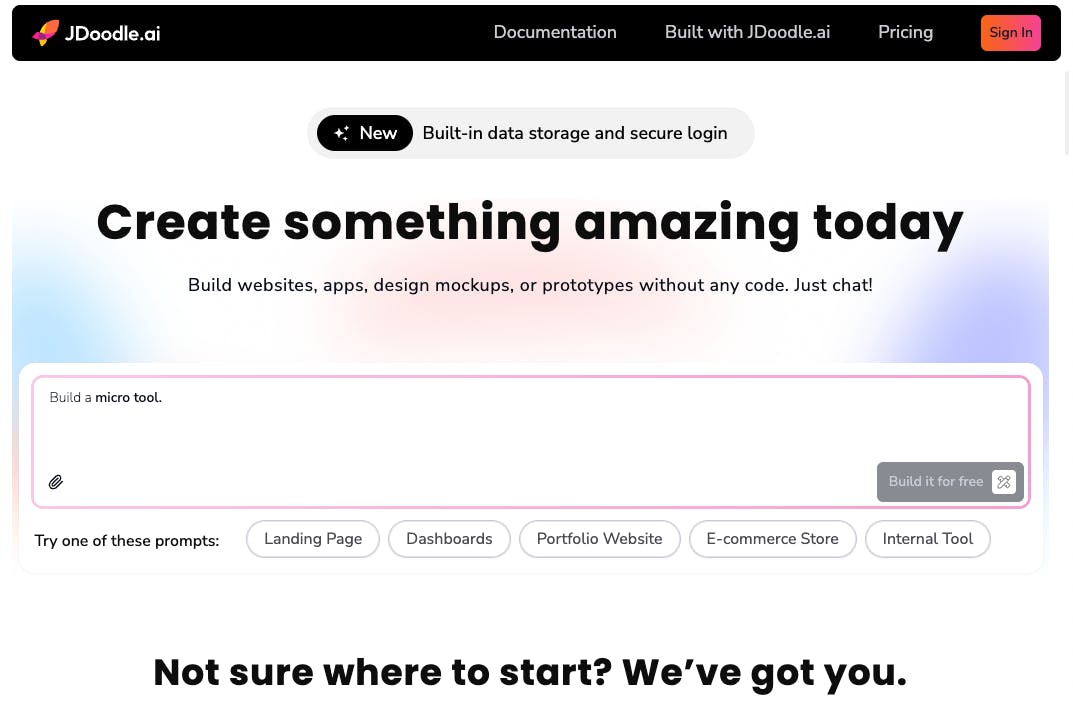
A quick MVP
I started JDoodle with $20 — that was the cost of a virtual server at that time — and a few weeks of work over the weekends.
It was a one-page site where you could type Java code and click a button to get the result. People liked it and started asking for more languages and features. I started adding them, one by one, as per their requests. And from there, it just grew organically.
I built that version using Grails/Groovy. I loved that stack. It helped build stuff at super-speed at the time. I miss it today.
Now, it's:
Vue.js
Java/Spring
Python/FastAPI
And microservices to handle different tasks
Validate features based on ROI
I invested a lot of time into building features just because some users asked for them. Doing this was both good and bad.
It helped grow the user base. But few of the features generated any revenue.
If I had to start over, I would be very mindful of that. I would validate not only on user experience, but also on ROI.
Don't lose touch with the code
As your company grows, don't lose your technical skills. I started as a developer and went on to hold multiple architecture roles, but I have remained hands-on to this day.
That complex skillset has been my — and JDoodle's – biggest advantage so far.
Organic growth
All of our growth has been organic. When I launched, I posted in a few forums — that's it. Maybe ten posts in the initial months. That, and I had a Java blog at the time, which had around 15 posts on it, so that was driving some traffic.
The rest was word of mouth. Growth was slow, but steady.
Only after funding, did we start doing some active marketing, like newsletters and social media posts. And we're currently in the process of kicking off proper marketing for JDoodle.ai. That includes:
Social media
Paid social and newsletter ads
Email marketing
Organic channels are still playing a bigger role than paid. Results for ads have not been great yet.
Cover your costs from day one
Initially, it was ad-supported, so it covered its costs from the first month.
Now, we don't display any ads. We offer a freemium subscription model.
Test and validate value
In my experience, if you build something that is valuable to someone, they will spread the word.
So, focus on building a quality product that solves a real problem. I validated at least 10 different ideas, JDoodle was the valid one. The other nine weren't real problems.
Keep testing — and validate before you go too far.
What's next?
Making software development simple has always been the goal. In terms of numbers, I aim to reach 500 million users, including both tech and non-tech users, through our JDoodle.ai platform. And we want to reach 8-figure revenue soon.
You can learn more at JDoodle.ai and JDoodle.com. Or follow me on X and LinkedIn.

Leave a Comment
What really stands out here is the patience and discipline behind JDoodle’s growth. Validating 10 ideas before finding one that truly solved a real problem takes uncommon persistence. The fact that it started as a $20 side project and scaled to millions of users purely through organic demand says a lot about product-market fit done right.
The reminder to validate features not just on feedback, but on ROI, is gold — so many of us miss that early. Really inspiring to see how staying close to the code and focusing on accessibility turned into such meaningful impact.
how to get clients. i spend 6 months building a saas and now no one wants it.
see this wrriter
The dual positioning is interesting—serving technical users while enabling non-coders through an AI agent is a thoughtful expansion. How are you ensuring non-coders get real outcomes without oversimplifying, while still keeping the system flexible as their needs grow?
Yeah, keeping things simple and yet useful to all is something many struggle with. You want to have all the features you can to provide value, but not overwhelm someone just looking for one to two features.
Can you try our saas : RMBG PRO
Totally agree with this. Something I learned building my own product: the hardest part isn’t coding, it’s figuring out who actually cares about what you’re building.
"Almost zero marketing" = 10 forum posts + an existing Java blog driving traffic. That's not zero marketing, that's quite good & targeted marketing :)
Looking for a compelling press release to promote your Christmas event or holiday campaign?
Prime Nova Solutions Professional Press Release Writing & Distribution
Looking to give your announcement the visibility it deserves? Prime Nova Solutions provides expertly crafted press releases and strategic distribution designed to amplify your message and strengthen your brand presence.
We specialize in high quality PR writing across a wide range of industries, including:
Crypto & Blockchain PR Clear, authoritative releases for projects, exchanges, tokens, and innovations.
Music PR Artist features, release announcements, event promotions, and industry visibility.
Product Launch PR Compelling content that highlights key features and market impact.
Book PR Engaging press releases for authors, book launches, and promotional campaigns.
Christmas & Seasonal PR Festive, engaging messaging tailored for holiday marketing and events.
What you get:
✔ News-ready, professionally written press releases
✔ Strong storytelling that attracts media and audience attention
✔ Targeted distribution to reputable outlets
✔ Fast delivery and clear communication
Connect with Prime Nova Solutions:
WhatsApp: 08060371685
Let’s amplify your story and get your announcement in front of the right audience.
Really inspiring story. The part about building JDoodle with just $20 and a weekend MVP really shows how far a simple, valuable tool can go when it solves a real pain point.
I’m curious — when you validated 10 ideas before JDoodle, how did you personally decide whether an idea wasn’t worth pursuing? Was it low adoption, weak engagement, or something else you looked for early on?
Love the clarity on “validate ROI, not just requests” — that’s a huge lesson for many builders.
Nice article James. You talked about learning from early users. How did founder actually get those first 10 to 100 users? I am also building dev toos on the side, so the part about validating 10 ideas and then realizing that many requested features did nothing for revenue really hit me.
Hey!
I’ve been helping founders build their first version without spending money on agencies or dev teams upfront.
We’re doing this through Avery — you describe your app in plain English → it helps you build it → and you only pay once the app is live.
If anyone here is working on an idea or stuck because development is too expensive, I’m happy to take a look and tell you honestly if we can help.
Template Suite link (for ready tools):
https://avery.software
If you want to build something custom, I can share details about our Founder Studio too.
Incredible story. Growing from rural South India with limited access to building 1.2M users organically mirrors something I'm exploring in rural Spain — democratizing bioeconomy knowledge and tools for entrepreneurs without access to urban resources. Your point about solving real problems over chasing features resonates deeply. How did you decide between staying product-focused vs. adding monetization features early on?
Incredible story. Growing from rural South India with limited access to building 1.2M users organically mirrors something I'm exploring in rural Spain — democratizing bioeconomy knowledge and tools for entrepreneurs without access to urban resources. Your point about solving real problems over chasing features resonates deeply. How did you decide between staying product-focused vs. adding monetization features early on?
That MVP story is a reminder you don’t need much to start.
Build something small, listen closely, and let users shape what comes next.
Really inspiring example of product-first growth. It’s motivating to see how useful tools can spread organically. I’m also experimenting with a small project and trying to focus on solving a real problem first.
The "almost zero marketing" with 1.2M registered users is explained by search intent, not luck. Online compilers and coding environments get discovered almost entirely through Google queries: "run Python online," "Java compiler browser," "test code without installing." These are high-intent, high-volume queries where the search result is the product. JDoodle doesn't need a marketing strategy because the use case is self-describing and the search volume is structurally large as programming education expands globally.
The 1.2M registered vs. 20M+ served gap is the real metric: the vast majority of users get value without signing up. That's characteristic of utility tools — the product is good enough that most people don't need an account, which means the registered user base is actually highly qualified (they opted in deliberately). Monetizing 1.2M registered users is a much more tractable problem than trying to re-engage 20M anonymous sessions.
The origin story matters more than it might seem. Gokul's childhood experience with constrained computer access in rural South India was the actual insight: programming education globally is blocked by the hardware setup problem, not by lack of interest or teaching quality. A browser-based compiler removes that barrier completely for anyone with internet access, including the 100M+ students in emerging markets who have smartphones but not personal computers.
JDoodle → JDoodle.ai is the right extension: experienced developers use the compiler, non-developers use AI to build and run code. One platform captures two different user journeys with the same underlying infrastructure.
The 6-figure → 8-figure ambition is achievable given the user base. The monetization surface is large.
Stories like this are exactly what keeps me going. As a solo indie dev, I recently started building Chrome extensions (currently working on a few under GetPlugzz), basically just combining AI tools with my own logic and ideas.
My whole goal is simply to create tools that actually help people, make their daily work a bit easier, and save them time. Seeing that you reached 1.2M users just by focusing on pure utility and being genuinely helpful is incredibly validating.
Huge congrats on the milestone!
Starting with a $20 server and growing it to six figures is wild. At what point did you realize JDoodle had real traction?
The transition from the ".com" for technical users to ".ai" for non-coders is a fascinating evolution.
I’m currently building ConvertlyAI, and your point about validating features based on ROI rather than just user requests really resonates with me. I recently spent time engineering a direct audio-to-marketing asset pipeline because users asked for it, but calculating the actual ROI on high-compute AI features is a constant balancing act.
Since you’ve moved to a freemium model, how do you handle the "compute vs. conversion" logic for your AI Agent? Do you gate specific high-cost AI features behind the subscription immediately, or do you allow a certain amount of free usage to prove the value first?
Achieving 1.2M users through slow, steady organic growth is an incredible feat. Congrats on the funding and the scale!
1.2m users with almost no marketing usually means insane utility + word of mouth loops.
im curious what the loop was: invites, templates, share links, or just devs telling devs? also did they do anything to keep support manageable at that scale?
Really inspiring. Thanks for sharing ..
Impressive traction with almost zero marketing. The organic channels you focused on, especially SEO and community presence, clearly compound over time.
I’m building a modular SaaS foundation and I see similar patterns, distribution discipline matters more than feature count early on.
Curious, at what point did you feel product pull was strong enough to double down fully?
Hey Gokul. We have similar backgrounds and job profiles. I am, admittedly, the world's worst marketer. I have a couple of saas products I am trying to market. Want to collaborate?
Starting with $20 and a one-page Java runner is such a great reminder that simple wins. Real problem > fancy launch.
Growing a tool to 1.2M users with almost zero marketing relies on product-led growth, strong word-of-mouth, and clear user value.
Acquiring 1.2M users is one thing; keeping them without a marketing team to run re-engagement campaigns is another. Did you find that the 'zero marketing' approach forced you to make the product more 'sticky' out of necessity? I’m curious if your churn rates are lower because your users are finding you organically (high intent) vs. being 'convinced' to join through an ad.
it's so interesting how past experiences can be the foundation of tomorrow's big visions. keep going. nice job.
Really enjoyed this. Building from a place of limited access clearly shaped the product in the right way — simplicity, speed, and real usefulness instead of unnecessary complexity.
The $20 MVP and organic growth story is a great reminder that doing one thing well can go a long way. Also appreciate the honesty around feature requests vs ROI — that balance is something most founders learn the hard way.
This resonates. I’ve seen many tools struggle not because of the product, but because users don’t immediately understand the value.
Awesome read! I love how you achieved massive user growth with almost no paid marketing by focusing on true product value and user experience. What was the biggest early indicator that your tool was ready for rapid adoption?
I read and learned something which was the organic growth and patience of continuing to touch with the skills and update which is very difficult part! I am also an startup but doing my work for 3 years but didnt get result.. sometimes I feel very disappointed but did not stop my work. I am also want to learn Saas products skill through vibe coding just like your but I am little confused to skip my current field or to continue it! you can see one of my project I have tested for my client reminidl dot org.. need your best guidance and thanks in advance.
The journey from validating 10 ideas to finding the one that stuck really resonates. As someone in marketing, I'm impressed by how organic growth through genuine value can outperform heavy spending. What signals helped you identify early on that JDoodle had real traction versus the other nine ideas you validated?
This is such an inspiring story! I really appreciate how you started JDoodle with a simple MVP and grew it organically based on user feedback. The focus on making programming accessible to people without access to high-end computers resonates deeply, especially in areas with limited resources.
Your approach to validating features based on ROI is a great lesson for any startup founder. It’s easy to get caught up in building features just because users ask for them, but your point about balancing user requests with business goals is crucial.
Also, your journey of staying hands-on with the code is something every founder can learn from. The technical expertise you bring to the table is clearly one of the reasons JDoodle has been so successful.
Best of luck with JDoodle.ai — it sounds like it’s going to be an amazing next step in making software development even more accessible to non-coders!
Well, I got a motivation on what I am doing, but hard part I am facing is getting the clients the businesses to use it
This really resonated with me. Starting with a very small MVP and focusing on ROI makes a lot of sense.
I’m building Timeki, a geofence-based time tracking app, and I’m seeing something similar already — plenty of early feature requests, but only a few that truly remove enough manual work for users to pay.
The reminder to validate economic value, not just usability, is timely. When JDoodle was still small, what signals did you rely on most to decide whether a requested feature was worth building — retention, repeat usage, or willingness to upgrade?
Did you find any specific distribution channel worked better than expected, or are you still experimenting?
Starting with $20 and a weekend MVP that grew to 20 million users - that's the kind of story that keeps the rest of us going. "Validate not only on user experience, but also on ROI" is a lesson I'm learning the hard way right now. Easy to get pulled into building what users ask for without asking whether it moves the business forward. Curious about the jdoodle pivot to non-coders - are you finding that audience through different channels than the original developer user base, or is there overlap?
Really impressive example of distribution through utility, not hype. Building something people genuinely need and then letting word-of-mouth and organic use do the heavy lifting, is still one of the strongest growth strategies.
Really inspiring breakdown! What stood out to me most was how you focused on solving a real problem with a tiny MVP and let product usefulness drive growth instead of trying to “market hard.” That ROI-based feature validation is a lesson many founders miss early on.
Curious — when you were validating those first 10 ideas before landing on JDoodle, what was your main kill signal for deciding an idea wasn’t worth pursuing? Was it low retention, weak organic spread, or something else?
I loved the explanation of the minimum viable product (MVP)!
What stands out to me is that “almost zero marketing” here really means high signal, low noise distribution. A small number of well-placed forum posts worked because the product was immediately useful, frictionless, and solved a concrete problem.
The lesson I take isn’t “post on forums,” but “design the product so discovery and adoption are cheap once the right user finds it.” That only happens when the core value is obvious in seconds and the scope is intentionally narrow.
The ROI-based feature validation is especially important. Many products die not from lack of users, but from accumulating features that dilute clarity and never justify their cost. This is a solid reminder that restraint is a growth strategy, not a limitation.
Swift Recovery Services is known for professionalism, confidentiality, and clear communication throughout the recovery process. By combining technical expertise with compliance-aware procedures, the firm aims to deliver reliable results while prioritizing client security and trust. For those seeking a dependable and knowledgeable partner in digital asset recovery, Swift Recovery Services stands out as a leading choice in the industry. ht tps:/ /swiftrecoveryservices. c om
WhatsApp: +1 725-343-2718
Email: info @ swiftrecoveryservices . com
Thanks for sharing the numbers. Super inspiring for someone just starting to ship small tools.
Started with $20 and weekend coding, now serving 20M people. This is the kind of story that keeps indie hackers going. "Validate on ROI, not just user requests" is great advice — easy to build features nobody pays for.
Organic growth stories are refreshing because they usually hide a lot of discipline—tight feedback loops, clarity on who the product is not for, and patience. Marketing amplifies clarity; it can’t replace it.
The "validate 10 ideas, only 1 was valid" part really resonates. Most founders (myself included) want to believe the first idea is the right one. Having the discipline to kill 9 ideas is harder than building them.
Your point about organic growth through genuine utility is exactly what I'm seeing with my own AI security testing platform. Launched a week ago, zero ad spend, but developers finding it through searches for "prompt injection testing" and "LLM security scanning" are already signing up. When the product solves a real pain point, SEO becomes your best friend.
The "validate features based on ROI" lesson is painful but necessary. I've already caught myself wanting to add features because a user asked - now I'm asking "will they pay for this?" first.
Curious about your forum posting strategy in 2013 - which forums drove the most traction for a developer tool? Wondering if the same approach works today with Reddit/Discord communities.
Amazing work!
When you were posting on different forums about your product, did you offer it for free or did you give a discount code?
This is a great example of what “almost zero marketing” actually looks like in practice — thank you for sharing this so openly.
What stood out to me is that the growth did not come from not doing marketing, but from doing marketing that is embedded in the product itself: clear positioning, obvious value in the first interaction, and natural reasons for users to bring others along.
For someone early like me, this is a helpful reframing. It gives me a concrete lens to evaluate new product ideas:
where are the distribution loops, and which ones would still require me to show up manually?
Thanks again — this definitely changes how I think about my current product idea going forward.
The "building features users request vs features that generate revenue" tension is something I wish more founders talked about. It's counterintuitive because we're all told to listen to users, but there's a difference between users who request features and users who pay for features. Sometimes those are different people entirely.
Also worth noting: 2013 was a different era for organic growth. Posting in 10 forums back then could actually move the needle because discovery wasn't as algorithmically gated. Trying that exact playbook today probably wouldn't work the same way. The lesson isn't "post in forums" but rather "find where your specific users already congregate and add genuine value there."
The $20 server start is a good reminder that infrastructure costs aren't the blocker anymore. The blocker is usually distribution or the patience to let something compound over a decade. Most people would have abandoned a side project long before year 11.
Curious how the transition to JDoodle is going. Serving developers and serving non-technical users are very different GTM motions, even if the underlying tech overlaps.
We are moving towards a world where people acquire things without seeing them, which makes the job of us SaaS developers even more difficult. :(
Organic growth is the dream, but 20 million users through word-of-mouth is next level. Your advice on validating features based on ROI rather than just user requests is a hard lesson for many developers. How do you now balance that ROI focus without losing the 'simplicity' that made JDoodle so popular in the first place?
Quite a good Growth!
Impressive growth, especially with almost zero traditional marketing!
What was the one distribution channel or user behavior that surprised you the most as the user base started scaling?
I'm curious because I'm seeing interesting patterns with my stylish name generator tool - users are organically sharing unique names they create, which is driving unexpected word-of-mouth growth. Would love to hear what worked for you!
This really resonated with me.
The part about building for people without access is powerful — it’s something many of us forget once tools become “normal” to us. Starting with a simple MVP, listening to real users, and growing organically is such an underrated path today.
I’m currently building a local-first Emotional AI system, and your journey is a great reminder that accessibility, simplicity, and staying hands-on with the code often matter more than chasing hype or scale too early.
Respect for staying close to the product and letting real value drive growth. This is the kind of story that motivates builders to keep going.
Organic channels are still playing a bigger role than paid" - this resonates so much.
I've been doing Reddit outreach for the past few months and seeing similar results. The key insight for me was targeting low-comment posts (under 5 comments) where OP is still actively checking. Way less competition than hot threads.
It's slower than ads, but the traffic quality is insanely better. People who come from genuine conversations actually convert.
For anyone looking to try Reddit for organic growth - I built a desktop tool to filter these low-competition posts automatically. Search "wappkit reddit" on google if curious.
Congrats on the growth, Gokul! The "solve a real problem and people spread the word" philosophy is exactly right.
This was a really inspiring read — especially the mix of patience, focus, and very deliberate validation.
A few things really stood out to me:
Starting with a $20 one-page MVP and letting real usage pull the product forward instead of overbuilding early.
Validating 10 ideas and killing 9 before committing, which is the opposite of “fall in love with the first thing that gets a bit of traction.”
The reminder to validate features on ROI, not just requests — it’s so easy as a dev to treat every user suggestion as a must-have, even when it does nothing for revenue.
Staying hands-on with the code even as the product and revenue grew. Most founders drift away from the technical side and lose their biggest edge.
I’m in the early days of a much smaller tool myself (focused on improving the writing flow), and this really reinforces two points:
slow, organic growth around a real problem can compound a lot more than loud launch campaigns;
discipline in saying “no” to low-ROI features is as important as choosing the initial idea.
Curious: when you were validating those 10 ideas, what was your main “kill signal”?
Low retention, lack of organic spread, weak usage, or just your own conviction that the problem wasn’t strong enough?
Impressive growth, especially with almost zero traditional marketing.
What was the one distribution channel or user behavior that surprised you the most as the user base started scaling?
This was valuabale!
This was a great read, especially the emphasis on accessibility and starting simple.
The part about validating features not just on user requests but on ROI really stood out. It feels like one of those lessons everyone learns the hard way, but rarely early enough.
Also appreciate the reminder about staying close to the code. It’s encouraging to hear that being hands-on technically can remain an advantage even as things scale. Thanks for sharing such a grounded breakdown of the journey.
Impressive history.... Thk you for sharing. This gives hope not to give up ideas but also to always think abt solving people real problems.
The "almost zero marketing" framing is interesting -- but it sounds like you had a Java blog with existing traffic plus you posted in a few forums right when you launched.
I'm at the stage where the product exists but distribution is the blocker. No existing blog, no audience, starting cold. Curious what you'd do differently if you were starting JDoodle today with no prior presence -- would you still lead with forum posts, or has the landscape changed enough that you'd try something else first?
The "build features users ask for vs features that actually pay" lesson never gets old. Feels like everyone has to learn it the hard way at least once.
I'm literally thinking about this daily right now while launching CTOx AI (ai.ctox .pro) - trying to help founders slow down just enough before committing to early tech decisions.
Great story.
You had me at helping children and expanding access. Such a great breakdown. People often see “zero marketing,” but the real driver is clarity around the user problem.
Working across brand and marketing teams taught me that when you truly understand the user’s trigger, you do not need a huge marketing engine. You need tight feedback loops and consistent delivery.
What early signals told you this tool had the potential to scale without heavy promotion?
Your story confirms my hunch: build something people want to share, then get out of the way.
This is a really inspiring journey building something with a $20-MVP and reaching 1.2 M+ users purely through organic growth is rare. I’d love to know: when you transitioned from the simple one-page runner to a full platform, how did you prioritize which new languages/features to add first did you rely more on user requests, early-traffic signals, or long-term roadmap thinking? As someone working with SaaS clients and growth strategies, this tradeoff between speed vs. direction always feels tricky, so your thinking here could help a lot of people.
@James Fleischmann
Incredible journey, Gokul , especially the way JDoodle grew to millions of users mostly through organic pull and genuine utility. Stories like this are rare today.
One thing that may be worth exploring as you scale JDoodle.ai is Reddit. Your target users ,students, early developers, educators, and non-technical builders , are extremely active across a set of niche subreddits, and posts like this resonate incredibly well when positioned authentically.
I specialize in helping founders map their product to the exact sub-communities where demand already exists and craft posts that avoid moderation issues while driving real engagement and signups (not just nice comments).
If you ever want a quick breakdown of which subreddits align best with JDoodle.ai and the content angles that consistently perform, I’m happy to share it.
Fantastic share!
Interesting how a low effort results with high reach..
There are so many AI coding products out now — I’m curious, what makes yours different?
Really interesting approach. I’m noticing that a lot of AI tools struggle not with the tech but with finding the right business model. Curious how you're planning to position this — subscription, credits, or something else?
Good article James. You talked about learning from early users. How did the founder actually get those first 10 to 100 users? Would love to know what your early GTM looked like.
Love this story. Turning a $20 weekend project into something that gives real access to kids who barely have computers is crazy inspiring.
I am also building dev tools on the side, so the part about validating 10 ideas and then later realizing that many requested features did nothing for revenue really hit me.
Curious how you decide what to ship now for JDoodle: do you start from a clear revenue hypothesis for each feature, or do you still let usage and teacher/student feedback lead first and only later cut what does not pull its weight?
The truth is, a good product needs a solid business model from day one.
i struggle to balance the time spent on a feature vs roi. I get immersed in a project and disapear into the either
Fantastic article. Appreciate the time and thought you put into it!
Incredible journey! Growing to 1.2M users with almost zero marketing, showing how powerful product-led growth can be when the problem-solution fit is strong. Love the transparency in your process - especially the focus on regular iteration. Thanks for sharing such actionable insights!
I love the premise of building something useful to developing communities and children in general.
impressive
can we list it on aithings. dev?
Impressive! Achieving 1.2M users organically shows the product truly resonates — a masterclass in product‑led growth.
Really inspiring breakdown. What stands out most is how JDoodle grew simply by solving a real accessibility problem and focusing on a super lean MVP. The reminder to validate ideas properly—and especially to validate features based on ROI—is gold for anyone building a developer-focused tool.
Also love that you stayed hands-on with the code. That’s something a lot of founders lose too early, but clearly it became one of your biggest strengths.
The slow, steady organic growth shows how powerful genuine user value can be compared to heavy marketing. Excited to see how JDoodle.ai evolves, especially with the push toward making web app creation accessible for non-coders.
Great insights all around!
Love how JDoodle’s growth was truly organic—proof that when a product genuinely solves a problem, users become your best marketers!
Phenomenal growth — scaling to 1–2M users with nearly zero marketing is no small feat. Your focus on product-market fit and organic traction is truly inspiring.
At AltPaths.io, we’re building an AI-powered crypto learning and analytics platform. Seeing your journey gives us a ton of motivation — thanks for sharing your roadmap.
I tried the BYO platform and it is pretty cool
Has anyone else here used it
Surprised there is no article about it yet
Just saw this business, amazing success, great job. These kind of start ups gives people caurage
This is incredibly inspiring. I love how you started JDoodle with just $20 and a single-page MVP, focused on solving a real problem, and let organic growth take it to millions of users. The lesson about validating ideas based on real value and ROI really resonates—something every founder should keep in mind. Excited to see JDoodle ai’s journey to 500M users!
This was a great read — especially how you kept things simple, validated through real usage, and let organic growth pull the product forward. Your point about not losing touch with the code really resonated. Thanks for sharing such a grounded, honest journey — it’s motivating for anyone building carefully and long-term.
This is nice and inspiring. Today it seems the only way for a software company to survive is to act in an incredible fast pace. However, your story shows patience and focusing on the basics would win in the long run. Congratulations!
I like your approach of quality first and organic marketing. I will try to follow for my own product.
Impressive growth! Scaling to 1.2M users with minimal marketing shows the power of product-market fit and organic adoption.
Inspiring case study showing how a tool reached 1.2M users organically, highlighting smart product design and viral growth strategies.
This is incredible growth especially with almost zero marketing.
What really stands out is how much of this traction came from pure product pull rather than push.
A lot of founders (including me) struggle with the balance between building vs. distribution early on.
Seeing a product hit 1.2M users without heavy marketing raises two big questions in my mind:
What was the moment you realized the product had “natural pull”?
Was it user retention, word-of-mouth, or internal analytics?
What did you not do during early growth that most founders usually waste time on?
(Things like over-polishing UI, paid ads, chasing big partnerships, etc.)
Insights like these help early builders understand what actually matters at the start.
Congrats on such an amazing milestone, really inspiring to see a product take off organically.
This is really amazing and motivating. Thanks for sharing this post !. Getting traction at early stage is a nightmare.
Sounds incredible that with almost no marketing, you grow your product to 1.2M users. Your product must be solving a real problem for your users to generate that kind of quick traction. Usually it takes a long period of consistent visibility before you start getting feedback that precise.
This is wild! 1.2M users with almost no marketing is the dream. Sounds like pure product-led growth. If you had to start over, what’s the one thing you’d still do exactly the same to get that kind of traction?
Gokul Chandrasekaran grew JDoodle to 1.2M users almost entirely organically, starting with a $20 MVP. Key lessons:
Build for real problems, even with minimal resources.
Start simple, validate features based on user demand and ROI.
Stay hands-on with code to maintain agility and technical edge.
Zero marketing isn't luck. It's an architectural decision.
Marketing is often just the tax we pay for technical latency or weak product-market fit. When value delivery is instantaneous (think Edge AI speeds), the product doesn't need to shout to get attention. It just needs to intervene at the right moment.
1.2M users with 0 ads is the definition of sovereignty. Respect.
Really cool to see how organic growth can compound when the product solves a real pain point. What caught my eye is that you mentioned almost zero marketing — it reminds me how much technical performance and UX affect adoption without paid campaigns.
Gokul’s story with JDoodle is inspiring. He started with a simple idea, $20, and built something that solved a real problem for users with limited access to computers. The growth was slow but steady, mostly organic, and focused on features that added real value. Staying hands-on with coding while validating ideas based on ROI clearly helped. Now, JDoodle is pushing the vision further, making software development accessible to even more people. It’s a great example of patience, real problem-solving, and smart growth.
That's a Homerun.. congratulations Sir
This is absolutely nice to see and glad you were able to help out a community. I really got impressed from you.
Love this story — super inspiring how a $20 weekend project turned into a tool used by millions.
I’m curious about one thing though: there are a few similar tools out there now, but JDoodle still seems to have its own vibe and loyal user base.
What do you think makes JDoodle stand out the most today?
Accessibility? Simplicity? Speed? Or something else users quietly love?
As someone who used to spend way too much time fighting environment setup, tools like this were a lifesaver — so I’m really interested in how you think about differentiation going forward.
Congratulations on this incredible success story! Your journey from $20 and a weekend project to serving 20+ million people is truly inspiring.
What resonated with me most was your approach to validation – testing 10 different ideas and having the discipline to choose just one. That's something most founders struggle with. We often stop at "good enough" instead of finding what's truly great.
You didn't just pick a good idea – you picked the right one and committed fully to it while the other nine fell away. That kind of focus and clarity is rare. Most people can't tell the difference between a good opportunity and a great one, or worse, they try to chase multiple good ideas at once.
The fact that you built something that genuinely solved your own problem (limited computer access during school) made all the difference. Real problems attract real users.
Wishing you all the best on the path to 500M users and 8-figure revenue.
Loved this. Validating 10 ideas to find the 1 that matters is the real work. I’ve been doing the same on the consumer side and distilled my sleep research into a tiny $2 product — The Tiny Sleep Method — a simple, science-based guide to help people sleep better without complicated routines. Thanks for the inspiration.
Crazy impressive how far you pushed this with such a simple starting point. The part that stands out is staying hands-on with the code even after the growth. Most founders drift away and lose the advantage that got them traction in the first place. Curious how you’re validating features now for JDoodle.ai since you’ve seen firsthand how easy it is to build things users ask for but won’t pay for. That balance is where most dev-heavy products get stuck.
This story is such a reminder that patience and problem-first thinking still win over hype. Building something useful, validating through real feedback, and letting word-of-mouth compound , that’s the kind of sustainable growth that never goes out of style.
The $20 MVP part especially hits home; it shows how clarity and persistence can outperform massive budgets. Thanks for sharing such an honest breakdown, Gokul , it’s the kind of story that keeps indie founders inspired to keep building.
Annie from the SoftlyWished Team
great writing and thoughtful work
Hey, this is wild but also kind of confusing: you grew JDoodle to 1.2M users with almost zero marketing? How did you decide which features to add vs which to skip, especially when few actually made money?
Incredible journey from a $20 side project to 1.2M users. I'm curious about the transition phase — at what user count did you realize this was no longer just a 'side project' and needed full-time focus (or funding)? That 'tipping point' is always the hardest to identify.
Incredible with that little spending on marketing. Getting a SaaS or Tool off the ground has always been very hard
Its always inspiring to see people bootstrap, and hear success stories!! Thank you for sharing
En Nexia Capital llevamos un tiempo trabajando con empresas que dicen “queremos IA”, pero lo que realmente necesitan es entender su proceso, no un chatbot más.
La mayoría de las implementaciones actuales no son inteligentes:
solo ejecutan reglas fijas, sin contexto, sin aprendizaje y sin conexión con los sistemas reales.
Nuestra filosofía es otra:
primero auditar los procesos internos de la empresa, después construir agentes autónomos que entiendan el negocio, tomen decisiones y realmente reduzcan tareas humanas repetitivas.
No se trata de poner un modelo grande.
Se trata de resolver un problema real.
This is wonderful, Gokul. Love what and how you are building this,
Truly inspiring, Gokul 👏 Love how you built JDoodle by focusing on accessibility, real problems, and organic growth. As a fellow founder building an AI marketing tool, this really resonates! 🚀
This is the kind of growth story that makes you look at your own product and wonder if you forgot to press a magic button somewhere. Jokes aside, your focus on keeping things simple and letting users spread it makes sense. Most people chase complex marketing plans when the product still has rough edges. Your approach shows that steady improvements and a clear use case can do more than paid ads.
Website doesn't work lol
This is great — thank you for sharing the JDoodle playbook. Quick question from someone launching a related tool: I built BriefGenius (AI tool that creates SEO content briefs in ~1 min). When you prioritized features from user requests, did you track request volume, conversion lift, or product usage to decide what to build first?
If anyone here regularly creates content briefs manually: how long does it take you on average? (reply with a number — “30m”, “2h”, etc.)
If you go to the site brief genius ai there's a free trial available — curious what you think.
Creating real value and leveraging organic growth is the key to growing a tool to 1.2M registered users. Solve a genuine problem, provide an intuitive user experience, and encourage word-of-mouth through community engagement and referrals. Continual improvements, user feedback loops, and strategic partnerships can help turn satisfied users into your biggest promoters.
It’s inspiring to see how a simple, well-thought-out MVP can grow organically to millions of users.
You turned limited access into a global solution. JDoodle's journey proves how clarity of purpose can outpace resources.
Really cool to see how organic growth can compound when the product solves a real pain point. What caught my eye is that you mentioned almost zero marketing — it reminds me how much technical performance and UX affect adoption without paid campaigns.
When we were testing SiteVital AI , a free AI-powered website-audit tool, we found that even small fixes in load time and accessibility noticeably boosted retention. Your story reinforces that optimizing the experience itself can be more powerful than traditional marketing spend.
Thanks for sharing — this is a great case study for anyone trying to scale a SaaS product through product-led growth.
A masterclass in bootstrapping and organic growth. A few things really stood out:
Validate features based on ROI: This is a painful but crucial lesson. How do you now approach feature requests to balance user demand with revenue potential?
Don't lose touch with the code: As a solo founder who also codes, I'm glad to hear it. How do you strategically divide your time now between technical work, management, and the new marketing push for the AI?
The journey from a $20 MVP to a funded, multi-product company is amazing. Excited to see where it goes.
it’s a brilliant playbook for sustainable growth. Balancing technical depth with strategic focus is rare.
Understanding mathematics becomes easier when you can see how equations transform into shapes and graphs. The Desmos Calculator is a free online graphing tool that helps students and teachers visualize math concepts in a simple and interactive way. Whether you are studying algebra, geometry, trigonometry, or calculus, Desmos makes learning clearer and more enjoyable.
the story was amazing
Incredible journey, Gokul — what really hits home is how clarity and patience drove JDoodle’s success. Starting with a $20 MVP, focusing on accessibility, and letting user demand shape the product instead of forcing growth is a masterclass in sustainable building.
The part about validating features through ROI rather than pure feedback is such an underrated lesson — especially for indie founders who equate “requested” with “valuable.”
Also love how you’ve evolved from empowering coders to now helping non-coders with JDoodle.ai. That transition — simplifying creation without losing depth — might just define the next big wave of developer tools.
This story is incredible — from starting with a $20 virtual server to building something that’s helped millions of students. What really stands out is how grounded your approach is: organic growth, validating ideas through real problems, and staying hands-on with the code. It’s inspiring to see how you’ve stayed true to your mission of accessibility while scaling sustainably. JDoodle’s impact on students without access to high-end computers is something truly worth celebrating
This is an amazing story love how you focused on accessibility first, not just growth.
Building something for people without access to high-end tools and still reaching 1M+ users organically says a lot about the product’s real impact.
The “don’t lose touch with the code” mindset also stood out it’s rare to see founders stay hands-on as they scale.
Curious when growth was slow in the beginning, what helped you stay consistent and not give up?
Incredible journey, Gokul! It’s proof that genuine problem-solving and user empathy can outperform any ad budget.
As someone helping founders grow through Reddit, I see so many similar success stories where authentic community conversations spark massive traction. Has Reddit or other dev communities played a role in JDoodle’s growth? Would love to hear your take on that.
this is very inspiring
Appreciate that! What really resonates for me in JDoodle’s journey is how intentional community building and problem-first thinking led to sustainable, organic growth.
I’ve helped several founders replicate similar results on Reddit ,using conversations, feedback loops, and community authority to attract users organically (without traditional marketing spend).
It’s proof that when your product solves a real problem and you know how to engage the right audience authentically, traction follows naturally.
“Validate features based on ROI” is such a practical takeaway—too many builders add features because someone asked, not because it drives value.
Love this breakdown.
Organic growth and staying hands on clearly built a strong foundation. On the flip side, some features didn’t generate revenue ,a good reminder to validate ROI early. Great insights for anyone building a product.
Goals becoming expectations is a silent productivity trap. I help founders track progress without stress, happy to share a simple system if interested.
What really stood out to me is how you built for people without access and kept that purpose at the center even as JDoodle scaled. The part about validating based on ROI instead of just user requests really hits home. We’re learning the same lesson while building Loopra, where it’s easy to chase “cool” features instead of sustainable value. Huge respect for staying hands-on and proving that organic growth and consistency still win in the long run.
That’s such an inspiring story — turning a $20 weekend project into a platform helping millions is incredible. I really like your focus on accessibility and practical validation. sounds like a natural next step — making tech creation easier for everyone.
The hardest part is to get a few first users..
Really an inspiring story. Me also working in the filed of giving the coding platforms to the non-coders align me with your goal and I truly understand what it takes to make a difference.
Interesting approach, thanks for sharing your process 👏”
oppure
“Really cool to see real growth data behind this, thanks for the insights!
That’s an inspiring validation journey, Gokul. Most founders talk about “idea discovery,” but few stay long enough in the idea validation trench to find the one that truly clicks.
What stands out here is the discipline of letting go — testing 10 ideas, killing 9, and doubling down on the one that found real traction. JDoodle’s organic growth reminds me how powerful quiet, utility-driven products can still be in a world obsessed with hype cycles.
Staying hands-on with the code — it’s rare for founders to keep that connection once things grow. The fact you remain technical is inspiring.
Really inspiring journey 👏
Love how you turned a simple idea into something that helps millions of people learn and code — especially students with limited access. The “start with $20 and grow organically” part really shows what persistence and clear vision can do. Excited to see how JDoodle.ai evolves! 🚀
This is nice to see. I'm glad you were able to help out the community, and grow your company at the same time. I am really impressed.
That's great, What's your tech stack? Always curious what tools people use.
This is a perfect example of building with user value in mind, starting with a core function and then expanding based on requests was a great approach. Love to see success stories like this!
Love this story a lot. There is something powerful about building for people who simply never had access, especially because most of us forget how much of an advantage early exposure really is. Turning a one-page Java runner into a platform that millions of students rely on is insane in the best way.
The part about feature requests struck me too. I’ve also fallen into the trap of building things because a few users asked, only to realize later that those features didn’t move revenue or activation at all. Your “validate on ROI, not just user excitement” learning is one I wish more builders talked about.
I’m also curious about your shift into JDoodle.ai. Going from a developer tool to something non-coders can rely on feels like a completely different challenge. How are you thinking about balancing flexibility, safety, and simplicity when your users may not understand the underlying logic?
Would love to hear how you’re approaching that transition since a lot of us are trying to build AI tools that make sense for both technical and non-technical users.
Gokul Chandrasekaran’s success with JDoodle stems from building an MVP with just $20 and growing it organically. By focusing on user needs, validating features based on ROI, and staying hands-on with the code, he turned JDoodle into a platform serving millions. His advice: test ideas early, focus on quality, and let organic growth drive success. Now, with he aims for 500 million users and 8-figure revenue.
pretty cool !
This is inspiring Gokul. The biggest take away for me is to build something valuable. I think we are stuck on a loop to build something and hope that it lands with our customers instead of building value 👍🏾
Love this story, Gokul especially the part about validating 10 ideas before finding the one that truly stuck. That persistence and focus on accessibility really stands out.
Totally resonate with your move from JDoodle.com to JDoodle.ai bridging that gap between technical and non-technical creators is exactly what we’re exploring with Simplita.ai too. It’s inspiring to see how you’ve scaled something so purpose-driven into a real business.
How do you approach balancing simplicity for new users while still keeping the flexibility that advanced users expect?
Thanks for sharing, Gokul! You say that building new features built the user base, but not revenue. Those two do intuitively feel strongly connected, so I'm curious if you think the user base would have grown anyway without these features? Or do you just think you would have had fewer customers with higher RoI each?
Great
Hello Gokul,
This is nice to see. I'm glad you were able to help out the community, and grow your company at the same time.
A few questions -
How did you determine the other 9 ideas weren't real problems?
What would you define as too far?
Thanks for sharing your insights here. I sent you a connection request on LinkedIn.
Appreciate, but now AI is evolving fast and so manual coding
How did you get the first visitors and traffic into your website? It's what i'm struggling the most with currently
i'm curious about this organic growth more? how a few posts got you there?
Super inspiring story and appreciate the transparency. One thing I’m trying to understand (for my own learning):
You mentioned 1.2M registered users from mostly organic and a few forum posts.
Would you be open to sharing:
what % of those users are active today (MAU / WAU)?
which channels ended up being the biggest drivers (SEO, schools, embeds, blog, etc.)?
Asking because a lot of us here struggle with distribution, and knowing the traffic breakdown would help make this repeatable.
If you'd like to try AI-powered marketing, I recommend Amplift .ai . It can help solve problems you encounter in marketing, including SEO, AEO, writing, and more.
This comment was deleted 9 months ago
This comment was deleted 10 months ago