Guest Posting vs. Normal Backlinks: What Really Works in SEO?
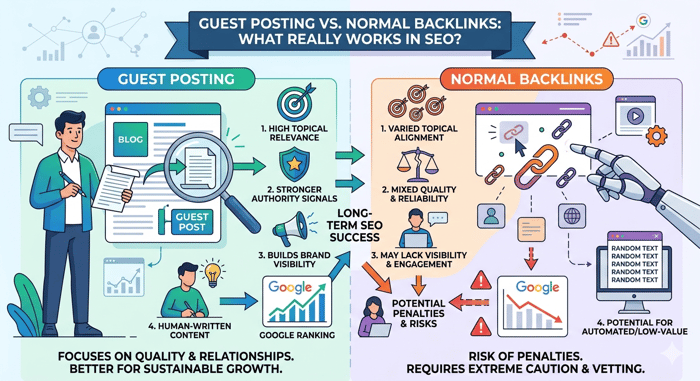
If you’ve spent any time learning about SEO, you’ve probably heard the phrase: “backlinks are everything.” And it’s true—backlinks remain one of the strongest ranking factors in search engines. But here’s where many people get confused: not all backlinks deliver the same results.
Two common approaches—guest posting and normal backlinks—are often treated as equal. In reality, they are very different in how they impact your website’s growth, authority, and long-term success.
Let’s break it down in a clear, practical way so you can make smarter decisions for your SEO strategy.
🔗 Understanding Backlinks First
A backlink is simply a link from one website to another. Think of it as a “vote of confidence.” When a trusted website links to you, search engines assume your content is valuable.
But here’s the catch:
👉 A few high-quality backlinks can outperform hundreds of low-quality ones.
That’s why how you build links matters more than how many you build.
✍️ What Is Guest Posting?
Guest posting is one of the most effective and widely recommended link-building strategies. It involves writing an article for another website in your niche and including a link back to your site.
Why Guest Posting Stands Out:
You create valuable, original content
Your link is placed naturally within the article
The website is usually relevant to your industry
You reach a real audience, not just search engines
👉 Example:
If you run a fitness website and publish a guest post on a health blog, your backlink becomes highly relevant—and powerful.
🔄 What Are Normal Backlinks?
“Normal backlinks” is a broad term often used for links created through easier or less strategic methods.
These include:
Blog comments
Forum links
Business directories
Profile links
Automated submissions
While these links are easier to get, they usually lack depth and authority.
⚖️ Guest Posting vs. Normal Backlinks: The Real Difference
- Impact on Rankings
Guest Posting: Strong, long-term ranking improvements
Normal Backlinks: Limited or inconsistent impact
Search engines value links that come from real content and real websites, which is exactly what guest posting provides.
- Trust and Authority
Guest Posting: Builds credibility and brand trust
Normal Backlinks: Often ignored or seen as low-value
A backlink from a respected blog sends a much stronger signal than dozens of links from random directories.
- Relevance Matters
Guest Posting: Niche-specific and targeted
Normal Backlinks: Often unrelated
Relevance is a key ranking factor. A link from a related website carries far more weight.
- Traffic Potential
Guest Posting: Can drive real visitors to your site
Normal Backlinks: Rarely bring meaningful traffic
Guest posts don’t just help SEO—they also bring engaged users who are interested in your content or services.
- Risk Factor
Guest Posting: Safe and aligned with SEO guidelines
Normal Backlinks: Risky if overused or spammy
Too many low-quality backlinks can actually hurt your rankings instead of helping them.
💡 Why Guest Posting Is a Long-Term Investment
Guest posting isn’t just about getting a backlink—it’s about building a presence.
When done correctly, it helps you:
Establish authority in your niche
Build relationships with other websites
Improve brand visibility
Gain trust from both users and search engines
It’s slower than quick link-building tricks, but the results are far more stable and long-lasting.
⚠️ Are Normal Backlinks Useless?
Not entirely.
A natural backlink profile includes a mix of link types. Some normal backlinks can:
Help diversify your link profile
Support your main SEO strategy
Provide small but useful signals
However, they should never be your main focus.
🚀 Smart Link Building Strategy
If you want real SEO growth, here’s a balanced approach:
✔ Focus primarily on guest posting and high-quality backlinks
✔ Use normal backlinks in moderation
✔ Avoid automated or spammy link-building tools
✔ Prioritize relevance, authority, and content quality
✔ Think long-term, not shortcuts
🏁 Final Thoughts
When comparing guest posting and normal backlinks, the difference is clear:
👉 Guest posting builds authority, trust, and long-term rankings
👉 Normal backlinks offer limited value and can be risky if misused
If you’re serious about growing your website, don’t chase hundreds of easy links. Instead, invest in meaningful connections, valuable content, and high-quality placements.
Because in SEO, it’s not about how many links you have—
it’s about how much those links actually matter.

I’ve kept things simple by using managed link building, which handled the outreach and gave me steady, white hat links without me babysitting the process. The mix of crowd marketing posts and guest posts helped my newer pages get some trust faster, and the pricing didn’t punch a hole in my wallet. The free consultation also made it easier to sort out what I actually needed.
Good point 👍 and I completely agree with your observation.
In most real campaigns, the difference actually comes down to intent + quality of placement, not just the type of backlink. A guest post on a relevant, high-traffic page tends to perform better because it combines context, relevance, and real user engagement.
At the same time, I’ve also seen “normal” backlinks work when they come from pages that are already indexed well and getting steady traffic.
So maybe it’s less about guest post vs normal backlink and more about whether the link lives in an active, trusted ecosystem or not.
Curious to know—have you noticed certain niches where normal backlinks still outperform guest posts?