History of Computer - From A Big Bulky to Portals of 2020
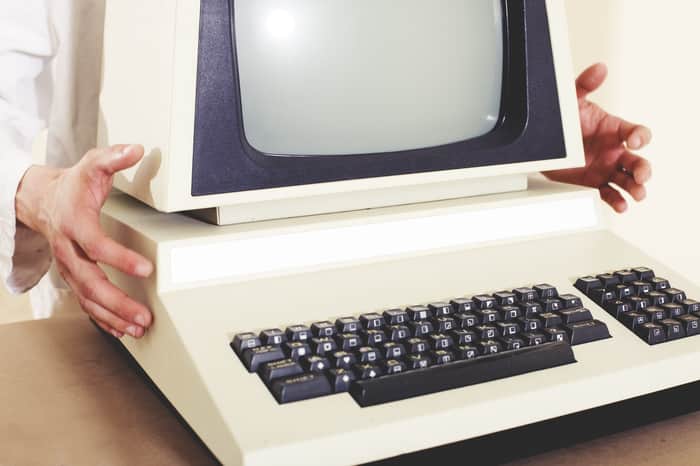
Nowadays, computers are ubiquitous both in professional and private life.
Computers have changed the world. Today there is hardly any area of daily life that does not require it. Integrated micro-computer used, for example, for control of washing machines, DVD recorders, coffee machines, and other equipment. The first freely programmable mechanical computer (Z3) Konrad Zuse presented before the public in 1938. In the broadest sense, he already matched the term that became established for these machines. The first fully electronic digital all in one computer was built in 1946 by the American scientist John William Mauchly and John Presper Eckert. He bore the name ENIAC (Electronic Numerical Integrator and Computer). The device consisted of 18,000 radio tubes, consumed as much electricity as a small town, and was as large as a house.
ENIAC could not expect better than a modern calculator
But despite this large size ENIAC took only one performance to that of a modern calculator equivalent. He mastered the four basic arithmetic operations, square root, and percent calculation. This example already shows the progress that computer technology has made in recent decades. A device that was as big as a house and its development had cost millions of dollars, could not expect better than a calculator, which you can buy for a few euros in any business.
Nevertheless, the operation of computers over the years has not changed. They still expect the same method. Computers only know two terms: one is “yes” or “one” and the other “No” or “zero.” So computers use only two numbers, namely 1 and 0 If the circuit is closed, it means 1, and he is open. There is no contact, it said 0 When computers were first radio tubes – depending on the circuit – manufactured electrical connection – or not. In a calculator, there is a so-called microprocessor which consists of semiconductive metal alloys.
Computers are superior to the human brain to speed.
A microprocessor (chip) is smaller than a fingernail, but he takes on the task of hundreds of radio tubes of the first computer ENIAC. Since all computers work with only the two numbers 1 and 0, it is referred to as their computational manner as binary (bi = 2 Greek). For people who expect after the decimal system (Greek decadent = 10), this method is very impractical. The number 1024 is written in the decimal system with only four digits.
In contrast, the binary arithmetic manner has eleven digits. The computer uses the decimal system according to the following principle to be a binary system: For the 0 and the one he also uses the number 0 or 1 But since he works with only two characters, it requires a combination of the two for the two binary characters, 1-0 and the decimal number 3 is in the computer language 1-1. For number 4, he must already have three characteristics: 1-0-0. In other words, whenever all possible combinations of the respective ones and zeros are exhausted, the computer adds another 0 and 1 added. In computing, the number 1024 looks like this: 1-0-0-0-0-0-0-0-0-0-0. At first glance, it may seem awkward but is a superior computer to the human brain at speed. This is because the electric current that causes the individual operations. He moves with the speed of light (300,000 miles per second).
With the invention of the microprocessor, computers were becoming more powerful.
Computers can not only expect but also save data at any time in a split second retrievable. The size of the data is measured in bytes. One byte corresponds to one character in a text. One thousand twenty-four bytes is 1 kilobyte, 1024 kilobytes yield 1 megabyte, 1024 megabytes equal 1 gigabyte, 1024 gigabytes, and 1 terabyte. In 1947 the first transistor was realized. Scientists significantly concerned in the development of John Bardeen, William B. Shockley, and Walter Brattain received the 1956 Nobel Prize for Physics. With the invention of the microprocessor standard producible in the 1970s, computers were getting smaller and more powerful. But it would take a decade before the first units found a broad audience. The most successful was the Commodore, who presented a home computer with an 8-bit microprocessor and a memory of 64 kilobytes in the early 1980s. To date, the real Commodore 64 as a best-selling computer of all time.
