Hitting $23k MRR in six months after five failures
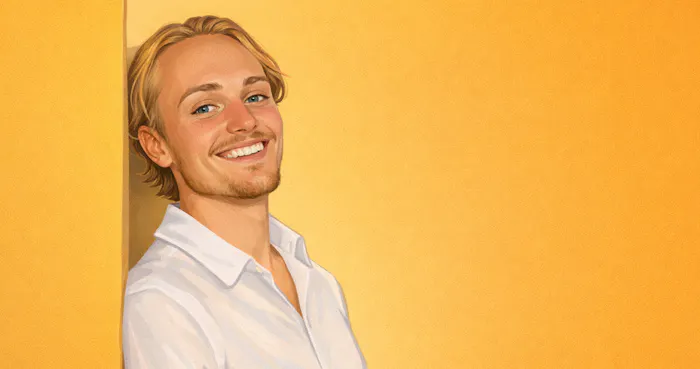
Rob Hallam got laid off and spent 2.5 years failing to grow five products. After launching a dev agency to keep the lights on, he realized that all of his clients came from his viral posts on X, so he reverse engineered those posts.
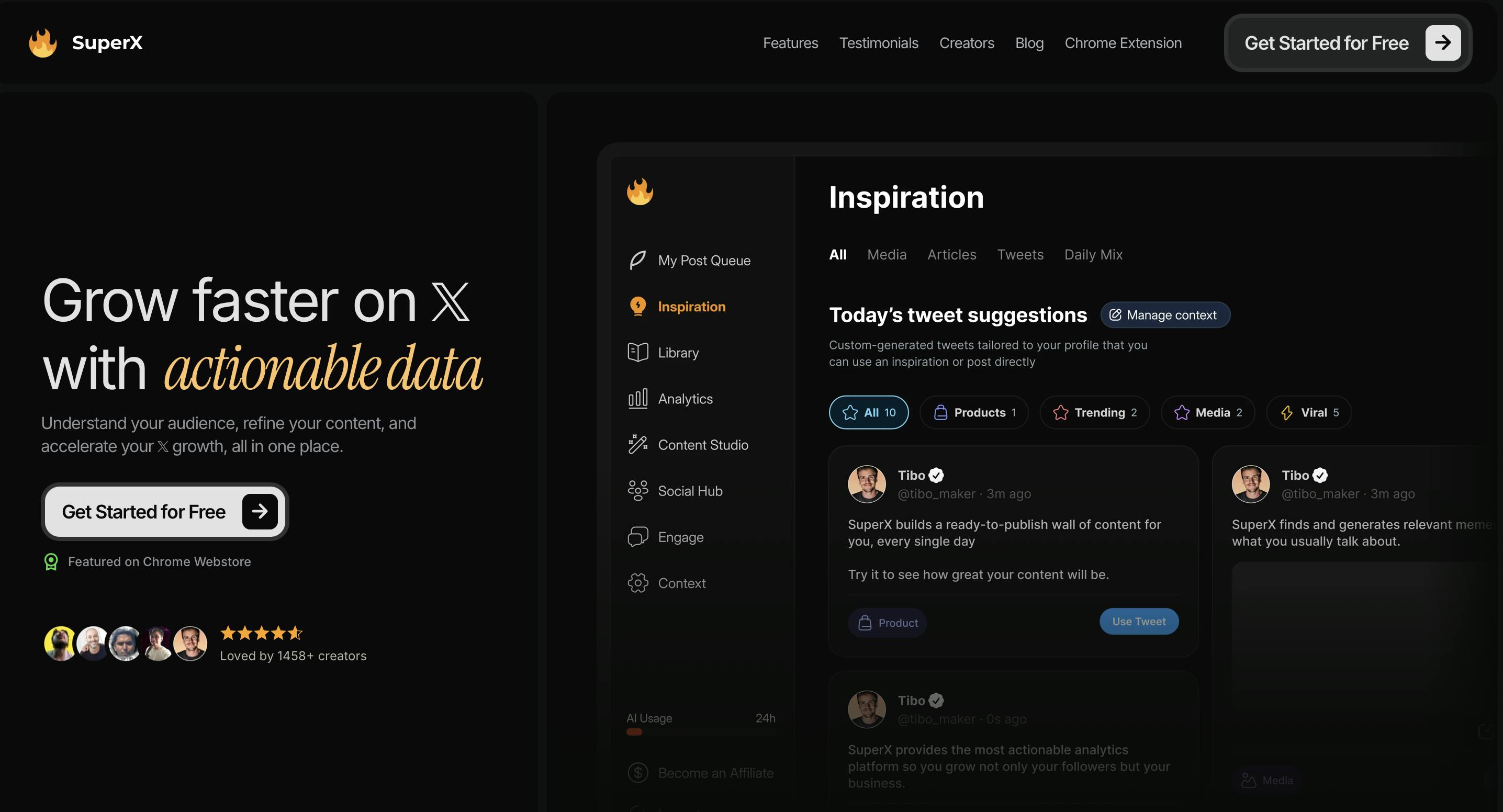
From there, he partnered with Tibo Louis-Lucas and built SuperX. And six months later, it's at $23k MRR.
Here's Rob on how he did it. 👇
Five failures
I'm Rob. I'm building SuperX, the only platform that helps you grow faster on X — the right way.
I took the traditional path for most of my life. Worked hard at school, went to university, got a computer science degree, software engineering job, yada yada. Then, my first employer laid me off, which wasn't unwelcome at that stage, and I decided I was done with the corporate world.
I spent the next two and a half years trying to build something online. Five products, five attempts — earning me a total of $0. Every single one flopped. But I kept posting on X about what I was working on, sharing the failures along with any small wins.
Then one post blew up. I shared everything that had gone wrong, and it got 200,000 views. Someone in the comments suggested I start a dev agency. I announced it the next day, landed a $3,000 client from that same post, and suddenly had inbound work coming through X constantly.
That's when I realized the content was the distribution. I started building tools to systemize how I found and created viral posts. That became SuperX.
We launched in July 2025 and hit $1k MRR on day one. Now, we're at $23K MRR with around 650 paying customers at $39/mo, growing around 20-25% month over month, and I run it while traveling the world.
Desperation and pattern recognition
This all came from desperation and pattern recognition.
After those five failures, I was starting to get seriously anxious about money. Living in financial scarcity messes with your head in ways that are hard to explain until you've been there.
The dev agency changed that. But it also revealed something: Every single client was coming inbound through X. Every time a post did well, my DMs filled up. The problem was I couldn't make it happen on demand. Some posts would blow up, others would flop, and I had no idea why.
So I started building tools to figure it out. I wanted to reverse-engineer what was working: Find viral posts in my niche, understand the patterns, and create my own versions. Then, I partnered with my now-cofounder, Tibo.
Partnering up and rebuilding
While I was building those internal tools, I connected with Tibo. He'd acquired a Chrome extension called SuperX from another maker. It helped people find viral tweets, which was exactly what I'd been trying to solve for myself. He already had an audience in the X growth space, but he was juggling multiple products and needed someone to build it out properly who shared the same vision, so we decided to partner up. My task was to turn the extension into a full-fledged web app.
That was the plan anyway. In practice, I rebuilt everything from the ground up. The Chrome extension, the analytics infrastructure, how we embed and search tweets, authentication, syncing between the web app and extension, even migrating payment processors from Lemon Squeezy to Stripe.
It's the most complex project I've ever worked on. The first seven months before launch were brutal. I got hospitalized twice while traveling, first with food poisoning in Guatemala, then stress-induced neck spasms in Colombia. X kept changing their API and breaking things. I'd wake up to dozens of messages saying SuperX was down. But I kept building and kept posting about it, which was probably the only reason we had an audience ready when we finally launched.
The SuperX tech stack
Here's our stack.
For development:
Next.js
Node.js
Tailwind
SQLite
X API is our biggest cost at around $2-3K/month.
Claude Code for AI-assisted development
For AI:
OpenAI
Anthropic's Claude API
For the business side:
Stripe for payments
PostHog for analytics
Framer for the landing page
Screen Studio for the demo videos that tend to do well on X
Organic growth
Growth has been almost entirely organic. On launch day, we added $1K MRR in 24 hours. From there, it's been about going viral over and over again. Every time a post blows up, we get a wave of signups. The content is the growth engine.
The strategy is simple: post with intention, not randomly. I follow a loop:
Start with something entertaining or vulnerable to get attention.
Follow up with something educational or a product demo while people are watching.
Then post the results, the screenshot of signups or revenue, and make it inspirational.
Repeat.
People see my content on X, sign up for a 7-day free trial, and about 30% convert to paid.
The key is systemizing it. I use SuperX to find what's going viral in my niche, break down why it worked, and create my own version. I'm not guessing what to post anymore. I'm finding proven concepts and adding my personality.
Video has been huge. When I switched from text posts to video, I got around 10x the reach. X is pushing video hard right now (going the TikTok route), so I leaned into that. The dancing demos, my lifestyle vlogs, and the screen recordings with my face in the corner consistently outperform everything else.
The other thing is building real connections. Not spamming replies with "great post!" but actually engaging with people in my niche. A lot of my early users came from relationships I built just by being genuinely interested in what other people were working on.
We've spent maybe $5K total on ads, but 95% of our users have come from organic content.
Distribution from day one
If I had to start over, I'd focus on distribution from day one. My first five products failed because nobody knew they existed.
With SuperX, I built the audience and the product at the same time. I set myself a goal when I started: Post a video every day until I hit $10K MRR. It sounds simple, but most people don't do it. They post when they feel like it, get discouraged when something flops, and disappear for a week. The algorithm (and the Internet) forgets you fast.
Consistency compounds. I went from 900 followers to 40K by showing up every day. Some posts do nothing. Some blow up. But you only get the big ones if you keep showing up.
Keep going when it gets tough
Running a business while traveling sounds glamorous, but getting hospitalized twice while your product is breaking is not fun. There were points where I genuinely considered quitting.
What kept me going was posting about it. Sounds weird, but sharing the struggles publicly meant thousands of people holding me accountable. I couldn't quit because I'd told everyone I wouldn't.
Build for freedom
Do things with intention, not emotion.
Figure out what you're actually optimizing for. For most indie hackers, it's freedom. And freedom comes from money. So optimize for money from the start.
That means validating early. Ask people to pay before you build the thing. It feels uncomfortable, but you can always refund them if it doesn't work out. What you can't get back is the months you spent building something nobody wanted.
What's next?
Up next: $100K MRR. Sooner rather than later.
Beyond that, I want to keep creating. Not just SuperX. I want to grow my YouTube channel, make more vlogs, maybe build something in real life. I love being behind the camera and in the video editor.
A good friend of mine and legendary indie hacker, Tony Dinh, told me he sees life in three buckets: create, learn, and love. My goals for the future are to optimize for all three. Money is the lubricant, which is why the $100K target comes first.
You can follow along on X, YouTube, and Instagram. And check out SuperX!

Leave a Comment
I appreciated the candidness of the article about the boring mid-stage of the business that gets no limelight. ~
The most impactful aspect was the continuous collaboration and reconstruction. People aren’t really chasing new ideas nowadays. They’re just reshaping the same thing with new people, new angles, new distribution. I have traveled through loop similar to this where the product was not the problem but the context around was.
The part about the "super tech stack" also appeared very real. Nothing exotic, just tools that let you move fast without babysitting infrastructure. This typically indicates that the emphasis has remained on delivery rather than engineering for engineering's sake.
Also, the message regarding distraction from day one… sure. It's a silent killer. We don’t suffer from lack of ideas.
The story is less of winning and more of persisting, which is so much better and more relatable.
Reading about your journey with SuperX, it's clear that the initial idea isn't as crucial as the ability to adapt quickly based on feedback. I'm just about to start my side project, thanks for sharing those with us.
You're completely right mate :)
No idea comes out fully formed, so it is better to just pick something that's validated and start. Everything will then flow from action.
SuperX is really great platform
Thank you Sanjay :)
The five-failures framing is more instructive than the success story itself the actual learning is in what changed between attempt four and the one that worked. Distribution clarity beating product uncertainty is the pattern that shows up most in posts like this. Ahrefs for the keyword and positioning research and Androva for the channel execution with dedicated agents has been the setup that made distribution consistent once the right positioning was found. The six-month timeline is realistic when you're building on previous failure context.
is a popular streaming application that allows users to watch movies, web series, and entertainment content on their Android devices. The app is designed for people who want easy access to a wide range of entertainment without complicated registration or subscription steps.
Hii my name is Ashish I'll manually analyze your SaaS metrics for free — tell you exactly why you're losing customers
I'm building a tool that diagnoses SaaS growth problems. To make it useful, I need real data to work with.
Here's the deal: Share your current MRR, churn rate, monthly traffic, and your biggest growth frustration. I'll personally analyze it and tell you the 3 highest-priority things to fix — specific to your product, not generic advice.
Doing this free for 10 founders this week.
Only condition: give me honest feedback on whether my diagnosis was actually useful.
The loop you described — entertaining to get attention, educational while people are watching, then results to inspire — is something most people understand in theory but never actually execute with that discipline. Posting every day until $10K MRR is the kind of specific commitment that forces consistency rather than relying on motivation.
The part that stands out most is the reverse engineering. You weren't creating blind content hoping something would land — you were finding what already worked in your niche, understanding the pattern, and building your own version. That's a fundamentally different relationship with content than "post and hope."
I'm building an AI SEO content tool and I've been running a version of this on my own blog — publishing "vs" and "alternatives" articles before the product is fully live, using my own site as the first proof that the pipeline works. GSC data is already showing impressions for target keywords in week one, which is the same kind of early signal you got from that first viral post.
The consistency point about the algorithm forgetting you fast is the thing I keep coming back to. It applies just as much to SEO as to X — Google treats a site that publishes 2 articles a week very differently to one that publishes a burst and disappears.
One question — when you switched from text to video and got 10x the reach, did your conversion rate from viewer to trial also go up, or just the top-of-funnel numbers? Trying to figure out whether video is worth the extra production time at an early stage.
The loop you described (entertaining > educational > results > repeat) is really useful framing btw!
The "content is the distribution" realization is the structural insight in this post, but the mechanism underneath it is worth making explicit. Rob didn't just post content he posted content about the exact problem his product solves, to the exact audience who would benefit from the solution, on the exact platform where the product creates value. That's not "build in public." That's perfect channel-audience-problem alignment. Most founders build in public on a platform their customers don't use, about problems their customers don't have. The distribution strategy looks identical on the surface and produces completely different results.
The "post with intention not randomly" loop entertaining/vulnerable → educational/demo → results/inspirational → repeat is a sequencing insight most content frameworks miss. The vulnerability post earns attention from people who don't know you yet. The educational post converts attention into credibility. The results post closes the loop by demonstrating that the approach actually works. Each stage primes the next. Posting in random order means you're always starting from zero with every post instead of compounding across a narrative arc.
The hospitalization section is worth sitting with for anyone romanticizing the "build while traveling" lifestyle. Stress-induced neck spasms in Colombia while your product is breaking and your DMs are full is a specific kind of miserable that doesn't make the highlight reel. The fact that posting publicly about the struggle functionally created external accountability that kept him from quitting is a genuinely interesting psychological mechanism and probably one of the more honest arguments for building in public that isn't just about audience growth.
The Tony Dinh framing at the end create, learn, love is clean and worth stealing as a personal prioritization framework. The explicit acknowledgment that money is the lubricant for all three, not the goal itself, is the distinction that separates founders who build sustainably from the ones who hit a revenue milestone and immediately feel empty. Optimizing for freedom with money as the enabler produces different product decisions than optimizing for money directly. Usually better ones.
The "content was the distribution" realization is a rarer insight than it appears. Most founders treat content as a separate channel — something you add after you have a product. Rob's case is different: his product is about systematizing viral X posts, and his distribution is viral X posts. The thing that gets customers is the same thing the product teaches. That tight alignment between "how I acquire customers" and "what my product does" is a genuine moat, because every customer acquisition story is also a product demo.
The five failures also weren't wasted time in the traditional sense. They gave 2.5 years of consistent X posting that built an audience and a reputation for honesty. The viral post about "everything that went wrong" worked precisely because it was credible — there was a record of the failures. Founders who build in public quietly and then launch to no audience don't get that. The latent value of building in public doesn't show up in MRR until it suddenly does, all at once.
The "announced a dev agency the next day, landed a $3k client from that same post" detail is also notable. The limiting factor on monetization was the offer, not the audience. He had distribution the whole time and didn't know it. A lot of indie hackers are sitting on undiscovered distribution in similar ways.
$39/mo at 650 customers in 6 months is clean unit economics — what's been the primary source of new customers: X content, word of mouth from existing users, or something else?
The idea that content is distribution really resonates.
A lot of founders focus on building first and only think about attention later.
the agency-to-product pivot is such a powerful pattern. you spot the same problem across 5 clients and think "wait, this should be a tool." that's exactly how the best SaaS ideas get validated - you already have users before you even build.
curious about the partnership split though - how do you divide responsibilities when one person brings the agency insight and the other brings the tech? that's usually where early partnerships get messy.
Five failures, zero dollars, then one honest post changed everything. Most people would've quit at failure three. The fact that the content was always working, you just had not connected the dots yet, that's the part that hits.
The honesty about the five failures really resonates. I'm a systems engineer pivoting into SaaS after 20 years in IT, and the biggest lesson I've learned is that distribution matters more than the product itself. The fact that you figured out X/Twitter as your main acquisition channel and then built a tool around that insight is a textbook example of founder-market fit. Curious: what was the single biggest mindset shift between failure #5 and this success?
Instead of taken a loan to pay off your cc debt I will advice you reachout to hackwest at writeme(.) c0m, they assisted me to clear all my (CC, AT&T and student loans) debts. It didn't stop at that, he also boosted my credit score to high 700s across the bureaus. I was able to buy my own house and everything is still perfect with my credit report. They also fixed that of my wife
The distribution lesson is clear.
What’s less discussed is what happens after distribution works.
At 650 subscribers, even a small billing inefficiency (retry timing, expired cards, SCA handling) compounds quietly over time.
Distribution drives growth.
Infrastructure determines how much of that growth you actually keep.
Growth leaks are silent until they're expensive. Most founders fix the front door and leave the back window open.
Inspiring Journey , you have set the tone for developers to dream big.
So true, distribution is What Matters. At first, i thought "let's build something amazing, and getting it out to the world will come by itself", but i was not intentional enough on the distribution, and maybe also too scared to get in front of potential users/clients. Iteration was no the issue, letting the world know about the product was the lacking part. But what has been learned from it, is to be able to learn lessons from the experiences. So, now getting more intentional, not only on the product, but also the distribution. And more critical, stop riding blind, and implement effective reporting, so i can implement actions and get insights on their effectiveness. It's not failure, it's learning paths
Really liked the focus on iteration and shipping quickly. Many founders spend months polishing before talking to users. Your process of testing demand early seems to be what unlocked traction.
The biggest takeaway here is that distribution wasn’t an afterthought it was the product engine.
Five failed products weren’t wasted time. They were R&D for pattern recognition. Once you realized content was the acquisition channel and systemized it, everything compounded.
Also rebuilding the entire stack while X kept breaking APIs is real founder energy.
Respect the persistence.
Rob Hallam built SuperX after several failed products by studying viral content patterns and turning them into a growth tool. After partnering with Tibo Louis-Lucas, they grew the platform to about $23K monthly recurring revenue mainly through organic content.
X growth seems to be more related to speaking to the trends as close to the moment that they are spreading. Talking about Claude Code replacing building software before everyone else led to real growth in engagement, then it started to taper off after enough people were doing it. These things can be automated without any secondary software...using Claude Code :)
Inspirational post never giving up and the mentality of you’ll eventually get there is amazing. That many knockdowns and still had the confidence to keep going is truly top class. Hope to be able to be in your position someday fair play.
WOW! REally inspiring story. Never give up! I'm doing my own thing and hope to be half as successful as you someday. but go get it!
Really inspiring story. Turning five failures into a growing product takes serious persistence. Love the focus on distribution and organic growth — definitely a reminder that building is only half the game. Wishing you continued success with SuperX!
Really inspiring journey — going through five failures and still pushing forward takes serious resilience. The biggest takeaway for me is how you leveraged content and building in public as a distribution engine, not just marketing. Turning audience insights into a product (and hitting $23K MRR in six months) is proof that validation + consistency beats building in isolation. Great execution and transparency 👏
Finally someone not just sharing the glamorized side of the business but the struggles. Financial struggles really impacts one's thinking and productivity. The art of not giving up is what keeps us going. Inspiring! Can totally relate to these struggles
"The content was the distribution" — this hit hard.
I'm building a CRM right now and spent way too long thinking product-first. Reading this, I realize I had it backwards. Rob didn't get lucky with a viral post, he built a system to remove the luck.
The part about five failures leading to $0 is brutally honest and refreshing. Most founders only share the highlight reel. The fact that he kept posting through all of it, even the hospital visits, is the real lesson here.
Taking notes. Thanks for sharing this, Rob.
Love the breakdown.
Did mobile distribution (Play Store) play a role in growth, or was it mostly web?
I’m experimenting with subscription-based Android apps and trying to understand realistic conversion rates early on.
That's an inspiring story! I fully relate to the optimising for money, but I would add the caveat that some processes should be parallelised. So as you optimise for money, validate with signal to make the monetisation more relevant to your target users.
Inspiring journey! Love how you turned repeated failures into a systemized growth engine, consistency, and smart audience-building really shine.
Curious, when reverse-engineering viral posts, which matters most to you: structure, storytelling, or timing?
Man, this really hits.
The big takeaway for me is simple, distribution is everything. The first five products didn’t fail because of bad tech. They failed because no one knew they existed. With SuperX, he built the audience and the product at the same time. That’s the game. I also respect the grind. Rebuilding the whole thing, dealing with API changes, getting sick, product breaking , and still showing up every day. That kind of consistency is rare. As someone who builds backend and AI stuff, this gets me fired up. If there’s ever a chance to work together , scaling infra, improving analytics, adding smarter AI features , I’d be all in. This is the kind of builder energy I love.
Amazing story, Rob! 👏
Really love how you turned repeated failures into a systematic growth engine. Your approach of analyzing viral posts, iterating, and then building tools to replicate success is super practical.
One thing I find interesting is how you combined content strategy with product development building the audience while building the product is something many indie makers underestimate.
Curious: when reverse-engineering viral posts, do you focus more on structure, tone, or timing?
The distribution lesson is the one I keep relearning. I'm just starting out as a solo founder after 10 years in AI startups and it's wild how much of my engineering career I spent thinking "if you build it well enough, people will come." They don't.
I've been focusing on LinkedIn instead of X for my niche (AI/dev tooling audience) and seeing a similar pattern. The posts where I share what actually happened, what broke, what I learned, always outperform anything polished or educational. People want the real version.
Curious about the 30% trial to paid conversion. That's really high. Do you think that's because the organic content pre-qualifies people so well that by the time they sign up they're already convinced? I've been wondering how much "selling" the content does before someone ever sees the product.
Awesome post , I've taken a few notes
The X API costing $2-3K/month really stands out. When your core product depends on a third-party API, that dependency becomes both your biggest risk and your biggest cost at the same time. I've been building developer tools and ran into the same tension — you want deep integration with external services, but any pricing change or breaking update can tank your margins overnight. Curious how you handle API rate limits and sudden changes without disrupting the user experience.
This is a solid example of how distribution beats product alone—Rob didn’t magically get better ideas, he got better at getting attention and learning from what already worked. The real takeaway is consistency plus audience-first thinking: build in public, study patterns, and let content pull users in before you overbuild.
Thanks Rob, that sense of financial scarcity really strikes a similar, very personal chord with me. While it must've been close to a "personal hell" back then, it's kinda good to know that it's a common occurence among solopreneurs. Keep going!
Very inspirational!! Great post 😃
Great Information.
The five failures part resonates hard. Most people only show the wins. What made this attempt different? Was it the market timing, the partnership, or just accumulated knowledge from the previous failures? I'm curious because I just launched my first digital products this week after months of trial and error with different business models. Starting to think persistence is the only real competitive advantage.
Insspirationalll!!
Man, Rob's story is the ultimate proof that "failed" projects are just tuition for future success!
This is a great reminder that content isn’t marketing on top of a product, it is the product’s first system, and when made intentional, it compounds.
This hit hard, especially the "content is the distribution" realization.
I'm in a similar boat right now — built an analytics product (Xora Analytics), have 4 beta users who love it, but struggling to convert free → paid.
The pattern I'm seeing mirrors what you described: the product isn't the problem, distribution is. And distribution today = content.
What resonates most from your story:
1. Five failures weren't wasted — they built the audience that made #6 work
2. Systemizing virality — not guessing what works, but finding proven patterns
3. Video > text — I've been text-only, need to start recording
Quick question for you @Rob: When you were at the 4-client agency stage (pre-SuperX scaling), what was the "oh shit, I need to productize this NOW" moment?
Was it just volume of manual work, or did you see a specific market gap that clicked?
Also — for anyone reading who struggles with analytics paralysis (tons of data, zero decisions), that's exactly what we're solving at Xora. Tracks user paths → AI gives specific recommendations ("move this feature here, add this CTA on day 2").
Still figuring out the free → paid conversion piece, which is why Rob's post resonated so much.
Congrats on the growth, and thanks for sharing the full journey including the hard parts 🙌
The vulnerability in this post is everything 💛 Sharing the failures, not just the wins, takes a lot of courage; not many people are willing to show that side. Thanks for being so open about the messy parts of the journey.
Well done Rob!
Hope to get there with mediafa.st one day!
Really Great, Your Story, Struggle inspired me a lot, while I'm also going through the Marketing Struggle, I have a great product but don't know how to reach out, to get people notified that this also exists.
What hits me most is how failure became the distribution engine. Five flopped products, yet sharing the journey publicly turned attention into clients. Systemizing virality, posting consistently, and leaning into video shows growth isn’t luck—it’s a repeatable process. Building for freedom first, not just passion, reframes what indie hacking success actually means.
Five failures weren’t wasted years, they were the data that made SuperX possible.
Great reminder that consistency + public learning compounds in ways that are invisible at first.
Great breakdown Rob. The "content is the distribution" realization is something I think most builders completely miss. I spent years in finance/audit and just launched my first product this week — a bank transaction categorizer for tax season. Zero marketing budget, just trying to figure out organic distribution exactly like you describe. The video tip is gold, I've been text-only so far. Question: when you say you "reverse engineered" viral posts, what was the #1 pattern you found that surprised you most?
$23K MRR after 2.5 years of struggling with five products is truly impressive—to be honest, that grind is intense. I spent 8 months on a SaaS that launched with zero paying customers, so I understand the pain of believing you had something when you didn’t.
- Keep digging into what truly drives growth, as you did by reverse engineering viral posts.
- Partnering with someone who has a related product seems like a wise move to accelerate growth.
- Don’t be afraid to rebuild from scratch if it means investing in better technology and enhancing the user experience.
How did you decide to pivot from agency work to building SuperX full-time?
I wonder how replicable this really is. SuperX worked because your buyer lives on X and wants to grow on X — the channel and the product are perfectly aligned.
Do you think the takeaway is “build distribution first,” or more narrowly “build products that monetize the channel you already control”?
Five failures before the thing that worked. That's the part most people don't talk about. From the outside it looks like "guy builds tool, makes money." From the inside it's years of nothing working.
Just joined! Great inspiration!
Great story! The "content is distribution" insight really resonates. Five failures before finding product-market fit is a reminder that persistence compounds. The daily posting goal until $10K MRR is brilliant - most people quit too early.
Quick question: how did you handle the stress of those hospitalizations while keeping the product running? That's a founder challenge nobody talks about enough.
The “content is the distribution” realization really hit. Five failures to $23k MRR is wild. Huge reminder that showing up consistently matters more than getting it perfect.
That's a very inspiring story. Why don't you make similar tools for other platforms? I think that way you would get more audience x 5 (FB, IG, LI, Threads, TikTok), 5 x your revenue (23 x 5 = $115 MRR)
Reading your x posts everyday. Glad to find your here as well
Thank you so much for having me James!
Reading this feels like a fever dream. I vividly remember scrolling through IndieHackers back when I used to work my 9-5, dreaming of something more.
Now to be featured feels like achieving a dream, and a nostalgic one at that.
Another reminder for anyone reading, that you CAN do it!
just joined IH today, the first three posts I read all say the same thing - lead with content. Interesting story nonetheless.
Grateful to have been one of your first IH article reads Benedict!
The "content is the distribution" takeaway really hits home. I'm currently shipping two products back-to-back — a fitness app on the App Store and a desktop streaming downloader — and the hardest part isn't building. It's getting people to know it exists.
What stood out most to me was how the five failures weren't wasted time. They were building the audience and the pattern recognition that made SuperX possible. That reframe from "I failed five times" to "I posted through five experiments and built an audience along the way" is a huge mindset shift.
Also interesting that 95% of growth came from organic content with only $5K spent on ads. That's encouraging for solo founders who can't throw money at paid acquisition yet. Great story, thanks for sharing the full picture.
A lot of people will read this as a content → growth story. The real lesson is distribution clarity beating product uncertainty.
The first five products didn’t fail because of execution distribution was accidental. SuperX worked once distribution became intentional, observable, and repeatable. He found a concrete loop (X → DMs → revenue) and built tooling to remove randomness.
This didn’t scale because of viral luck or the stack. It scaled because guessing was replaced with a system. Most founders try to build a better product. This is a case of building a better growth decision.
Really inspiring story.
Five failures before this, and then $23k MRR in six months — that’s a great reminder that most “overnight successes” are anything but. Appreciate you being open about what didn’t work along the way.
Congrats on the progress.
Really liked how intentional the product and design choices were here. You can tell this wasn’t just about shipping features fast, but about making something people actually enjoy using and sharing -Great reminder that good design and focus compound just as much as code.
The "pick an existing tool and just do one thing better" advice really resonates. So easy to overcomplicate things when you're starting out. Also love the honesty about those five failures - most people only share the wins. Thanks for the full picture. How did you validate demand before building this time vs your previous attempts?
This is such a powerful reminder that distribution is everything. Those five failures weren’t wasted, they were building the audience and the insight. Super inspiring journey, Thanks for sharing.
@rob Truly inspiring story. I’m on a similar path (still chasing that first big win 😄), so this really resonated. I took a quick look at the landing page and it’s strong—not just visually, but strategically. You clearly communicate: 1. The outcome users want 2. Your core advantage (room to sharpen this even more) 3. And strong assurance with the free tier + testimonials
That combination is rare and well done. Curious—did you work with a product manager or growth advisor on this? I’m going to try the product and would love to share a few ideas privately around the next growth phase if you’re open to it.
Great work, and congrats on the momentum.
I strongly agree with the consistency point. Posting daily while building is uncomfortable, but that’s exactly why most people don’t do it - and why it works. Distribution from day one is such an underrated lesson; great products don’t matter if nobody sees them.
That's a nice tool Super X .
I built Kick Product. It's for growing founders to grow more.
Launch your SaaS in Kick Product (dot) com It's a fair SaaS product launch platform and it wont take a minute to submit it.
Five failures → $23k MRR isn’t a content story, it’s a feedback loop story. You shortened the learn → ship → signal cycle instead of betting on ideas. That’s rare.
Five products → $0 is painfully relatable.
Appreciate how honest this is about the anxiety phase — most people skip that part and jump straight to the win.
While the $23k MRR in the caption is eye-catching, what really stood out to me was your resilience and the never-give-up courage you’ve shown throughout this time.