Hitting $29k MRR by building an audience
first
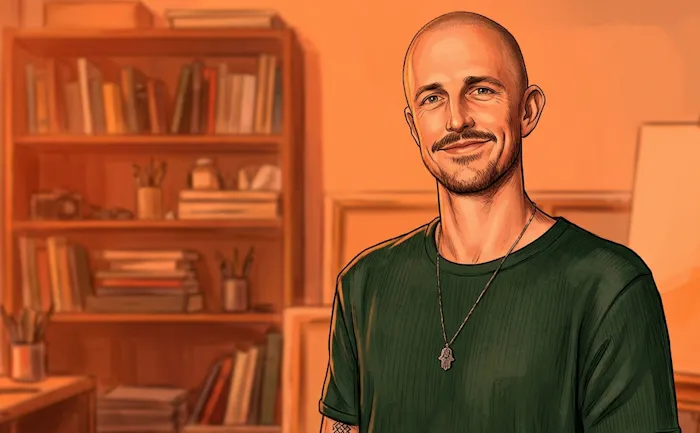
Ryan Robinson built an audience for over 12 years before starting RightBlogger. When he launched, he had customers immediately, hitting $2k MRR within a week. Today, he's at $29k MRR. And that's just from his SaaS — he also earns from his blog, YouTube channel, and agency.
Here's Ryan on how he's doing it. 👇
From simple blog to $350k ARR platform
I'm Ryan Robinson, and I've been a blogger for more than 15 years. I run ryrob.com, my blog about blogging, SEO, marketing, and online business, reaching around 500,000 monthly readers. Over time, the blog became a full-time business, a YouTube channel with 80k+ subscribers, and Refresh, my boutique B2B content and SEO agency.
In 2023, I co-founded RightBlogger, our blog automation platform for marketing agencies, content teams, and pro creators. I started this company with my business partner, Andy Feliciotti, the first week AI burst onto the scene.
RightBlogger has grown to more than 50,000 users. It found its product/market fit after we pivoted to full blog automation, with our tool publishing SEO-optimized blog content on autopilot to your connected sites. Our tooling includes everything from keyword research to briefs, full drafts, AI images, YouTube to blog automations, and direct WordPress publishing. The core idea has always been the same: stop making marketers and creators stitch together five different SaaS tools to publish consistent, high-quality content that delivers results.
We're currently at $350k ARR.
Building the tool he wished existed
I built RightBlogger because I was tired of recommending marketing automation tools that I didn't fully believe in — tools not designed for my exact method of turning lean content teams into high-output organizations.
My audience would email me, asking about AI writing tools, keyword tools, and SEO processes. For years, I'd direct them to a patchwork of five or six subscriptions that collectively cost more than most bootstrapped marketing teams and agencies could afford, and none of which was built with a real workflow in mind.
Meanwhile, I was doing the same patchwork myself every day — firing up one tool for keyword research, another for outlines, a third for drafting, a fourth for optimization, and then manually publishing. The workflow was fractured in a way that only made sense if you'd never tried to publish a high volume of blog content.
When Andy and I started building in 2023, our pitch to each other was simple: What if we built the tool we'd wished existed for the last ten years? Not a "ChatGPT wrapper," but a real, opinionated toolkit built around how lean marketing teams work. That's the business we decided to build.
One piece at a time
Andy is a genuinely world-class developer; he's built tools for almost 20 years and runs 100+ other sites. He built the MVP in a weekend using a SaaS boilerplate, wired together our first 25 tools using OpenAI's API, and we were off.
I brought the distribution, the audience, and the lived experience of being the customer. That split has held ever since as we've grown the team. He builds, I sell.
We started with a handful of tools: a blog idea generator, an outline tool, a basic article writer, and a few supporting utilities. The initial version was rough, single-purpose, and not pretty. But we had one big advantage that most new tools don't have. We had a built-in audience of hundreds of thousands of creators and marketers who actually wanted the thing. I could teach a new toolset to 300,000+ email subscribers the same day we shipped it and know within hours whether it would work. We got our first $2k MRR during week one, and growth stayed pretty steady for almost a year.
From there, we kept adding tools based almost entirely on what our users asked for. We're now at 80+ purpose-built tools inside RightBlogger, most of them shaped by user feedback, support tickets, or something I personally needed for my own sites. The product grew the way a blog grows, one piece at a time, each answering a real challenge someone had.

A model-agnostic stack
Andy owns the tech stack decisions. Here's the stack:
Next.js and React on the frontend
Node.js on the backend
PostgreSQL as the primary database
Stripe for billing
Anthropic, OpenAI, Gemini, and other model providers on the inference layer, routed so we can swap them without breaking the product
Cloudflare for caching, security, and the Worker proxy pattern we use elsewhere in our stack
Vercel for hosting the app; WordPress for our marketing site
The model-agnostic layer is essential to what we do. We've migrated between providers more times than I can count as newer models ship, and our users never fall behind. If you're building in AI and you've hard-coded yourself into one vendor, you're one pricing change away from a big pain.
Boring growth tactics and unfair advantages
RightBlogger is a straightforward subscription-based SaaS. We offer monthly and annual plans across three pricing tiers. We offer no freemium, usage-based billing, or credit gimmicks. Instead, we provide a fully featured free trial; if you like it, you pay monthly or save by choosing an annual plan.
Our growth stems from a few key areas, in rough order of impact:
Content from ryrob.com: A decade of SEO has compounded in our favor. It ranks for queries that creators, marketing teams, and agencies already search for. And we naturally mention RightBlogger wherever it genuinely fits.
YouTube: We create tutorials, livestreams, and content collabs with other creators that show people how to use our tools to grow their audience. I publish these on both my personal channel and the RightBlogger channel. Together, these drive a meaningful share of signups.
Direct traffic and word of mouth from our existing user base: Our best marketing comes from shipping tools people want to tell their friends about.
Email: Our newsletter list is our single highest-converting channel, by a wide margin.
Affiliates and partnerships: We partner with other marketing influencers, creators, and brands with non-competing products, but similar audiences in our space.
Founder-led sales for our Agency Plan where I take demo calls myself, because at that price point, agencies want to talk to a human, and ideally one who's lived their problem.
Honestly, growth has not been a hockey stick. Instead, it's been a compounding staircase: a good month, a flat month, a down month, then a big month when something hits, and we're back to the start, reinventing as the market changes again. For an indie SaaS, real growth looks like a very slow build when you zoom out.
The unfair advantage I've had is my fifteen-year head start on the audience side. I was a blogger before I was a SaaS founder, which meant when we launched RightBlogger, I could go to bat with real traffic, a real email list, and real trust on day one. Most founders have to build the audience and the product simultaneously. I got to build one first. But that was a hell of a challenge, itself.
That said, the tactics have been boring and repeatable.
The three biggest challenges
The biggest everyday challenge is one most AI-adjacent founders I know also struggle with: the ground keeps moving under us. Claude, in particular, has significantly changed things for us. Sitting still isn't an option, so we constantly reinvent RightBlogger's purpose, function, and target audience, gradually moving to serve larger customers who get more product value.
Positioning has been a big challenge, too. When we started, "AI tools for creators" was a sufficiently sharp wedge. It's no longer interesting, especially when any creator can open ChatGPT or Claude for free. So we retooled significantly. We don't sell simple AI tools; we sell workflow, automation, and a real publishing pipeline built for how marketers and creators work. That repositioning is still in progress and has been the messiest strategic work I've done in a long time.
My own two-hats problem has also been a smaller but real challenge. I build a SaaS, run a well-known blog and YouTube channel, consult for startup marketing teams, and head an agency. It's a lot. Most weeks it works; some weeks it absolutely doesn't, and something slips. RightBlogger has sometimes paid for that, which is tough to accept. During periods when I'm spread too thin, the product didn't get the marketing push it deserved.
Advantages that you can steal
A few advantages stand out above the rest:
I'm building a long-running audience. I can't overstate how much easier everything becomes when you build a real relationship with potential customers before launching the product. If you're reading this and debating "audience first or product first," choose audience every single time. In my experience, it's a worthy detour that ultimately pays off significantly in the long run.
I trust my technical cofounder completely to always do what's right, not what's short-term, financially motivated. Andy and I have a clean split of responsibilities; we both respect each other's domain. I'm not second-guessing his architecture decisions; he's not rewriting my email copy. If you're solo and struggling, the right second person changes everything.
Being a customer. I use RightBlogger every day on my own sites. Every bug I hit is a bug a customer would encounter. Every workflow friction point is one that a paying user also feels. There's no substitute for dogfooding your own tool as a real user, not a ceremonial one.
Staying intentionally lean. No outside investors means we face no pressure to grow in ways that don't make sense. We can optimize for sustainable profit instead of arbitrary milestones, and we can say no to ideas that would stretch us too thin in a given quarter.
The compounding nature of content. A blog post I wrote in 2019, and a video I made in 2023, still send RightBlogger customers in 2026. No paid channel I've ever tested comes close to that math over a long enough horizon.
A few honest tips
Here are a few honest tips; I'll skip the generic advice.
Pick an audience before you pick a product. The question "who is this for" outweighs the question "what does it do" every single time. Ten years of teaching the audience we built RightBlogger for meant we didn't launch to crickets.
Charge more than feels comfortable. Our Agency Plan is $249/month, and we sometimes still wonder if it's too cheap. If your price makes you slightly uncomfortable, you're likely near the right number. If it feels obviously cheap, you're definitely too cheap, and buyers will be skeptical of the value you deliver. Pricing is crucial. Being slightly higher than our comfort level motivates us to deliver increasing value to our users.
Ship your ugly version and get 1-on-1 with your customers. The first version of RightBlogger embarrasses us when we look at the screenshots today. It also attracted paying customers within weeks. You can't out-think a market by polishing in private; you must build with the people using your tool and getting value from it. Treat yourself as a consultant to every customer in your early days.
Treat marketing as a product discipline. If you're a technical founder whose instinct is to "figure out marketing later," you won't. Marketing deserves the same rigor, the same iteration, and the same ownership as the code.
Protect your long game. Building lean is a decade-long activity, not a nine-month sprint. Build your business the way you'll want to build it three years from now, but recognize when timing presents the opportunity to go all in on a product that's really hitting.
What's next?
From here, I have a mix of ambition and realism. That's how I think about this in order to live a well-rounded life.
Short term (this year), we're doubling down on the Agency audience. We want RightBlogger to be the obvious first call for any content agency scaling content systems using AI, without losing the craft, brand voices, or client relationships that drive their business. That's a segment where we outcompete ChatGPT in workflow, and we can charge a fair price for real value.
Medium term, we want to become less dependent on me. Right now, much of RightBlogger's distribution relies on my audience, channels, and reputation. That's a strength, but also a single point of failure. Building distribution that doesn't require me to write or create video content is the next hard problem. We recently brought on a COO, a friend of over two decades, to help us scale our sales process beyond my organic reach.
Longer term, I'm open to where this goes. We're profitable, growing, and have optionality. We could keep running this as a lifestyle business for the next decade, raise if the right opportunity showed up, or eventually sell it into a larger content infrastructure play.
You can learn more in a few places, depending on what you're looking for:
RightBlogger: The SaaS itself, with a free trial if you want to try it
My business blog: Fifteen years of writing about content, SEO, and side hustles
YouTube: Three weekly videos on SEO, AI search, content, and building online businesses
Twitter/X: The shortest-form version of what I'm thinking about
LinkedIn: The business side of everything above
My book & personal blog: Where I share the raw behind-the-scenes stuff
Thanks for reading, and thanks for having me! 🤘

Leave a Comment
"Building an audience first is a cheat code, but for those of us starting from scratch, organic marketing like cold outreach and community building is the only way.
I recently launched completely free to help e-commerce sellers automate their copywriting. Since I have $0 ad budget, I'm purely relying on organic distribution and jumping into relevant communities. It’s hard work, but stories like this keep the hustle alive.
For those who launched without a pre-built audience, what was your biggest breakthrough channel?"
zoncreator site
Thats a very well planned and executed idea!
This was a great reminder that solving a niche problem really well can be enough to build a long-lasting business. I also liked the emphasis on shipping early, talking to every customer, and gradually improving instead of chasing perfection. The fact that Shift has stayed lean and profitable for a decade is just as impressive as the revenue. Thanks for sharing such an honest story.
Great hardworking for blogging Journey
Nice article
This is the most underrated growth strategy. Building an audience creates defensible moat that no algorithm can take away. Curious how you differentiated in a crowded space initially?
Its a quite success but I believe nowadays everybody wants to earn money with AI. Ryan has already been involved with internet for years. So IMO this is an achievement for Ryan but not for anyone who is after easy money.
Audience-first is such a powerful strategy. Building trust and community before monetizing creates a moat that competitors cannot easily cross. 9k MRR from an audience-first approach validates that content + community = compounding revenue. What platform was most effective for audience building in your experience?
This really hits home. A lot of founders treat audience building as “marketing after the product,” but this shows how powerful it is when trust is already built before launch. The part I liked most is that the product came from a real workflow pain, not just an AI trend. Audience gets attention, but solving a problem you personally understand is what makes people actually pay.
This is so true. Building an audience first gives you distribution from day one. The willingness to share your journey and be transparent about challenges is what builds trust. Many founders focus too much on the product and forget that people follow people, not products. Curious how much of your current growth is still coming from your audience vs organic discovery now that you've hit $29k MRR.
This resonates with something I'm experiencing while building my own product. As builders, it's easy to become emotionally attached to the features we've spent weeks creating, so we naturally assume they'll be the most valuable.
Lately I've been trying to do the opposite—treat every feature as a hypothesis until real users prove it's useful. The biggest surprise has been that some features I was least excited about got positive reactions, while a few I considered "must-have" barely mattered.
I think confidence should come from user evidence, not development effort. The more I build, the more I realize that shipping and listening beats perfect planning every time.
The model-agnostic stack is the part that doesn't get enough attention in AI tool building.
Most founders hard-code to OpenAI because it's easiest at launch. Then GPT-4 pricing changes, or Claude ships something better, and they're stuck — either eat the margin hit or migrate under pressure. Ryan's team routed inference through a proxy layer so they can swap providers without breaking the product. That's not a technical detail — it's a business continuity decision.
The cost is real: you're maintaining compatibility across multiple APIs, handling different output formats, and testing each model's quirks. But the upside is you're never one pricing change away from a crisis.
This is a pattern I see in early AI tools: optimize for launch speed (single vendor) vs. long-term optionality (model-agnostic). The right choice depends on your runway and how fast the space is moving. In a space where Claude changed the game "more times than I can count," optionality wins.
Question: when you migrated between providers, was there a specific metric that told you "this model is better for our use case"? Or was it more of a "try it, see if users notice" bet?
It's interesting how the idea of building an audience before building a product keeps showing up in so many successful founder stories. It may take years, but it compounds over time. I also loved your point that marketing should be treated as a product discipline, not something to figure out later. Loved reading this :)
Really Impressive
Building an audience before launching is such an underrated strategy. Having people who already trust your work makes it much easier to validate ideas, get early feedback, and grow sustainably. It's always interesting to see real-world examples like this. I recently came across FilmApp while looking for movie and TV recommendations, and it's become one of my favorite places to discover something new to watch. Thanks for sharing your experience!
It's really important to create audience first.
That jump from $2k to $29k is wild — did you notice a specific moment where the audience you'd built really started converting, or was it more gradual?
nice article
I'm building Analyse at the moment and this post is inspiring. I'm a technical founder, and building an actual customer base by exposure is the hardest part for me. Do you have any real advice for a product & situation like my own?
This is incredibly inspiring. As a highly technical founder , audience building and GTM is by far the hardest part of the equation for me right now as I build my own B2B SaaS. Writing the backend architecture feels trivial compared to building trust at scale.
Did you start building your audience before you even had the idea for the product, or were you building the audience around your specific problem space from day one?
The audience-first point is the one nobody wants to hear, because it's really a 12-year head start disguised as a tactic. When you launch to 500k existing readers, "distribution" is already solved — the SaaS is almost the easy part.
What I keep wrestling with as a solo founder building product-first (with AI doing most of the engineering): the cost to build has basically collapsed, but the cost to earn attention hasn't moved at all. So the moat quietly shifted from "can you build it" to "can you get anyone to look."
Curious, Ryan — if you were starting today from zero audience, would you still spend the first year building the audience before touching product code? Or has AI changed the sequencing for you at all?
The model-agnostic point really stood out. AI stacks change fast. Locking your product to one provider usually creates more work later than it saves today.
Building an audience first didn't just reduce customer acquisition cost, it reduced product risk. Having people who trust you gives you faster feedback, better prioritization and a much shorter path to product-market fit. The MRR is the outcome, not the strategy.
Wow Ryan, this is seriously impressive! 🔥
I've been following audience-first stories for a while, but yours just hits different. 12–15 years of consistently showing up with your blog and YouTube, actually helping people, and then launching something you genuinely needed yourself — that’s the dream setup. No wonder you hit $2k MRR in the first week.
I really loved the part about shipping the ugly early version and just iterating based on real user feedback (and your own daily usage). Also the honest take on growth being more of a “compounding staircase” than a hockey stick — that felt very real.
Huge respect for building it this way. Thanks for sharing all the details, man. Super motivating. Keep crushing it! 🤘
That guy is very rich!
The "audience first" path is real but underrated on one point: an audience isn't followers, it's a group of people who trust you on one specific topic. The win isn't follower count — it's that people come to you for one thing and keep coming back. The mistake I made was posting broadly to build "an audience" instead of being genuinely useful on one narrow topic until I was the person people thought of for it. Narrow + consistent beats broad + sporadic.
Great article. I’ve also realised that building a product is often the easy part. The real challenge is finding users if you just build in isolation and hope they will show up at launch.
Did the product first route so this one stings. Launched to nobody and have been grinding for installs ever since. The part about polite feedback that never converts is something I think about a lot because you honestly cannot tell if people want it or are just being nice. And trying to build and do all the marketing yourself at the same time means something always ends up getting dropped.
The detail worth stealing here isn't the 12-year head start, it's that Ryan built the audience around a problem (blogging and SEO) rather than a product, which is why it kept paying off through every pivot. I see the inverse constantly in pitch decks: founders build the product first and treat distribution as a launch task, and it's usually a two-year hole they didn't price in. Audience compounds like capital, and it's the only asset that transfers between products.
I hope i will reach this level, and i feel like i'm almost
One thing that really stood out to me is that the audience wasn't just a marketing channel—it became a distribution advantage built on years of trust.
The line about "pick an audience before you pick a product" is especially powerful. It's easy for founders to think they're building an audience as a way to promote a product, but your story shows the opposite: the audience shaped the product, validated it, and made launching much less risky.
I also appreciate the honesty about growth looking like a "compounding staircase" rather than a hockey stick. That's a much more realistic picture of what sustainable SaaS growth looks like, especially for bootstrapped founders.
Great interview with a lot of practical lessons.
"Audience-first is underrated because the early math feels slower — no immediate revenue, just engagement metrics that don't pay rent. But you're right; it compounds differently than selling. Once you have 2-3k genuinely engaged readers, product direction becomes almost trivial — they tell you exactly what they need, and you're selling solutions to real problems instead of hoping features stick.
Most builders skip this and get stuck in the feature-chasing trap: add more, sell harder, lower price. You end up commoditized. The founders who nail audience-first typically end up with pricing power because their users are invested, not just transactional. The tough part is surviving that first 6 months when the audience feels slow. Sounds like you're past that inflection point."
"Pick an audience before you pick a product" — this should be required reading for every first-time founder.
Ryan's 12-year runway before launch is an extreme version of this, but even a few months of intentional audience building changes everything. The feedback velocity point in the comments is underrated too — it's not about follower count, it's about how fast you can get honest answers.
This is actually one of the things that comes up a lot at goldenweeks, a 2-week deep work retreat in Zanzibar. When founders slow down and step away from the build treadmill, they often realize their real problem isn't the product — it's that they never figured out who it's actually for. Audience clarity before feature clarity.
Great story, thanks for sharing it.
Reading this from the exact opposite position: I just shipped my first SaaS after months of building, and I have zero audience. No blog, no list, no followers. So "audience first, every single time" stings a bit that ship has sailed for this launch.
What resonated most though was "treat marketing as a product discipline." As a technical founder, my instinct was exactly the "figure out marketing later" trap he describes. I'm now trying to give distribution the same daily rigor I gave the code small, boring, repeatable actions instead of waiting for a launch moment.
Ryan had a 15-year head start. Curious what he'd do differently if he had to start from zero today, with the product already built.
i hope i am able to build something that helps people
I hope that one day I will reach that level.
This is a great reminder that distribution compounds longer than product!!
The 'two-hats problem' hits hard—juggling SEO, marketing, and platform maintenance means things inevitably slip. Retooling around a specific audience rather than just chasing generic AI features seems like the only way to survive the constant shifts from OpenAI and Anthropic right now. Thanks for sharing the raw journey, Ryan!
I agree with so many things you've highlighted in your article. The main points being 'Stay Lean', 'Pick and audience' and 'Ship your ugly version'. I especially like that last one and it's given me the courage to launch my construction management app - SiteDiary Pro - without needing it to be 'perfect'.
Very informative article!
"Pick an audience before you pick a product" is the advice I wish I had read six months ago.
I launched my first Shopify app three days ago — AltGuard, which helps EU merchants comply with the European Accessibility Act using AI-generated alt text. I built the product first, then started thinking about distribution. Reading this makes me realize I am doing it in the harder order.
The positioning challenge you described also resonates directly. My early framing was "AI alt text generator" — which sounds like a commodity. But the real value is legal compliance and peace of mind for EU merchants who face actual fines. That is a completely different conversation, and I am only now sharpening that message.
The compounding content point is the one I keep coming back to. I have no audience yet, no blog, no YouTube channel. Every install I get right now requires manual effort. Building something that compounds over time — even slowly — is clearly the move, and I am not doing it yet.
One question — when you launched RightBlogger to your existing audience, how did you handle people who gave polite positive feedback but never converted to paying customers? How did you tell the difference between genuine interest and social support from people who knew you?
Genuinely one of the most useful reads on this platform.
The success of RightBlogger proves that building an audience before a product is the ultimate founder advantage. By leveraging over a decade of content creation to solve a real, fractured workflow problem for an audience that already trusted him, Ryan Robinson bypassed the hardest part of launching a SaaS. Combined with a model-agnostic tech stack and a smart pivot toward full automation rather than generic AI wrappers, this strategy shows how a lean team can turn a built-in audience into a highly resilient, $350k ARR platform.
The RightBlogger + blog combination is a smart
structure — the blog builds the audience and
credibility, the tool monetizes it. Content as the
funnel, product as the engine. A lot of people try
to do one without the other and wonder why growth
stalls.
What I find most useful watching founders in the
content space is the compounding — a blog post you
wrote years ago is still bringing in people today,
which is the opposite of paid acquisition where the
traffic stops the second you stop paying. That
durability is underrated.
I'm building in fintech and thinking hard about the
content-as-funnel model right now — where the content
and the product solve the same problem, so the reader
is pre-qualified before they ever land on the tool.
Curious how you think about the balance between
writing for SEO/discovery vs. writing for the people
already in your audience — do you optimize one over
the other, or does the same piece usually do both?
True every app these days. need to find a market and funnel during the building phase itself
Really solid breakdown of how compounding audience + product execution actually plays out in practice. The part that stands out most is how distribution wasn’t an afterthought but a core input into the product from day one, which made that early MRR possible and then let feedback shape the roadmap in real time. It’s a good reminder that the “build in public” narrative is less about visibility and more about shortening the loop between user pain and product iteration, especially when you already have trust and attention built up over years.
I am building my first online SaaS business, and to be honest, I am feeling pretty overwhelmed and afraid. My initial goal is to reach a modest Monthly Recurring Revenue (MRR) of $600 to $1,000.Since this is my very first launch, my biggest worries are:User Acquisition: How do I find and retain enough active users?Marketing: What are the most effective, low-budget strategies for a beginner?User Trust: How do I build credibility from scratch so people feel safe paying for my software?I would love to get your advice, insights, or any strategy ideas on how to overcome these hurdles and hit my first revenue milestone.
Totally fair fear for a first SaaS.I’d avoid trying to solve acquisition, marketing, and trust all at once. The useful first cut is usually: where exactly is the first break?Are people not seeing it, not understanding it, not trusting it, or not taking action after they see it?If you share the product link + one current metric you have — visitors, signups, replies, demo requests, anything — it’s much easier to point to the first thing I’d test this week.
distribution really what's matter now
Love that he's already thinking about exit optionality this early — "raise, keep running it, or sell into a bigger play" is exactly the mindset that keeps your options open instead of boxing you in. The audience-first approach probably makes any of those paths easier too, since it's clearly not just riding on the product alone.
" If you're solo and struggling, the right second person changes everything." - i truly agree and hence i also started building a product to push people to find their right second person ! Rightly said!
The "being a customer, not a ceremonial one" line hit different than I expected. I'm testing my own early prototype on myself right now, and it's easy to convince yourself that's basically dogfooding but Ryan's version sounds more disciplined than that: using it on real work, daily, for years, not just poking at it to check features work.
Also appreciated the honesty on positioning being the messier problem than building. "AI tools for creators" going from sharp wedge to meaningless in ~2 years is a good reminder that the product surviving isn't the same as the pitch surviving.
Curious, for anyone here without Ryan's 12-year audience runway has "be your own most demanding user for months before telling anyone" been a real substitute for audience-first, or does it just delay the same distribution problem?
Great writeup, and rare honesty in admitting your audience is also your single point of failure. One reframe for people discouraged by the decade-plus head start: the asset here isn’t really audience size, it’s feedback velocity. Ryan could ship a tool and know within hours whether it worked. That’s what compressed his iteration cycles, and you don’t need 300k subscribers to get it. A hundred people in the right niche who actually reply to your emails buys you the same loop, just at smaller scale. Audience-first is often heard as “build distribution first” when the more repeatable lesson is “build a learning engine first.” Distribution follows the products that survive that loop.
The 12-year runway is the part that stands out. Audience-first clearly works, but building for over a decade before you launch isn’t really repeatable for most people starting today. Curious if the real takeaway is just “start your audience now and be patient, ” or whether there’s a compressed version that still works when you don’t have a decade to spend. As someone launching with basically no following, the question I keep hitting is what the minimum viable audience even looks like before a product is worth putting out.
That’s specific enough to test.Before launching wider, I’d try one small thing: find 20 people who already show the problem in public, and ask one pain question instead of pitching the product.Something like:“Quick question — when you deal with [specific problem], what do you currently do, and what part feels most annoying?”The signal isn’t “sounds cool.” The signal is whether they describe a real workaround, ask to see it, or offer to try it.
the honest answer is it's not a follower count, it's a reply count. minimum viable audience is "enough people that when you post 'who's struggling with X, can I watch how you handle it now?' you get 5-10 real conversations." that might be 200 engaged followers, or just being a known face in one subreddit/Slack/Discord where your buyer already hangs out.
the compressed version isn't audience then product, it's both in the same loop. pick one specific pain, show up where those people already are, post what you're learning, and try to pre-sell before you build. Ryan's decade basically compresses to "go deep in one community until you know their problem in their own words."
you'll know you're ready when you can predict what they'll say before they say it, and a couple of them will pay before the thing is fully built.
That "same loop" framing is the most useful compression of Ryan's story I've seen. Most people read it as a sequencing problem (do audience first, THEN build), but you're right — it's concurrent: pick the pain, show up in the community, share what you're learning, and the product emerges from the signal.
The "predict what they'll say before they say it" test is a great readiness check too. Bookmarking that one.