How a VPN Can Lend Ethical Hackers Greater Privacy and Security
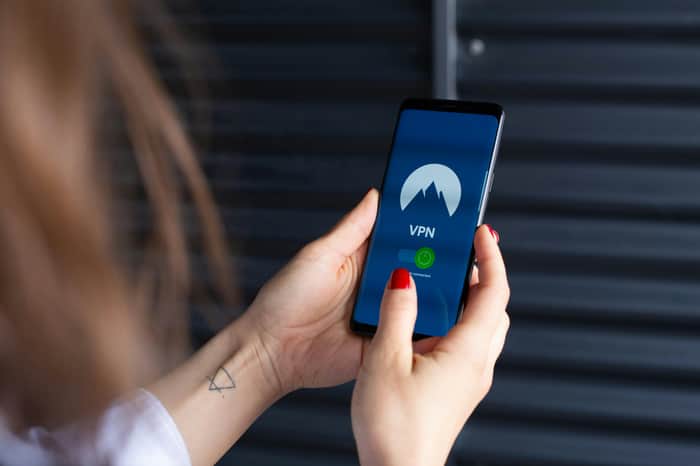
An ethical hacker understands how important it is to maintain privacy and anonymity online. In the digital age, their work serves to test security systems and improve a company's cyber defenses. They provide a useful service, but such efforts inherently put them at risk of revealing their identity or compromising their system in the process. This is where a VPN can make a real difference, protecting an ethical hacker's identity while enabling them to conduct penetration testing, vulnerability assessments, and security audits more safely across various environments.
How Can a VPN Help?
A VPN works by encrypting internet traffic and data and routing it through a remote server before it reaches an internet provider. This process masks your IP address and online identity, making it appear as though the user is in the country where the VPN's server is located. In this way, it prevents government authorities, network administrators, and even an internet service provider (ISP) from detecting a device's online activity. Without a VPN, data flows freely through a shared digital space, opening it up to interception and malicious actions. By encrypting and protecting all your internet traffic, this concealment of identity and location ensures that ethical hackers are protected from retaliatory actions while knowing that their work remains private and professional.
Enabling Secure Testing
One of the ethical hacker's primary responsibilities is to perform secure penetration testing. This is a process by which a cyber-security expert simulates an attack on a company's computer systems, finding and exploiting potential vulnerabilities so that they may be addressed. Penetration testing is a preemptive measure, identifying weak points before they can be taken advantage of by malicious actors---in such cases, a VPN is especially effective.
A VPN may be used to secure communications channels during a penetration test, maintaining data security through encryption even when it is exchanged between the ethical hacker and the target system, preventing any unauthorized access.
Bypassing Geo-Restrictions for New Angles
The VPN's unique ability to bypass geo-restrictions by accessing remote servers enables new avenues for simulated attacks. Certain networks and systems are otherwise inaccessible due to location. This may help them avoid attacks but leaves them more vulnerable when they do come under fire. An ethical hacker may use a VPN to conduct attacks on these faraway systems through a VPN's remote servers, allowing for more comprehensive penetration testing and other cyber-security investigations.
Maintaining Standards
Holding to ethical hacking standards is perhaps the riskiest part of an ethical hacker's work, due to the difficulty of remaining within legal boundaries and maintaining confidentiality in their activities. In addition to cyber-security best practices, a VPN's data encryption service ensures that testing activities remain confidential and that the data potentially sent between the target system and the ethical hacker is secure. By using a VPN, an ethical hacker is better able to maintain legal standards while continuing their essential work.
Key Features to Consider
When choosing a VPN for ethical hacking, it's important to keep a few factors in mind. All VPNs have similar base features, but only some are suitable for an ethical hacker's particular needs. The best VPNs will have strong encryption, high-speed connections, a no-logs policy, and multi-hop capabilities. The values of the first two are self-explanatory, but the next are more specific.
A no-logs policy means that a VPN provider will not collect or store user data concerning online activity, a vitally important clause for any ethical hacker. Without a no-log policy, a VPN can track data just as a network or ISP would, rendering its services moot.
Rather than encrypting data through a single server, multi-hop VPNs disperse data across multiple servers, making it far more difficult for would-be attackers to intercept a user's traffic. Ethical hackers are especially at risk of cyber attacks, so this additional resource will likely be a deciding factor when choosing a VPN.
Another Line of Defense
Overall, a VPN offers an additional layer of security for the ethical hacker, serving to maintain anonymity online. Its added protection remains effective through penetration testing, vulnerability assessments, and security audits while providing further benefits in terms of test angles and personal use.
