How Agentic AI Will Transform Industrial Work by 2026
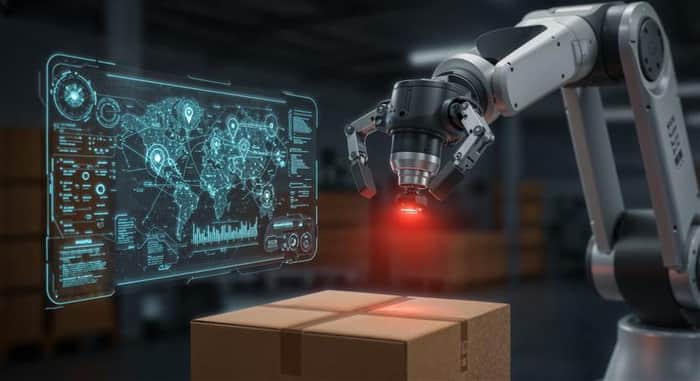
Agentic AI is set to fundamentally change industrial operations by taking control of entire workflows, delivering highly personalized customer service, and proactively managing IT and cybersecurity. Employees will move from performing repetitive tasks to supervising AI systems, while robotics and IoT enable real-time monitoring and predictive maintenance of equipment. This integration promises greater efficiency, reduced downtime, and smarter, more adaptive industrial operations capable of responding to dynamic market demands.
#1. Complete Automated Workflows
Unlike traditional bots that handle only one task at a time, agentic AI can manage multi-step processes from start to finish. In supply chain operations, for instance, these systems can monitor real-time demand, identify the most reliable suppliers, place purchase orders, and reroute shipments automatically, all without human intervention. By taking ownership of full workflows, agentic AI reduces errors, accelerates operations, and optimizes resource allocation. This level of automation allows companies to respond faster to market fluctuations, maintain consistent production schedules, and gain a competitive edge in increasingly complex industrial environments.
#2. Truly Personalized Customer Service
The era of simple, scripted chatbots is ending. By 2026, agentic AI will function as intelligent personal assistants, providing tailored solutions for each customer. These systems can analyze a customer’s history, preferences, and real-time behavior to make independent decisions, such as processing refunds, recommending products, or delivering financial advice. Unlike traditional automated tools, these AI agents can handle complex requests, adapt to individual needs, and continuously improve service quality. The result is faster, more accurate support, higher customer satisfaction, and more time for human employees to focus on strategic or high-value interactions.
#3. Proactive IT and Security Management
Cybersecurity and IT operations will shift from reactive to proactive approaches with agentic AI. These systems can continuously monitor networks, identify unusual activity, and respond immediately to potential threats. Acting like a digital immune system, agentic AI can isolate problems or remediate them automatically before they escalate. This reduces the risk of cyberattacks, system failures, and data breaches, while freeing IT teams to focus on innovation and strategic projects instead of handling repetitive security tasks.
#4. Shifting from Assistants to Team Members
As AI takes over routine operations, employees will transition into “agent orchestrator” roles, focusing on oversight and decision-making. These workers will supervise AI performance, ensure automated workflows align with business goals, and manage multiple AI systems simultaneously. By 2026, AI assistants are expected to support staff at every level, from interns to executives, helping them save time, reduce errors, and concentrate on strategic responsibilities rather than repetitive operational work.
#5. AI in Physical Industrial Settings
Agentic AI will also bridge the digital and physical worlds through robotics and IoT. In factories and warehouses, these systems will continuously monitor machine performance, detect early signs of malfunction, and make real-time adjustments to operations. Predictive maintenance will be automated, scheduling repairs before failures occur, reducing downtime, and preventing costly disruptions. This combination of intelligent monitoring, proactive maintenance, and automated control will enhance overall productivity, improve operational reliability, and ensure industrial systems run efficiently and safely.
Final Thought
From my perspective, agentic AI will change how industrial work is structured rather than simply how tasks are automated. Its real impact will be seen in smoother workflows, faster decisions, and better use of human effort. If organizations focus on practical adoption and clear oversight, agentic AI can become a reliable support system that improves efficiency, reduces disruption, and helps industries adapt to ongoing change.

What fascinates me most: The combination of #1 and #4 essentially describes a complete reorganization of work and value creation.
When AI takes over entire workflows and humans become orchestrators, the question is: Who owns these automated means of production? The difference between "everyone can orchestrate their own bot team" and "only a few large IT corporations control these systems" is the difference between emancipation and new dependency.
I'm currently building a project (Botbusiness) that tests exactly this democratization: Can anyone create productive AI teams through simple prompts? And if so, what social structures do we need to ensure this truly benefits everyone, not just a few?