How an IT Support Company Can Boost Your Business Efficiency
Picking the right IT support company can feel like a big job. You know you need help because your time is better spent running your business, not troubleshooting a printer that has decided to take the day off. The wrong choice can lead to endless frustration, lost money, and security risks you don't want to think about.
You need a partner you can trust with your business technology. This relationship can either hold your business back or become a powerful driver of your growth. Finding the perfect IT support company should not be a shot in the dark, and after reading this, it will not be.
Why Your Choice of IT Support Company Matters So Much
Let's be honest, technology is the backbone of your business. When it works, you barely notice it. But when it fails, everything grinds to a halt and affects your bottom line.
Every minute of downtime costs you money and harms your reputation. A recent study found that IT downtime can cost small businesses up to thousands of dollars per hour. That staggering figure highlights just how critical operational continuity is for any modern company.
This decision goes far beyond just fixing broken computers. It is about protecting your sensitive data with strong cybersecurity services and a solid business continuity plan. It is also about empowering your employees to be productive and building a foundation for future success.
9 Critical Factors for Choosing the Right IT Partner
This process does not have to be a guessing game. By focusing on a few key areas, you can filter out the providers who talk a big game from those who actually deliver. You will learn what to look for and the questions you need to ask.
1. A History of Stability (Longevity)
The tech industry is notoriously fast-paced, and companies appear and disappear frequently. A provider that has been around for a decade or more is a positive signal. It indicates they have managed to thrive in a competitive market for a good reason.
Their longevity means they have likely built a base of happy, long-term clients who value their service. Stability suggests they run their own business well, so they are in a good position to help you run yours. They have proven processes and a stable team, which reduces risks for your business.
According to the Bureau of Labor Statistics, many businesses do not make it past their first few years. An IT company that has weathered economic storms and technological shifts has proven its resilience. This history shows a commitment to their clients and the industry.
2. Are They There When You Need Them? (Availability)
When your network goes down, you cannot afford to wait for a fix. Speed and responsiveness from your technical support team are non-negotiable. You need to know that when you call for help, someone will answer and act quickly.
This is where a Service Level Agreement (SLA) comes in. An SLA is a contract that defines the level of service you can expect from an IT outsourcing partner. Do not be afraid to read the fine print here, as it is their written promise to you.
Look for specific metrics like guaranteed response times and resolution times. A good SLA sets clear expectations for how long it will take to start working on your issue and their goals for fixing it. This transparency protects you and holds them accountable for their service.
Many providers offer tiered support based on the severity of the issue. Here is a common example of what that might look like.
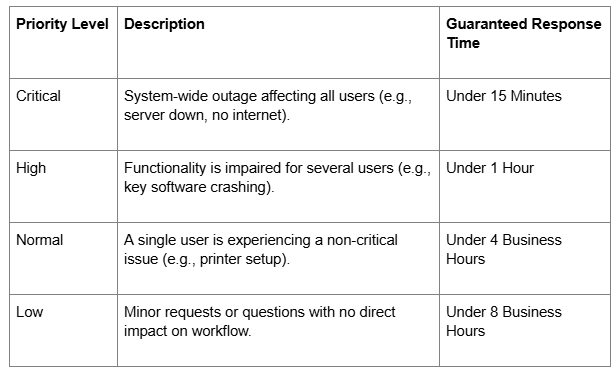
A clear SLA and a reliable help desk support system are fundamental to a good working relationship. It confirms that the provider is serious about their commitments.
3. The Power of a Local Presence
In today's connected world, remote monitoring and support are incredibly efficient. Many software glitches and configuration changes can be fixed without a technician setting foot in your office. This is a great advantage that keeps costs down and resolution times short.
But what about when the problem is not digital? What happens if your office internet goes out, a critical server fails, or your firewall hardware gives up? For these physical issues, having a local team that can arrive onsite is a game-changer.
Knowing that an actual person can be there quickly gives you valuable peace of mind. A local provider also has a better feel for the regional business community and the unique challenges you might face. They may have relationships with local internet providers that can help resolve outages faster.
4. Proof of Expertise: Certifications and Partnerships
You would not hire an accountant without credentials, so you should not trust your company's IT infrastructure to someone without proven expertise. Certifications from recognized bodies like Microsoft, Cisco, or CompTIA show that technicians have met high standards. These credentials demonstrate a commitment to professional development.
These certifications are not just wall decorations; they represent hours of study and rigorous testing. This background means the people working on your systems have a deep understanding of the technology. Strong expertise in network security is particularly important for protecting your assets.
Also, look at their partnerships with major technology vendors. A strong relationship with companies like Microsoft, Dell, or Amazon Web Services means they get better support and access to new products. Good vendor management can translate into better pricing and faster solutions for your business.
5. Do They Understand Your World? (Industry Experience)
Every industry has its own quirks, specialized software, and regulatory requirements. An IT support company that works with other businesses in your field already speaks your language. They understand your daily workflow and the tools you depend on.
For example, if you run a medical clinic, you need a provider who understands HIPAA regulations and can manage your electronic health records system. A law firm needs expertise in case management software and e-discovery protocols. A construction company needs support for project management and bidding software that is often used on rugged devices.
This specialized experience means they can offer more effective solutions and proactive advice. They are not learning the ropes on your time. Their existing knowledge of your industry can provide valuable insights to improve your operations.
6. A Broad Range of Experience (Diversity)
While industry-specific knowledge is valuable, a provider with a diverse client base offers other advantages. Working across different sectors exposes an IT company to a wide variety of problems and solutions. This experience builds a deep well of institutional knowledge that benefits all their clients.
When a strange or unusual issue pops up—and it will—chances are they have seen something similar before. Their experience with another industry might give them a fresh perspective to fix your problem quickly. They have a larger toolkit of solutions to draw from for your business needs.
A partner with a broad portfolio of clients is often more prepared for the unexpected. Their diverse experience makes them better problem-solvers for everyone they work with. This adaptability can be a significant asset when new technologies or challenges emerge.
7. Can You Truly Count on Them? (Reliability)
Everyone says they give great service, but reliability is about more than just promises. It's about consistently showing up and delivering on what was agreed upon. A truly reliable partner becomes an invisible force that keeps your business running smoothly without constant intervention.
Ask about uptime guarantees and their approach to proactive maintenance. Many top providers will guarantee that your critical systems will be operational over 99% of the time. This shows they are confident in their ability to maintain a stable IT infrastructure.
The best IT support companies do not wait for things to break. They use remote monitoring tools to watch your systems around the clock, spotting potential issues before they impact your work. This proactive approach to maintenance saves you from headaches and lost productivity.
8. A Proactive Approach: Fully Managed Services
The old way of handling IT was the break-fix model, where you would only call for help after a problem occurred. This outdated approach is both inefficient and costly. You are paying for repairs while your business is already suffering from the disruption.
A much better way is to use a managed services provider. This means you pay a flat monthly fee for a comprehensive package of support and technology consulting. This model turns IT from a reactive expense into a predictable and manageable part of your IT budget.
This service typically includes a range of proactive solutions to keep your business secure and efficient. A comprehensive managed services plan often features:
24/7 remote monitoring of servers and workstations.
Management of your network security and firewalls.
Regular software patching and updates to protect against vulnerabilities.
A robust data backup and recovery strategy to protect your information.
Unlimited help desk support for your employees.
Strategic guidance on your technology roadmap and investments.
This model shifts your IT from a variable cost to a fixed investment. Your IT partner is now motivated to keep your systems running perfectly. Their goals are aligned with yours, creating a true partnership focused on stability and growth.
9. Solutions That Actually Fit Your Business
Your business is not a carbon copy of any other. You have your own goals, challenges, and budget. For this reason, you should not accept a one-size-fits-all IT solution.
A great IT support company will start by listening. They should ask questions about where your business is heading and what frustrations you currently have with your technology. The initial conversations should be all about understanding your specific situation.
A good provider will often conduct a thorough assessment of your current systems. This helps them identify your vulnerabilities and opportunities for improvement. The best solution is one that feels like it was designed just for you and supports your growth.
Red Flags to Watch Out For
Just as important as knowing what to look for is knowing what to avoid. During your search, keep an eye out for warning signs that a provider might not be the right fit. Paying attention to these details can save you a lot of trouble later on.
Be wary of anyone who pressures you into signing a long-term contract immediately. A confident provider will be happy to let their service speak for itself, perhaps with a shorter-term agreement or a trial period. Also, be careful with vague contracts that lack specific details on response times or included services.
If a company is not transparent about its pricing or hits you with a lot of unexpected fees, that is a major red flag. Good partners are upfront about all costs related to your IT budget. Finally, if they cannot provide current client references, you should wonder why.
FAQs About Choosing an IT Support Company
Here are some common questions businesses have when selecting an IT partner.
What is the difference between managed IT services and break-fix?
Break-fix support is a reactive model where you call an IT technician when something breaks and pay an hourly rate for the repair. Managed services is a proactive model where you pay a fixed monthly fee for ongoing monitoring, maintenance, and support. The goal of managed services is to prevent problems before they happen.
How much should I expect to pay for IT support?
Pricing varies widely based on the number of users, the complexity of your IT infrastructure, and the level of service required. Managed services are often priced per user or per device, ranging from $50 to $250 per user per month. It is best to get quotes from several providers based on your specific needs.
Should I be concerned if an IT company outsources its help desk?
It can be a concern if it impacts the quality or speed of service. Some companies successfully use outsourced help desks, but you should ask about their training, location, and how they integrate with the primary technical team. A poorly managed outsourced help desk can lead to communication issues and slower resolutions.
What is a business continuity plan and why do I need one?
A business continuity plan outlines how your business will continue to operate during and after a disaster. This includes everything from natural disasters to major cyberattacks. An effective plan includes data backup and recovery, alternative communication methods, and steps to get your team working again quickly.
How long should an IT support contract be?
Contract lengths vary, but one to three years is common for managed services. Some providers may offer month-to-month options, but longer contracts can sometimes provide better pricing. Avoid getting locked into a very long contract (over three years) without an early termination clause if service levels are not met.
Choosing an IT support company is one of the most important decisions you will make for your business. It is about finding a true partner who will help you reduce risks, improve productivity, and achieve your goals. This relationship is foundational to your daily operations and long-term strategy.
By taking the time to do your homework and evaluating potential partners on these key factors, you can make a choice with confidence. You can find a provider who not only fixes problems but actively contributes to your success with services like technology consulting and cloud computing services. With the right IT support company in your corner, you can finally stop worrying about technology and focus on what you do best.

