How ASRS Systems Improve Warehouse Storage
Warehouses today must store large volumes of inventory while keeping products easy to access for picking and shipping. As operations grow, traditional storage methods often lead to crowded aisles, inefficient use of vertical space, and slower retrieval processes. These limitations make it harder for warehouses to scale efficiently.
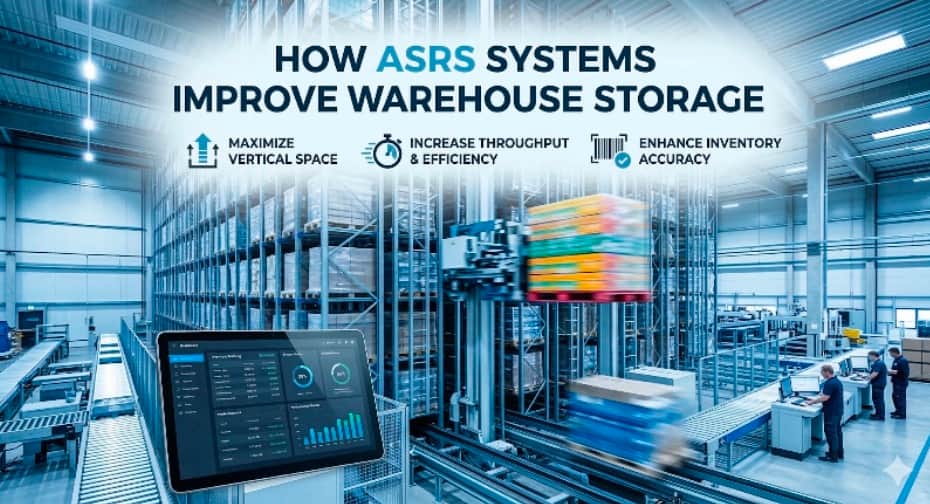
Automated Storage and Retrieval Systems (ASRS) help solve this challenge by automating how goods are stored and retrieved inside a warehouse. By using machines, intelligent software, and high density storage structures, ASRS systems allow warehouses to organize inventory more efficiently, access products faster, and make better use of available space.
The Storage Challenges Modern Warehouses Face
Warehouse storage becomes more complex as inventory volumes grow and product variety increases. Many facilities rely on traditional racking systems that depend heavily on manual handling and fixed storage locations. Over time, these methods can limit how efficiently space is used and slow down daily operations.
Common storage challenges include:
inefficient use of vertical warehouse space
limited storage density for pallets and containers
slow manual retrieval of stored inventory
increased worker travel between storage areas
higher risk of handling errors during storage and retrieval
When these issues accumulate, warehouses may struggle to keep up with operational demand. This is why many modern facilities look for storage solutions that can improve both capacity and efficiency.
What an ASRS System Actually Does Inside a Warehouse
An Automated Storage and Retrieval System manages how inventory is stored and retrieved within the warehouse. Instead of workers manually placing and retrieving pallets or containers, machines move goods between storage locations and operational areas.
A typical ASRS workflow follows a structured process:
Goods arrive at the receiving area of the warehouse.
The system assigns an appropriate storage location based on inventory data.
Automated machines move pallets or containers into the storage rack.
Inventory is stored in high density locations within the system.
When products are needed, the system retrieves them and delivers them to the required workstation.
By controlling storage locations and product movement automatically, ASRS systems help warehouses maintain organized inventory while reducing manual handling tasks.
Key Components That Make ASRS Systems Work
An ASRS system operates through several coordinated components that manage storage and retrieval tasks automatically. Each component plays a specific role in maintaining organized inventory and ensuring smooth warehouse operations.
Storage racking structure
ASRS systems use specially designed racking structures that allow goods to be stored vertically. These racks maximize warehouse height and create high density storage zones.
Automated storage machines
Machines such as stacker cranes or shuttle systems move pallets or containers within the storage racks. They transport goods to assigned storage locations and retrieve them when needed.
Transport and transfer systems
Conveyors, lifts, or automated transfer equipment connect the storage system with receiving, picking, and shipping areas. These systems move inventory between different operational zones.
Warehouse control software
Software manages storage locations, tracks inventory, and coordinates the movement of automated equipment. It ensures that products are stored correctly and retrieved efficiently when requested.
How ASRS Improves Warehouse Storage Efficiency
ASRS systems significantly improve how warehouses manage storage space and inventory movement. By automating storage processes, warehouses can organize products more efficiently and reduce manual handling.
One major advantage is the ability to use vertical storage space more effectively. Automated systems can access high rack locations that would otherwise be difficult to use with manual forklifts.
ASRS systems also improve storage density. By minimizing aisle space and organizing inventory more precisely, warehouses can store more products within the same facility footprint.
Another improvement comes from faster storage and retrieval operations. Automated machines move inventory directly to the required location, which reduces delays caused by manual searching or handling.
Finally, automation improves inventory accuracy. Since storage locations and product movements are controlled by software, warehouses maintain better visibility and tracking of stored goods.
Types of ASRS Systems Used in Modern Warehouses
Different warehouses require different storage solutions depending on inventory size, throughput requirements, and operational complexity. ASRS technology includes several system types designed for specific storage environments.
Unit Load ASRS
These systems handle full pallets or heavy loads. They are commonly used in manufacturing warehouses and large distribution centers where pallet storage is the primary requirement.
Mini Load ASRS
Mini load systems are designed for smaller containers, cartons, or totes. They are often used in environments that handle a large number of smaller items, such as parts distribution or e-commerce fulfillment.
Shuttle Based Storage Systems
Shuttle systems use automated vehicles that move inside storage racks to transport pallets or containers. These systems allow very high storage density and are widely used in modern automated warehouses.
Vertical Lift Modules
Vertical lift systems store items in vertically stacked trays and automatically deliver them to workstations. These compact systems are often used in smaller facilities or specialized storage environments.
Where ASRS Systems Deliver the Most Value
ASRS systems are especially valuable in warehouses where storage efficiency and inventory accessibility are critical. Facilities that manage large volumes of products or operate in limited space often benefit the most from automated storage solutions.
Manufacturing warehouses frequently use ASRS to manage palletized materials and keep production supply chains organized. Distribution centers also rely on automated storage to handle large inventories while maintaining efficient retrieval operations.
Cold storage facilities benefit from ASRS because automated systems reduce the need for workers to operate in extreme temperatures. In e-commerce fulfillment environments, ASRS systems help manage high inventory volumes while supporting faster order preparation.
In these types of operations, automated storage improves space utilization, reduces manual handling, and helps warehouses maintain consistent operational performance.
How ASRS Fits Into Modern Warehouse Automation
ASRS systems are often part of a larger warehouse automation environment rather than a standalone technology. In many modern facilities, automated storage works alongside other systems that manage product movement and warehouse operations.
For example, ASRS storage zones may connect to conveyor systems, robotic transport systems, or automated picking stations. These technologies help move goods between receiving, storage, and shipping areas without relying heavily on manual handling.
Warehouse software also plays an important role in coordinating these systems. Platforms such as warehouse management systems or control software help track inventory locations, manage storage tasks, and coordinate the movement of automated equipment.
Companies like Atomix design integrated automation environments where storage systems, robotic movement, and intelligent warehouse software work together. In these environments, ASRS helps maintain organized inventory while other automation technologies manage internal product flow across the warehouse.
Factors to Consider Before Implementing ASRS
Before implementing an ASRS system, warehouses must evaluate several operational and physical factors. Proper planning ensures that the system improves storage efficiency while supporting daily operations.
One important consideration is warehouse layout and ceiling height. Since ASRS systems rely on vertical storage, facilities must have enough height and structural capacity to support automated racking structures.
Another factor is inventory characteristics. The size, weight, and turnover rate of products influence which type of ASRS system will work best.
Warehouses should also evaluate throughput requirements. Storage systems must handle the volume of inventory movements required during daily operations.
Finally, system integration is critical. ASRS solutions should connect smoothly with warehouse management software and other automation technologies to ensure efficient coordination across the facility.
Factors to Consider Before Implementing ASRS
Before implementing an ASRS system, warehouses must evaluate several operational and physical factors. Proper planning ensures that the system improves storage efficiency while supporting daily operations.
One important consideration is warehouse layout and ceiling height. Since ASRS systems rely on vertical storage, facilities must have enough height and structural capacity to support automated racking structures.
Another factor is inventory characteristics. The size, weight, and turnover rate of products influence which type of ASRS system will work best.
Warehouses should also evaluate throughput requirements. Storage systems must handle the volume of inventory movements required during daily operations.
Finally, system integration is critical. ASRS solutions should connect smoothly with warehouse management software and other automation technologies to ensure efficient coordination across the facility.

