How bad were the power outages in Portugal and Spain?
A massive power outage hit the peninsula on April 28th, affecting millions across Portugal and Spain. Here's how it impacted indie hackers.
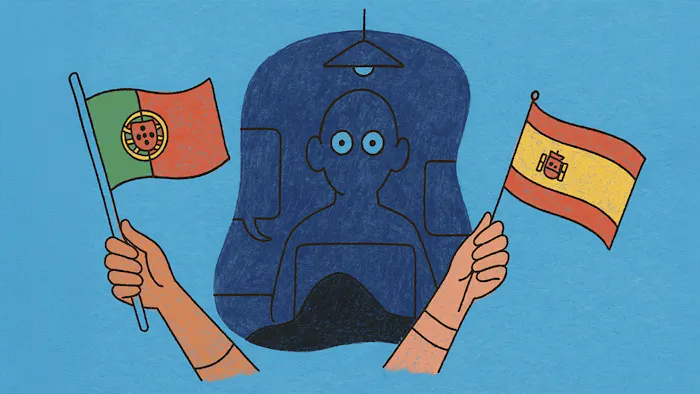
A few days ago, a massive power outage hit Spain and Portugal. Both countries are popular destinations for indie hackers who work remotely, so it wasn't long before founders like Pieter Levels began tweeting about it:
At the time of this writing, we don't yet know the cause of the outage. But we do know some of the impact because Cloudflare, a global internet infrastructure company, just published a post analyzing the damage.
What happened?
The power failure occurred during mid-morning local time on April 28th, causing an immediate and dramatic drop in internet connectivity across both countries.
Cloudflare's traffic monitoring systems detected steep declines in internet activity within minutes of the outage:
Portugal saw a 35% drop in overall internet traffic
Spain saw a 20% reduction in connectivity
Border regions between the two countries were partially affected as well
For context, these aren't small fluctuations — they represent millions of users suddenly going offline, and thousands of businesses losing their digital presence.
“This is a stark reminder of how dependent our digital infrastructure is on reliable electricity. Even with redundancy systems in place, a cascading power failure of this magnitude can overwhelm backup capabilities.” —Cloudflare
Timeline of the outage and recovery
The outage's timeline showed interesting patterns:
Spanish internet traffic began recovering faster, with major population centers like Madrid and Barcelona seeing connectivity restored within hours.
Portugal's recovery lagged behind, with some regions remaining significantly below normal traffic levels for over 24 hours:
Dealing with outages as a nomad
Step 1: travel to places known for having really good internet infrastructure.
But be prepared for anomalies: Spain and Portugal are known for having really strong internet infrastructure, consistently ranking among the top countries in Europe for broadband coverage and speed.
So if step 1 fails you, make sure to do some prepping ahead of time and to surround yourself with a community if possible:

I'm in Lisbon and you're right. Community is the thing that will save us. It was sweet to see everyone gathering in the center of our neighborhoods, just to be together in the weirdness. Some local markets left fruit outside for people to take if they needed it.
Great write-up. I was in Madrid at a coworking cafe for this. The regular internet was down, but three people had Starlink (lol!) and offered to hotspot in return for coffee. Good times!
Starlink in the best
Doist's Head of Operations, Chase Warrington, just posted about this! He wrote about how his company, with ~20% of the remote team in the affected areas, was able to manage. Fort, he was in Austin for Running Remote so he was able to get online to enforce a hard pivot until the lights came back on. https://www.linkedin.com/feed/update/urn:li:activity:7322668222036512771/
Power Is Restored in Spain and Portugal After Widespread Outage. Electricity was back in most of the two countries after a blackout that shut down much of daily life. The cause of the outage remained unclear.Electricity was completely knocked out in most of Spain and Portugal for several hours, finally returning to most places on Monday evening. Traffic lights, street lamps, payment terminals and screens were all cut off unless they were battery powered; many shops shut and others were forced to accept only cash payments.
Sounds like Spain and Portugal accidentally hit the “off” switch on civilization for a bit 😂 Glad they’ve got the lights back on!
I work remotely too and this is honestly one of those quiet fears people don’t talk about much. I hope everyone who was had affected had quick return to normality.
A sudden 20–35% drop in national internet traffic isn’t just slow Wi-Fi or a neighborhood blackout, it means millions of people and businesses disappeared from the network almost at once. When infrastructure fails at that scale, redundancy only helps so much because power, cellular, and backhaul systems are all tied together.
For remote workers and indie hackers, it’s a good reminder that “good internet” and “resilient internet” aren’t the same thing. Even countries with strong broadband can go dark if electricity drops across a wide area.
The community angle is what stuck with me. Tech failed, but people didn’t. The Starlink-for-coffee and free fruit stories are exactly why nomad hubs matter more than just fast Wi-Fi.
That blackout really showed how fragile even "stable" systems can be. Millions offline in minutes, and it took over a day in some parts of Portugal to get back up. Definitely a reminder to have contingency plans.
All this happened due to lack of management
Crazy that Spain bounced back faster than Portugal. Wonder if that’s down to grid management or just luck with where the failure cascaded first
great info
Sounds like it was a serious disruption — millions offline, 35% traffic drop in Portugal and 20% in Spain, with Portugal taking over a day to fully recover.
I DID IT. CONTACT ME TO KNOW MORE ABOUT THIS SUBJECT
As someone living in Portugal it was kind of a scary day with a lot of fake news that resulted in absurd reactions. We really have to fight this!
I was working remotely and I just had to stop and try to got home somehow.
The April 28th power outage was a wake-up call for digital entrepreneurs across Portugal and Spain. With millions affected, remote workers, indie hackers, and solopreneurs faced hours of downtime, lost client communications, and stalled deployments. It’s a reminder that even in developed regions, infrastructure risks can hit hard — having offline contingency plans and backup power options isn’t just smart, it’s essential.
That outage hit hard, a solid reminder that even in top tier tech hubs, one glitch can pause everything.
It’s why I always prep offline drafts when working on emails, articles, and launch content for startups. Can’t risk going dark when conversions depend on the next message going out.
If anyone needs a hand refining their tech or growth messaging (especially while recovering from downtime), happy to help.
I often use some online modes, and they will automatically save my last changes when the power is off, which saves me a lot of annoyance
Nothing like a peninsula-wide ctrl+alt+delete to remind indie hackers to hit "save" more often. Bet some folks finally learned to love the autosave feature
写得真棒。我当时在马德里一家共享办公咖啡馆写这篇文章。常规网络断了,但有三个人用的是星链(哈哈!),他们主动提出用热点换取一杯咖啡。真是太棒了!
Thanks for sharing this, Channing.
As someone from Uruguay who works remotely, this was a wake-up call. We often take stable infrastructure for granted — especially in countries with generally reliable systems like Spain and Portugal.
But events like this show how important it is to plan for the unexpected!
Love seeing how community and creativity helped people stay connected — the Starlink-for-coffee story was gold!
That outage really highlights how reliant we are on stable power and internet. It's a good reminder to always have backup plans in place for those "just in case" moments.
Was a digital nomad in Guatemala myself for a stretch — absolutely stunning country and a solid spot if you know how to move. I’m currently scaling a startup from the U.S., but I’ve definitely worked from picturesque tropical backdrops in Central America. Biggest challenge I faced? Besides power outages (TWICE!), connectivity and team sync across time zones — especially when running ops across India + Philippines back ends… and that one time a WATERFALL began POURING THROUGH THE WALL (more on that later!). But people coming together saved the day, and I learned $20 USD can buy A LOT of FRESH TORTILLAS! Curious — how are you handling ops or growth while remote? Any unexpected wins?
It’s easy to forget how much we rely on things like electricity until they’re suddenly not there. The outage was a small disruption, but honestly a good reminder of how much we take for granted, lights, internet, hot water, even just charging a device. Grateful for the return to normal and a deeper appreciation for the basics.
This outage is a strong reminder that reliability should be part of the sustainability conversation. Wind and solar are essential, but when the grid leans too heavily on weather-dependent sources, it becomes fragile.
It’s a bit sad to see so many countries abandoning nuclear — arguably the only scalable and stable form of clean energy we have.
good
great