How Carriers Can Reduce Check Calls by 50% Using a Driver Mobile App
Introduction
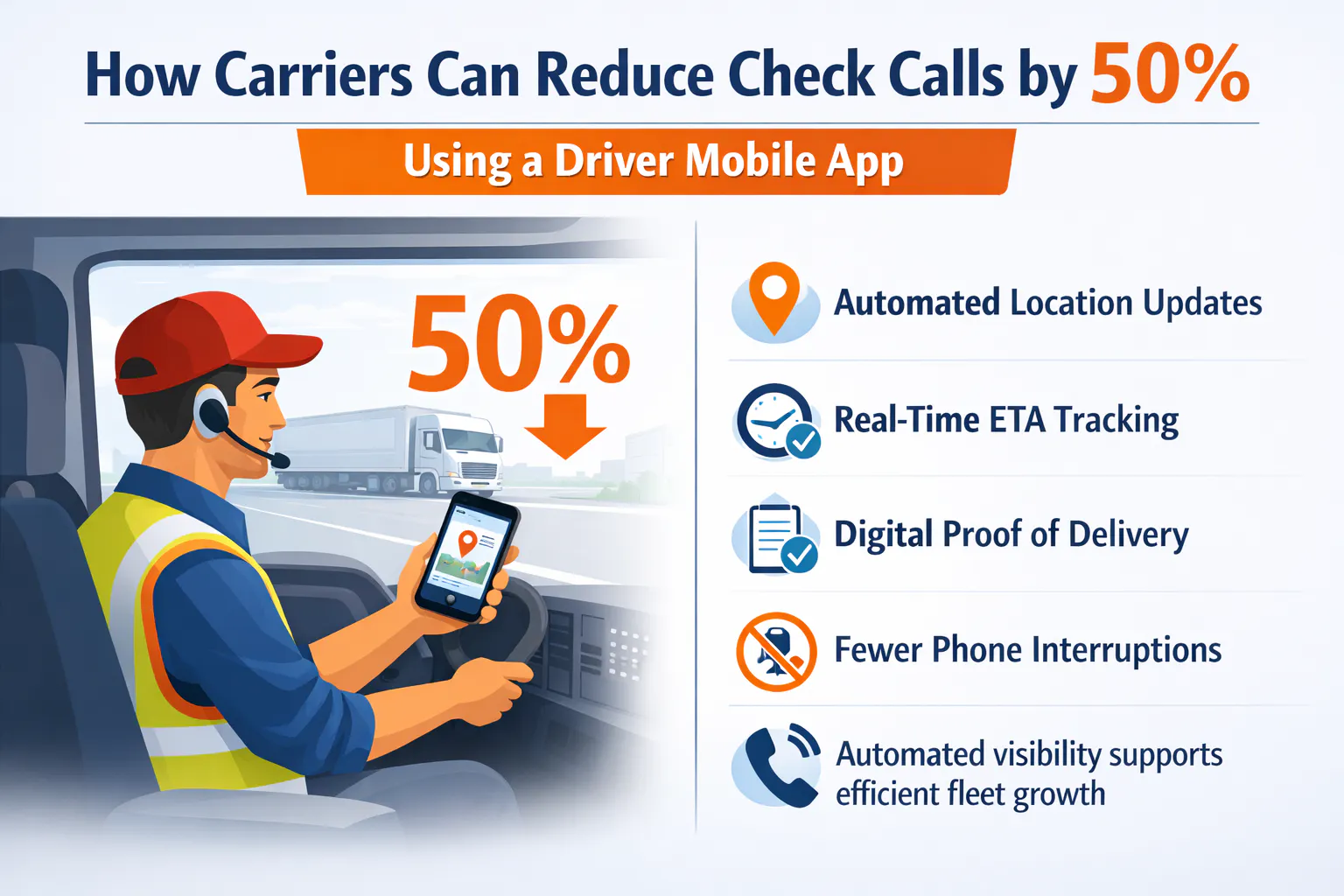
For many trucking carriers, check calls have become a routine part of daily operations. Dispatchers spend valuable time requesting shipment updates, brokers expect real-time visibility, and customer service teams repeatedly share the same information. While these conversations help keep freight moving, they also create unnecessary administrative work and reduce operational efficiency.
The root cause isn't poor communication. It's limited shipment visibility. When drivers, dispatchers, brokers, and customers can't access real-time updates, phone calls, text messages, and emails become the default way to track every load. As operations expand, relying on manual communication becomes increasingly inefficient and harder to sustain.
A driver mobile app addresses this challenge by automatically providing GPS tracking, ETA updates, arrival notifications, and digital Proof of Delivery (POD), giving stakeholders instant access to critical shipment information. With real-time visibility, dispatchers can spend less time chasing routine updates and more time managing exceptions that impact operations.
The operational impact is already evident across the industry. LTI Delivers reduced its check-call volume by 40% after adopting a real-time freight visibility platform, demonstrating how automated tracking and shipment visibility can significantly reduce manual communication.
In this article, you'll learn why check calls happen, how a driver mobile app helps reduce them, and what carriers should consider when improving shipment visibility and operational efficiency.
Quick Summary
Check calls are often a visibility problem, not a communication problem. When dispatchers, brokers, and customers lack real-time shipment information, manual calls become the default way to track loads.
A driver mobile app automates routine updates such as GPS tracking, ETA sharing, geofenced notifications, and digital Proof of Delivery (POD), significantly reducing repetitive check calls.
Fewer manual updates allow dispatchers to focus on exception management, improve customer service, reduce driver interruptions, and support more efficient fleet operations.
While many carriers can reduce routine check calls by up to 50%, results depend on factors such as fleet size, driver adoption, workflow optimization, system integration, and consistent app usage.
Before adopting a solution, evaluate your current communication process, identify repetitive status requests, and measure key metrics like dispatcher workload, check-call volume, and shipment visibility to build a stronger business case for automation.
The Hidden Cost of Manual Check Calls for Growing Carriers
A single check call may seem routine, but across dozens or hundreds of loads each week, these conversations consume valuable time, increase administrative work, and make it harder for growing carriers to operate efficiently.
Lost Dispatcher Time
Routine status requests prevent dispatchers from focusing on load planning, exception management, and customer service. As shipment volumes increase, repetitive communication reduces overall productivity.
Driver Disruptions
Frequent check calls interrupt drivers and distract them from their primary responsibility. Automated shipment visibility reduces unnecessary communication while keeping stakeholders informed with real-time updates.
Broker Follow-Ups
Without real-time visibility, brokers repeatedly request shipment updates, ETAs, and delivery confirmations. Automated tracking provides timely information, reducing duplicate communication and improving responsiveness.
Slower Customer Updates
When shipment information isn't instantly available, customer updates become slower and more reactive. Automated visibility enables faster, more accurate communication throughout the shipment lifecycle.
Growing Administrative Work
Manual communication extends beyond phone calls to system updates, emails, and paperwork. Automating routine status updates reduces administrative effort and improves information consistency.
Scaling Challenges
As fleets grow, manual communication becomes increasingly difficult to manage. Automated visibility helps carriers support more loads without increasing dispatcher workload at the same pace.
A Typical Day Before and After a Driver Mobile App
Imagine a dispatcher managing 60 trucks during a busy workday. Throughout the day, brokers request updated ETAs, customers ask about delivery progress, and drivers receive repeated calls to confirm pickup and arrival times. Although each conversation takes only a few minutes, the combined workload can consume hours that could otherwise be spent resolving delays, planning loads, or supporting drivers.
Now imagine the same operation using a driver mobile app. Real-time GPS tracking, automated ETA updates, geofenced notifications, and digital Proof of Delivery (POD) keep shipment information flowing automatically. Instead of answering routine status requests, dispatchers can focus on exceptions that genuinely require attention, improving both operational efficiency and customer service.
This simple shift illustrates why many carriers view automated shipment visibility as more than a technology upgrade—it's a smarter way to manage growing freight operations.
Why Do Check Calls Happen in Trucking Operations?
Check calls don't happen because teams communicate too much. They occur when dispatchers, brokers, customers, and other stakeholders don't have instant access to shipment information, forcing them to rely on manual status requests.
The Visibility Gap
Every shipment involves multiple stakeholders, including dispatchers, brokers, customers, and receivers. When they can't access accurate, real-time shipment information, they depend on drivers or dispatchers for updates, creating repetitive communication that slows operations and increases administrative workload.
Most Common Check Calls
Most check calls are routine requests for shipment status rather than conversations that require operational decisions. The most common include:
Pickup Confirmation: Has the load been picked up?
Location Updates: Where is the driver right now?
ETA Requests: When is the shipment expected to arrive?
Delay Notifications: Has traffic, weather, or another issue affected the schedule?
Delivery Confirmation: Has the shipment been delivered successfully?
Proof of Delivery (POD): Has the completed delivery record been shared?
Because these requests follow predictable workflows, they're ideal candidates for automation through real-time GPS tracking, automated status updates, and digital document sharing.
How a Driver Mobile App Automates Routine Status Updates
A driver mobile app reduces check calls by automatically sharing routine shipment updates. Instead of relying on phone calls or text messages, dispatchers, brokers, and customers can access real-time shipment information, allowing dispatch teams to focus on exceptions rather than routine tracking.
Real-Time GPS Tracking
Real-time GPS tracking automatically shares a driver's location, eliminating the need for repeated location requests. Dispatchers and authorized stakeholders can monitor shipment progress through a centralized platform without interrupting drivers.
Geofenced Status Updates
Geofencing automatically records key milestones, such as arrivals and departures at pickup and delivery locations. These updates keep stakeholders informed without requiring dispatchers to contact drivers for routine confirmations.
Automatic ETA Updates
A driver mobile app continuously updates estimated arrival times using real-time trip data. This provides more accurate ETAs, helping dispatchers, brokers, and customers stay informed without repeated follow-up calls.
Digital Proof of Delivery (POD)
Drivers can capture and upload signed Proof of Delivery (POD) directly through the app. Instant access to delivery documents speeds up verification, reduces paperwork delays, and minimizes post-delivery follow-ups.
Centralized Communication
Some situations still require direct communication, but a driver mobile app keeps conversations and shipment information in one place. This reduces time spent switching between calls, texts, and emails while improving collaboration across the operation.
Also Read: https://fastforwardtms.com/features/truck-driver-app/
Which Check Calls Can Be Automated and Which Still Need Human Conversations?
A driver mobile app doesn't eliminate every check call. Its primary purpose is to automate routine shipment updates, allowing dispatchers to focus on situations that require human judgment and operational decision-making.
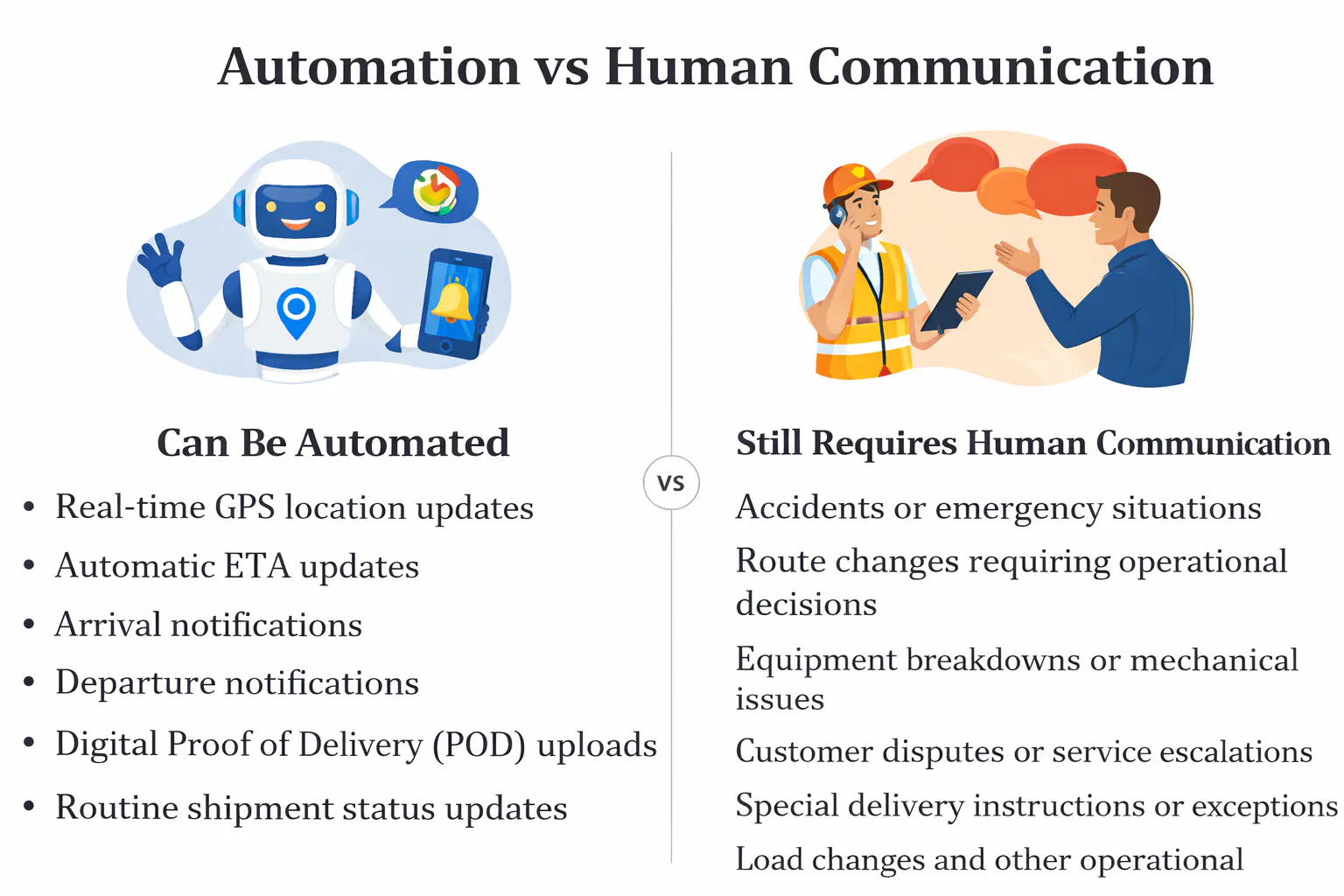
Routine updates like location sharing, ETA notifications, arrival confirmations, and POD uploads follow predictable workflows, making them ideal for automation. In contrast, unexpected events still require direct communication, quick decisions, and collaboration between drivers, dispatchers, and customers.
Key Takeaway: A driver mobile app doesn't replace human communication. It automates repetitive status updates, giving dispatch teams more time to resolve operational issues that truly require attention.
Traditional Tracking vs. Visibility-Driven Operations
A driver mobile app transforms how shipment information moves across the operation. Instead of relying on dispatchers to collect and share updates, real-time visibility automatically keeps stakeholders informed, reducing manual communication and improving operational efficiency.
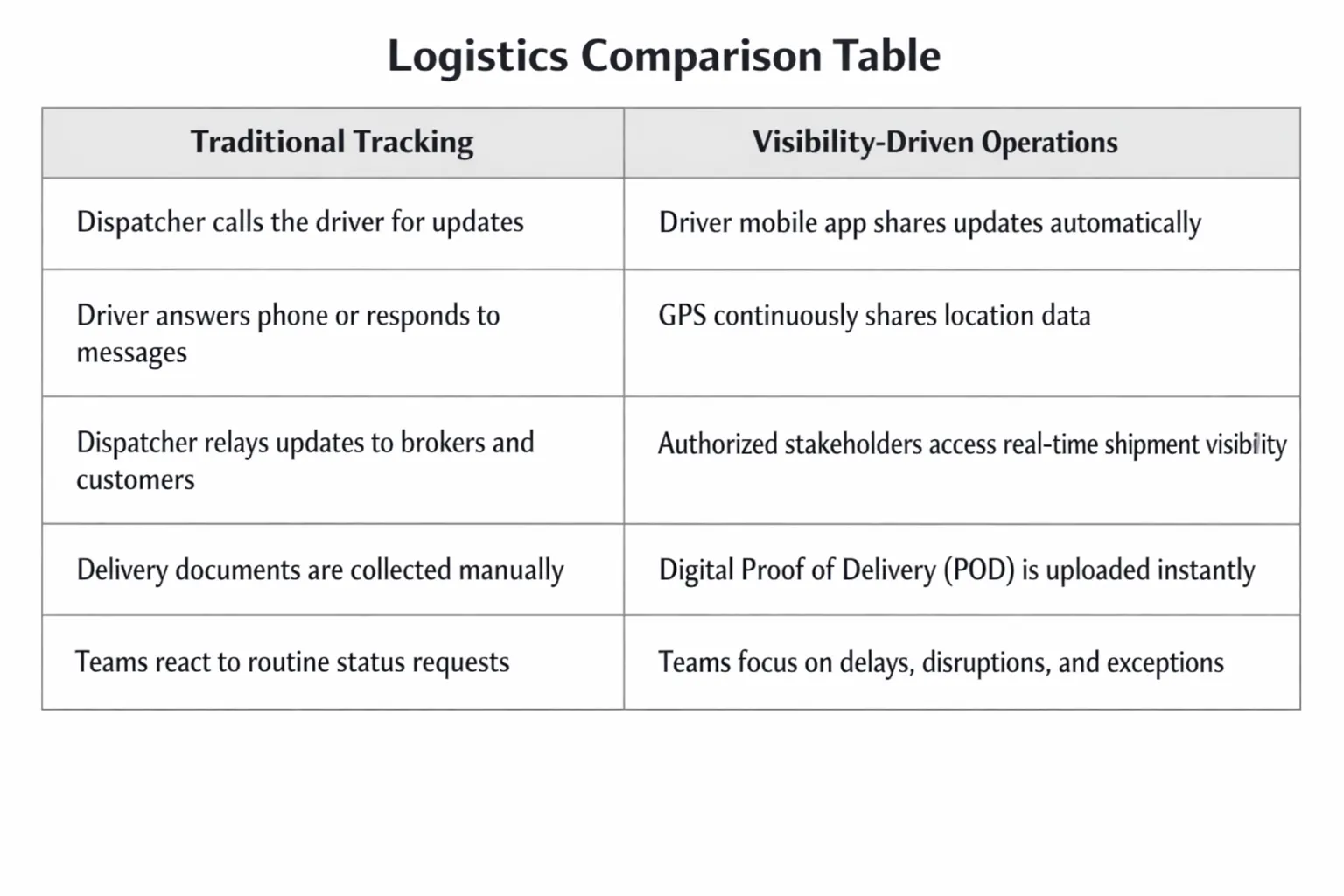
With routine updates automated, dispatchers spend less time tracking loads and more time managing exceptions. Drivers experience fewer interruptions, while brokers and customers receive faster, more accurate shipment updates. As fleets grow, this visibility-driven approach helps carriers improve efficiency without increasing communication at the same pace.
Why a 50% Reduction in Check Calls Is Realistic
Many daily check calls involve routine status requests rather than operational decisions. When a driver mobile app automates shipment visibility, many of these repetitive updates no longer require manual communication, allowing dispatch teams to focus on higher-value work.
Fleet Size
Larger fleets typically handle more loads and status requests, creating greater opportunities to reduce routine check calls. However, smaller carriers can also benefit by improving shipment visibility and communication.
Driver Adoption
Consistent driver participation is essential. Regular GPS tracking, status updates, and digital document submissions ensure stakeholders receive accurate information without repeated follow-up calls.
Existing Workflows
Carriers that rely heavily on manual calls, texts, or spreadsheets often see the greatest improvements because automation replaces repetitive communication with real-time visibility.
System Integration
A driver mobile app delivers better results when it integrates with existing transportation systems, creating a single source of truth and reducing duplicate updates.
Consistent App Usage
Automation is most effective when drivers and dispatch teams use the app consistently. Daily use of tracking, ETA updates, geofencing, and POD uploads helps maximize operational efficiency.
Key Takeaway: Many carriers can significantly reduce routine check calls, but results depend on fleet size, driver adoption, workflow maturity, system integration, and consistent use of the technology.
How Fewer Check Calls Improve Fleet Operations
Reducing check calls does more than save time. It improves communication, increases operational efficiency, and helps carriers manage growing freight volumes without adding unnecessary administrative work.
Higher Dispatcher Productivity
With fewer routine status requests, dispatchers can focus on load planning, exception management, customer service, and other high-value tasks that improve daily fleet operations.
Fewer Driver Interruptions
Reducing check calls allows drivers to stay focused on the road instead of responding to routine update requests, improving productivity while keeping stakeholders informed through automated visibility.
Better Broker and Customer Communication
Real-time shipment updates provide brokers and customers with faster, more accurate information, reducing repeated follow-ups and improving transparency throughout the shipment lifecycle.
Greater Shipment Visibility
A centralized view of shipment progress gives dispatchers, brokers, and customers access to the same real-time information, reducing communication gaps and improving operational coordination.
Faster Document Processing
Digital Proof of Delivery (POD) and mobile document uploads speed up document verification, reduce paperwork delays, and help billing and invoicing teams begin their workflows sooner.
Easier Fleet Growth
Automated shipment visibility enables carriers to manage more loads without increasing dispatcher workload at the same pace, creating a more scalable and efficient operation.
Common Challenges When Implementing a Driver Mobile App
Implementing a driver mobile app involves more than installing new technology. Long-term success depends on user adoption, reliable processes, and seamless integration with existing operations.
Driver Adoption
Drivers are more likely to embrace a mobile app when it's easy to use and clearly improves their daily workflow. Simple onboarding, training, and ongoing support encourage consistent adoption.
Staff Training
Dispatchers and back-office teams need clear training to use automated visibility effectively. Well-defined processes help teams rely on real-time data instead of routine manual check calls.
System Integration
A driver mobile app should integrate with existing transportation systems to eliminate duplicate data entry, improve information accuracy, and create a unified operational workflow.
Data Accuracy
Reliable GPS tracking, ETA updates, and delivery information build trust across the operation. Regular monitoring and standardized processes help maintain accurate, real-time shipment visibility.
Change Management
Moving from manual communication to automated visibility requires process changes as well as technology. A phased rollout, employee feedback, and continuous improvement help ensure successful adoption.
Key Takeaway: The success of a driver mobile app depends not only on the technology itself but also on driver adoption, staff training, system integration, and well-managed operational change.
How to Choose the Right Driver Mobile App for Your Fleet
Not every driver mobile app delivers the same value. Choose a solution that improves shipment visibility, simplifies communication, integrates with your existing workflows, and supports long-term fleet growth.
Real-Time GPS Tracking
Real-time GPS tracking provides continuous shipment visibility, reducing location requests and helping dispatchers, brokers, and customers monitor load progress without contacting drivers.
Geofencing
Geofencing automatically records arrivals and departures at key locations, reducing manual confirmations while keeping shipment milestones accurate and up to date.
Automated Status Updates
Automated pickup, transit, and delivery updates reduce repetitive communication and ensure stakeholders receive timely shipment information throughout the load lifecycle.
ETA Visibility
Dynamic ETA updates help dispatchers, brokers, and customers plan more effectively by providing accurate arrival estimates based on real-time trip conditions.
Digital Proof of Delivery (POD)
Digital POD capture allows drivers to submit signed delivery documents instantly, reducing paperwork delays and accelerating post-delivery processes.
Mobile Document Uploads
Drivers should be able to upload bills of lading, receipts, and other shipment documents directly from the app, improving record accuracy and reducing administrative work.
In-App Communication
Built-in messaging keeps shipment-related communication in one place, reducing reliance on separate phone calls, text messages, and emails.
Easy Driver Experience
A simple, intuitive interface encourages consistent driver adoption, helping carriers maximize the value of automated tracking and communication.
Reliable Integrations
Choose a solution that integrates with your existing transportation systems to eliminate duplicate data entry and create a connected operational workflow.
Secure Data Handling
Strong security protects shipment, driver, and operational data while supporting compliance and maintaining business continuity.
Evaluation Checklist
Before selecting a driver mobile app, confirm that it offers:
Real-time GPS tracking
Geofencing
Automated status updates
Dynamic ETA visibility
Digital Proof of Delivery (POD)
Mobile document uploads
In-app communication
Easy driver experience
Reliable system integrations
Secure data handling
Key Takeaway: The right driver mobile app isn't defined by the number of features—it delivers reliable visibility, seamless workflows, strong driver adoption, and measurable operational improvements.
Common Mistakes to Avoid When Reducing Check Calls
Implementing a driver mobile app is an important step, but technology alone won't eliminate unnecessary check calls. Many carriers expect immediate results without evaluating the processes that create repetitive communication in the first place.
Avoid these common mistakes when modernizing your operations:
Focusing only on GPS tracking: Visibility is more than knowing where a truck is. Automated status updates, ETA sharing, geofencing, and digital PODs work together to reduce manual communication.
Overlooking driver adoption: Even the best solution delivers limited value if drivers don't use it consistently.
Keeping old communication habits: Continuing to rely on phone calls for routine updates limits the benefits of automated visibility.
Ignoring system integration: A disconnected workflow can lead to duplicate data entry and inconsistent shipment information.
Measuring software cost instead of operational savings: Consider the time saved, improved dispatcher productivity, and better customer communication—not just the implementation cost.
How to Measure Success After Implementation
Implementing a driver mobile app is only the first step. Tracking the right performance metrics helps carriers measure efficiency gains, identify improvement opportunities, and evaluate the long-term impact of automated shipment visibility.
Daily Check Calls
Track the number of routine check calls handled each day. A steady decline indicates that stakeholders are relying more on automated shipment updates than manual communication.
Dispatcher Productivity
Measure how much time dispatchers spend tracking loads before and after implementation. Less time on routine updates means more time for planning, customer service, and exception management.
Driver Interruptions
Monitor how often drivers are contacted for routine status requests. Fewer interruptions help drivers stay focused while improving communication through automated updates.
ETA Accuracy
Compare estimated and actual arrival times to evaluate tracking accuracy. More reliable ETAs improve planning, customer confidence, and proactive communication.
POD Submission Time
Measure how quickly Proof of Delivery (POD) documents are uploaded after delivery. Faster submissions help accelerate billing, invoicing, and other back-office processes.
Broker Status Requests
Track how frequently brokers request shipment updates. Fewer follow-ups indicate that real-time visibility is providing the information they need.
Loads Managed Per Dispatcher
Measure whether dispatchers can manage more loads without increasing workload. This is a strong indicator of improved operational efficiency and scalability.
Customer Response Time
Track how quickly customer inquiries are resolved. Real-time shipment visibility enables faster, more accurate responses without relying on manual follow-ups.
Success Metrics Checklist
Regularly monitor:
Daily check calls
Dispatcher productivity
Driver interruptions
ETA accuracy
POD submission time
Broker status requests
Loads managed per dispatcher
Customer response time
Key Takeaway: Measuring operational metrics before and after implementation helps carriers quantify the value of a driver mobile app and identify opportunities for continuous improvement.
Before You Invest, Evaluate Your Current Check-Call Process
Before investing in a driver mobile app, evaluate how your team manages shipment updates today. Identifying communication bottlenecks and visibility gaps helps determine where automation can deliver the greatest operational value.
Ask These Questions
Ask yourself the following questions to evaluate your current check-call process:
How many check calls does your dispatch team handle each day?
This establishes a baseline for measuring future improvements.
Which check calls are repeated most often?
Identify routine requests for locations, ETAs, pickups, or deliveries.
How much dispatcher time is spent gathering shipment updates?
Measure how much time is devoted to routine communication instead of higher-value work.
Which shipment updates could be automated?
Consider whether GPS tracking, ETA updates, arrival notifications, or POD submissions can replace manual follow-ups.
Are brokers requesting the same information repeatedly?
Frequent status requests often indicate a shipment visibility gap rather than a communication problem.
Is manual communication limiting fleet growth?
If managing more loads requires additional dispatcher time, your current process may no longer be scalable.
Signs Your Process Needs Improvement
Your operation may benefit from automated shipment visibility if you regularly experience:
Dispatchers spending hours on routine check calls.
Drivers receiving repeated status requests.
Brokers requesting the same shipment updates.
Delays in sharing ETAs or delivery confirmations.
Difficulty managing additional loads without increasing administrative workload.
Key Takeaway: Understanding your current communication process is the first step toward reducing unnecessary check calls and building a stronger business case for automation.
How Modern Carriers Shift from Manual Tracking to Exception-Based Management
Modern carriers aren't eliminating communication—they're changing how it happens. By automating routine shipment updates, a driver mobile app gives dispatchers, brokers, and customers real-time visibility while allowing teams to focus on operational exceptions.
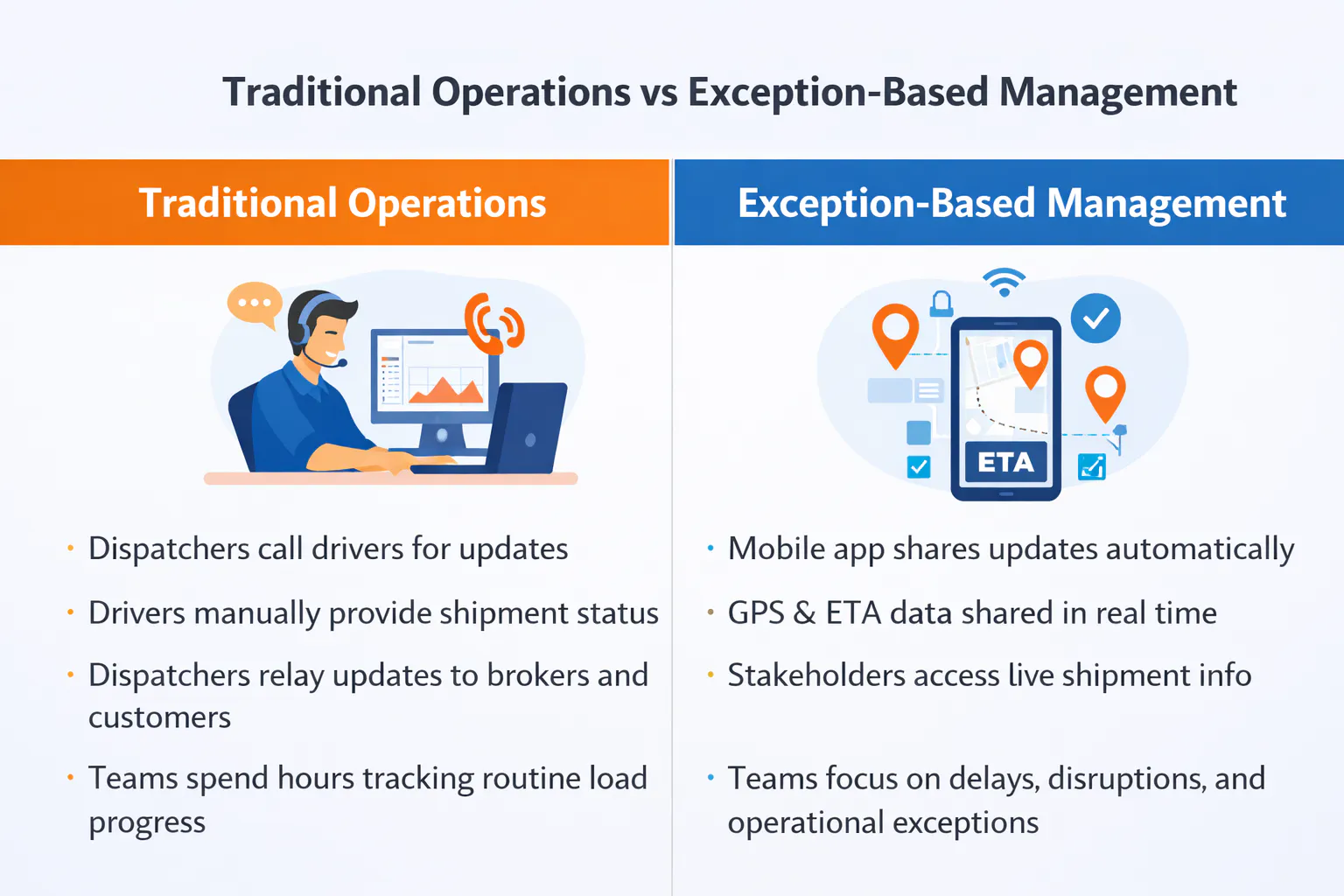
As routine communication decreases, dispatchers spend more time solving problems, supporting drivers, and improving customer service. Instead of chasing updates, they manage exceptions that directly impact operational performance.
Conclusion
For many carriers, check calls are a symptom of limited shipment visibility rather than an operational necessity. When routine updates rely on phone calls, valuable time is lost to repetitive communication instead of higher-value operational work.
A driver mobile app helps close this visibility gap by automating GPS tracking, ETA updates, arrival notifications, and digital Proof of Delivery (POD). As routine shipment updates become automated, dispatchers can focus on managing exceptions, improving customer service, and supporting more efficient fleet operations.
The greatest benefit isn't simply fewer check calls. It's creating a more connected, scalable operation where real-time visibility improves communication, reduces administrative effort, and helps carriers grow with greater confidence.
Ready to Reduce Check Calls?
Before investing in a new solution, evaluate how much time your team spends on routine check calls and manual shipment updates. If communication is slowing your operations, it may be time to explore how a driver mobile app can improve visibility and reduce unnecessary workload.
Solutions like Fast Forward TMS combine real-time GPS tracking, automated status updates, digital Proof of Delivery (POD), and centralized dispatch tools to help carriers streamline operations. Backed by 18+ years of transportation technology expertise, 1,500+ carriers, and SOC 2 Type II compliance, it's built to help growing fleets improve efficiency and scale with confidence.
Frequently Asked Questions
Can a driver mobile app eliminate all check calls?
No. A driver mobile app automates routine updates such as GPS location sharing, ETA updates, arrival notifications, and Proof of Delivery (POD). Operational exceptions like accidents, equipment failures, or route changes still require direct communication.
How quickly can carriers reduce check calls?
Results vary based on fleet size, driver adoption, existing workflows, and system integration. Carriers that consistently use automated tracking and status updates typically see the greatest reduction in routine check calls.
Is a driver mobile app only suitable for large fleets?
No. Small and mid-sized carriers can also improve shipment visibility, reduce dispatcher workload, and streamline communication. Even modest reductions in routine check calls can deliver meaningful operational savings.
What's the biggest benefit beyond reducing check calls?
The greatest long-term benefit is improved operational efficiency. By automating routine shipment updates, dispatchers spend less time tracking loads and more time managing exceptions, supporting drivers, and improving customer service.

