How Do You Choose a Thermal Label Size for Readability and Scanning
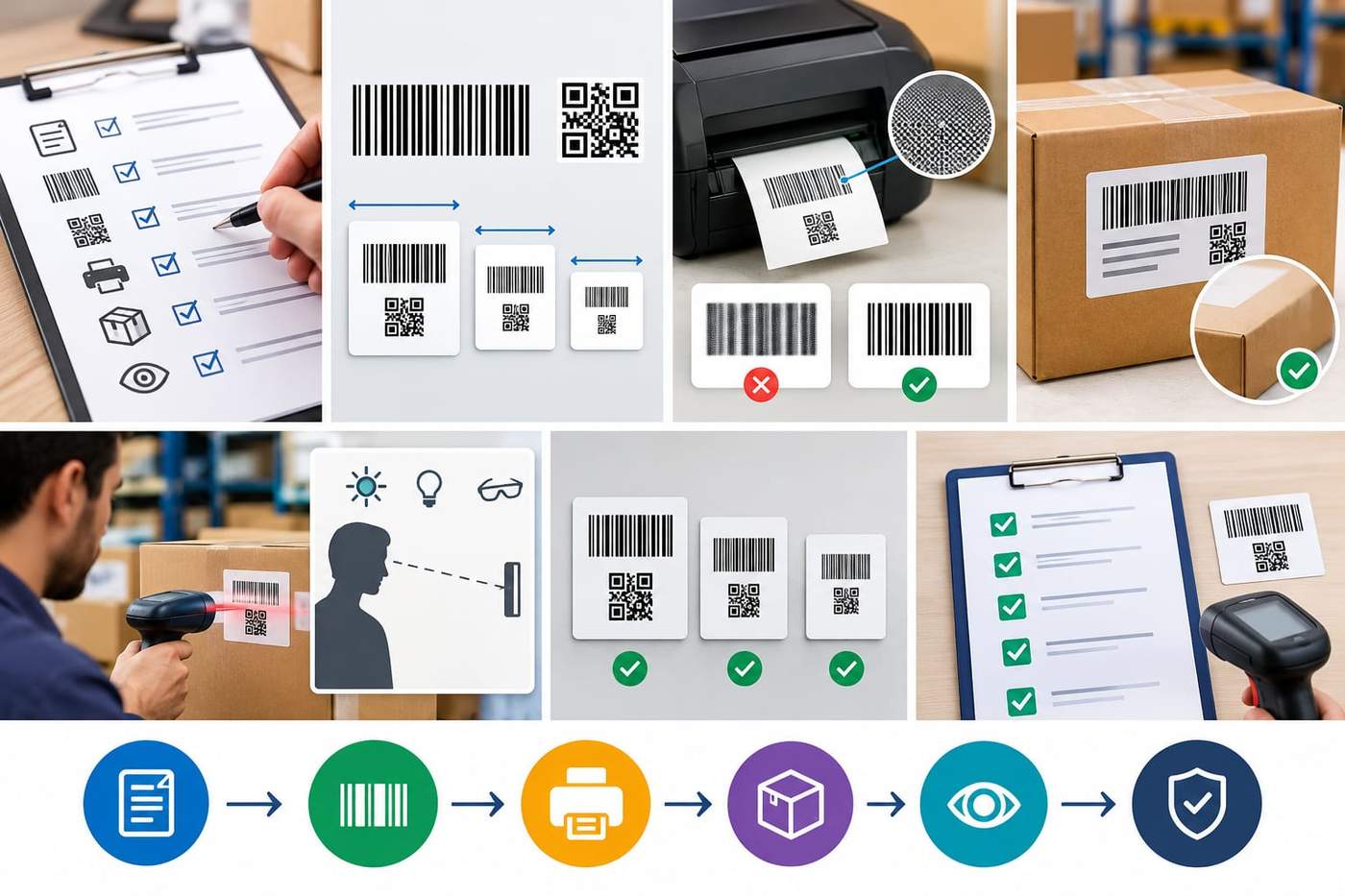
Choose label size after defining the required text, barcode symbology, scan distance, printer resolution, quiet zones, and available flat surface. A label that merely fits the package may still force text below a readable size or compress a barcode beyond reliable printing.
For businesses fitting text and barcodes onto limited package space, the decision depends first on list required content first and match the barcode to the space. The approved item record should preserve the conditions and test results that support the choice.
When reviewing how do you choose a thermal label size for readability and scanning, buyers can compare relevant barcode label sizes before requesting samples. Product listings help narrow the options, but approval should use the actual printer, surface, and operating environment described in this article.
List Required Content First
Separate mandatory identifiers and handling information from optional marketing copy. Every added field competes for space and can reduce the size of the information that drives the workflow.
Write the content in priority order and remove duplication. Keep essential human-readable identifiers near the barcode so employees can recover when scanning fails.
A production trial should include normal variation in list required content first, including different operators or package lots when those factors change the process.
Match the Barcode to the Space
Linear barcodes usually grow wider as data increases, while 2D codes become denser or larger. Both need protected quiet zones and sufficient module size.
Choose the symbology and data before setting label dimensions. Generate the code at final size and do not stretch it to fill a layout.
The purchase specification should state the accepted condition for match the barcode to the space so a repeat order can be checked against the same requirement.
Account for Printer Resolution
A low-resolution printer represents small bars, modules, and type with fewer dots. A design that looks sharp on screen may lose detail at 203 dpi.
Design for the lowest resolution that must print the label. Test fine text and codes using production darkness and speed.
If results differ, change one factor at a time. This separates the effect of account for printer resolution from printer maintenance, artwork, or handling changes.
Use the Flat Application Area
Package width is not the same as usable label area. Curves, seams, corners, ribs, handles, and closures can distort printing or lift the label.
Measure the largest uninterrupted flat panel after the package is filled and closed. Leave clearance for tape, straps, and automatic handling.
Keep a retained sample that demonstrates acceptable use the flat application area. Written descriptions alone may not capture the physical behavior that matters in this application.
Set Readability From the Viewing Task
Text read at arm's length needs a different size from text read close to a workstation. Glare, lighting, and employee protective equipment also affect viewing.
Test printed samples at the actual distance and light level. Ask representative users to locate and read the critical field without coaching.
For businesses fitting text and barcodes onto limited package space, the relevant result is whether set readability from the viewing task remains consistent during normal work, not whether one carefully prepared sample looks acceptable.
Approve the Smallest Reliable Size
Reducing label area may lower material use, but it can increase scanning failures, reprints, and manual handling. The smallest physical size is not always the lowest-cost size.
Compare at least two prototypes and measure first-pass scans, reading time, placement accuracy, and waste. Choose the smallest format that maintains a comfortable performance margin.
Record the media lot, printer, surface, environment, and observation when checking approve the smallest reliable size. These details make later comparisons useful.
Buyer Checklist
List Required Content First Write the content in priority order and remove duplication.
Match the Barcode to the Space Choose the symbology and data before setting label dimensions.
Account for Printer Resolution Design for the lowest resolution that must print the label.
Use the Flat Application Area Measure the largest uninterrupted flat panel after the package is filled and closed.
Set Readability From the Viewing Task Test printed samples at the actual distance and light level.
A supplier discussion should use the completed specification rather than the article title alone. Buyers evaluating how do you choose a thermal label size for readability and scanning can ask BETCKEY labels to confirm the available construction and sample details. Any performance claim should be checked against the intended printer, substrate, temperature, handling, and service period.
Common Buyer Questions
What is the main check for list required content first? Separate mandatory identifiers and handling information from optional marketing copy. Every added field competes for space and can reduce the size of the information that drives the workflow. Write the content in priority order and remove duplication. Keep essential human-readable identifiers near the barcode so employees can recover when scanning fails.
What is the main check for match the barcode to the space? Linear barcodes usually grow wider as data increases, while 2D codes become denser or larger. Both need protected quiet zones and sufficient module size. Choose the symbology and data before setting label dimensions. Generate the code at final size and do not stretch it to fill a layout.
What is the main check for account for printer resolution? A low-resolution printer represents small bars, modules, and type with fewer dots. A design that looks sharp on screen may lose detail at 203 dpi. Design for the lowest resolution that must print the label. Test fine text and codes using production darkness and speed.
Final Buying Decision
Base the final choice on measured results for list required content first, match the barcode to the space, and approve the smallest reliable size. Approve the complete label construction with a written test method and retained sample. Operators then have a stable setup, and purchasing can compare quality, price, and supply against the same requirement.
Production Approval
Run the proposed item through a representative production period before full deployment. For businesses fitting text and barcodes onto limited package space, the trial should include the busiest normal condition, the most difficult surface or package, and the printer with the least performance margin. Count feeding errors, reprints, application failures, unreadable text, and rescans. Review the evidence with operations and purchasing, update the item specification, and retain the final sample with its lot number.

