How Growing Businesses Can Take Control of Waste Across Every Site
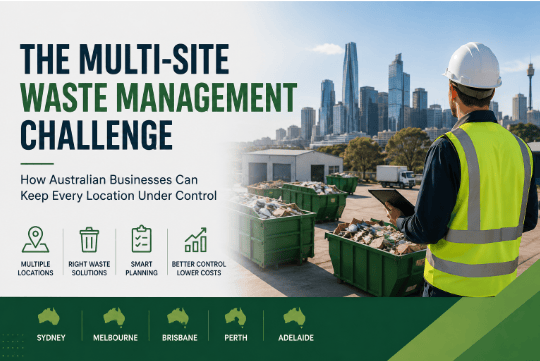
Managing waste from one business location can be relatively straightforward. Managing it across several sites is a different challenge. A construction company may have active projects in Sydney, Melbourne and Brisbane, while a retail or property business may operate dozens of locations with completely different waste requirements.
The solution is not necessarily to use the same waste arrangement everywhere. Instead, businesses need a system that provides consistent processes while allowing each location to respond to its own needs.
Why Multi-Site Businesses Struggle With Waste Management
Every location operates differently. One site may generate packaging and general commercial waste, while another could produce large amounts of renovation debris, green waste or construction materials.
Problems often arise when businesses use a one-size-fits-all approach. A bin that works well for one location may be too small for another, resulting in overflowing waste, additional collections or unnecessary costs.
Project schedules can also create sudden changes. Renovations, office relocations, property maintenance and construction milestones can all produce significantly more waste than normal operations.
1. Create a Waste Profile for Each Location
Start by understanding what each site actually produces.
Record the main waste types, approximate volumes and how frequently waste needs to be removed. A temporary construction site may require larger capacity for a short period, whereas an established commercial property might need smaller but regular collections.
This simple assessment helps businesses avoid paying for capacity they rarely use or dealing with insufficient capacity during busy periods.
2. Match Waste Collection to Business Activity
Waste requirements should reflect what happens at each location.
Construction and renovation projects can generate bulky materials in concentrated periods. Retail businesses may deal with packaging and stock-related waste, while offices generally produce smaller volumes of everyday commercial waste.
Collection frequency is also important. Choosing a suitable bin is only part of the solution. Businesses should consider when waste is generated and arrange removal around their operating schedule.
3. Build One System With Local Flexibility
A multi-site business benefits from having consistent procedures. Site managers should know who is responsible for arranging waste removal, how capacity is estimated and what materials can be placed in each waste solution.
However, the actual arrangement does not have to be identical everywhere.
A business operating across Sydney, Melbourne, Perth or Brisbane may need different bin sizes, collection schedules and waste solutions depending on the activity taking place at each site.
Centralised planning combined with local decision-making can make the entire process easier to manage.
4. Plan for Waste Spikes Before They Happen
Normal waste levels can change quickly.
Office relocations, commercial fit-outs, renovations, seasonal stock changes, landscaping work and construction milestones can all create temporary waste spikes.
Instead of waiting until a site is struggling with excess waste, businesses should identify these events during project planning. Booking additional capacity in advance can help prevent unnecessary disruption and keep work areas safer and more organised.
5. Track Waste Costs Across Locations
Businesses managing multiple sites should also monitor their waste spending.
Comparing collection frequency, bin usage and waste volumes can reveal useful patterns. One location might regularly need additional capacity, while another may have more capacity than it actually requires.
Reviewing this information periodically allows businesses to adjust their arrangements and make better decisions for future projects.
It can also help identify where better waste separation or improved on-site processes could reduce unnecessary disposal costs.
6. Make Responsibility Clear
A waste management system works better when someone is responsible for it.
Each location should have a designated person or team who understands the site's requirements and can coordinate waste removal when necessary.
Staff should also know basic rules around waste separation, bin capacity and prohibited materials. Clear instructions reduce confusion and make it easier to prevent unsuitable materials from ending up in the wrong waste stream.
A Better Approach for Growing Businesses
Multi-site waste management does not need to become complicated. The key is to avoid treating every location as though it has identical requirements.
Businesses can establish one overall process for planning, budgeting and monitoring waste while allowing individual sites to select the capacity and collection arrangements that suit their operations.
This approach provides greater control without creating unnecessary administrative work.
Conclusion
Managing waste across multiple Australian business locations requires more than simply ordering bins when they are needed. Businesses need to understand what each site produces, anticipate changes in waste volumes and create clear responsibilities for local teams.
A practical system combines centralised planning with location-specific solutions. When waste management is treated as part of normal business operations rather than an afterthought, companies can reduce disruption, control costs and keep their sites more organised.

