How I Avoided Buying a High-Traffic Domain Filled With Fake Visitors
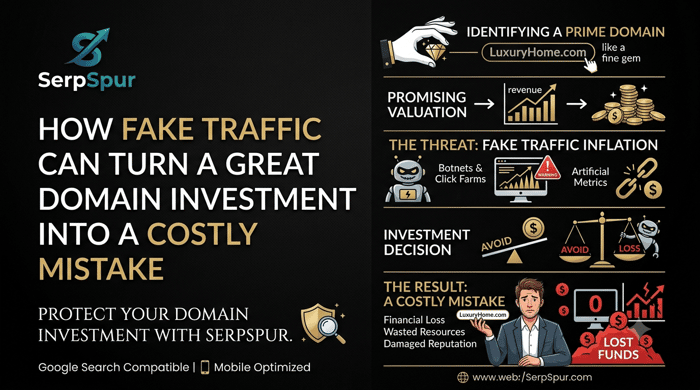
Last month, I came close to buying what seemed like the perfect domain for a niche site.
On paper, everything looked great. The traffic numbers were strong, the backlink profile seemed healthy, and the asking price was reasonable. It checked almost every box on my acquisition list.
Still, something didn't feel right.
I've learned that impressive metrics don't always tell the full story, so before making the purchase, I decided to dig deeper into the traffic quality rather than focusing solely on volume.
That extra step saved me from making an expensive mistake.
After analyzing the traffic patterns, I discovered that roughly 60% of the visits weren't coming from real users. Much of the activity originated from click farms, scrapers, and automated bots. The traffic spike that initially made the domain attractive was largely artificial.
Had I relied only on pageviews and basic SEO metrics, I probably would have overpaid for an asset with very little actual value.
The experience changed the way I evaluate domains and traffic sources.
Now, before considering any acquisition, I look beyond:
Monthly traffic numbers
Referring domains
Keyword rankings
Historical growth charts
Instead, I pay close attention to:
Geographic traffic distribution
User engagement patterns
Unusual spikes in traffic history
Suspicious referral sources
Bot and scraper activity
Consistency between rankings and visitor behavior
I've realized that fake traffic doesn't just affect domain acquisitions. It can also distort decisions around link building, sponsorships, partnerships, and content investments.
A site with inflated numbers may appear valuable, but if the audience isn't real, those metrics are meaningless.
The biggest lesson I took away from this experience is simple:
Traffic volume matters, but traffic quality matters even more.
Sometimes a smaller site with genuine users is worth far more than a larger site powered by bots.
Adding traffic validation to my due diligence process has become just as important as checking backlinks and keyword rankings. It's a small step that can prevent costly mistakes and help ensure that every investment is based on real audience value rather than vanity metrics.

Great post, and honestly this is one of those lessons that's easy to learn the hard way. I've been burned by similar situations, especially when evaluating backlink profiles for content partnerships.
One thing I've started doing is pinging the backlinks I'm considering buying or trading for, just to see if they actually get indexed and drive any real referral traffic. I built a small tool to automate this, SERPSpur's Backlink Pinger, which helps me check if those links are even being discovered by search engines. It's been eye-opening to find that a lot of "premium" backlinks from high-traffic domains never actually get crawled.
Your point about geographic distribution and user engagement patterns is spot on. I've seen domains with 50k monthly visits from Tier 3 countries that look great on paper but convert at 0.1%. The bot traffic issue is real, and it's getting worse with AI scrapers.
A question for you: did you find any specific tool or method that helped you distinguish between legitimate traffic and bot/scraper activity? I've been relying on server log analysis and user session recordings, but curious if there's a more efficient way.
Great catch on the bot traffic. Fake traffic is such a hidden cost in domain acquisitions. I'm curious—does your detector also differentiate between low-quality bot traffic and legitimate automated activity like search engine crawlers?
Great catch. Bot traffic is such a hidden trap when buying domains. I've started checking metrics like session duration and bounce rate more closely, but a dedicated detector sounds like a lifesaver. Does it also flag mixed traffic patterns, like real users mixed with bots?
Smart catch. Bot traffic is a huge blind spot for many buyers. Do you also check for sudden traffic spikes in the last 30 days? That's often a red flag for scraped or bought traffic.
Appreciate you stopping by—definitely a must-check before any domain purchase!
Great point. I also check backlink indexing patterns—unnaturally fast or clustered indexing can be a red flag for PBNs or link schemes. How do you verify bot traffic vs real users during due diligence?
Appreciate you sharing your experience! That's exactly the kind of situation I built it for—saving people from expensive mistakes.