How I Built a Free PageRank & Trust Metric Tool for Backlink Analysis
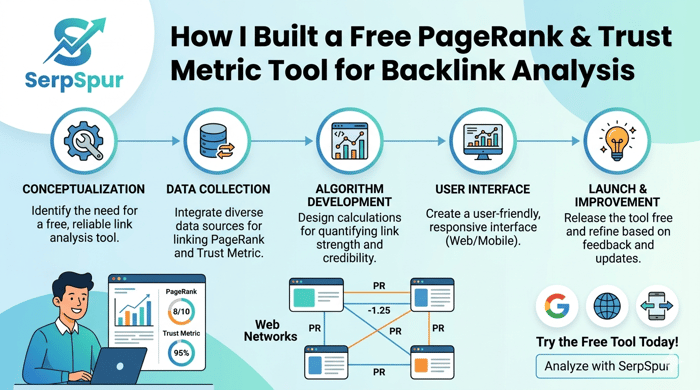
If you’ve ever wished you could peek into Google’s old PageRank data without dropping hundreds on SEO tools, you’re not alone. I recently created a free PageRank checker that does just that—and adds a modern twist. By combining legacy PR scores with my custom trust rate metric, you can see how domain authority really correlates with rankings today.
The Problem:
Most SEOs rely on expensive tools to estimate domain authority. While these tools give useful insights, they often don’t show historical context like legacy PageRank. Without this perspective, it’s hard to fully understand why some domains rank consistently well despite “low” modern metrics.
The Solution:
I built a PageRank checker integrated into SerpSpur. It lets you:
Compare old PR scores with a trust rate I developed.
Analyze backlinks and domain authority from a historical lens.
Identify authoritative websites without paying a fortune.
How It Works:
The tool pulls legacy PageRank values and overlays them with my proprietary trust score. This creates a clear snapshot of a site’s authority and reliability. I’ve found that domains with strong trust scores consistently rank well, even if their PR numbers are lower than expected.
Why This Matters:
Understanding the relationship between historical PageRank and modern trust metrics helps with:
Backlink evaluation for outreach campaigns.
Identifying domains worth targeting for guest posts or partnerships.
Recognizing hidden authority websites that might otherwise be overlooked.
The Best Part:
It’s completely free. No trial limits, no premium subscription required. Just data—clean, actionable, and easy to use.
Conclusion:
Legacy PageRank isn’t dead; it’s just part of a bigger picture. By combining it with modern trust metrics, SEOs can make smarter decisions about backlinks, domain authority, and content strategy.
Check it out and start analyzing the sites that matter most—without breaking the bank.
Try the Free PageRank Checker on SerpSpur →

Nice work. I'd love to see if your trust rate metric catches expired domains with artificially inflated old PR better than traditional tools do. Any plans to open source the comparison logic?
That's a clever approach. Have you noticed any specific industries where old PR still strongly correlates with current trust/rankings, versus ones where it's completely broken?