How I built MockReal, AI mock interviews that actually feel real
I’ve always hated interview prep. Not because I didn't know the material, but because the process felt like talking to a wall.
I spent years:
Asking myself questions and then Googling if my own answers were right.
Memorizing "perfect" scripts that made me sound like a robot.
Having zero clue if my tone, confidence, or clarity were actually hitting the mark.
It was inefficient, lonely, and frankly, boring.
With AI getting better, I figured this was a solved problem. I was wrong.
My first few MVPs were garbage. I tried stitching together basic STT + TTS, but it was clunky. The delays were awkward, the voices were robotic, and it felt nothing like a real high-stakes interview. It didn't solve the core issue: The Stress of the Flow.
The breakthrough came when I stopped "stitching" tech together and rebuilt everything around native voice-to-voice interaction.
That changed everything.
Suddenly: The conversation actually flowed.
You could interrupt or be interrupted (like a real human).
The AI actually evaluated the way I spoke, not just the keywords I used.
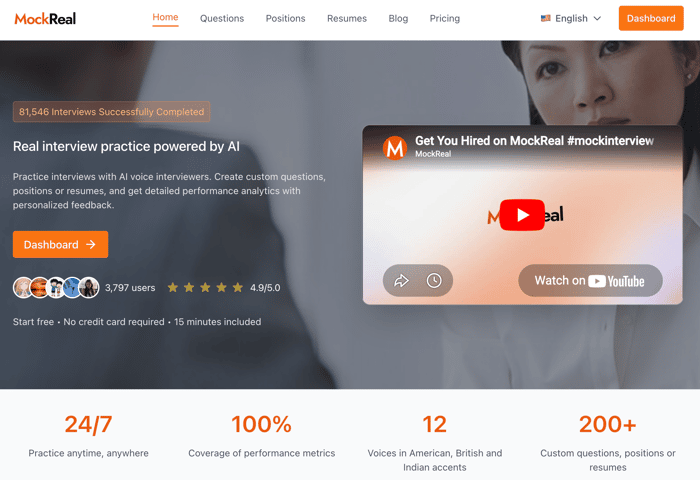
I finally put mockreal.com out into the wild.
The validation has been the best part of the journey. People aren't just clicking around—they’re actually finishing 20-minute mock sessions. Most importantly, people are actually starting to pay for it.
The biggest lesson I’ve learned so far: Interview prep isn't a content problem (the questions are everywhere). It’s an experience problem. If it doesn't feel real, it doesn't help.
I’m currently doubling down on performance analytics—things like structure, confidence scores, and role-specific "pressure modes."
If you’re prepping for something big right now, how are you doing it? Still using a mirror, or have you found a better way?

Moving from "clunky STT/TTS" to a native voice-to-voice interaction is the exact pivot that makes AI feel human, Gary. Interview prep has always been an "experience problem"—memorizing scripts doesn't help when you're actually under the pressure of a real, flowing conversation.
I’m currently running a project in Tokyo (Tokyo Lore) that highlights high-utility logic and builders who master real-time interaction. Since you've cracked the code on making mock sessions engaging enough for users to actually finish 20-minute sessions, entering your project could be the perfect way to showcase your "pressure mode" logic while your odds are at their peak.