How I Got My First 1,000 Visitors to a Free Tool Site Without Paid Ads
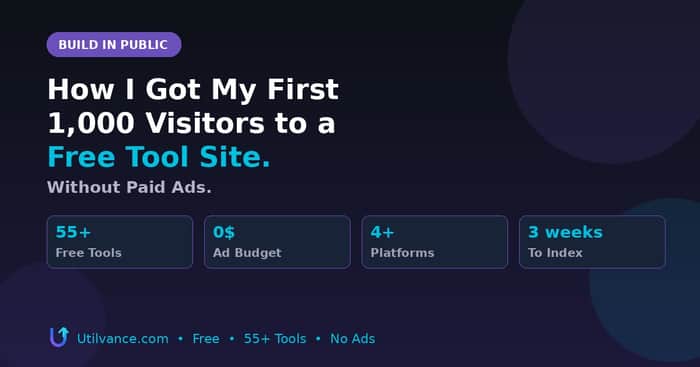
I built Utilvance.com, a free browser-based platform with 55+ calculators and everyday tools. No signup, no ads, everything runs locally in the browser.
Getting the first traffic without a budget meant doing everything manually. Here is exactly what worked and what did not.
What worked:
Product Hunt submission got an initial spike. The post is still indexed and brings steady referral traffic.
Writing build-in-public posts on Indie Hackers, Dev.to, and Medium. Not promotional content but actual behind-the-scenes posts about what I built and why. These get organic engagement and the backlinks are dofollow on most platforms.
Submitting to SaaSHub and AlternativeTo. These pages rank on their own for "calculator alternatives" type queries and send steady passive traffic.
Publishing SEO-focused blog posts inside the tool site itself. Google started indexing individual tool pages within the first 3 weeks.
What did not work:
Posting links directly in communities without context. Gets ignored or removed.
Expecting quick results from SEO. The first 8 weeks produced almost nothing from organic search.
Current status: 55+ tools live, 3 articles on Medium, 3 on Dev.to, listed on Product Hunt, SaaSHub, and Indie Hackers. Traffic is growing week over week.
What has worked for you when launching a free tool with no marketing budget?
Check it out: Utilvance.com

Congrats on the first 1,000. The directory referrals make sense to me: someone searching for a calculator alternative has a use in mind already. That seems a promising place to explain which particular task each tool handles well.
The 8-week SEO lag is the bit people underestimate. I’ve had better luck treating directory pages as distribution experiments first, then doubling down only when a query starts getting impressions. Which of the 55 tools ended up bringing the most repeat traffic?
Good breakdown, especially the warning about contextless links. I would track each channel by qualified action, not visits alone, and give every distribution surface a clear attribution window so you can compare durable discovery with short referral spikes.