How I Got the First 500 Users for WORK Network as a Solo Founder
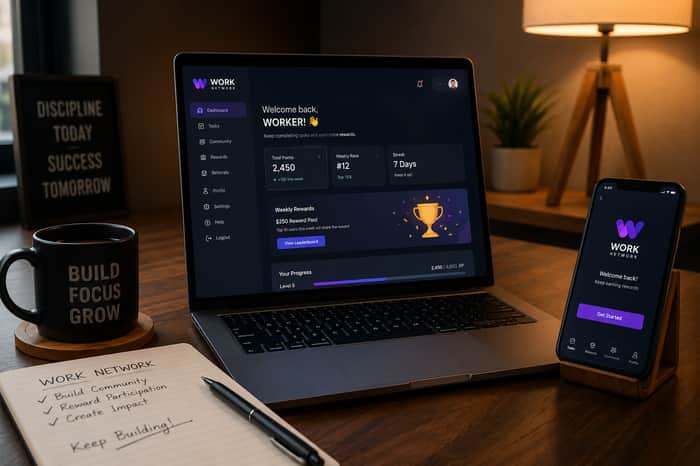
Three months ago, WORK Network was just an idea.
Today, we've reached our first 500 users.
Compared to the millions of users that large platforms have, 500 might not sound like much. But for a solo founder building a community-focused rewards platform, it's a milestone worth celebrating.
More importantly, the journey taught me lessons that I wish I had known from day one.
The Biggest Surprise: Building Wasn't the Hard Part
When I started WORK Network, I assumed the hardest challenge would be development.
I spent months building:
- Flutter mobile apps
- Firebase backend systems
- Community features
- Weekly rewards
- Referral systems
- Progress tracking
The app eventually worked.
Then I discovered a much harder problem:
Getting people to actually use it.
Nobody Cares About Your App
At least not initially.
As founders, we spend months thinking about our projects. We know every feature, every screen, every improvement.
Users don't.
Most people are busy. They already have apps on their phones. They don't wake up searching for another platform to install.
This was probably the most important lesson of the entire journey.
Building something useful is only the beginning.
Growth Didn't Come From One Big Event
There wasn't a magical launch day.
No viral tweet.
No famous influencer.
Growth came from dozens of small actions:
- Publishing articles
- Sharing development updates
- Listening to feedback
- Improving onboarding
- Fixing bugs
- Talking to users
- Building trust
Progress felt slow at times, but small improvements started compounding.
Community Matters More Than Features
One thing that surprised me was how often users cared about the community rather than specific features.
People wanted:
- Transparency
- Communication
- Fair rewards
- Regular updates
- Confidence that the project was active
Many users were willing to forgive small bugs if they believed the platform was genuinely improving.
Trust turned out to be more valuable than perfection.
The Importance of Weekly Rewards
One of the most successful additions was the weekly rewards system.
The goal wasn't simply to distribute rewards.
The goal was to create a reason for users to return, participate, and stay engaged.
Retention is often harder than acquisition.
Weekly rewards helped create ongoing activity and gave users something to look forward to.
What Didn't Work
Not everything succeeded.
Some ideas looked great on paper but generated little interest.
Some promotional efforts produced almost no results.
Some features took longer than expected and delivered less value than anticipated.
Those failures were frustrating, but they were also valuable.
Each one provided information that helped improve the platform.
What's Next?
The first 500 users are just the beginning.
The focus now is:
- Improving retention
- Expanding the community
- Continuing to refine the reward system
- Learning from user feedback
- Building long-term sustainability
The goal has never been overnight success.
The goal is to build something useful and continue improving it one step at a time.
Final Thoughts
If you're building your own startup, app, or side project, here's what I've learned:
- Launch earlier than you think.
- Listen to users more than your assumptions.
- Expect growth to take longer than planned.
- Consistency beats occasional bursts of effort.
- Trust is one of the most valuable assets you can build.
Five hundred users won't make headlines.
But every large platform started with its first user.
Then its first ten.
Then its first hundred.
This is simply the next step in the journey.
Website: https://work-networks.com

The "nobody cares about your app" and "retention is harder than acquisition" lessons are the ones I'd build the whole journey around. Most solo founders learn them a year too late, so fair play for naming them at 500 users.
The weekly rewards point is the interesting one. Giving people a reason to come back beats almost any acquisition trick..!
That's actually my area, I run Insert Affiliate (https://insertaffiliate.com/ - referral and affiliate tracking for apps), so one thing I'm curious about: with the referral system on Firebase, can you tell which referrers bring users who actually stick around and stay active, not just who redeemed a code? And how are you finding affiliate trust, we find a lot of our users say that they come to us for our trusted reputation as we're partnered with the top receipt verifiers - affiliates found it hard to trust others saying that they hadn't yet made a sale despite having a lot of clicks on some occasions!t
The mobile-app lesson I’d underline here is intent over channel size. For Kinetic Override, broad launch posts underperform exact phrases like no-root Android auto clicker, macro recorder, or record taps/swipes. Smaller surfaces work better when the wording already matches the pain.
Hi, sir.
Profile: https://topstar-ai.github.io
I’d really appreciate the opportunity to connect and promise good benefit to you.
Looking forward to your thoughts.
Best regards.