How I Increased Returning Users by 30–35% With a Lightweight Engagement Flow
Introduction
Hi Indie Hackers
One problem I have seen over and over and experienced myself is getting users to come back. You spend hours writing guides, publishing tutorials, or sharing stories, but many visitors never return. It can feel frustrating, especially when you know your content has real value.
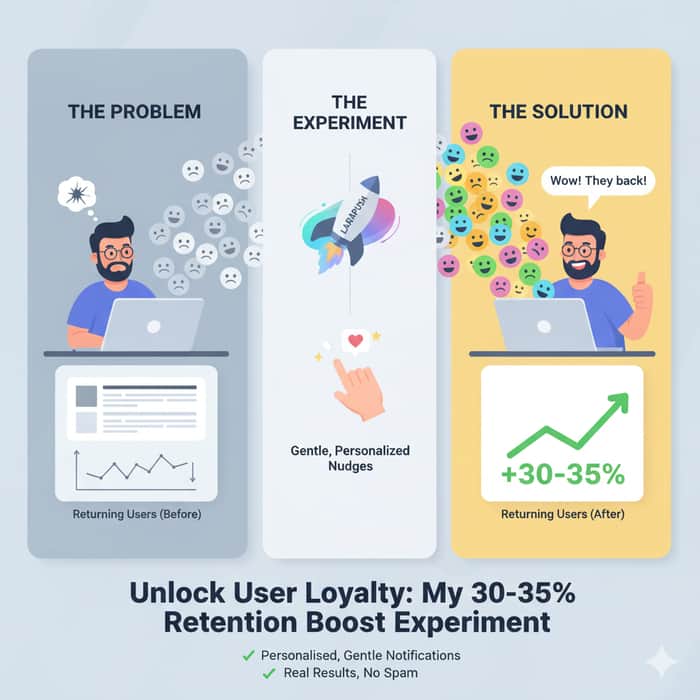
I decided to run a small experiment to test whether a gentle, lightweight approach could improve returning visits. The results were better than I expected. In just a few weeks, I saw roughly 30–35% more returning users. Here is what I learned, what worked, and what did not, so other makers can try something similar.
The Problem With Returning Users
Most creators rely on emails, newsletters, or pop-ups to re-engage users. While these methods can work, they often feel spammy or intrusive. Readers sometimes tune out entirely, and it is easy to damage trust. I wanted something different, a way to bring people back that felt personal, thoughtful, and non-intrusive.
Designing the Experiment
I started by grouping users based on the type of content they had interacted with in the past, such as guides on growth, tech, or travel. Then, whenever new content in a category went live, the system would send a small, friendly notification. I capped the number of nudges to 1–2 per week per user to avoid overwhelming anyone.
The tone of these nudges was casual and human, not official or corporate. Even small adjustments to wording and timing had a noticeable effect on engagement. Testing different times of day revealed that sending these messages when users were most likely to be online produced the best results.
Results
After a few weeks, the difference was clear. The group that received the nudges returned to the site about 30–35% more often than those who did not. Click-through rates were highest when the messages referenced something the user had previously engaged with, and opt-out rates were extremely low.
Not everything worked as planned. Over-complicating the tagging system, sending too many messages, or trying to be too clever with headlines actually reduced engagement. Simplicity and relevance were key.
Lessons Learned
This experiment taught me that small, thoughtful touches can make a significant difference. Personalised nudges based on actual user behaviour outperformed broad targeting, and keeping the tone human mattered more than I anticipated. Timing also played a crucial role, as small tweaks in send times produced better click-through rates.
The biggest takeaway is that you do not need complex systems or aggressive campaigns to improve retention. Respect users, stay relevant, and be considerate with messaging.
How You Can Try This
If you would like to replicate this approach, start simple. Group users by broad content categories, send them friendly nudges when relevant content appears, and limit frequency. Measure return visits, iterate, and see what works for your audience.
I am looking for a few makers who want to test this early and provide feedback. If you are interested, comment below or DM me, and I will share the demo and setup guide. I would also love to hear what strategies have worked for you in keeping users coming back.
