How I keep track of my connections
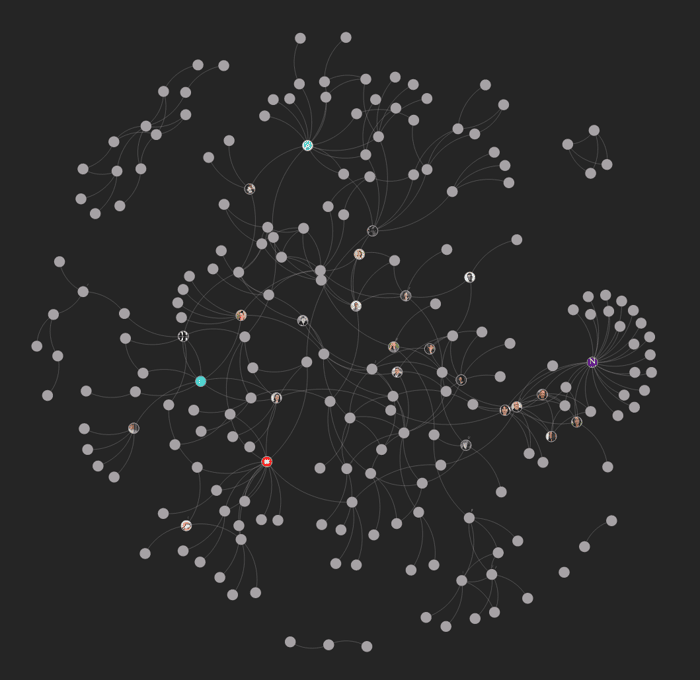
Last week I had one of those random chats with a stranger (facilitated via elpha.com), we talked about what we wanted to get out of the talk, and I showed her my social capital map. Given her excitement about what is second nature for me, I thought my approach might not be that common and decided to share it.
I'm approaching these random 1-on1 with a long-term perspective. That means I need to keep track of the relationships. As a social network analyst, what better way than to create my own social capital.
Social capital means your relationships and the "assets" you have access to, thanks to your connections.
Creating this map of your relationships is really not hard, but it can help you in the future. The hardest part is to remember that you have it and update it. It's more of a time investment than anything else.
How to create your social capital
- As I wanted an easy solution, I'm using Kumu.io (paid version). There isn't much to it than to create a map, add an element (a person you work with), and information you know about that person.
- I'm using tags to describe a person's expertise, as I can then cluster people around their expertise.
- You can add other information about a person via fields or the description box. It's like an annotated LinkedIn or Twitter. For example, you can add if a person should be avoided or how they helped you with something.
- After adding people (or communities), you connect them to other people where possible. That will create your network.
Once you have the network, you can search through it. For example, if I need marketing help, I can search for marketing and see the people/community connected to this expertise area. I can then decide who to reach out to and ask for help. I could also zoom out a bit and see what other skills these people have and use that information to decide who to contact. That's the most straightforward use of the tool.
I did a walk-through of a paper-based exercise for workfrom.co. That might help those who think that their network is small or who aren't sure where to start: https://twitter.com/katerinabohlec/status/1270663310426419200. I did the same exercise for startups where co-founders created their combined social capital.
The magic of the social capital is not just that you can search for specific expertise within your connections, but you can also run analysis to find out if you are overly relying on one person, how diverse your network is, etc.
If you like to know more, I write about the science of social capital: https://netnigma.substack.com/
Final note. I had someone comment that this is a capitalist view on relationships as I'm "exploiting" my connections. That is wrong, as you can't exploit your connections (at least not forever). If you want something from someone, there needs to be a basic level of trust between the two of you. It's also about having reciprocal relationships. If you ask something from someone, be ready to repay the favor.

This is super interesting.
Do you keep track of important interactions with people from your network?
I'm also curious to hear:
What's your approach to ensure you give as much (or more) value as you get from them?
How do you ensure these relationships are meaningful and genuine, and not just merely transactional?
Thanks for sharing!
Yes, I try to keep track of the interactions with people. That's not daily but more on an ad-hoc fashion. I know I could be more strategic about it.
To give value you need to understand what they do. I know it's sounds cliche, but it's about listening to them and not trying to think about what you'll say next.
I think if some of the relations are transactional, that's ok. If you want meaningful interaction, you need a shared ground and a desire that the other person also benefits from the interaction. That takes time. For me, it goes back to understanding the person. I'm also adopting a long-term view on meaningful connections. For example, right now I might not be able to help you, but in 5 years I could help a team member of yours. So the "meaningfulness of connections" flows or is transferred from one person to another.
Makes total sense!
Thanks for sharing your approach and insights.
Oh, I like this.
Now I'm wondering how/if this could be used for places like Indie Hackers. Do you have any ideas around that? Or how people use it specifically for community building?
Reminds me a bit of Roam too, which isn't relationship specific, but you can [[tag anything in double brackets]] and it then brings the data together in various ways.
Specifically for community building in Indie Hackers, you could
Creating reply and mention networks is often done with Twitter or any other type of discussion forums: https://towardsdatascience.com/generating-twitter-ego-networks-detecting-ego-communities-93897883d255
Once you have the clusters or these central people, you can do several things.
Example 1: If you want more interaction between two subgroups, find a topic that two central people find interesting and get them to talk. Or arrange a 1-1 between them
Why central people_? the advantage of using central people is that they are in a better place to bring a new topic into a community. They have the necessary informal power to bring in new topics.
Example 2: You can also look for people who are good at building bridges (high betweenness centrality) and ask them to go be active in another community.
Example 3: You can see who is at the edge of the community and try to bring them in.
I haven't seen how it is used for community building, but more often to describe the community. Of course, you could calculate a number of community metrics, then try out something with the community and see how the metrics change (more/less fragmentation, quicker onboarding of new members, greater levels of interaction).
Happy to chat more about it.