How I Learned the Hard Way That Modular Design for AI Agents Isn’t Optional
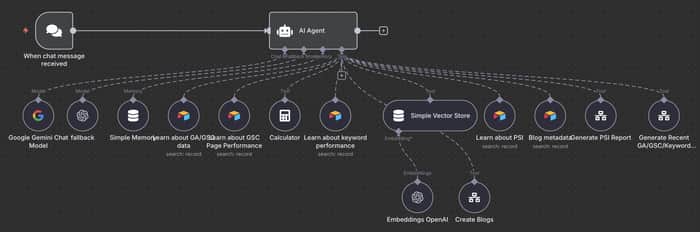
I built two versions of the same AI agent. Only one worked but they both played a role.
Version 1 was messy and fast. It helped me get a vision for the end goal, but the results were trash. All of the tools were directly attached to one agent which caused the system prompt and tool descriptions to be too far-reaching, creating an inevitable slope for hallucinations and incorrect tool calling.
Version 2 was modular and structured. It took longer to architect, but the reliability and scalability reflect the effort. The system prompts are intentional and the tool descriptions are segregated. This gave the agent the ability to provide accurate and consistent responses.
Here’s what that experience taught me:
-
Speed without structure creates chaos. Moving fast helped me understand what I wanted to build, but fixing it was painful.
-
Structure without iteration creates stagnation. The modular version worked well, but it wouldn’t exist without the messy prototype that came before it.
Balance both. Use speed to discover, then structure to scale. That simple shift from “just get it working” to “design it to evolve” completely changed how I think about building agents.
Now I treat modular design as a strategy, not just a best practice.

Modular design often reveals assumptions only once you start composing real behaviors — the cost shows up in the decisions you have to rethink.
Curious — after this lesson, what’s the one validation signal or metric you’re now watching to decide if your next architectural iteration is the right one?
Really good read, couldn’t agree more with your hard-won conclusion that modular design for AI agents isn’t optional. In my work building orchestration-first systems, I’ve seen firsthand how tightly coupled, monolithic agents become unmanageable as soon as you try to add new capabilities or swap out models. Without clearly defined interfaces, your planner, memory, or execution modules end up entangled. Debugging becomes a nightmare, and scaling is painful.
When you design agents modularly, each piece can evolve independently: you can replace the reasoning engine, plug in a new memory store, or add a specialized tool executor without rewriting the whole stack. That modularity isn’t just about maintainability, it’s the foundation for resilience, observability, and future-proofing. The architecture may feel more complex upfront, but that complexity pays off in flexibility and durability down the road.