How I made my first $5K as indie iOS Developer?
First things first, let’s talk about some stats. Based on several articles on the internet and based on just some pure observations it’s pretty safe to say that 9 out of 10 apps on the AppStore fail. It’s a fact. There are many reasons why that is. From not having a proper ASO in place to having a bad design, a bad set of features, and not a good market fit in general. Having said that, I am very fortunate I can share my story with you about my app - Trading Tracker.
About my app
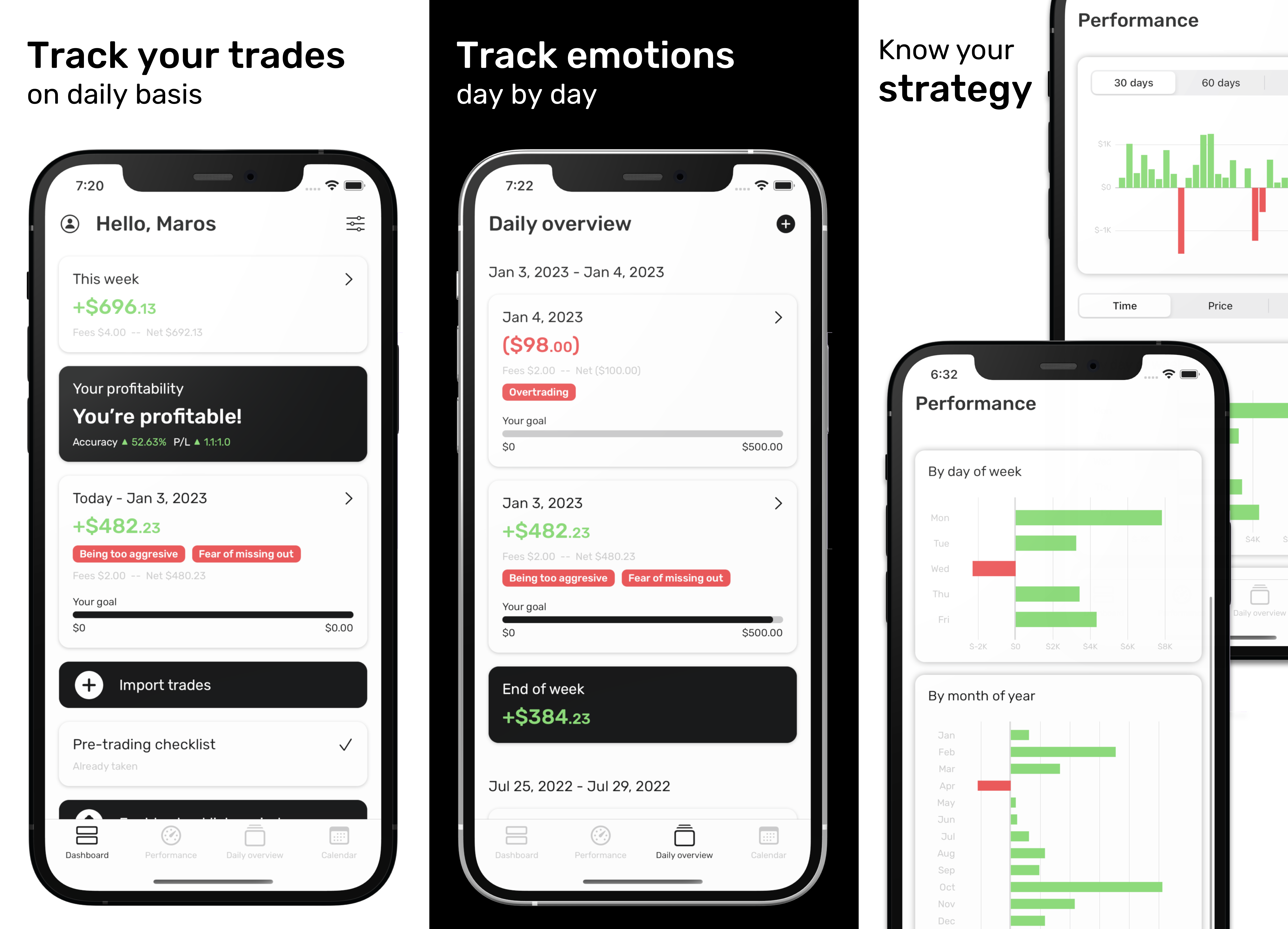
Trading Tracker, as its name implies, is an iOS app for any stock market traders to journal their trades, and track the metrics, what’s working for them, and what’s not working. Side note for non-traders, knowing your metrics if you’re a trader is probably the most crucial thing you want to know. Without metrics, you’re blind. These metrics and stats have all of the information about your strategy and profitability. As a trader, I wanted something easy to use, to pick out of my pocket and import my trades. Most of the already existing apps are too confusing and so I decided to build my own thing. So now you should have a clearer picture of the target audience and market fit of this app.
App’s journey on the AppStore
I started to work on the app in Nov 2021 and released it completely for free in Dec 2021. It was a very simple app back then (let’s say an excel sheet but in the form of an app). I was using it on my own for my tracking. It had a couple of users here and there but nothing too crazy.
In Jan 2022 I saw more and more users downloading the app. It was like 8 users a day. And so I switched the app to paid app - just for fun. The price was $1.49. It was a “set it and forget it” kind of thing. In March 2022 I came back and looked at the stats. I was impressed to see that I made my very first money online! I made about $80 in total. And then I started to think - “okay, this actually might mean there’s an opportunity to do more with this app”. I knew exactly what features would be the most effective. One of them is the automatic import of .csv files with trade data. And so I started building.
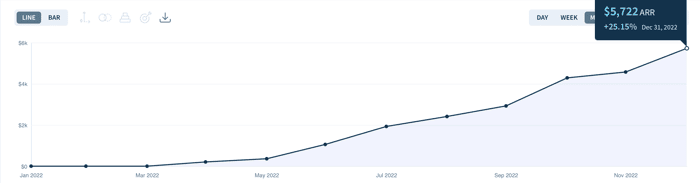
In April 2022 I released version 2.0 which also included a paywall and subscriptions. The app offers 1-year, 3-month, and 1-month subscriptions. You can see on the chart above that I immediately saw a couple of subscriptions.
Subscription vs. paid app
I was thinking a lot about what pricing model to choose. The answer came pretty quickly. I was considering a couple of arguments:
Is this app a lifetime project? - We can talk about this topic a lot but long story short, what’s a lifetime? 20 years? 30 years? I don’t know. I don’t know where I will be in 5 or 10 years. And I don’t want to let the customers hang with the bought product. I might have a different plan than I have now. So no, it’s not a lifetime project.
Is this some kind of utility app? - It is not. Yes, it’s a tool. But not a utility app. Utility apps are used once or twice a year. This app will be used every single day.
What is the competition’s approach? - Well, every single trading tracker product is subscription-based.
So I think that’s why it was pretty easy for me to decide what pricing model to choose. There was one thing, however, I wanted to enforce - usability for free users. The app is useful if you’re not willing to pay for it. Yes, some features are restricted or limited. But the core features are free for everyone.
Current status & next steps
As you can see on the chart above, I made over $5000 in 2022 from April to December. I haven’t done any kind of marketing. All traffic is coming purely from AppStore search thanks to my ASO (topic for another post probably?). At the end of 2022, I had a short reflection and was thinking about what to do next. I assume that if I am doing absolutely nothing to acquire new users and still get paid $5000/year, then if I will do some type of marketing and user acquisition I will get paid more. Maybe I am wrong but this is what I assume logically.
So my next steps for 2023 are:
- focus on marketing - improve ASO, create new acquisition channels (Reddit, Twitter, blog)
- try not to implement new features but improve the existing ones
- make the app prettier and easier to navigate
- not to get over my head if some months are worse than others 😁

inspiring!