How I Reached $200 MRR with a Local Search Spoofing Tool
Reaching your first revenue milestone is always exciting, especially when it comes from solving a problem you personally face every day. Recently, I crossed $200 in Monthly Recurring Revenue (MRR) with a tool I originally built for myself: SerpSpur Local Search Spoofer.
The Problem That Started It All
If you've ever worked in SEO, particularly local SEO, you've probably encountered this issue. You optimize a website for multiple locations, but when you search for your target keywords, the results don't accurately reflect what users in other cities are seeing.
I constantly found myself wondering:
How does my site rank in another city?
Are local competitors outranking me in specific locations?
Is my Google Business Profile visibility changing across regions?
The only reliable way to check was either asking someone in that location or using expensive enterprise tools. Neither option was ideal.
Building a Simple Solution
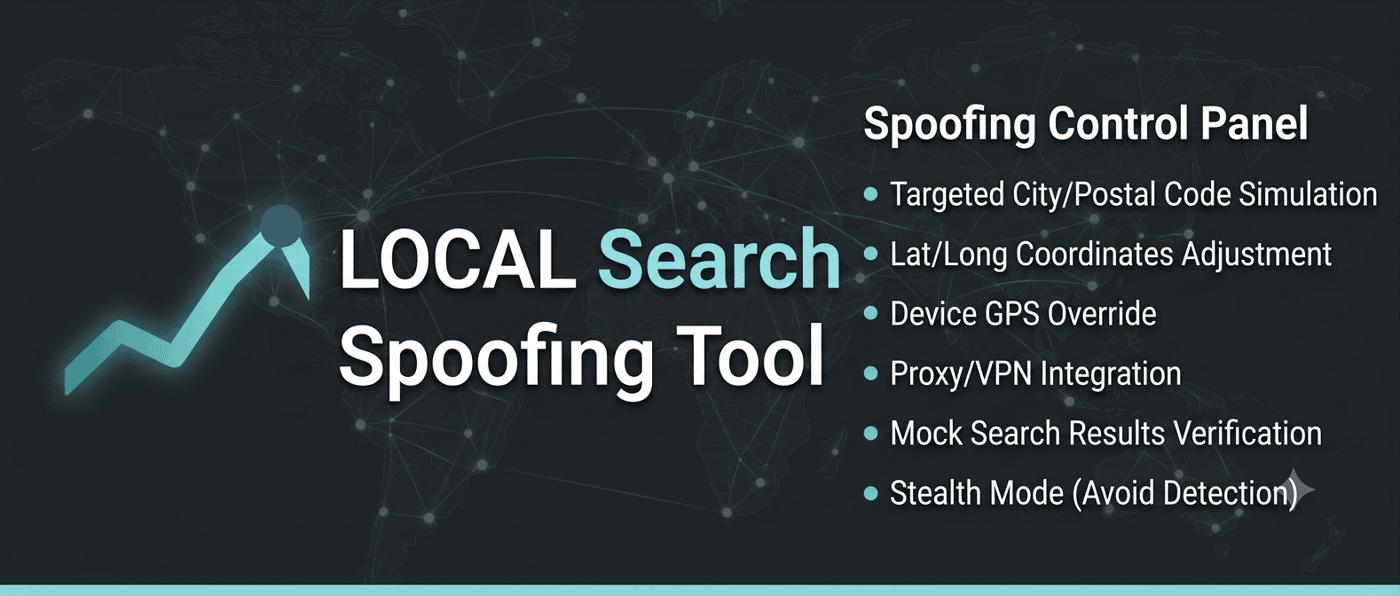
To solve this, I created a tool that allows users to simulate searches from different locations without physically being there.
The goal was simple:
View search results from different cities.
Test local SEO campaigns more accurately.
Monitor rankings without relying on guesswork.
Save time and money.
What started as a personal utility quickly became something I used every day.
Discovering That Others Had the Same Problem
After sharing the tool with a few SEO friends, the feedback was surprisingly positive.
Many told me they faced the exact same challenge:
Local SEO agencies managing multiple clients.
Small business owners trying to track local visibility.
Freelance SEOs handling campaigns in different cities.
Digital marketers analyzing regional search trends.
It became clear that this wasn't just my problem—it was a widespread issue within the SEO community.
Introducing SerpSpur Local Search Spoofer
That's when I decided to publicly launch SerpSpur Local Search Spoofer.
The tool helps users simulate local searches and analyze search engine results from different locations, making local SEO research significantly easier.
Key Benefits
Check rankings from different cities.
Improve local SEO analysis.
Compare search visibility across regions.
Save time on manual location testing.
Free to try with no complicated setup.
The Journey to $200 MRR
The growth wasn't overnight.
I focused on:
Listening to user feedback.
Improving the tool regularly.
Sharing it within SEO communities.
Creating useful content around local SEO.
Solving real-world problems instead of chasing trends.
Over time, users started recommending the tool to others, and recurring revenue gradually increased.
Crossing $200 MRR may not sound massive compared to large SaaS companies, but it's an important milestone because it validates the idea. It proves that people are willing to pay for solutions that genuinely save them time and improve their workflow.
Lessons Learned
A few things stood out during this journey:
The best product ideas often come from your own frustrations.
Simple tools can solve expensive problems.
SEO professionals value practical solutions over flashy features.
Consistent improvements matter more than a perfect launch.
What's Next?
I'm continuing to improve SerpSpur Local Search Spoofer based on user feedback and expanding its capabilities for local SEO professionals and businesses.


Nice, congrats on hitting $200 MRR! I love that you built it for your own workflow—those dogfooding tools often nail the real pain points. Have you considered adding a feature for mobile vs desktop spoofing? That'd be huge for local SEO audits.
Nice milestone! I've tried a few local spoofers before but they were either slow or inaccurate. Does SerpSpur use a VPN network or just header manipulation for the location spoofing?