How I Started Using Data to Understand My Soil Instead of Guessing Every Season
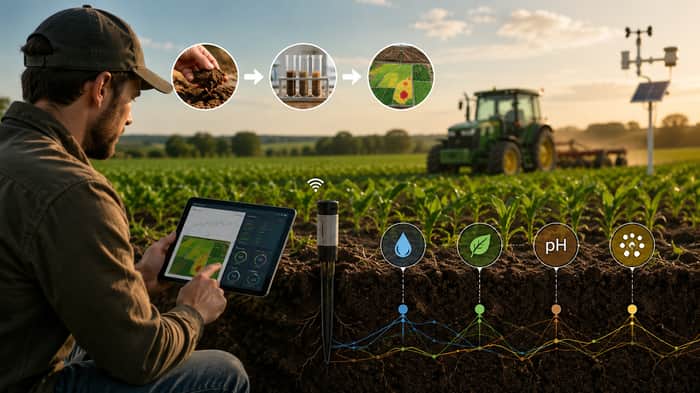
For years, a lot of my farming decisions were based on experience and observation.
And to be fair, that works—up to a point.
You look at the soil, check the crop condition, adjust inputs, and hope the season goes in your favor.
But there’s always a gap:
you’re reacting to what you can see, not what’s actually happening beneath the surface.
That gap is where most inefficiencies live.
Over time, I started exploring two ideas that sounded complex at first—carbon utilization and remote sensing.
But once I understood them practically, they turned out to be less about “advanced technology” and more about making better decisions with better information.
1. The Problem With Guess-Based Farming
Even experienced farmers rely on judgment:
- When to irrigate
- How much nutrient to add
- Whether soil health is improving or declining
But judgment has limits.
You can’t always see:
- nutrient imbalances
- early stress signals
- long-term soil degradation
So what happens?
You end up:
- overusing inputs
- reacting late to problems
- missing opportunities to optimize
That’s where data starts becoming valuable—not as a replacement for experience, but as a support system.
2. Carbon Is Not Just a Buzzword—It’s the Foundation
When I first heard about carbon in farming, it sounded like a climate discussion.
But in practical terms, it’s much simpler.
Soil carbon is directly linked to:
- soil fertility
- structure
- water retention
- microbial life
Higher carbon levels generally mean healthier soil.
Instead of focusing only on fertilizers, I started looking at:
How do I increase and retain carbon in the soil?
That changed my approach:
- more organic inputs
- better residue management
- reduced unnecessary soil disturbance
Over time, the soil became more stable and productive.
3. Remote Sensing Makes the Invisible Visible
Remote sensing sounds technical, but the idea is straightforward.
Using tools like drones or satellite data, you can monitor:
- crop health
- moisture levels
- stress patterns
- growth variations across fields
Instead of walking the field and checking small sections, you get a complete view.
And often, you catch issues earlier than you would manually.
For example:
- uneven growth areas
- early signs of disease
- irrigation gaps
This allows you to act before problems spread.
That’s a big shift—from reacting late to responding early.
4. Precision Reduces Waste
One of the biggest benefits I noticed was efficiency.
When you combine:
- better soil understanding (carbon focus)
- better field visibility (remote sensing)
You stop treating the entire farm the same way.
Instead:
- inputs become targeted
- water use becomes optimized
- interventions become more accurate
The result is simple:
less waste, better output.
And in farming, reducing waste is often more powerful than increasing effort.
5. Technology Doesn’t Replace Experience—It Sharpens It
There’s a common fear that technology will replace traditional farming knowledge.
But what I’ve seen is different.
Technology works best when combined with experience.
- Data shows patterns
- Experience helps interpret them
- Decisions become more informed
You’re not guessing anymore—you’re deciding with clarity.
That’s a big difference.
What Changed for Me
After applying these ideas consistently:
- Soil health became easier to manage
- Input use became more controlled
- Crop issues were identified earlier
- Decision-making became less stressful
But the biggest change was mental.
I moved from:
“Let’s see what happens this season”
to:
“I understand what’s happening, and I can act accordingly”
Modern farming is not just about working harder.
It’s about understanding better.
Carbon utilization and remote sensing may sound advanced, but at their core, they solve a simple problem:
They reduce uncertainty.
And when uncertainty reduces, everything improves—costs, yields, and confidence.
The future of farming may not depend on who has the most land or the most resources.
It may depend on who understands their land the best.
If you want a deeper breakdown of how carbon utilization and remote sensing work in organic farming—and how you can apply them practically—I’ve explained it in detail here:
Carbon Utilization and Remote Sensing in Modern Organic Farming
This will help you move from concept to real-world application.
