How I Turned a Line of Code into Real-World Impact (and You Can Too)
This year, I wanted to try something a little different with my side projects.
Not just ship another dashboard.
Not just chase MRR.
But build something that actually touches the real world - something that does good the same way we ship features: fast, simple, and quietly powerful.
That thought turned into a small experiment that started with one line of code:
await sdk.plantTree({ amount: 1 });
One line. One tree. That’s where it began. 🌳
❓The problem: Doing good always felt… complex
I've always wanted to add some form of "impact" to my products — plant trees for new users, clean ocean waste when someone upgrades, or offset emissions for digital actions.
But I kept running into friction:
- Who handles the logistics?
- How do I prove it’s real?
- What about tracking, updates, and transparency?
I didn’t want to build a full ops team. I just wanted to write a function that does good.
⚡ The solution (and code)
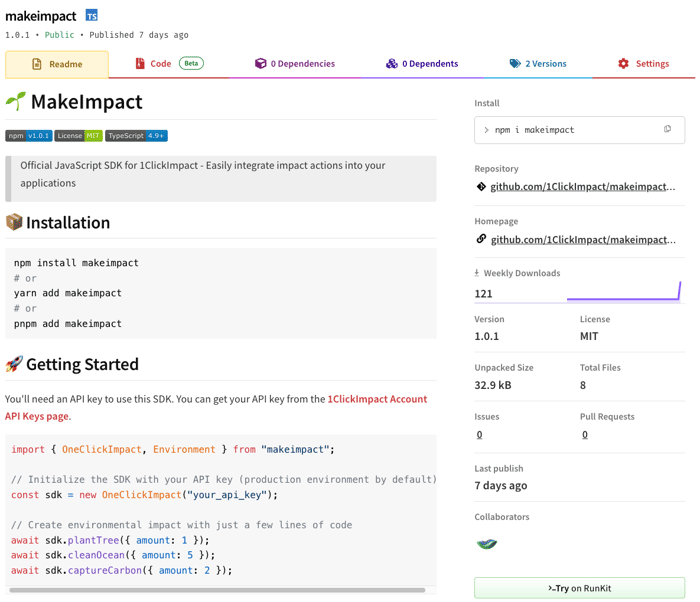
So I built a minimal SDK and API to test this idea out:
import { OneClickImpact } from "makeimpact";
const sdk = new OneClickImpact("your_api_key");

// Plant a tree 🌳
await sdk.plantTree({ amount: 1 });

// Clean ocean plastic 🐠
await sdk.cleanOcean({ amount: 5 });

// Capture CO₂ from air 🌍
await sdk.captureCarbon({ amount: 2 });
Each of these calls triggers a verified action in the real world.
The cool part? There's a live dashboard, and even recorded planting sessions for transparency.
This tiny SDK now powers impact features in a few of my projects — and friends are starting to use it too.
🧩 How I’m integrating it (without annoying users)
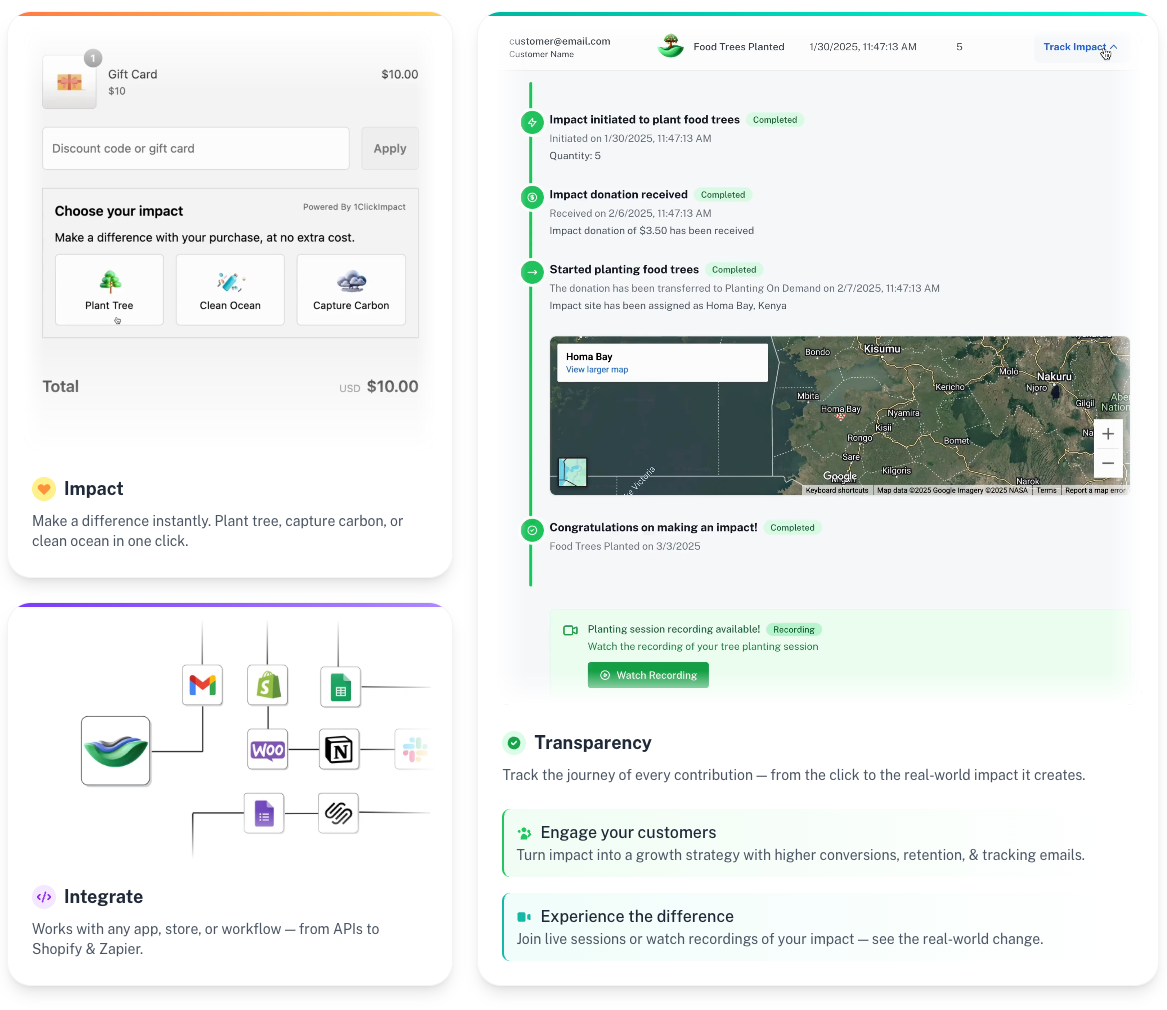
- A tree planted when someone signs up
- 5 ocean plastics removed when a user shares feedback
- CO₂ captured when a team reaches a milestone
These are all invisible to users, but surprisingly effective in making the product feel more purposeful.
The response has been… different.
People noticed. They cared. Some even reached out just because of that one tiny feature.
🛠️ Want to try it?
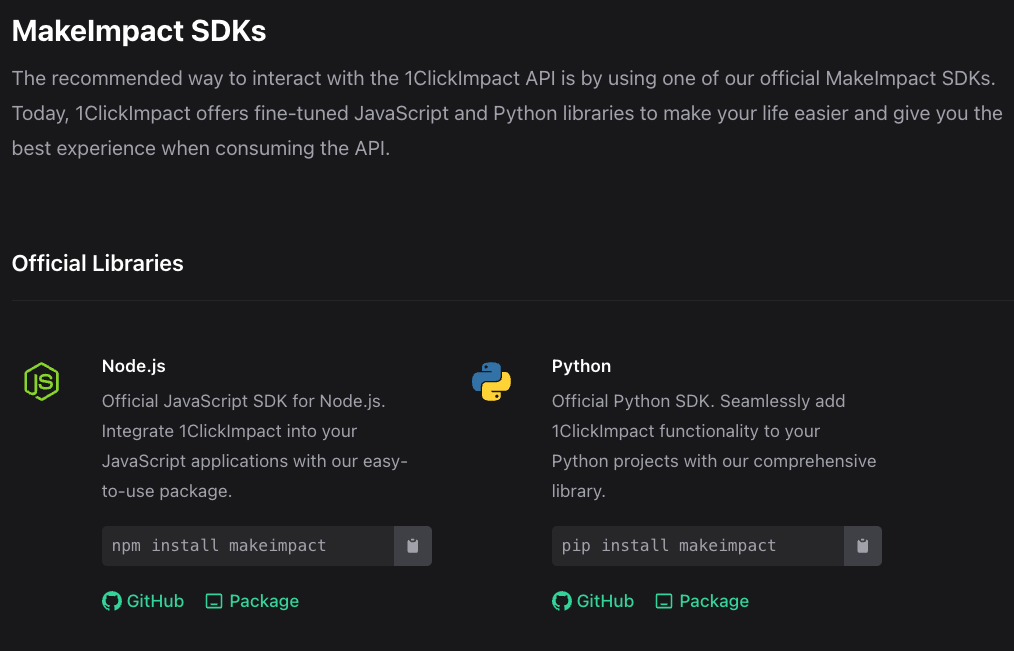
If this idea sparks something for you, here are the SDKs and docs I put together:
It’s all open and hackable. Feel free to build your own thing on top of it or fork it.
🌍 Final thought
We don’t need to build nonprofits or raise millions to do good.
Sometimes a side project and a bit of code is enough.
I’m still experimenting, but if you're building something and want to tie it to a real-world action, I’d love to hear how you'd use this idea.
Let’s make impact simple—and part of how we build.

This is super cool. Quick question though how do you handle verification? Like, if I’m telling users I planted trees or captured carbon, is there any way to actually prove that happened? I’ve seen a lot of “greenwashing” stuff lately so just trying to be careful before integrating something like this.
Great question and honestly, that concern is what pushed me to build this in the first place.
We partner directly with vetted orgs (tree planting teams, ocean cleanup groups, carbon capture projects) and every action is traceable. When an impact is triggered, we log it in your dashboard immediately and queue it with the relevant partner.
You (and optionally your users) get:
Live status updates (e.g., “Queued for planting”, “Planted”, etc.)
Access to livestreams and footage from planting sessions
Proof reports and certificates for larger batches
No vague “you made an impact” messages — actual receipts. I built this for builders like us who want to do good without the fluff.