How online logo maker Logaster overcame $100,000 losses due to Google ban
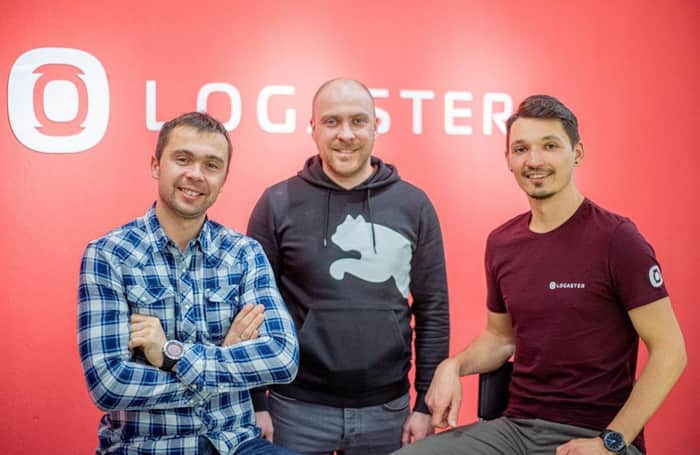
Launched in 2012, the Ukraine-based online logo generator Logaster started to generate a profit just a couple of years later, in 2014. Over the years, Logaster has created more than 12 mln logos and counting. However, the company had a dark period in its history when Google banned its website from Google search. Alexander Olijnyk, the founder of Logaster talk about how his company has managed to overcome the blow.
Logaster backstory
In 2008, Alexander Olijnyk and Evgeni Kasinsky were running a successful business that was selling equipment for Internet providers. Their second business had to do with designing WordPress websites. At some point, the entrepreneurs realized that they needed logos for their websites. This is how they came up with the idea of launching an online logo-making service.
“Since our main business was taking up all of our time, the thing with the logo generator was just a hobby. It was not until 2012 that we launched the first beta version of the Logaster website”, says Olijnyk.
At that time, most logo making websites resembled online Photoshop services, in a sense that a user had to draw a logo themselves using the available tools. Our goal, however, was to provide our clients with ready-to-use logo designs.
We started with logos and then expanded to business cards, envelopes, and entire kits of custom designs. Things were going smoothly until Google banned our website.
About the Google ban
By 2013, Olijnyk and his team outsourced a SEO agency to do Logaster SEO promotion for $2,000 a month.
“We only had a superficial understanding of what they were doing. We lacked both skills and time to dig deeper into the issue. The business was growing, the sales were soaring. Everything seemed to be in order”, says Alexander.
In the March of 2013, traffic started to go down. At first, we thought it was a season thing. Two months later, there was still no improvement. Finally, our SEO team found out that the website had been banned from Google search.
It turned out that the promotion methods that our contracted SEO agency was using were now considered inappropriate. “The SEO team had been relying on their prior experience, and their strategy had been delivering great results until Google updated its ranging algorithms in 2013. What was okay to do now became a violation of the rules”, explains Alexander.
The SEO agency gave up, and Logaster decided to write to Google support. A month later, a response came saying that Logaster was referenced by unnatural links. The search engine provided the examples of such links and advised to disavow them.
Logaster followed the recommendations. However, one month later it received another Google email mentioning unnatural links. (There is a special service called Google Disavow Links Tool that allows to disavow any external links on Google.)
“We disavowed the links again, plus about a hundred more. We wrote to Google again. One month later, we got the old same email from them. We absolutely had to change something. Traffic was continuing to go down. Our sales stopped”, says the co-founder of Logaster.
Finally, we decided to disavow the bigger part of domain-level links that had been added by our SEO team. This is what we did:
· exported all Logaster backlinks from Google Webmaster Tools and Ahrefs tool;
· analyzed the backlink anchors;
· created a file with the obtained data;
· replaced unnatural links with natural ones;
· added the remaining links to the updated file and sent it to Disavow Links Tool.
As a result, out of 810 domains built by our former SEO contractor, we only kept 14 domains and 280 URLs.
However, the problem remained. After being banned for several months, the Logaster website lost its top position in the Google search results. It was nowhere around the first, second, or even third search results page.
The company lost a lot of money. According to Olijnyk, the total losses amounted to around $100,000.
“We spent around $25,000-30,000 while working with our SEO contractor. During the time when the website was banned, we lost roughly $35,000. After the ban was lifted, we were hovering around a break-even point and lost another $70,000 in missed profits″, says Olijnyk.
How Logaster handled the aftermath
Following the ban, Logaster decided to build its own marketing team. Also, since the company lacked the required expertise, they hired a SEO consultant. The consultant was commissioned with a task to bring Logaster back to the top of the Google search. However, in the summer of 2013, there were no visible changes. The company even started to consider changing the domain.
Then the number of organic external links started to grow bit by bit. This is how the company was expanding the pool of its external links:
The lessons learned:
· When it comes to website promotion, you either need to do it yourself, or supervise your outsourced SEO agency.
· Relying on one domain only is risky.
To diversify risks, the logo maker launched regional websites, such as logaster.ru, logaster.com.es, logaster.com.br, logaster.cn, and logaster.fr. This way, even if one of the websites goes down, the remaining platforms will continue operating to matter work.
To all businesses which are considering SEO promotion, Alexander Olijnyk advises to diversify traffic sources:
“Don’t repeat our mistake. Don’t buy links. And if you can’t avoid that, at least buy links on the websites visited by your target audience. Google is constantly improving their algorithms, and they’re sure to notice a spike in your number of links. That 2013 ban costed us a fortune”.

Holy moly that's crazy! That would really suck to have to got though this. I feel like I've never seen a good experience when people buy links.
Anyone on IH ever have a good experience buying links?